• About UGM
  • Academic Portal
  • IT Center
  • Library
  • Research
  • Webmail
  • Informasi Publik
  • English
    • Indonesia
Universitas Gadjah Mada Faculty of Cultural Sciences
Universitas Gadjah Mada
  • Home
  • Profile
    • History
    • Vision and Mission
    • Organizational structure
    • Administration
    • Staff
    • Faculty Members
  • Academic
    • Academic Calendar
    • Undergraduate Programs
      • Bachelor of Cultural Antrophology
      • Bachelor in Archaeolagy
      • Bachelor in History
      • Bachelor in Tourism
      • Bochetor in Korean Language and Culture
      • Bachelor in Indonesian Language and Culture
      • Bachelor in English
      • Bachelor in Arabic
      • Bachelor in Japanese Language and Culture
      • Bachelor in Javanese Language, Literature and Culture
      • Bachelor in French language and literature
    • Graduate Programs
      • Master in Antrophology
      • Master in ArchaeoIogy
      • Master in History
      • Master in Linguistics
      • Master in Literature
      • Master In American Studies
      • Master in Middle Eastern Cultural Studies
    • Post-Graduate Programs / S3
      • Doctor in Antropology
      • Doctor in American Studies
      • Doctor in Humanities
    • Student Service
  • KPPM
    • Research Information
    • Scientific / Academic Publications
    • Community Service
    • International Cooperation
    • Domestic Cooperation
  • Student Organizations
    • Student Executive Council
    • Semi-Autonomous Organizations
      • KAPALASASTRA
      • Christian Student Alliance
      • LINCAK
      • Saskine
      • Catholic Student Family
      • Dian Budaya
      • Sastra Kanuragan (sasgan)
      • Family of Muslim Cultural Sciences Students (KMIB)
      • Bejo Mulyo
    • Autonomous Organizations
      • Family of Anthropology Students (KEMANT)
      • English Department Student Association
      • Tourism Students Association (HIMAPA)
      • Family of Indonesian Literature Students (KMSI)
      • West Asian Literature Student Association (IMABA)
      • Association of Korean-Language Students (HIMAHARA)
      • Family of Regional Indonesian Literatures Students (KAMASUTRA)
      • The Family Body of History Students (BKMS)
      • The French Literature Students Association (HMSP)
      • Family of Anthropology Students
      • Japanese Student Association (HIMAJE)
  • Admission
    • Student Evaluation
  • Home
  • SDGs 9: Industry Innovation and Infrastructure
  • SDGs 9: Industry Innovation and Infrastructure
  • page. 5
Arsip:

SDGs 9: Industry Innovation and Infrastructure

Kemant Visits the Department of Mechanical and Industrial Engineering Library

HEADLINESNews ReleaseSDGs 17: Partnerships for the GoalsSDGs 4: Quality EducationSDGs 9: Industry innovation and infrastructure Tuesday, 25 March 2025

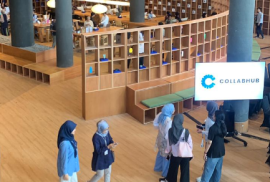
Yogyakarta, 24/3/2025 – On Friday, March 21st, 2025, Keluarga Mahasiswa Antropologi (Kemant) UGM went westward to the Faculty of Engineering, to visit the Library of the Department of Mechanical and Civil Engineering (DTMI). DTMI has been sending invitations to student bodies all across the university to visit their library, to share what they’ve been developing these past few months: a library that provides a comfortable public space for students. The library sits on the southern part of the department building, right next to the parking lot. The space inside it is moderately big, about twice the size of the Anthropology Reading Room on the fifth floor of Soegondo. In front of the entrance, sits a locker for students to put their bags in.  Next to that is the receptionist table, and next to that are rows of tall bookshelves filled all the way to the top. Books of many different kinds can be found; from the typical engineering books about Autocad and metallurgy, to fictional novels and even some biographies. Beside these bookshelves, many students are sitting in an arrangement of tables – some are doing their homework, some are playing board games, and some are merely socializing with each other. The library has a built-in decibel-meter, used to measure the sound level in the room; it beeps loudly when the sound goes over a certain threshold, a reminder to the students to keep it down. Aside from the main room with shelves and tables, the library also holds two isolated rooms – walled up with glass – to serve as meeting/reading rooms, where students who need more silence can go and sit.

Dhika, a third-year mechanical engineering student serving part-time as the library keeper, explained that this vibrant atmosphere is a relatively new experience. Back then, the DTMI Library was a cramped space that seldom held visitors. With dreams of an easy and accessible public space for students, Dhika and a few friends of his then advocated for the improvement of the library. The space was renovated, lifting up the ceiling and widening the interior. The book collection was expanded to hold more kinds of books, not just limited to engineering guides. Some professors also donated to the library’s collection; not just books, but also board games to enrich the place. Another thing that changed was the opening hours. Whereas back then the library was only open during working hours on Monday to Friday, nowadays the place can be accessed by students from morning until night, seven days a week. With these changes, the library became a gathering place where students can spend their time on campus, facilitated by the existence of myriad books and games in the library. The once-barren place is now filled with student activity, and the whole place became more lively.

After the tour, the Kemant representatives were free to explore the library by themselves. Some read the new book additions that haven’t been sorted into shelves, but most tried to play the board games that are available. While accompanying the excited students, Dhika reiterated the point of this visit: spreading awareness to students from all over UGM about the importance of a common space such as the DTMI Library, and to help realize the dream of a public space for students from all faculties and departments.

[Public Relations of Cultural Anthropology, Amadeus Abhirama Paramanindita]

Korean Language and Culture Lecturer Participates in International Conference in Melbourne

HEADLINESNews ReleaseSDGs 4: Quality EducationSDGs 9: Industry innovation and infrastructure Tuesday, 18 March 2025

Melbourne, 15-17 December 2024 – Lecturers from the UGM Korean Language and Culture study programme once again took part in one of the international conferences related to Korean Studies. This time Alfiana Amrin Rosyadi participated as a presenter from Indonesia in ‘The 4th Biennial International Conference and Annual Teacher Workshop’ organised by the Australian Association of Teachers of Korean (AUATK) held in Melbourne from 15 to 17 December 2024. This annual event attracts Korean language researchers and educators from around the world, providing a platform for sharing knowledge and best practices in Korean language education.

In 2024, AUATK’s theme is ‘The Use of AI in Korean Language Teaching,’ a topic relevant to technological developments in education. The integration of artificial intelligence into language teaching is a significant step towards improving access to education. By utilising AI technology, educators can create a more inclusive learning environment that meets a variety of learning needs.

During the three-day event, the conference featured various academic activities, including a workshop from the Korean National Language Institute, paper presentations, and an AI Prompt Engineering Workshop. The event provided a platform for academics and educators to discuss and share insights regarding innovations in Korean language teaching methods. The conference can serve as an important platform to foster collaboration among educators and researchers in the field of Korean language education. By bringing together experts from different backgrounds, the event encourages the exchange of ideas and the development of new approaches in teaching Korean as a foreign language.

The following are our lecturers’ impressions of the conference:

‘Wonderful. I gained new experiences and networks. I think it is time for the UGM Korean Language and Culture programme to not only focus on Korean Studies in Korea but also around the world. It is possible that UGM researchers can collaborate with Korean language researchers from renowned universities in the world besides those in Korea.’ – Alfiana

The participation of UGM Korean Language and Culture Study Programme lecturers in this prestigious conference confirms the commitment to advancing the field of Korean language education. By sharing knowledge and experiences, educators can contribute to global discussions on best practices and innovative teaching methods. The conference is also in line with the Sustainable Development Goals (SDGs), particularly on Quality Education, as well as Innovation and Infrastructure.

[Public Relations of Korean Language and Culture, Sherina Azmi Ahmad translated by Public Relations of Faculty of Cultural Sciences, Bulan Churniati]

Polanco S. Achri as Curator of Moda-Modif Exhibition: Bridging Youth Creativity to a Wider Space

HEADLINESNews ReleaseSDGSSDGs 11: Sustainable cities and communitiesSDGs 12: Responsible consumption and productionSDGs 16: Peace justice and strong institutionsSDGs 4: Quality EducationSDGs 8: Decent work and economic growthSDGs 9: Industry innovation and infrastructure Thursday, 2 January 2025

Yogyakarta – Polanco S. Achri, a writer born in Yogyakarta and currently pursuing a master’s degree in literature at the Faculty of Cultural Sciences, Universitas Gadjah Mada, continues to make waves in the art scene. Known for his poetry, prose, and essays on performance and visual arts, Polanco also actively contributes as a scriptwriter and musician in the Utusan Negeri Dongeng community. He is the mind behind the management of Pendjadjaboekoe and a member of Sindikat Muda Liar Ngantukan. His achievements include curating exhibitions such as Soil Distortion #2 (2024) and Membaca Jokpin (2024), as well as directing documentary films Di Balik Merangkul (2021) and Sangu Rasa (2023).

Most recently, Polanco has taken on the role of curator for the Moda-Modif Exhibition, which runs from December 20, 2024, to January 11, 2025, at Rumah DAS Gallery, Condongcatur. Open to the public daily from 11:00 a.m. to 5:00 p.m., the exhibition invites visitors free of charge, with no prior registration required.

About Moda-Modif: Youthful Energy in Motion
The Moda-Modif Exhibition (Creativity in Visual Arts by Youth) embodies the ideas of Moda (movement) and Modif (modification). These concepts reflect the continuous exploration, learning, and innovation of young artists who push boundaries to create new narratives.

This exhibition serves as a stepping stone, offering young artists a bridge to larger platforms. Their art is a result of a journey that is both creative and reflective. Beyond a mere display of visual arts, Moda-Modif fosters interaction through activities such as Artist Talks, Curatorial Tours, Reading Space Activations, and collaborations with local communities. Every aspect of the exhibition is designed to bring art closer to the public.

Featuring works by 17 young artists over three weeks, the exhibition highlights not only the aesthetic aspects of their creations but also stories of transformation, adaptation, and the dynamic spirit of youth.

Polanco’s Aspirations
Polanco hopes that the Moda-Modif Exhibition will encourage young artists from Yogyakarta and Solo to continue evolving, taking bold steps, and finding creative strategies to thrive.

“This exhibition is not just about showcasing works; it’s about building courage and ingenuity in navigating the art world,” he remarked.

Through his role as curator, Polanco reaffirms his dedication to bridging artistic expression with broader societal engagement, ensuring that the voices of young creators are heard and appreciated.


Photo Source: Doc. DAS House


Departure! UGM Community Service Program Team Period IV “Menjamu Lawu” Ready to Serve for 50 Days

News ReleaseSDGSSDGs 10: Reduced InequalitiesSDGs 11: Sustainable cities and communitiesSDGs 12: Responsible consumption and productionSDGs 17: Partnerships for the GoalsSDGs 3: Good health and well-beingSDGs 4: Quality EducationSDGs 8: Decent work and economic growthSDGs 9: Industry innovation and infrastructure Tuesday, 31 December 2024

Yogyakarta, December 20, 2024 – The Universitas Gadjah Mada (UGM) Period IV Community Service Program (KKN-PPM) Ngargoyoso “Menuju Lawu” team was officially dispatched to the service locations in Kemuning Village and Berjo Village, Ngargoyoso District, Karanganyar Regency. The team will run the service program for 50 days.

Preparations for departure began early in the morning at 07.30 WIB at the UGM Fire Brigade Post. Students were seen busy loading equipment such as suitcases, backpacks, and other needs to support activities in the field. Before leaving, all team members underwent a final briefing to ensure coordination and readiness.

Among the team members, there are two students from the Faculty of Cultural Sciences UGM, namely I Putu Adhimas Radiansyah Aryawan (Archaeology Study Program, class of 2022) and Khirana Marwadika (History Study Program, class of 2022). Their presence is expected to contribute to the optimization of village potential and community empowerment programs based on Smart Village and Eco Tourism in both villages.

The trip from Yogyakarta to Kemuning Village and Berjo Village took about 2.5 hours. Arriving at the location, the team immediately conducted a briefing and cleaned up to start the service. For the next 50 days, the KKN-PPM UGM team will try to help the local community in developing the village potential while creating a sustainable empowerment model.

With the spirit of togetherness, the team hopes that this program will not only provide tangible benefits to the people of Kemuning Village and Berjo Village but also become a valuable experience for UGM students in implementing the knowledge they have learned in college.

Exploring Africa in the Guest Lecture by Dr. Edna Agyepong: “Social Construction and Land

HEADLINESNews ReleaseSDGSSDGs 10: Reduced InequalitiesSDGs 17: Partnerships for the GoalsSDGs 4: Quality EducationSDGs 8: Decent work and economic growthSDGs 9: Industry innovation and infrastructureSustainable Development Goals Monday, 30 December 2024

The Department of Anthropology UGM hosted a significant guest lecture by Dr. Edna Agyepong, an academic from the University of Energy and Natural Resource. The guest lecture aimed to explain the complexities of cultural diversity and economic development in Africa, particularly in developing countries.

Dr. Agyepong began her lecture by emphasizing the importance of cultural diversity in shaping land use practices. He argued that understanding local customs and traditions is crucial for effective land management. “Cultural diversity is not just a matter of heritage; it is a vital resource for sustainable development,” he said. This perspective is in line with the UN Sustainable Development Goals (SDGs), particularly Goal 4, which encourages quality education that promotes sustainability.

The lecture also highlighted the role of education for sustainability in empowering communities. Dr. Agyepong pointed out that education initiatives must integrate local knowledge and practices to be effective. “When we educate people about their land and its significance, we empower them to make informed decisions,” he explained. This approach fosters a sense of ownership and responsibility among community members, which is crucial for sustainable economic development.

Dr. Agyepong also discussed the economic development challenges facing many African countries. He noted that while there is potential for growth, external factors such as climate change and global market fluctuations often hinder progress. “Developing countries must navigate these challenges while also preserving their cultural identity,” he said. This balancing act is critical to achieving the SDGs, particularly Goal 8, which focuses on promoting inclusive and sustainable economic growth.

The guest lecture also discussed the importance of civil society partnerships in driving development assistance. Dr. Agyepong emphasized that collaboration between governments, NGOs, and local communities is essential for effective resource management. “Civil society plays a critical role in championing the needs of the people and ensuring that development initiatives are inclusive,” he said. This collaborative approach can lead to more sustainable outcomes and greater community engagement.

As the lecture progressed, Dr. Agyepong shared case studies from various African countries, illustrating successful initiatives that integrate cultural diversity and sustainable practices. These examples served as inspiration to the participants, demonstrating the potential for positive change when local knowledge is valued and integrated into development strategies.

The audience was highly engaged during the Q&A session, where students asked questions about the practical application of Dr. Agyepong’s theories. Many expressed a desire to learn more about how they can contribute to sustainable development efforts in their own communities. Dr. Agyepong encouraged them to seek partnerships and engage with local organizations to make a meaningful impact.

In conclusion, Dr. Agyepong’s lecture provided valuable insights into the complexities of land use and cultural diversity in Africa. The emphasis on education for sustainability and the importance of civil society partnerships resonated strongly with participants, highlighting the need for collaborative efforts in achieving the SDGs. As the event drew to a close, participants left with renewed vigor and commitment to drive sustainable development in their own contexts. Dr. Agyepong’s lecture was a significant step in this direction, inspiring the next generation of leaders to embrace cultural diversity and work towards a sustainable future.

[Public Relations Faculty of Cultural Sciences UGM, Sandya Kirani]

1…34567…17

Video UGM

[shtmlslider name='shslider_options']
Universitas Gadjah Mada

Faculty of Cultural Sciences
Universitas Gadjah Mada
Jl. Nusantara 1, Bulaksumur Yogyakarta 55281, Indonesia
   fib@ugm.ac.id
   +62 (274) 513096
   +62 (274) 550451

Work Units

  • Office of Journal & Publishing
  • INCULS
  • Information Technology and Database
  • Language Learning Center
  • Library Unit
  • Public Relations
  • Research

Facilities

  • Computer Laboratory
  • Gamelan
  • Guest House
  • Language Library
  • Library
  • Phonetics Library
  • Self Access Unit
  • Student Internet Centre

Importan Links

  • Journal of Humaniora
  • Subscriber Journal
  • Alumni Portal
  • Career
  • Departmens News
  • UGM Streaming

Contacts

  • Academic
  • Administration
  • Dean’s Office
  • Departments / Study Programs
  • Public Relations

© 2024 Faculty of Cultural Sciences Universitas Gadjah Mada

KEBIJAKAN PRIVASI/PRIVACY POLICY

[EN] We use cookies to help our viewer get the best experience on our website. -- [ID] Kami menggunakan cookie untuk membantu pengunjung kami mendapatkan pengalaman terbaik di situs web kami.I Agree / Saya Setuju