• About UGM
  • Academic Portal
  • IT Center
  • Library
  • Research
  • Webmail
  • Informasi Publik
  • English
    • Indonesia
Universitas Gadjah Mada Faculty of Cultural Sciences
Universitas Gadjah Mada
  • Home
  • Profile
    • History
    • Vision and Mission
    • Organizational structure
    • Administration
    • Staff
    • Faculty Members
  • Academic
    • Academic Calendar
    • Undergraduate Programs
      • Bachelor of Cultural Antrophology
      • Bachelor in Archaeolagy
      • Bachelor in History
      • Bachelor in Tourism
      • Bochetor in Korean Language and Culture
      • Bachelor in Indonesian Language and Culture
      • Bachelor in English
      • Bachelor in Arabic
      • Bachelor in Japanese Language and Culture
      • Bachelor in Javanese Language, Literature and Culture
      • Bachelor in French language and literature
    • Graduate Programs
      • Master in Antrophology
      • Master in ArchaeoIogy
      • Master in History
      • Master in Linguistics
      • Master in Literature
      • Master In American Studies
      • Master in Middle Eastern Cultural Studies
    • Post-Graduate Programs / S3
      • Doctor in Antropology
      • Doctor in American Studies
      • Doctor in Humanities
    • Student Service
  • KPPM
    • Research Information
    • Scientific / Academic Publications
    • Community Service
    • International Cooperation
    • Domestic Cooperation
  • Student Organizations
    • Student Executive Council
    • Semi-Autonomous Organizations
      • KAPALASASTRA
      • Christian Student Alliance
      • LINCAK
      • Saskine
      • Catholic Student Family
      • Dian Budaya
      • Sastra Kanuragan (sasgan)
      • Family of Muslim Cultural Sciences Students (KMIB)
      • Bejo Mulyo
    • Autonomous Organizations
      • Family of Anthropology Students (KEMANT)
      • English Department Student Association
      • Tourism Students Association (HIMAPA)
      • Family of Indonesian Literature Students (KMSI)
      • West Asian Literature Student Association (IMABA)
      • Association of Korean-Language Students (HIMAHARA)
      • Family of Regional Indonesian Literatures Students (KAMASUTRA)
      • The Family Body of History Students (BKMS)
      • The French Literature Students Association (HMSP)
      • Family of Anthropology Students
      • Japanese Student Association (HIMAJE)
  • Admission
    • Student Evaluation
  • Home
  • SDGs 17: Partnerships for the Goals
  • SDGs 17: Partnerships for the Goals
  • page. 23
Arsip:

SDGs 17: Partnerships for the Goals

Creative Writing Workshop: Exploring the Art of Flash Fiction with Alexandra Masri Do

SDGs 10: Reduced InequalitiesSDGs 17: Partnerships for the GoalsSDGs 4: Quality EducationSDGs 5: Gender equality Thursday, 18 September 2025

Yogyakarta, 11/9/2025 – The Master’s Program in Literature, Faculty of Cultural Sciences, Universitas Gadjah Mada, hosted a two-day creative writing workshop on flash fiction, held on Tuesday (9/9) and Thursday (11/9) at Soegondo Building, Room 125, FIB UGM.

The event featured international creative writer Alexandra Masri Do, widely known as Maz Do, who holds a Master of Fine Arts (MFA) degree in fiction from Cornell University, USA. Currently in Yogyakarta on a Fulbright scholarship for creative writing and research, Maz Do has published short stories in renowned literary journals such as Guernica, The Baffler, and McSweeney’s Quarterly Concern. The workshop was attended by around 20 participants, not only from the Master’s Program in Literature at UGM but also from various backgrounds outside the program who shared an interest in creative writing.

The first session, titled “Flash Fiction: Discover the Art of Short-Form Storytelling”, introduced the fundamentals of flash fiction as a compact narrative form capable of delivering depth within brevity. Alexandra opened the workshop with a provocative exercise called the Lying Exercise by Steven Doung.

She emphasized that this practice is essential because writing fiction, in a positive sense, involves “lying” by creating new realities through imagination. “Fiction is a lie, but it is a lie that reveals truth. As writers, we invent, we fabricate—but through this act of lying, we reach something deeply human and meaningful,” Maz Do explained.

Through this exercise, participants were encouraged to realize that the “lies” crafted in fiction can, in fact, serve as gateways to broader truths. Following this, Maz Do elaborated on key elements such as shape, perspective, and how a story can be viewed as a series of questions that challenge readers’ expectations.

The second session, titled “Generative Creative Workshop: Write Your Own Flash Fiction”, focused more on practice and story development. Participants engaged in simple yet imaginative exercises such as the Chair Exercise, which connected words to visuals and personal memories. Starting with the word “chair”, participants explored synonyms, compared the visual images that arose, and linked them to personal memories. From these associations, they were asked to compose short sentences and share them in group discussions.

Enthusiasm was evident throughout both days of the workshop. The atmosphere was dynamic, filled with discussions, partner activities, and reflective sharing. The presence of participants from diverse backgrounds—academics, students, and literary enthusiasts alike—brought unique perspectives into the creative process.

The workshop provided valuable insights into how a short narrative can powerfully evoke readers’ imagination. More than just theory, Maz Do equipped participants with practical skills in writing, revising, and sharpening literary sensitivity.

Through this program, the Master’s Program in Literature, FIB UGM reaffirms its commitment to creating open, innovative, and internationally engaged learning spaces. With guidance from Maz Do, flash fiction has proven to be a refreshing medium for exploring imagination and enriching today’s literary practice.

Author: Marsya Kamila / Public Relations, Master’s Program in Literature

UGM Korean Literature Festival 2025: Literature Seminar, Achievements, and Inspiration

SDGs 17: Partnerships for the GoalsSDGs 4: Quality EducationSDGs 5: Gender equality Wednesday, 17 September 2025

Yogyakarta, 6/9/2025 — The Korean Language and Culture Study Program, Faculty of Cultural Sciences, Universitas Gadjah Mada, successfully held the UGM Korean Literature Festival 2025 at the Purbacaraka Auditorium. The event took place from 09.00 to 11.30 WIB and featured a series of activities including a literature seminar, award announcement, and a talk show with Cursed Bunny author, Chung Bora.

The seminar opened with a presentation by Mrs. Alfiana Amrin Rosyadi, one of the founders of the K-Lit UGM community. She shared the journey of K-Lit UGM from its early formation to its successful organization of various literary activities, including translation workshops and the first Korean literature festival in Indonesia.

Following this, Mrs. Febriani Elfida Trihtarani delivered a talk titled “Cursed Bunny: Between Horror, Magical Elements, and Social Issues.” She discussed how Chung Bora’s short story collection explores compelling narratives infused with horror, magical elements, and reflections of social issues in South Korea.

The event continued with the announcement of competition winners. In the Korean Literature Scientific Paper Competition, Az-Zahra Ahsana Amala won first place and received a prize of Rp3,000,000. Zahra also had the opportunity to present her paper titled “Analysis of Borderline Personality Disorder Tendencies in the Main Character of Lee Kkonnnim’s Novel Jugigo Sipeun Ai.” Second place went to Ajeng Adinda Putri (Rp1,500,000), and third place to Rizqi Hauna Nadhira (Rp1,000,000).

Meanwhile, in the Cursed Bunny Novel Video Review Competition, Bernadeta Dheswita Puspitasari won first place (Rp600,000), followed by Yosie Rizkha Amaf in second place (Rp450,000), and Jeanetta Gabriella Bangun in third place (Rp200,000).

All prizes were sponsored by the Korean Language and Culture Study Program, Faculty of Cultural Sciences UGM, as a form of appreciation for student creativity. The organizers hope that this festival will not only serve as a platform for literary engagement but also inspire young generations to be critical, creative, and attentive to the development of Korean literature in Indonesia.

Author: Sherina Azmi A.

Expert Lecture on Philology: Transforming Ancient Manuscripts into Performing Arts

SDGs 17: Partnerships for the GoalsSDGs 4: Quality Education Tuesday, 16 September 2025

Yogyakarta, 15/9/2025 – The Department of Language and Literature, Faculty of Cultural Sciences (FIB) UGM, held an event titled “Expert Lecture on Philology: Transforming Ancient Manuscripts into Performing Arts.” The program took place at Room 709, R. Soegondo Building, FIB UGM from 09.00 to 12.00 GMT+7, and was also streamed live through the official YouTube channel Kanal Pengetahuan FIB UGM.

The lecture attracted not only students from FIB UGM but also international participants, including students from Osaka University, Japan. Some participants joined via Zoom, creating a vibrant and cross-cultural discussion. The presence of international students highlighted the global relevance of this topic and opened opportunities to promote Indonesia’s cultural heritage on an international stage.

The first speaker, Dr. R. Bima Slamet Raharja, M.A., a lecturer in Javanese Language, Literature, and Culture, delivered a theoretical framework of alih wahana (media transfer), moderated by Dr. Rudy Wiratama, M.A. Dr. Bima explained that alih wahana encompasses translation, adaptation, and the transfer of one art form into another. “A medium is like a vehicle—it carries ideas, feelings, and expressions,” he emphasized.

He further explained that alih wahana is inseparable from intermedia relations. Understanding the medium used to express ideas has significant implications for the study of art and media, ranging from expression, cinema, illustration, and visual poetry to remediation, adaptation, and multimedia practices.

Following this session, presentations by Anon Suneko, S.Sn., M.Sn., and Paksi Raras Alit, S.S., M.A., complemented the discussion by exploring the practical aspects of transforming ancient manuscripts into performing arts. Their insights bridged theoretical perspectives with contemporary artistic practices, providing students with new ways to connect classical texts to modern forms of cultural expression.

Beyond academic enrichment, the event strongly supports the Sustainable Development Goals (SDGs), particularly in cultural preservation, quality education, and international cooperation. The involvement of international participants underscored the potential of transforming ancient manuscripts into performing arts not only as a form of heritage conservation but also as cultural diplomacy—strengthening Indonesia’s role in promoting its cultural legacy to the world.

Author: Candra Solihin

36 Arabic Study Program Students from UGM Complete Internship Programs Across Various Institutions in the Even Semester 2024/2025

News ReleaseSDGs 17: Partnerships for the GoalsSDGs 4: Quality EducationSDGs 8: Decent work and economic growth Thursday, 11 September 2025

Yogyakarta, 8/9/2025 – A total of 36 students from the Arabic Study Program, Faculty of Cultural Sciences, Universitas Gadjah Mada (UGM), successfully completed internship programs during the even semester of the 2024/2025 academic year. The internships took place across a wide range of institutions, including government offices, publishing houses, educational institutions, media outlets, and private companies.

The program serves as a crucial part of the students’ learning journey, allowing them to not only apply their academic knowledge but also sharpen practical skills needed in today’s workplace.

UGM Arabic Study Program students were placed in diverse institutions, spanning both public and private sectors. These included: the Ministry of Religious Affairs (Sleman, Bantul, Purworejo, Yogyakarta City, and Regional Office of Yogyakarta); publishing and media outlets such as Brilliant Books, Mojok Publishing, Deepublish, and Tirto.id; educational institutions such as SDIT Al-Khairaat, Miftahul Huda Islamic Boarding School (Kroya, West Java), and MAN 2 Yogyakarta; state agencies such as the National Narcotics Agency (BNN) of Yogyakarta, LLDIKTI Region V Yogyakarta, and the Office of Community Empowerment, Villages, Population, and Civil Registration of DIY; as well as private sector and companies including At-Tayibah Al-Multazam Group (Umrah & Hajj Travel) and Telkom Purwokerto.

Through this program, students are expected not only to gain first-hand work experience but also to build professional networks, strengthen their communication, literacy, and research skills, and apply their Arabic language expertise in real-world contexts.

The participation of Arabic Study Program students across various sectors also highlights the program’s commitment to supporting the Sustainable Development Goals (SDGs), particularly SDG 4 (Quality Education), SDG 8 (Decent Work and Economic Growth), and SDG 17 (Partnerships for the Goals), by fostering meaningful collaboration between higher education, government, and industry.

With this internship experience, it is hoped that the students will enrich their academic competencies while preparing themselves to become excellent, adaptive graduates ready to contribute to society.


Author: Muhammad Ardiansyah

Ministry of Manpower Visits the Library of the Department of Mechanical and Industrial Engineering

SDGs 17: Partnerships for the GoalsSDGs 4: Quality EducationSDGs 9: Industry innovation and infrastructure Tuesday, 9 September 2025

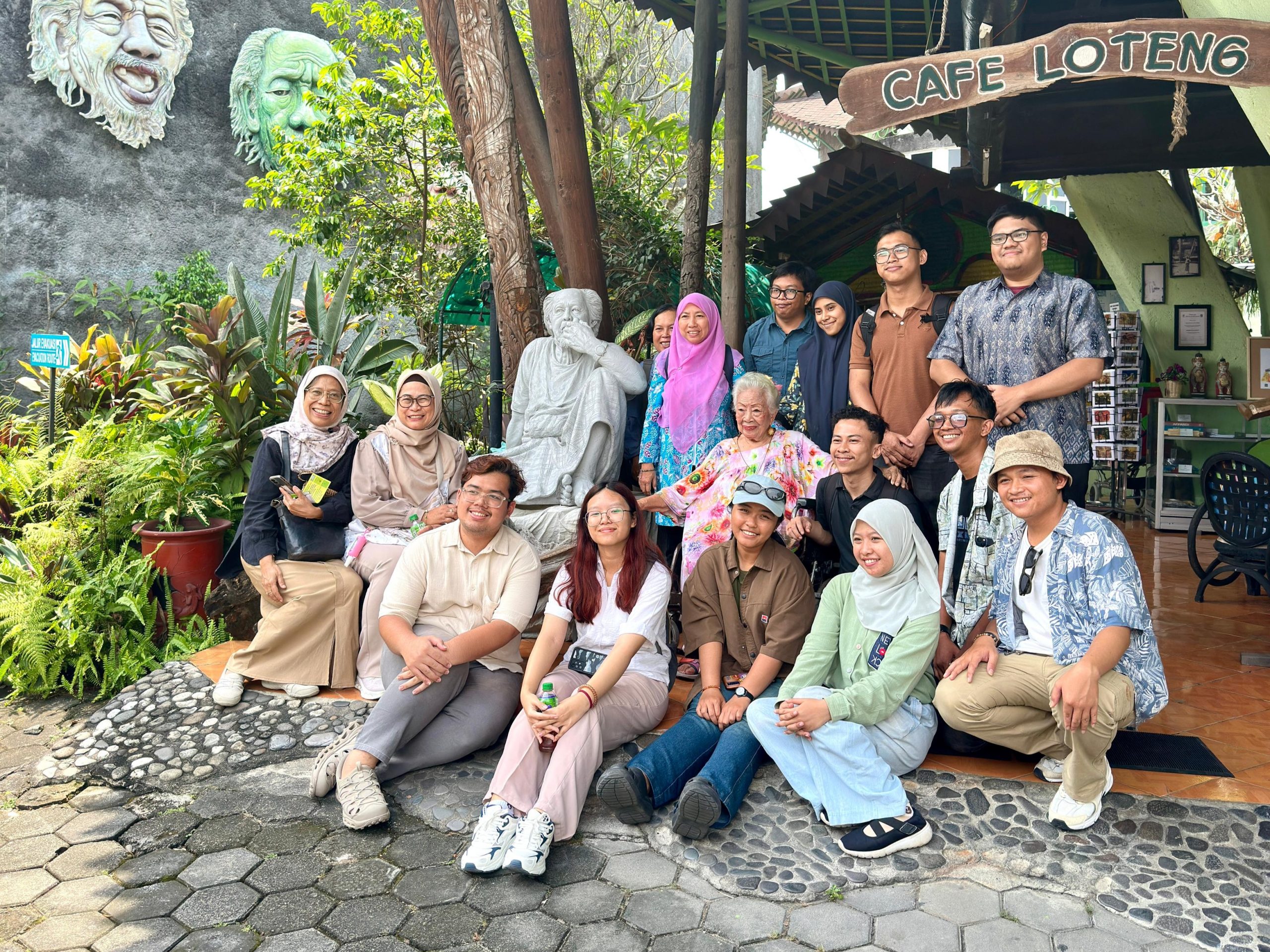
Yogyakarta, 21/3/2025 – Keluarga Mahasiswa Antropologi (Kemant) UGM went westward to the Faculty of Engineering, to visit the Library of the Department of Mechanical and Civil Engineering (DTMI). DTMI has been sending invitations to student bodies all across the university to visit their library, to share what they’ve been developing these past few months: a library that provides a comfortable public space for students. The library sits on the southern part of the department building, right next to the parking lot. The space inside it is moderately big, about twice the size of the Anthropology Reading Room on the fifth floor of Soegondo. In front of the entrance, sits a locker for students to put their bags in.  Next to that is the receptionist table, and next to that are rows of tall bookshelves filled all the way to the top. Books of many different kinds can be found; from the typical engineering books about Autocad and metallurgy, to fictional novels and even some biographies. Beside these bookshelves, many students are sitting in an arrangement of tables – some are doing their homework, some are playing board games, and some are merely socializing with each other. The library has a built-in decibel-meter, used to measure the sound level in the room; it beeps loudly when the sound goes over a certain threshold, a reminder to the students to keep it down. Aside from the main room with shelves and tables, the library also holds two isolated rooms – walled up with glass – to serve as meeting/reading rooms, where students who need more silence can go and sit.

Dhika, a third-year mechanical engineering student serving part-time as the library keeper, explained that this vibrant atmosphere is a relatively new experience. Back then, the DTMI Library was a cramped space that seldom held visitors. With dreams of an easy and accessible public space for students, Dhika and a few friends of his then advocated for the improvement of the library. The space was renovated, lifting up the ceiling and widening the interior. The book collection was expanded to hold more kinds of books, not just limited to engineering guides. Some professors also donated to the library’s collection; not just books, but also board games to enrich the place. Another thing that changed was the opening hours. Whereas back then the library was only open during working hours on Monday to Friday, nowadays the place can be accessed by students from morning until night, seven days a week. With these changes, the library became a gathering place where students can spend their time on campus, facilitated by the existence of myriad books and games in the library. The once-barren place is now filled with student activity, and the whole place became more lively.

After the tour, the Kemant representatives were free to explore the library by themselves. Some read the new book additions that haven’t been sorted into shelves, but most tried to play the board games that are available. While accompanying the excited students, Dhika reiterated the point of this visit: spreading awareness to students from all over UGM about the importance of a common space such as the DTMI Library, and to help realize the dream of a public space for students from all faculties and departments.

Author: Amadeus Abhirama Paramanindita

1…2122232425…64

Video UGM

[shtmlslider name='shslider_options']
Universitas Gadjah Mada

Faculty of Cultural Sciences
Universitas Gadjah Mada
Jl. Nusantara 1, Bulaksumur Yogyakarta 55281, Indonesia
   fib@ugm.ac.id
   +62 (274) 513096
   +62 (274) 550451

Work Units

  • Office of Journal & Publishing
  • INCULS
  • Information Technology and Database
  • Language Learning Center
  • Library Unit
  • Public Relations
  • Research

Facilities

  • Computer Laboratory
  • Gamelan
  • Guest House
  • Language Library
  • Library
  • Phonetics Library
  • Self Access Unit
  • Student Internet Centre

Importan Links

  • Journal of Humaniora
  • Subscriber Journal
  • Alumni Portal
  • Career
  • Departmens News
  • UGM Streaming

Contacts

  • Academic
  • Administration
  • Dean’s Office
  • Departments / Study Programs
  • Public Relations

© 2024 Faculty of Cultural Sciences Universitas Gadjah Mada

KEBIJAKAN PRIVASI/PRIVACY POLICY

[EN] We use cookies to help our viewer get the best experience on our website. -- [ID] Kami menggunakan cookie untuk membantu pengunjung kami mendapatkan pengalaman terbaik di situs web kami.I Agree / Saya Setuju