• About UGM
  • Academic Portal
  • IT Center
  • Library
  • Research
  • Webmail
  • Informasi Publik
  • English
    • Indonesia
Universitas Gadjah Mada Faculty of Cultural Sciences
Universitas Gadjah Mada
  • Home
  • Profile
    • History
    • Vision and Mission
    • Organizational structure
    • Administration
    • Staff
    • Faculty Members
  • Academic
    • Academic Calendar
    • Undergraduate Programs
      • Bachelor of Cultural Antrophology
      • Bachelor in Archaeolagy
      • Bachelor in History
      • Bachelor in Tourism
      • Bochetor in Korean Language and Culture
      • Bachelor in Indonesian Language and Culture
      • Bachelor in English
      • Bachelor in Arabic
      • Bachelor in Japanese Language and Culture
      • Bachelor in Javanese Language, Literature and Culture
      • Bachelor in French language and literature
    • Graduate Programs
      • Master in Antrophology
      • Master in ArchaeoIogy
      • Master in History
      • Master in Linguistics
      • Master in Literature
      • Master In American Studies
      • Master in Middle Eastern Cultural Studies
    • Post-Graduate Programs / S3
      • Doctor in Antropology
      • Doctor in American Studies
      • Doctor in Humanities
    • Student Service
  • KPPM
    • Research Information
    • Scientific / Academic Publications
    • Community Service
    • International Cooperation
    • Domestic Cooperation
  • Student Organizations
    • Student Executive Council
    • Semi-Autonomous Organizations
      • KAPALASASTRA
      • Christian Student Alliance
      • LINCAK
      • Saskine
      • Catholic Student Family
      • Dian Budaya
      • Sastra Kanuragan (sasgan)
      • Family of Muslim Cultural Sciences Students (KMIB)
      • Bejo Mulyo
    • Autonomous Organizations
      • Family of Anthropology Students (KEMANT)
      • English Department Student Association
      • Tourism Students Association (HIMAPA)
      • Family of Indonesian Literature Students (KMSI)
      • West Asian Literature Student Association (IMABA)
      • Association of Korean-Language Students (HIMAHARA)
      • Family of Regional Indonesian Literatures Students (KAMASUTRA)
      • The Family Body of History Students (BKMS)
      • The French Literature Students Association (HMSP)
      • Family of Anthropology Students
      • Japanese Student Association (HIMAJE)
  • Admission
    • Student Evaluation
  • Home
  • SDGs 17: Partnerships for the Goals
  • (Page 22)
Arsip:

SDGs 17: Partnerships for the Goals

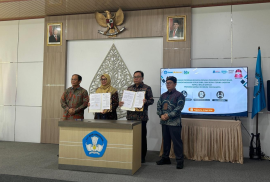
Signing of the Cooperation Agreement between the Yogyakarta Language Office and FIB UGM in Strengthening Language and Literature

News Release Tuesday, 26 May 2026

Yogyakarta, April, 24 2026 – The Balai Bahasa Provinsi Daerah Istimewa Yogyakarta and the Faculty of Cultural Sciences Universitas Gadjah Mada signed a cooperation agreement concerning the synergy of language and literature development, cultivation, and preservation through the strategic role of higher education institutions. This activity formed part of an effort to strengthen collaboration between language institutions and academic institutions in maintaining the sustainability of language and literature amid the dynamics of globalization.

The cooperation agreement was signed by Drs. Umar Solikhan, M.Hum., as the Head of the Yogyakarta Language Office and Dr. Mimi Savitri, M.A. as the Vice Dean for Research, Community Service, Cooperation, and Alumni Affairs of the Faculty of Cultural Sciences. Through this partnership, both parties committed to developing various collaborative programs in the fields of education, language development, and academic advancement, including student internships, language competency enhancement, regional language preservation, academic activities, and the development of the Indonesian for Foreign Speakers (BIPA) program.

The event was also attended by representatives of the Badan Pengembangan dan Pembinaan Bahasa as well as heads of language offices from several provinces, including Banten, West Java, Central Java, and East Java. The presence of these stakeholders reflected the importance of cross-regional synergy in strengthening both language policies and the implementation of national language programs.

In his remarks, Drs. Umar Solikhan, M.Hum., emphasized that the Language Office’s attention is directed not only toward the status of the Indonesian language, but also toward the sustainability of regional languages. According to him, the preservation of regional languages is one of the major tasks that urgently needs to be strengthened.

“Indonesia possesses extraordinary linguistic diversity. However, the current condition is certainly far from ideal. Our younger generation seems to be increasingly unfamiliar with regional languages and finds it difficult to use them.”

He further explained that the Language Office would strengthen regional language preservation efforts through several measures, such as improving teachers’ competencies and the quality of regional language instruction, adjusting educational curricula, and empowering local communities. In this context, the cooperation between the Yogyakarta Language Office and the Faculty of Cultural Sciences serves as one concrete step in supporting these efforts.

Through this collaboration, it is hoped that an ecosystem supporting the strengthening of Indonesian and regional linguistic and literary identities can be established, while also encouraging innovation in linguistic studies and practices relevant to contemporary societal needs. One concrete initiative that has already been implemented is the development of a Javanese language corpus organized by the Yogyakarta Language Office with the involvement of students from the Javanese Language, Literature, and Culture Study Program, FIB UGM.

Author : Haryo Untoro
Editor : Haryo Untoro
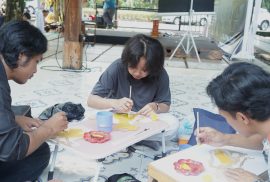
FIB UGM Engages Youth in Cultural Preservation Through Wayang Festival

HEADLINESNews Release Tuesday, 26 May 2026

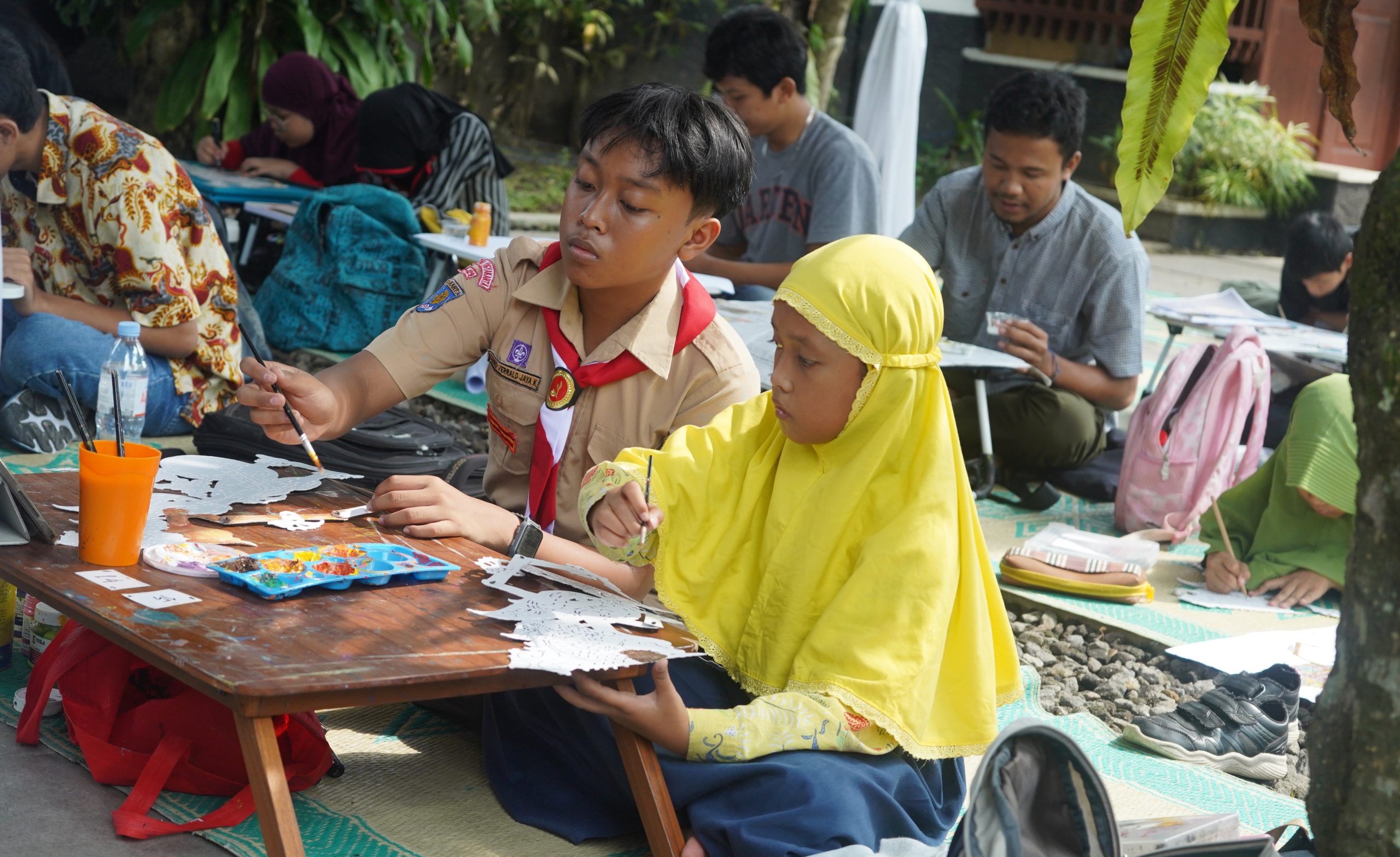
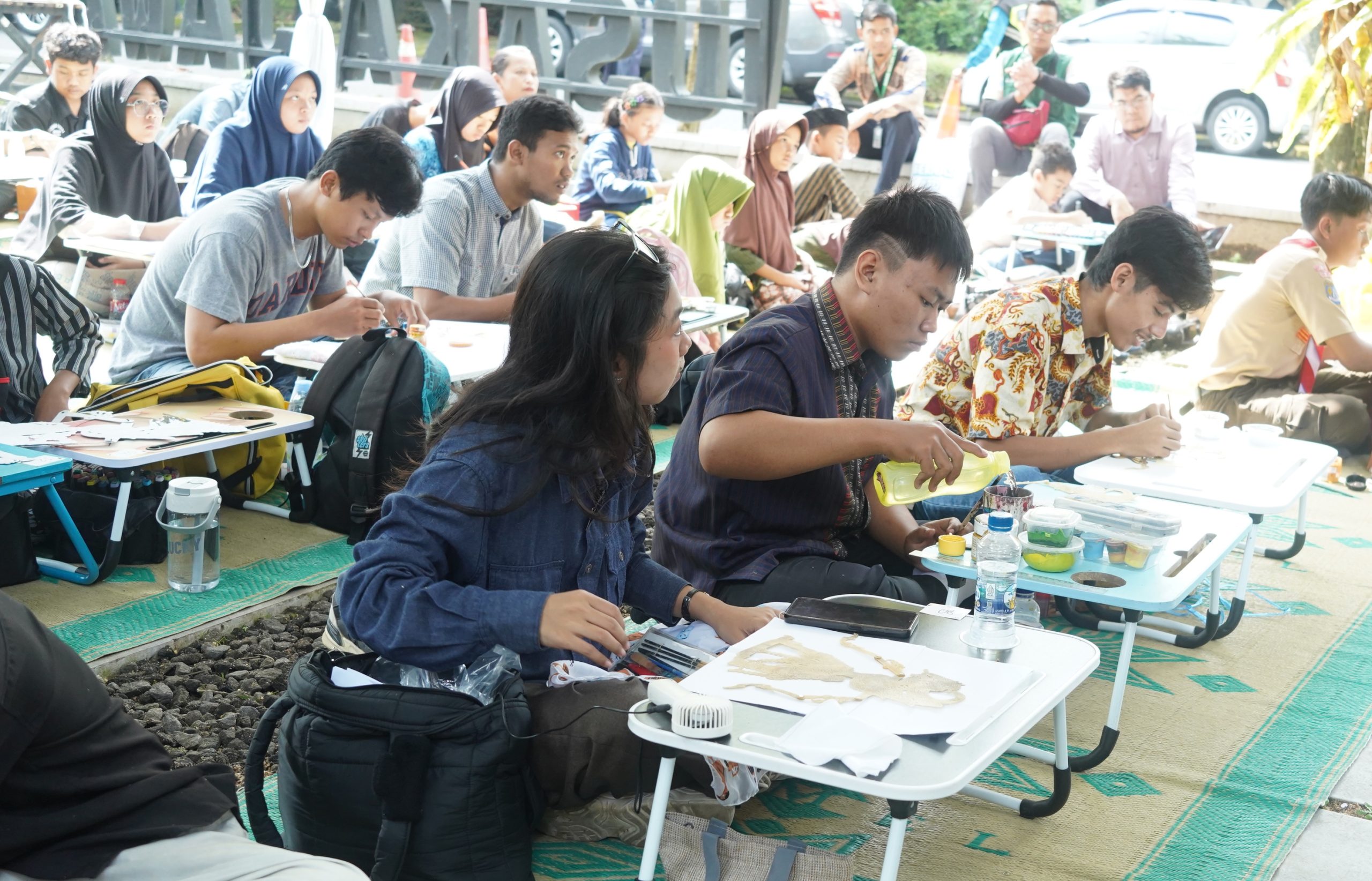
Yogyakarta, May 21, 2026 – The Faculty of Cultural Sciences at Universitas Gadjah Mada (FIB UGM) is hosting the Gadjah Mada Wayang Festival 2026 from May 21 to 23, 2026. The festival features a traditional leather puppet painting (sungging) competition and a cardboard puppet coloring contest, representing a concrete step by the educational institution to preserve Indonesian heritage.

This event is part of the EQUITY program funded by the Indonesian Endowment Fund for Education (LPDP RI) and serves as a celebration of the 80th anniversary of FIB UGM. This year, the Gadjah Mada Wayang Festival adopts the grand theme “Kita. Butuh. Wayang.” (We. Need. Wayang.). The theme conveys a vital message about fostering a balanced synergy between the university’s academic discourse and the livelihoods of wayang craftsmen in Butuh Hamlet, Sidowarno Village, Klaten Regency.

The competitions began simultaneously on Thursday, May 21, 2026, at 09:30 AM WIB. The leather puppet painting competition targets high school students, university students, and the general public from various regions, with a maximum age limit of 25. The organizing committee provided a Surakarta-style Gathutkaca puppet character as the primary medium. Participants are given five and a half hours to complete their work individually. They are free to choose their painting style based on personal preference, such as the Surakarta or Yogyakarta style.

Alongside this event, the committee is holding an in-person cardboard puppet (Wayang Karton) coloring competition at Pusaka Jawa UGM. This competition is specifically designed for elementary and junior high school students. Participants are given three hours to complete their work. All entries from both competitions will be returned and remain the full property of the participants after the winners are announced.

The evaluation for both competitions takes place in a single judging phase. The primary criteria used by the panel of judges include coloring technique, color composition, neatness and cleanliness, as well as the level of creativity shown by the participants.

These efforts to preserve wayang artistry serve as an important bridge to keep local cultural heritage deeply rooted in the identity of the younger generation. The close collaboration between the higher education institution and village artisans demonstrates that protecting tradition goes hand in hand with community empowerment and strengthening the local economy for the future.

[Public Relations of FIB UGM, Candra Solihin]

FIB UGM and Local Artisans Preserve Traditional Arts at Gadjah Mada Wayang Festival 2026

HEADLINESNews Release Tuesday, 26 May 2026

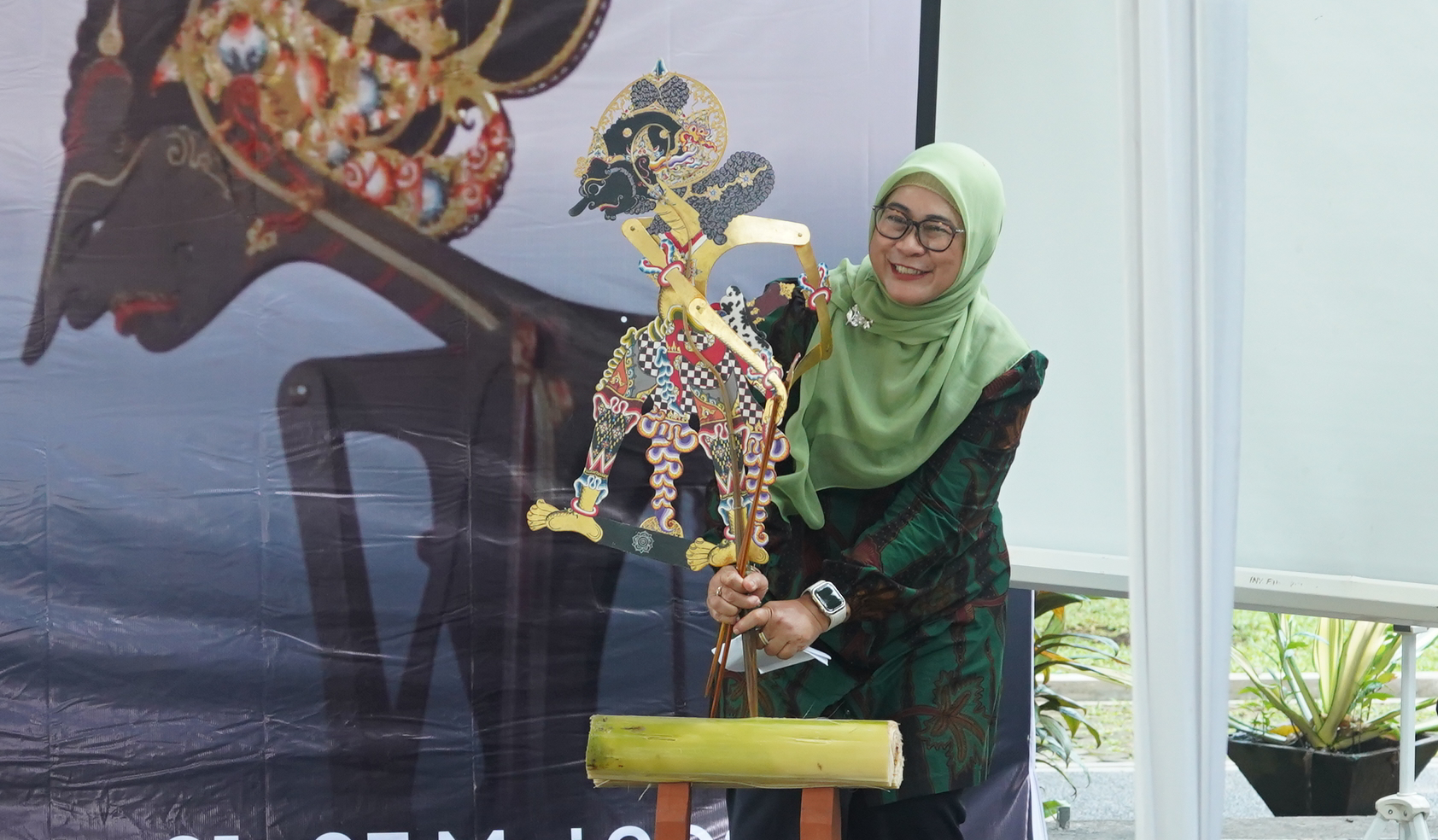
Yogyakarta, May 21, 2026 – The Faculty of Cultural Sciences at Universitas Gadjah Mada (FIB UGM) has officially opened the Gadjah Mada Wayang Festival 2026 at the UGM Center for Javanese Studies (Pusaka Jawa). The event, running from Thursday, May 21, to Saturday, May 23, 2026, is part of the Indonesian Endowment Fund for Education Agency (LPDP RI) EQUITY program and serves as a celebration of the 80th anniversary of FIB UGM.

This year’s festival highlights the main theme “Kita. Butuh. Wayang.” (We Need Wayang). This theme carries a vital message regarding the effort to build a balanced synergy between the academic sphere of UGM and the creative pulse of wayang artisans in Butuh Hamlet, Sidowarno Village, Klaten Regency.

FIB UGM emphasizes that this year’s theme reflects a commitment to keeping traditions alive. It serves as a declaration that the existence of wayang cannot merely be preserved in museum showcases or through stage performances. Wayang must be actively sustained by empowering its makers in Butuh Hamlet, appreciating its creative process, and ensuring its noble values are carried forward by ‘Us’ into the present and future.

The Gadjah Mada Wayang Festival series opened on Thursday, May 21, 2026, with an Opening Ceremony and a Solo Wayang Performance. On the same day, the committee also hosted a Cardboard Wayang Coloring and Wayang Painting (Sungging) Competition. For three full days, the general public can visit the Wayang Exhibition and Market, which showcases a variety of highly valuable artworks crafted by local artisans.

The second day, Friday, May 22, 2026, focuses on strengthening the academic foundation through an Expert Lecture. The highlight of the festival will take place on Saturday, May 23, 2026. On this final day, the public will have the opportunity to participate in a Tatah Sungging (Wayang Carving and Painting) Workshop, watch the vibrant Nusantara Wayang Parade, and attend the closing ceremony along with the announcement of the competition winners.

The Gadjah Mada Wayang Festival 2026 represents a concrete step by the university to preserve the nation’s cultural heritage. Empowering village artisans and placing them at the center of art preservation will foster self-reliance and economic growth within local communities. This empowerment-based preservation approach ensures that ancestral heritage remains competitive, inclusive, and capable of supporting the welfare of its artisans across generations.

[Public Relations of FIB UGM, Candra Solihin]

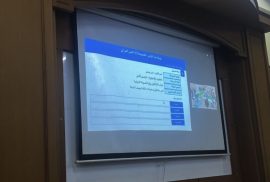
Transformation of Arabic Language Learning in the AI Era Highlighted in International Seminar

News Release Wednesday, 20 May 2026

 Efforts to strengthen the integration of technology in Arabic language education were once again highlighted through an international seminar titled “Arabic Linguistic Analysis and Instructional Design.” Held virtually on Thursday, April 30, 2026, the seminar brought together educators, academics, and Arabic language practitioners from various countries. The event served as a discussion forum to explore the development of Arabic language teaching methods in the era of Artificial Intelligence (AI). Through this forum, participants were encouraged to understand the importance of utilizing technology in education while still maintaining scientific and pedagogical foundations in language learning.

Throughout the seminar, participants were introduced to a five-hour learning roadmap consisting of three main stages: theoretical reinforcement, hands-on practice, and professional development for educators. Through this approach, participants gained a broader understanding of how AI can be implemented effectively and sustainably in Arabic language learning. One of the main highlights of the seminar was the introduction of “Mubeen,” an AI model specifically designed for Arabic linguistic needs. Compared to general AI models, Mubeen is considered more capable of handling the complexities of the Arabic language, including accurate tashkil (diacritical marks), morphological structure analysis, and understanding cultural contexts embedded in Arabic usage.

In addition to the presentation sessions, the seminar also featured interactive activities where participants were directly involved in prompt engineering practices. During this session, participants created descriptive Arabic texts, which were later analyzed using the Pedagogical Judge (القاضي البيداغوجي) approach to evaluate their educational quality. The discussions became increasingly engaging, particularly when addressing the role of AI in education. Some participants viewed AI as a tool that could help educators reduce repetitive administrative and planning tasks. Others, however, expressed concerns that excessive reliance on AI could make the learning process overly mechanical. These differing perspectives enriched the discussion and broadened participants’ understanding of technology’s role as a supporting tool in education.

Although conducted virtually, participants remained highly enthusiastic throughout the seminar. This was reflected in the active question-and-answer sessions, discussions, and exchanges of experiences regarding the use of technology in Arabic language learning. As the seminar concluded, the event not only became a platform for sharing knowledge and insights, but also encouraged participants to commit to implementing the training outcomes in their respective institutions. Through this initiative, participants are expected to develop Arabic language teaching methods that are more innovative, adaptive, and relevant to technological advancements in the digital era.

Author : Indana Zulfa Maulida

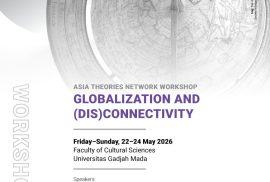
Asia Theories Network Workshop 2026 to Discuss Globalization and the Dynamics of (Dis)Connectivity in the Digital Era

News Release Wednesday, 20 May 2026

The Faculty of Cultural Sciences at Universitas Gadjah Mada, through the organization of the Asia Theories Network (ATN) Workshop 2026, presents an international academic forum bringing together leading scholars from Asia, the United States, and Europe to discuss the paradoxes of globalization and disconnection in the digital era. The event will take place from May 22–24, 2026, in Room 709, Soegondo Building, Faculty of Cultural Sciences, Universitas Gadjah Mada.

Carrying the theme “Globalization and (Dis)Connectivity,” the workshop highlights various issues concerning the transformation of identities, communities, and institutions in an increasingly digitally connected world. Participants are invited to discuss how digital and cultural networks not only foster global integration but also generate new forms of social isolation and disconnection within contemporary society.

ATN Workshop 2026 will also feature interdisciplinary dialogues involving the fields of literature, education, politics, and cultural studies. Academics and researchers will explore a range of contemporary issues, including digital social movements, coalition politics, decolonial discourse, digital well-being, and Anthropocene-related issues concerning the relationship between humans and the environment. The combination of global and local perspectives in each session serves as one of the workshop’s major strengths, including discussions of regional cases such as Taiwan’s Sunflower Movement and media controversies in Indonesia.

In addition to the academic forum, participants will also have the opportunity to experience the cultural richness of Yogyakarta through various cultural activities, including temple visits, traditional performances, and local culinary experiences. These activities aim to introduce Indonesian culture to the international academic community while strengthening cross-cultural exchange among nations.

The organization of the Asia Theories Network Workshop 2026 also supports the achievement of the Sustainable Development Goals (SDGs), particularly SDG 4 on Quality Education through the strengthening of international academic collaboration and the development of critical scholarly discourse, SDG 10 on Reduced Inequalities through intercultural dialogue and global-local perspectives, and SDG 17 on Partnerships for the Goals through international academic cooperation among researchers, educational institutions, and intellectual communities from various countries.

[Public Relations of FIB UGM, Alma Syahwalani]

1…2021222324…95

Video UGM

[shtmlslider name='shslider_options']
Universitas Gadjah Mada

Faculty of Cultural Sciences
Universitas Gadjah Mada
Jl. Nusantara 1, Bulaksumur Yogyakarta 55281, Indonesia
   fib@ugm.ac.id
   +62 (274) 513096
   +62 (274) 550451

Work Units

  • Office of Journal & Publishing
  • INCULS
  • Information Technology and Database
  • Language Learning Center
  • Library Unit
  • Public Relations
  • Research

Facilities

  • Computer Laboratory
  • Gamelan
  • Guest House
  • Language Library
  • Library
  • Phonetics Library
  • Self Access Unit
  • Student Internet Centre

Importan Links

  • Journal of Humaniora
  • Subscriber Journal
  • Alumni Portal
  • Career
  • Departmens News
  • UGM Streaming

Contacts

  • Academic
  • Administration
  • Dean’s Office
  • Departments / Study Programs
  • Public Relations

© 2024 Faculty of Cultural Sciences Universitas Gadjah Mada

KEBIJAKAN PRIVASI/PRIVACY POLICY

[EN] We use cookies to help our viewer get the best experience on our website. -- [ID] Kami menggunakan cookie untuk membantu pengunjung kami mendapatkan pengalaman terbaik di situs web kami.I Agree / Saya Setuju