• About UGM
  • Academic Portal
  • IT Center
  • Library
  • Research
  • Webmail
  • Informasi Publik
  • English
    • Indonesia
Universitas Gadjah Mada Faculty of Cultural Sciences
Universitas Gadjah Mada
  • Home
  • Profile
    • History
    • Vision and Mission
    • Organizational structure
    • Administration
    • Staff
    • Faculty Members
  • Academic
    • Academic Calendar
    • Undergraduate Programs
      • Bachelor of Cultural Antrophology
      • Bachelor in Archaeolagy
      • Bachelor in History
      • Bachelor in Tourism
      • Bochetor in Korean Language and Culture
      • Bachelor in Indonesian Language and Culture
      • Bachelor in English
      • Bachelor in Arabic
      • Bachelor in Japanese Language and Culture
      • Bachelor in Javanese Language, Literature and Culture
      • Bachelor in French language and literature
    • Graduate Programs
      • Master in Antrophology
      • Master in ArchaeoIogy
      • Master in History
      • Master in Linguistics
      • Master in Literature
      • Master In American Studies
      • Master in Middle Eastern Cultural Studies
    • Post-Graduate Programs / S3
      • Doctor in Antropology
      • Doctor in American Studies
      • Doctor in Humanities
    • Student Service
  • KPPM
    • Research Information
    • Scientific / Academic Publications
    • Community Service
    • International Cooperation
    • Domestic Cooperation
  • Student Organizations
    • Student Executive Council
    • Semi-Autonomous Organizations
      • KAPALASASTRA
      • Christian Student Alliance
      • LINCAK
      • Saskine
      • Catholic Student Family
      • Dian Budaya
      • Sastra Kanuragan (sasgan)
      • Family of Muslim Cultural Sciences Students (KMIB)
      • Bejo Mulyo
    • Autonomous Organizations
      • Family of Anthropology Students (KEMANT)
      • English Department Student Association
      • Tourism Students Association (HIMAPA)
      • Family of Indonesian Literature Students (KMSI)
      • West Asian Literature Student Association (IMABA)
      • Association of Korean-Language Students (HIMAHARA)
      • Family of Regional Indonesian Literatures Students (KAMASUTRA)
      • The Family Body of History Students (BKMS)
      • The French Literature Students Association (HMSP)
      • Family of Anthropology Students
      • Japanese Student Association (HIMAJE)
  • Admission
    • Student Evaluation
  • Home
  • SDGs 16: Peace Justice and Strong Institutions
  • SDGs 16: Peace Justice and Strong Institutions
  • page. 8
Arsip:

SDGs 16: Peace Justice and Strong Institutions

Seminar Antarabangsa KAJIAN MELAYU-JAWA (SEMEJA) IV

UGM and Universiti Kebangsaan Malaysia Strengthen Academic Networks in the Malay-Javanese Studies International Seminar

News ReleaseSDGs 11: Sustainable cities and communitiesSDGs 16: Peace justice and strong institutionsSDGs 17: Partnerships for the GoalsSDGs 4: Quality Education Wednesday, 2 July 2025

Yogyakarta, 1/7/2025 – The 4th International Seminar on Malay-Javanese Studies (SEMEJA 2025) was officially opened at the University Club of Gadjah Mada University (UGM) on July 1, 2025. The seminar brought together academics, researchers, and cultural observers from Indonesia and Malaysia. The opening ceremony commenced solemnly at 8:30 AM, starting with a prayer, followed by welcoming speeches from various dignitaries, including the Dean of the Faculty of Cultural Sciences at UGM and the Director of the Institute of Malay Civilization (ATMA) at Universiti Kebangsaan Malaysia (UKM).

In his welcoming address, Prof. Dr. Setiadi, S.Sos., M.Si., the Dean of the Faculty of Cultural Sciences at UGM, expressed his appreciation for the presence of all participants and partners from UKM, particularly ATMA. He emphasized the importance of continuing scientific collaboration that had been delayed due to the COVID-19 pandemic. “This seminar serves as a strategic platform to delve into the historical, cultural, linguistic, and civilizational ties between the Malay and Javanese communities. UGM believes that Malay-Javanese studies provide significant benefits in strengthening international academic networks and preserving our shared cultural heritage,” said Prof. Setiadi.

He also highlighted that this seminar is not only relevant for cultural and historical experts but also for academics from various fields who wish to develop scientific perspectives rooted in local and regional identities. This aligns with the Sustainable Development Goals (SDGs) of promoting quality education and fostering global partnerships.

This year, SEMEJA IV focuses on how cultural heritage can play a role in community empowerment and strengthening regional integration. The issues raised include language, arts, and culture; leadership and regional integration; heritage preservation as a catalyst for community development; strengthening heritage and sustainable development; and social solidarity through cross-border cultural cooperation.

With an inclusive theme and approach, SEMEJA IV is designed to foster meaningful dialogue, knowledge exchange, and strategic cooperation among academic institutions, local communities, and stakeholders from Indonesia and Malaysia. The seminar marks an important milestone in the efforts to preserve Malay-Javanese culture and create a shared space for academic integration and local values at both regional and global levels.

The opening ceremony also featured a cultural performance of Javanese dance by Ratnatraya, an art student organization from the Department of Javanese Language and Literature at UGM. This was followed by an inaugural speech by YBhg. Dato Haslina Abdul Hamid, the Secretary-General of the Malaysian Ministry of National Unity, and a keynote session led by Prof. Dr. Heddy Shri Ahimsa-Putra from UGM’s Graduate School.

The seminar is scheduled to last for two days, July 1 and 2, 2025, featuring a variety of scientific discussion sessions, community forums, and cultural performances. The presence of stakeholders from both countries is expected to pave the way for closer and more sustainable academic and cultural collaborations.

As part of the seminar’s commitment to the SDGs, particularly in education in developing countries, the event aims to leverage technology and cultural insights to enhance educational outcomes and community engagement. By fostering global partnerships, SEMEJA IV seeks to create a collaborative environment that empowers communities through shared knowledge and cultural understanding.

In conclusion, SEMEJA 2025 not only serves as a platform for academic discourse but also as a celebration of the rich cultural heritage shared by the Malay and Javanese peoples. The collaborative efforts between UGM and UKM exemplify the potential of academic partnerships in addressing global challenges while promoting local identities and cultural preservation.


[Public Relations of FIB UGM, Candra Solihin]
Mike McGovern of Michigan University: Resentment Three Ways: Is Resentment Politically Destructive, or Can it be Constructive?

News Release Friday, 13 June 2025

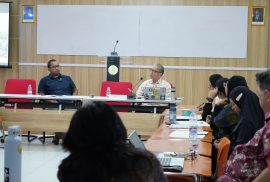
Yogyakarta, 06/13/2025 — The Department of Cultural Anthropology presented Mike McGovern from the University of Michigan as a resource person in a seminar entitled “Resentment Three Ways: Is Resentment Politically Destructive, or Can it be Constructive?” Cultural Anthropology students attended this event to explore the complex nature of resentment and its impact on society.

In his presentation, Mike McGovern highlighted that most European thinking on resentment follows the views of Friedrich Nietzsche, who belittled this sentiment as part of a “slave rebellion in morality,” which he said characterized Judeo-Christian culture. According to Nietzsche, resentment is considered an emotion that is past-oriented, childish, and ultimately detrimental to the individual who experiences it.

This seminar aims to explore the multifaceted nature of resentment, especially in the context of education and conflict resolution. Mike McGovern emphasized that understanding resentment is essential to fostering dialogue and promoting peace in societies that end conflict. He argues that hurt can lead to destructive political outcomes or serve as a catalyst for constructive change, depending on how it is managed.

Mike McGovern brings together three case studies from Myanmar, Guinea, and the United States to illustrate how hurt operates in different social and economic contexts, each producing different trajectories and outcomes. In Myanmar, for example, hurt has fueled protracted ethnic conflict, divisions, and hampered progress toward reconciliation. Meanwhile, the situation in Guinea shows how collective hurt over colonial legacies has fueled movements toward social justice and political reform.

Throughout the seminar, McGovern encouraged participants to reflect on their own experiences with hurt and consider how these feelings can be transformed into positive action. He emphasized the importance of education in this process, as it provides individuals with the tools to engage in constructive dialogue and resolve conflict.

As the seminar concluded, participants left with a new understanding of the dual nature of hurt. While it can be a source of discord and conflict, it also has the potential to inspire change and foster unity when approached thoughtfully. The event emphasized the importance of addressing emotions such as hurt in efforts to achieve sustainable development goals, especially in the areas of education and conflict resolution.


[Humas FIB UGM, Candra Solihin]

IKMASA’s “Basket Asik”: Fun, Fitness, and Talent Scouting on the Court

HEADLINESNews ReleaseSDGs 16: Peace justice and strong institutionsSDGs 17: Partnerships for the GoalsSDGs 3: Good health and well-being Tuesday, 3 June 2025

Yogyakarta, May 24, 2025 – In the spirit of promoting fitness, team spirit, and athletic potential among students, the Arabic Study Program Student Association (IKMASA) of Universitas Gadjah Mada launched its first basketball training session called Basket Asik IKMASA on Saturday morning, May 24, 2025, at the Faculty of Psychology Basketball Court, UGM.

Starting at 7:00 AM, the session was free of charge and open to all Arabic Study Program students from any year. Participants didn’t come alone—friends, family members, and partners were also welcome, creating a warm and inclusive atmosphere on the court.

While the activity was held in a casual and cheerful tone, it also served as an initial step toward discovering promising basketball talent who could represent IKMASA in future sports competitions. 

This initiative also contributes to the achievement of the United Nations Sustainable Development Goals (SDGs), particularly SDGs 3: Good Health and Well-Being, SDGs 16: Peace, Justice, and Strong Institutions, and SDGs 17: Partnerships for the Goals, by encouraging physical activity and fostering healthy social networks through sports.

Basket Asik IKMASA is a testament to how a culture of health, camaraderie, and positive competition can thrive in a lighthearted and joyful environment—one basketball game at a time.

[Author, Muhammad Ardiansyah]

IKMASA Fun Match Futsal: Building Spirit and Sportsmanship Through Friendly Competition

HEADLINESNews ReleaseSDGs 16: Peace justice and strong institutionsSDGs 17: Partnerships for the GoalsSDGs 3: Good health and well-being Tuesday, 3 June 2025

Yogyakarta, May 23, 2025 – The Arabic Study Program Student Association (IKMASA) of Universitas Gadjah Mada brought together students in a lively sporting event, Fun Match Futsal SASRAB, held on Friday evening, May 23, 2025, at Telaga Futsal 1 starting at 5:30 PM.

Open to all Arabic Study Program students regardless of year or gender, the event also welcomed friends, family members, and partners to join the fun. With a participation fee of just Rp10,000, attendees enjoyed an energetic and friendly futsal match aimed at refreshing minds and bodies after a week of academic activities.

More than just a casual game, Fun Match Futsal SASRAB served as a platform to discover hidden talents and nurture interest in sports, especially futsal, among students. This activity also supports the achievement of the United Nations Sustainable Development Goals (SDGs), particularly SDGs 3: Good Health and Well-Being, SDGs 16: Peace, Justice, and Strong Institutions, and SDGs 17: Partnerships for the Goals, by promoting physical wellness and social connection in a collaborative, inclusive environment.

Through this fun and energizing event, IKMASA aims to strengthen solidarity and encourage active lifestyles among Arabic Literature students. Fun Match Futsal proves that student bonding, sportsmanship, and well-being can all be fostered—one goal at a time.

[Author, Muhammad Ardiansyah]

IKMASA Badminton Time: Having Fun Together Amid the Academic Hustle

HEADLINESNews ReleaseSDGs 16: Peace justice and strong institutionsSDGs 17: Partnerships for the GoalsSDGs 3: Good health and well-being Tuesday, 3 June 2025

Yogyakarta, May 17, 2025 – To recharge students’ spirits amid their demanding academic schedules, the Interests and Talents Division (Mikat) of the Arabic Study Program Student Association (IKMASA) at Universitas Gadjah Mada (UGM) hosted Badminton Time – “Edisi Keringet Bareng!” on Saturday, May 17, 2025, at GOR Lembah UGM from 3:00 to 5:00 PM.

The event was open to all Arabic Study Program students, whether seasoned badminton players or those simply looking to have fun and break a sweat together. With an entry fee of only Rp5,000, participants were provided with shuttlecocks, access to the court, and a vibrant opportunity to play and connect with fellow IKMASA members. No registration was required; students simply needed to show up in sportswear with energy and enthusiasm. Rackets were also available on-site for borrowing.

This activity also aligned with the goals of the Sustainable Development Goals (SDGs)—in particular, SDG 3: Good Health and Well-Being, SDG 16: Peace, Justice, and Strong Institutions, and SDG 17: Partnerships for the Goals. By creating a physically active and socially inclusive space, Badminton Time served as a platform for building community through wellness and collaboration.

The event successfully strengthened solidarity among IKMASA members while providing a healthy and enjoyable break from academic routines. Badminton Time stands as a testament that the spirit of sports, joy, and togetherness continues to thrive among Arabic Literature students at UGM.

[Author, Muhammad Ardiansyah]

1…678910…31

Video UGM

[shtmlslider name='shslider_options']
Universitas Gadjah Mada

Faculty of Cultural Sciences
Universitas Gadjah Mada
Jl. Nusantara 1, Bulaksumur Yogyakarta 55281, Indonesia
   fib@ugm.ac.id
   +62 (274) 513096
   +62 (274) 550451

Work Units

  • Office of Journal & Publishing
  • INCULS
  • Information Technology and Database
  • Language Learning Center
  • Library Unit
  • Public Relations
  • Research

Facilities

  • Computer Laboratory
  • Gamelan
  • Guest House
  • Language Library
  • Library
  • Phonetics Library
  • Self Access Unit
  • Student Internet Centre

Importan Links

  • Journal of Humaniora
  • Subscriber Journal
  • Alumni Portal
  • Career
  • Departmens News
  • UGM Streaming

Contacts

  • Academic
  • Administration
  • Dean’s Office
  • Departments / Study Programs
  • Public Relations

© 2024 Faculty of Cultural Sciences Universitas Gadjah Mada

KEBIJAKAN PRIVASI/PRIVACY POLICY

[EN] We use cookies to help our viewer get the best experience on our website. -- [ID] Kami menggunakan cookie untuk membantu pengunjung kami mendapatkan pengalaman terbaik di situs web kami.I Agree / Saya Setuju