• About UGM
  • Academic Portal
  • IT Center
  • Library
  • Research
  • Webmail
  • Informasi Publik
  • English
    • Indonesia
Universitas Gadjah Mada Faculty of Cultural Sciences
Universitas Gadjah Mada
  • Home
  • Profile
    • History
    • Vision and Mission
    • Organizational structure
    • Administration
    • Staff
    • Faculty Members
  • Academic
    • Academic Calendar
    • Undergraduate Programs
      • Bachelor of Cultural Antrophology
      • Bachelor in Archaeolagy
      • Bachelor in History
      • Bachelor in Tourism
      • Bochetor in Korean Language and Culture
      • Bachelor in Indonesian Language and Culture
      • Bachelor in English
      • Bachelor in Arabic
      • Bachelor in Japanese Language and Culture
      • Bachelor in Javanese Language, Literature and Culture
      • Bachelor in French language and literature
    • Graduate Programs
      • Master in Antrophology
      • Master in ArchaeoIogy
      • Master in History
      • Master in Linguistics
      • Master in Literature
      • Master In American Studies
      • Master in Middle Eastern Cultural Studies
    • Post-Graduate Programs / S3
      • Doctor in Antropology
      • Doctor in American Studies
      • Doctor in Humanities
    • Student Service
  • KPPM
    • Research Information
    • Scientific / Academic Publications
    • Community Service
    • International Cooperation
    • Domestic Cooperation
  • Student Organizations
    • Student Executive Council
    • Semi-Autonomous Organizations
      • KAPALASASTRA
      • Christian Student Alliance
      • LINCAK
      • Saskine
      • Catholic Student Family
      • Dian Budaya
      • Sastra Kanuragan (sasgan)
      • Family of Muslim Cultural Sciences Students (KMIB)
      • Bejo Mulyo
    • Autonomous Organizations
      • Family of Anthropology Students (KEMANT)
      • English Department Student Association
      • Tourism Students Association (HIMAPA)
      • Family of Indonesian Literature Students (KMSI)
      • West Asian Literature Student Association (IMABA)
      • Association of Korean-Language Students (HIMAHARA)
      • Family of Regional Indonesian Literatures Students (KAMASUTRA)
      • The Family Body of History Students (BKMS)
      • The French Literature Students Association (HMSP)
      • Family of Anthropology Students
      • Japanese Student Association (HIMAJE)
  • Admission
    • Student Evaluation
  • Home
  • SDGs 4: Quality Education
  • SDGs 4: Quality Education
  • page. 29
Arsip:

SDGs 4: Quality Education

Basabuja FIB UGM Team Won Bronze Medal in National Essay Competition of Andalas Scientific Week 2025

SDG 4 (Quality Education)SDGs 11: Sustainable cities and communitiesSDGs 15: Life on landSDGs 17: Partnerships for the Goals Monday, 16 June 2025

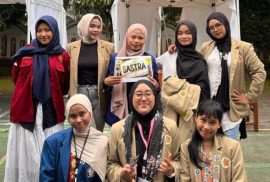
Universitas Gadjah Mada (UGM) students have made another proud achievement. The Basabuja team consisting of students of the Javanese Language, Literature and Culture Study Program, Faculty of Cultural Sciences (FIB), won a bronze medal in the national essay competition at the Andalas 2025 Scientific Week. The competition was organized by the Political Science Student Association (HIMAPOL) of Andalas University, West Sumatra.

The Basabuja team, which is an acronym for Javanese Language, Literature, and Culture, consists of four students namely Muhammad Siswoyo, Yudha Adistira, Dwi Mei Saroh, and Dian Nitami. In the competition that was held offline, the Basabuja team carried the subtheme of Law and Culture with the essay title Kuṭāramanawa: Ancient and Present Ramanawa.

The essay raised the customary law during the Majapahit Kingdom, which was recorded in Kuṭāramanawa. “What is applied from Kuṭāramanawa is in the form of Smart QR Code and Internet of Things (IoT). As a law that contains very complete social rules, with 275 articles and 19 chapters, we realize that Kuṭāramanawa has values that are relevant to today’s social and environmental conditions,” said Yudha Adistira in an online interview (28/05/2025).

According to Dwi Mei Saroh, in an online interview (24/05/2025), their team had to go through an elimination stage before entering the final round. The final round was held on May 10-13, 2025, with a presentation session on the 11th and the announcement of the winner on May 12. “The only one who represented our team to go and present at Andalas was Siswoyo,” he said.

The process of composing the essays that the team went through was not easy. Dian Nitami said that their long journey began in January 2025. “From the process, of course, many dynamics occurred and the toughest lies in the cost constraints. However, this was overcome with the commitment and solidarity of the team and the help of many other parties. Therefore, we would like to thank you for all the help that has been given,” he explained in an online interview (24/05/2025).

This achievement is expected to be a spark of enthusiasm for students of the Javanese Language, Literature and Culture Study Program to continue to work and innovate. In addition, Muhammad Siswoyo invited the younger generation to keep trying to preserve, explore knowledge, and innovate from Javanese literary works. “Javanese literature has many innovative opportunities that can be developed with an interdisciplinary approach. Many branches of science are connected to the laws, customs, culture, and habits of the Javanese people. Friends can utilize this into new innovations. For that, let’s preserve Javanese culture,” he said in an online interview (24/05/2025).

In line with this, Yudha Adistira emphasized the importance of accessibility to classic manuscripts as an effort to preserve and utilize the noble values of the nation. “Customary law is often considered ancient and left behind, but in fact it contains values that are very relevant to the present. However, access to manuscripts such as Kuṭāramanawa is still very limited. Therefore, we feel it is important to digitize this manuscript so that it can be more widely accessed, studied, and reapplied, especially in the context of legal education, cultural preservation, and national character building. We believe that technology can be a bridge between the past and the future,” he concluded.

Author: Haryo Untoro
Editor : Haryo Untoro
Javanese Article Writing Exercise with Wikimedia

SDGs 11: Sustainable cities and communitiesSDGs 17: Partnerships for the GoalsSDGs 4: Quality Education Monday, 16 June 2025

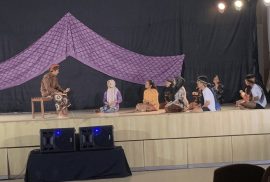
The implementation of the Productive Javanese Writing Course in the even semester of the 2024/2025 academic year at the Javanese Language, Literature and Culture Study Program, Faculty of Cultural Sciences, Universitas Gadjah Mada (FIB UGM), presents a different learning atmosphere from previous years. Batch 2024 students get direct assistance from Wikimedia members in learning article writing, especially in Javanese.

The collaboration between the Javanese Language, Literature and Culture Study Program and Wikimedia took place from Tuesday, May 6, 2025 to Tuesday, June 3, 2025. Through this collaboration, students not only learn the basics of article writing, but also get an in-depth understanding of the world of Wikipedia, including the structure and language style of article writing, things that are not allowed in writing on Wikimedia, and an introduction to the Wikimedia organization in Indonesia. The students even had the opportunity to write articles directly in Javanese.

During the program, two Wikimedia members, Mbak Ana and Mbak Hanifah, accompanied the students in learning activities. Based on an online interview on June 12, 2025, one of the course participants, Wreksi Awinanggya Pinandhita, said that this activity was considered very useful because it provided concrete provisions in writing, especially writing articles in Javanese.

Overall, this collaboration is considered to provide valuable experience for students. In addition to enriching writing skills, this activity also broadens students’ insights into the world of article writing in the context of local culture. Through the ability to write articles in Javanese, students actively contribute to reintroducing regional culture to a wider audience.

Author: Haryo Untoro
Editor : Haryo Untoro
Get To Know The Tutor: Khoirunisa Diah Pranata

INCULSSDGs 10: Reduced InequalitiesSDGs 17: Partnerships for the GoalsSDGs 4: Quality Education Friday, 13 June 2025

Yogyakarta, 12/06/2025- The phrase “Language is a window to the world” may sound simple, but for Khoirunisa Diah Pranata, a student of the Indonesian Language and Literature Program at Universitas Gadjah Mada (Class of 2022), it holds profound meaning. She has experienced firsthand how language is not just a tool for communication, but also a bridge that connects people from different cultural backgrounds, habits, and even ways of thinking. Through her role as a tutor in the Indonesian Culture and Language Service (INCULS) program, Sasa—her nickname—has embarked on a learning journey that is not just about teaching, but also about growing and learning together.

Sasa joined INCULS as a tutor in 2024. Her interest stemmed from her passion for interacting with people from various backgrounds. For her, university life is not only about reading books and completing academic assignments, but also about real-life experiences that broaden one’s perspective. “When I meet and speak with international students, I feel there’s a two-way learning process happening. I learn about them, and they learn about Indonesia,” she explained. Thus, being a tutor is more than just an informal teaching role—it’s a meaningful position that brings together people and cultures.

During her time as a tutor, Sasa supported several programs such as the Kokushikan University program (Japan), the 2025 Developing Countries Partnership (KNB) scholarship program, and a program from Monash University (Australia). Among all her experiences, Sasa found her most memorable moments with Shotaro, a student from the Kokushikan program. Shotaro was not only active and open-minded but also had a strong curiosity about Indonesian culture and social life. “We often had discussions, not just about vocabulary or grammar, but also about food, music, and daily habits,” Sasa recalled. To her, Shotaro exemplified how language learning can be a tool for building genuine connections.

Sasa’s tutoring approach is quite unique. She doesn’t stick to formal or conventional teaching methods. Instead, she prioritizes a personal approach. At the beginning of each session, she usually asks light questions like favorite colors, favorite foods, or preferred sports. The goal isn’t just to break the ice but to create a connection through personal interests. When a student’s hobbies or interests differ from hers, she finds common ground by connecting them with other students who share similar interests. “I believe language learning can be more effective when it starts from things that are close to everyday life,” she said.

One of the techniques Sasa often uses is flashcards, especially for introducing vocabulary related to objects, fruits, or colors. Visual aids such as picture cards have proven effective, especially for students who are not fluent in English. “I once taught a student who was not only new to the Indonesian language but also not very proficient in English. In that case, body language, facial expressions, and images became the main tools for communication,” she explained. In situations like these, Sasa realized that creativity is key to teaching. She also intentionally avoids using overly formal Indonesian to keep the learning environment relaxed and approachable.

Despite its joys, tutoring does come with challenges. One of the main challenges Sasa faced was language barriers. Many students came to INCULS with only very basic Indonesian language skills, and some had limited English proficiency as well. This required Sasa to find creative ways to keep communication flowing. “I have to be patient and read their expressions well. Sometimes they feel shy or lack confidence, which can also hinder their learning process,” she shared. To address this, Sasa employed a more personal approach. She wasn’t just a tutor in class but also a friend outside of it. She greeted students when passing by, engaged in casual conversations, and even accompanied a student to see a doctor when they were ill.

This experience was not only a learning process for the students but also had a significant impact on Sasa’s personal growth. She feels that she has become more open, communicative, and willing to try new things. “Being a tutor often made me reflect on my own understanding of Indonesia. Sometimes when students ask questions about things I consider ordinary, I feel challenged to explain them in a simple and understandable way,” she said. From this experience, Sasa realized that understanding one’s own culture is a vital part of being a language instructor.

Even with her best efforts, Sasa recognizes that tutoring is not something one can do alone without support. She emphasizes the importance of training for INCULS tutors, especially in teaching strategies and intercultural communication ethics. “We need more references and guidance, especially in responding to critical questions from international students. We don’t want misunderstandings, especially when explaining cultural habits or social systems in Indonesia,” she said. She also suggested that INCULS should provide more dedicated spaces to support the intensive teaching of the Indonesian language, creating a more conducive learning environment.

Despite all the challenges, Sasa expressed her gratitude to INCULS for providing her with a space to grow. “Thank you for being a true learning environment, a place to practice what it means to be Indonesian, and a place to grow. I hope INCULS continues to improve, expands its reach, and remains a healthy and inclusive platform for intercultural learning. I also wish the lecturers and staff continued health and success in carrying out their responsibilities,” she said sincerely.

Sasa’s experience as a tutor at INCULS is a small glimpse into a larger ongoing process: how language can become a unifying force, how learning can be a two-way journey, and how diversity is not just a challenge, but a source of richness. Experiences like hers are essential stepping stones toward building a global society that embraces mutual understanding, respect, and shared learning.

[INCULS UGM]

Korean Language and Culture Students of UGM Successfully Win Top Awards at KSI Yogyakarta 2025 Competition

HEADLINESNews ReleaseSDGs 17: Partnerships for the GoalsSDGs 4: Quality Education Tuesday, 3 June 2025

Yogyakarta, May 18, 2025 — Students of the Korean Language and Culture Study Program, Faculty of Cultural Sciences, Universitas Gadjah Mada once again achieved outstanding success at the King Sejong Institute (KSI) Yogyakarta 2025 Speech and Writing Competition. The event was held on Sunday, May 18, 2025, at the Soegondo Building, Faculty of Cultural Sciences UGM, and was attended by active KSI students, KSI alumni, as well as students of the Korean Language and Culture Study Program.

In this competition, two students of the Korean Language and Culture Study Program succeeded in achieving remarkable accomplishments. Adzini Nurul Fatima Juliani won 1st Place in the Writing category, while Adhyva Kaana Taqqiyaa won 3rd Place in the Speaking category. These achievements reflect the students’ comprehensive Korean language skills, both oral and written, and demonstrate the results of continuous learning within the study program.

One of the winners, Adzini, shared her enthusiasm for participating in the competition. “Since the beginning, I had been looking forward to KSI’s competition, so when the opportunity came, I immediately joined both the writing and speaking contests. I personally feel more confident in writing because it is my hobby, especially as the theme was about ‘dreams,’ which felt very close to me. The words just flowed naturally, as if I was writing in my diary. In my piece, I portrayed dreams through the metaphor ‘마음속에 있는 불빛이’ (the light inside the heart) with an emotional nuance to give it more depth. I’m so happy that my message was delivered and I was selected as the 1st place winner. This competition has been a valuable experience to test my abilities. I hope KSI continues to hold such events, and that more participants will join in the future. Thank you! KSI Yogyakarta 화이팅!”

Meanwhile, Adhyva, who participated in the speaking category, also shared her experience. “처음으로 참가한 대회라 정말 떨리기도 하고 설레기도 했어요. 전체적으로 너무 즐거웠고, 한국어문화학과 학생으로서 정말 값진 경험이었어요.” (“This was the first competition I’ve participated in, so I felt both nervous and excited. Overall, it was very enjoyable, and as a student of the Korean Language and Culture Program, it was truly a valuable experience.”)

The students’ participation in this event not only serves as a platform for developing Korean language proficiency but also contributes to supporting the Sustainable Development Goals (SDGs), particularly Goal 4 (Quality Education) and Goal 17 (Partnerships for the Goals), through strengthening inter-institutional collaboration and enhancing the quality of globally-oriented education

[Public Relation of Korean Language and Culture, Sherina Azmi]

Elvira Sundari Wins 1st Place in Yogyakarta Language Ambassador Competition

HEADLINESNews ReleaseSDGs 16: Peace justice and strong institutionsSDGs 4: Quality Education Tuesday, 3 June 2025

Yogyakarta, May 23, 2025 — Elvira Sundari, an Arabic Study Program student at the Faculty of Cultural Sciences, Universitas Gadjah Mada (UGM), claimed first place in the female category of the 2025 Yogyakarta Language Ambassador Selection. The award was announced during the Grand Final and Awarding Night held on Friday, May 23, 2025, at 7:00 PM WIB in the Bima Hall, Yogyakarta City Hall.

In a night filled with energy and excitement, Elvira delivered an outstanding performance alongside Razif Raihan Rasyid, a student from UGM’s Faculty of Animal Science, who was named the male first-place winner. Together, they will represent the Yogyakarta Special Region at the upcoming National Language Ambassador Competition. 

The Yogyakarta Language Ambassador Competition is an annual program organized by the Yogyakarta Language Center (Balai Bahasa Yogyakarta or BBY) to select young individuals with strong competence in language and literature. The selection process began well before the awarding night, starting with document screening, followed by interviews, intensive training, and final evaluations. Participants were assessed on personal potential, linguistic knowledge, and foreign language proficiency.

Drs. Anang Santosa, M.Hum., Head of BBY, emphasized that the Language Ambassador selection is more than a competition. It is a platform to shape agents of change who can preserve and promote the Indonesian language, safeguard regional languages, and master foreign languages. This initiative also aligns with the Sustainable Development Goals (SDGs), particularly Goal 4: Quality Education and Goal 16: Peace, Justice, and Strong Institutions, by empowering youth in advancing literacy, language, and cultural awareness.

[Author, Elvira Sundari]

1…2728293031…110

Video UGM

[shtmlslider name='shslider_options']
Universitas Gadjah Mada

Faculty of Cultural Sciences
Universitas Gadjah Mada
Jl. Nusantara 1, Bulaksumur Yogyakarta 55281, Indonesia
   fib@ugm.ac.id
   +62 (274) 513096
   +62 (274) 550451

Work Units

  • Office of Journal & Publishing
  • INCULS
  • Information Technology and Database
  • Language Learning Center
  • Library Unit
  • Public Relations
  • Research

Facilities

  • Computer Laboratory
  • Gamelan
  • Guest House
  • Language Library
  • Library
  • Phonetics Library
  • Self Access Unit
  • Student Internet Centre

Importan Links

  • Journal of Humaniora
  • Subscriber Journal
  • Alumni Portal
  • Career
  • Departmens News
  • UGM Streaming

Contacts

  • Academic
  • Administration
  • Dean’s Office
  • Departments / Study Programs
  • Public Relations

© 2024 Faculty of Cultural Sciences Universitas Gadjah Mada

KEBIJAKAN PRIVASI/PRIVACY POLICY

[EN] We use cookies to help our viewer get the best experience on our website. -- [ID] Kami menggunakan cookie untuk membantu pengunjung kami mendapatkan pengalaman terbaik di situs web kami.I Agree / Saya Setuju