• About UGM
  • Academic Portal
  • IT Center
  • Library
  • Research
  • Webmail
  • Informasi Publik
  • English
    • Indonesia
Universitas Gadjah Mada Faculty of Cultural Sciences
Universitas Gadjah Mada
  • Home
  • Profile
    • History
    • Vision and Mission
    • Organizational structure
    • Administration
    • Staff
    • Faculty Members
  • Academic
    • Academic Calendar
    • Undergraduate Programs
      • Bachelor of Cultural Antrophology
      • Bachelor in Archaeolagy
      • Bachelor in History
      • Bachelor in Tourism
      • Bochetor in Korean Language and Culture
      • Bachelor in Indonesian Language and Culture
      • Bachelor in English
      • Bachelor in Arabic
      • Bachelor in Japanese Language and Culture
      • Bachelor in Javanese Language, Literature and Culture
      • Bachelor in French language and literature
    • Graduate Programs
      • Master in Antrophology
      • Master in ArchaeoIogy
      • Master in History
      • Master in Linguistics
      • Master in Literature
      • Master In American Studies
      • Master in Middle Eastern Cultural Studies
    • Post-Graduate Programs / S3
      • Doctor in Antropology
      • Doctor in American Studies
      • Doctor in Humanities
    • Student Service
  • KPPM
    • Research Information
    • Scientific / Academic Publications
    • Community Service
    • International Cooperation
    • Domestic Cooperation
  • Student Organizations
    • Student Executive Council
    • Semi-Autonomous Organizations
      • KAPALASASTRA
      • Christian Student Alliance
      • LINCAK
      • Saskine
      • Catholic Student Family
      • Dian Budaya
      • Sastra Kanuragan (sasgan)
      • Family of Muslim Cultural Sciences Students (KMIB)
      • Bejo Mulyo
    • Autonomous Organizations
      • Family of Anthropology Students (KEMANT)
      • English Department Student Association
      • Tourism Students Association (HIMAPA)
      • Family of Indonesian Literature Students (KMSI)
      • West Asian Literature Student Association (IMABA)
      • Association of Korean-Language Students (HIMAHARA)
      • Family of Regional Indonesian Literatures Students (KAMASUTRA)
      • The Family Body of History Students (BKMS)
      • The French Literature Students Association (HMSP)
      • Family of Anthropology Students
      • Japanese Student Association (HIMAJE)
  • Admission
    • Student Evaluation
  • Home
  • SDGs 16: Peace Justice and Strong Institutions
  • SDGs 16: Peace Justice and Strong Institutions
  • page. 2
Arsip:

SDGs 16: Peace Justice and Strong Institutions

FIB UGM Hosts Southeast Asia Oral History Workshop to Amplify Grassroots Perspectives

News Release Friday, 20 February 2026

The Faculty of Cultural Sciences at Universitas Gadjah Mada hosted the Workshop on Oral History in Southeast Asia, organized by SEASREP Foundation in collaboration with Sejarah Lisan on 9–11 February 2026 at the FIB UGM Multimedia Room. The program was designed for postgraduate students and early-career researchers in Southeast Asia to strengthen their methodological, ethical, and conceptual capacities in oral history research, amid ongoing challenges in historical production often shaped by political interests and archival limitations.

The workshop was organized in response to the growing need to document life histories, testimonies, and field narratives that are frequently absent from official records. Across Southeast Asia, state violence, the silencing of archives and media, and the revision of historical narratives have significantly influenced how history is produced and disseminated.

In recent years, the region has witnessed efforts to reassess past violence in Indonesia, the rise of ethno-nationalist interpretations in Malaysia, the dominance of single-hero narratives in Singapore, and disputes over heritage sites along the Thailand–Cambodia border. These developments place marginalized voices at risk of being erased from collective memory.

Oral history and social history offer approaches to address these gaps. However, their practice entails methodological and ethical challenges, particularly when research touches upon politically and legally sensitive issues, trauma, and unequal access to information.

The workshop was designed to address the limited formal training in oral history available in the region. Many young researchers learn the method through practice without systematic preparation in interview design, interpretation, ethics, preservation, and public engagement. Through context-based training focused on Southeast Asia, participants were encouraged to understand oral history not merely as a technical tool, but as a critical concept and practice for reexamining how history is produced.

The three-day program adopted a phased approach. The first day explored the values and methodologies of oral history, including the development of interview guidelines and preparation for fieldwork challenges. The second day focused on interpretation, transcription, preservation, and publication, complemented by panel discussions and an oral history performance session to explore alternative narrative forms. The third day highlighted participants’ research presentations and discussions on ethical issues, power relations, and researchers’ responsibilities within complex socio-political environments.

Participants were expected to have an existing or planned research project based on oral history interviews. While there were no disciplinary restrictions, participants were required to actively share their experiences and engage in collective discussions.

Through a combination of lectures, panels, workshops, performances, and student presentations, the organizers emphasized active participation and community building. The workshop aimed to establish a network of oral history researchers in Southeast Asia and Japan committed to collaboration and non-exploitative research practices.

By the end of the program, participants were expected to understand the full stages of oral history research and its potential challenges, be able to design context-sensitive and ethically grounded interviews, and gain a deeper awareness of power relations and researcher positionality in fieldwork. They were also encouraged to view oral history as a means of critically engaging with dominant state narratives and expanding historical representation.

The workshop underscores the importance of strengthening academic capacity that upholds diversity of voices and social responsibility. Building a collaborative and reflective research community represents a strategic step toward ensuring that history is written not only by those in power, but also by those who have long remained at the margins of dominant narratives.

[Public Relations of FIB UGM, Candra Solihin]

Inauguration Night for New Master’s Students in Literature at UGM Affirms the Five Pillars and Academic Integrity

News Release Thursday, 19 February 2026

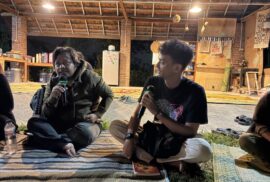
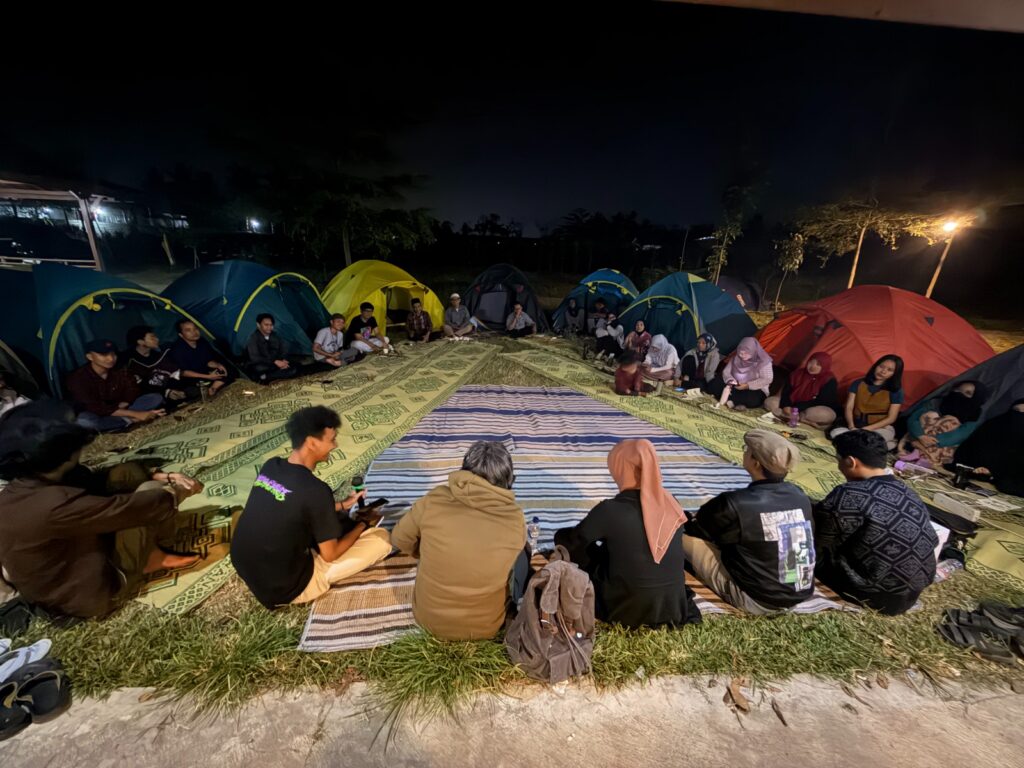
The Master’s Program in Literature at the Faculty of Cultural Sciences, Universitas Gadjah Mada (UGM), held an Inauguration Night for New Students of the Even Semester of the 2025/2026 Academic Year at Pondok As-Salam Kalimasada, Sleman Regency, Yogyakarta, on Saturday–Sunday, 14–15 February 2026. Carrying the theme “Our Literature, One Family,” the event marked the initial momentum in shaping the academic identity of master’s students.

The main session commenced on Saturday at 7:30 p.m. (WIB) and featured the Head of the Master’s Program in Literature, Prof. Dr. Aprinus Salam, M.Hum. In his remarks, he emphasized that at the master’s level, students are expected to demonstrate a higher degree of academic maturity.

“Master’s students are not only required to master course materials. They must also understand the history and philosophy of UGM as the foundation for developing academic attitudes and ethics,” he stated.

Aprinus also highlighted the importance of building a collaborative academic culture. He stressed that an open tradition of discussion, accompanied by mutual support across cohorts, is a prerequisite for fostering a healthy, productive, and sustainable scholarly community.

The event also featured a sharing session with senior students—Khotibul Umam, Marsya Kamila, and Kharisma Qurrota A’yun—who shared their experiences regarding time management, academic dynamics, and strategies for preparing research proposals as initial preparation for graduate studies.

The keynote lecture was delivered by Professor of Philosophy at UGM, Prof. Drs. M. Mukhtasar Syamsuddin, M.Hum., Ph.D., who elaborated on UGM’s Five Pillars as the philosophical foundation of the university. He explained that UGM is grounded in five principal identities: a National University, a University of Struggle, a Pancasila University, a People-Oriented University, and a Center of Culture. These pillars serve as the institutional direction as well as ethical guidelines for the entire academic community.

“UGM is not merely an educational institution, but a space for shaping the nation’s character. Therefore, its core values must be embodied in students’ daily conduct,” he remarked.

During the discussion session, Mukhtasar Syamsuddin also underscored the importance of interdisciplinary openness, particularly for literature students. According to him, the complexity of social and cultural issues demands cross-disciplinary dialogue; therefore, students should not construct rigid boundaries between literature, philosophy, and other fields of study. This perspective is highly relevant to the reflective and humanistic character of literary studies.

The main session concluded at 9:30 p.m. and was followed by performances by the 2025/2026 Even Semester cohort, including poetry readings and musical performances that strengthened solidarity among members. After the evening program, participants rested and continued the agenda the following day.

On the second day, Sunday (15/2), activities began with congregational dawn prayer, followed by a morning walk and group games designed to reinforce togetherness. The event concluded with a session for sharing hopes and a group photo before participants returned to their respective homes.

Through this inauguration night, the Master’s Program in Literature at the Faculty of Cultural Sciences, UGM, reaffirmed its commitment to postgraduate education that is oriented not only toward academic achievement but also toward the cultivation of integrity, interdisciplinary awareness, and moral responsibility in upholding the university’s core values. The event marked the beginning of the intellectual journey of 33 new students in developing critical, reflective literary studies that contribute meaningfully to society.

[Master of Arts in Literature, Rini Febriani Hauri]

UGM Student Wins First Place at Korean Culture International Poetry Contest in South Korea

News ReleaseSchoolarship Monday, 9 February 2026

Another international achievement has been secured by a student of the Faculty of Cultural Sciences. M Deni Maulana, a student of the Indonesian Language and Literature Study Program, won First Place at the Korean Culture International Poetry Contest Jeonbuk 3 held in Jeonju, South Korea, on November 28–29, 2025.

The international Korean poetry recitation competition brought together 48 participants from 16 countries, representing diverse academic and cultural backgrounds. The event was organized by the Jeonbuk Foreign Language Support Volunteer Association in collaboration with the Jeonju Jeonbuk City Government and the Department of Culture and Tourism. It aimed to introduce Korean literature to a global audience while strengthening cultural exchange through poetry.

Deni Maulana’s achievement is particularly noteworthy as it was accomplished while he was participating in a Student Exchange Double Major program at Jeonbuk National University under the Global Korean Scholarship Outstanding Student scheme. In the competition, Deni performed the Korean poem 빈방 (Empty Room) by Kim Jae-jin, a reflective work that demands emotional sensitivity and strong proficiency in the Korean language.

The competition consisted of rigorous selection and evaluation stages conducted by a panel of professional judges. Assessment criteria included accuracy of Korean pronunciation, mastery of intonation, expressive delivery, and depth of understanding of the poem’s meaning. Through an expressive yet controlled performance, Deni was considered successful in conveying the poem’s message to a cross-cultural audience.

Based on the judges’ final evaluation, First Place was awarded to M Deni Maulana from Indonesia. Second Place went to Sanya Koirala from Nepal, while Third Place was earned by Kato Minenhle from South Africa. The organizers stated that the finalists’ performances reflected a strong appreciation among the younger international generation for Korean literature.

This accomplishment represents not only a personal milestone for Deni but also highlights the active role of Indonesian students in fostering cultural dialogue at the global level. Through literature as a medium of expression, student participation in international forums such as this reinforces the values of mutual understanding, diversity, and international cooperation, which are essential to building an inclusive and sustainable future.

Source: M. Deni Maulana
[Public Relations of FIB UGM, Candra Solihin]

ICESCO Reaffirms Commitment to Advancing Language and Educational Planning

News Release Monday, 9 February 2026

Thursday, February 29, 2026 – ICESCO has reaffirmed its commitment to strengthening linguistic and educational policies by hosting an international forum titled “التخطيط اللغوي والتخطيط التربوية” (Language and Educational Planning). The event was held virtually via Zoom, drawing participants from across the globe.

The forum brought together a diverse group of academics, educators, researchers, and students from Indonesia, Morocco, Uzbekistan, and several other nations. It served as a collaborative platform to explore the nuances of language and educational strategy. During the session, keynote speaker Dr. Ahmed Al-Rahban shared profound insights into the symbiotic relationship between linguistic policy and formal education systems.

Language planning was highlighted not merely as a tool for preserving national and native languages, but as a cornerstone of sustainable educational strategies. The discussion underscored how linguistic policies directly influence curriculum development, teaching quality, and the formation of cultural identity in an increasingly globalized world. Through interactive dialogues, participants exchanged experiences and best practices tailored to the unique educational landscapes of their respective countries.

The virtual nature of the event facilitated a broad and inclusive cross-border exchange. Despite the digital format, the enthusiasm of the attendees was evident through the dynamic Q&A sessions and active discussions that took place throughout the program.

Through this initiative, ICESCO aims to spark strategic ideas and insights that contribute to the refinement of language and education policies worldwide. This forum is part of ICESCO’s ongoing efforts to bolster international cooperation in the fields of education, linguistics, and culture.

Author: Indana Zulfa Maulida

FIB Strengthens UGM’s Position as Indonesia’s Top University in THE by Subject 2026

News Release Thursday, 5 February 2026

The Faculty of Cultural Sciences at Universitas Gadjah Mada (FIB UGM) recorded a significant academic achievement by placing four disciplines at the top national rank in the World University Rankings by Subject 2026 released by Times Higher Education (THE). These four disciplines contributed to two broad subject areas that also positioned UGM as the leading university nationally, namely Social Sciences and Arts and Humanities.

Based on the rankings, UGM secured first place nationally in the Social Sciences and Arts and Humanities categories. Within these two subject areas, FIB UGM contributed four leading disciplines: anthropology, languages, literature and linguistics, history, and archaeology.

Times Higher Education is a global higher education ranking organization that has provided university performance data since 2004. Its rankings are widely used by students, academics, university leaders, governments, and industry stakeholders to assess the performance of higher education institutions worldwide.

As stated on the official Times Higher Education website, subject rankings are designed to provide a more specific picture of institutional strengths in particular fields of study. “We create university rankings to assess the performance of higher education institutions on the global stage and to provide a reference source that helps readers understand the diverse missions and achievements of universities,” Times Higher Education explained in its official statement.

The World University Rankings by Subject cover 11 broad subject areas encompassing a total of 148 academic disciplines. Although they use the same methodology as the THE World University Rankings, the weighting of indicators in the subject rankings is adjusted to reflect the characteristics of each field, ensuring a fairer and more relevant assessment.

For the Social Sciences category in 2026, the assessment includes disciplines such as communication and media studies, politics and international studies including development studies, sociology, geography, and anthropology. Meanwhile, the Arts and Humanities category covers languages, literature and linguistics, history, philosophy, theology, architecture, archaeology, as well as performing arts and design.

The achievement of these four disciplines at FIB UGM reflects the faculty’s consistent development of strong and relevant academic and humanities research in response to global social dynamics. This accomplishment also underscores the role of higher education institutions in producing knowledge, preserving cultural heritage, and strengthening cross-cultural understanding as essential foundations for sustainable and equitable development in the future. 

[Public Relations of FIB UGM, Candra Solihin]

1234…32

Video UGM

[shtmlslider name='shslider_options']
Universitas Gadjah Mada

Faculty of Cultural Sciences
Universitas Gadjah Mada
Jl. Nusantara 1, Bulaksumur Yogyakarta 55281, Indonesia
   fib@ugm.ac.id
   +62 (274) 513096
   +62 (274) 550451

Work Units

  • Office of Journal & Publishing
  • INCULS
  • Information Technology and Database
  • Language Learning Center
  • Library Unit
  • Public Relations
  • Research

Facilities

  • Computer Laboratory
  • Gamelan
  • Guest House
  • Language Library
  • Library
  • Phonetics Library
  • Self Access Unit
  • Student Internet Centre

Importan Links

  • Journal of Humaniora
  • Subscriber Journal
  • Alumni Portal
  • Career
  • Departmens News
  • UGM Streaming

Contacts

  • Academic
  • Administration
  • Dean’s Office
  • Departments / Study Programs
  • Public Relations

© 2024 Faculty of Cultural Sciences Universitas Gadjah Mada

KEBIJAKAN PRIVASI/PRIVACY POLICY

[EN] We use cookies to help our viewer get the best experience on our website. -- [ID] Kami menggunakan cookie untuk membantu pengunjung kami mendapatkan pengalaman terbaik di situs web kami.I Agree / Saya Setuju