• About UGM
  • Academic Portal
  • IT Center
  • Library
  • Research
  • Webmail
  • Informasi Publik
  • English
    • Indonesia
Universitas Gadjah Mada Faculty of Cultural Sciences
Universitas Gadjah Mada
  • Home
  • Profile
    • History
    • Vision and Mission
    • Organizational structure
    • Administration
    • Staff
    • Faculty Members
  • Academic
    • Academic Calendar
    • Undergraduate Programs
      • Bachelor of Cultural Antrophology
      • Bachelor in Archaeolagy
      • Bachelor in History
      • Bachelor in Tourism
      • Bochetor in Korean Language and Culture
      • Bachelor in Indonesian Language and Culture
      • Bachelor in English
      • Bachelor in Arabic
      • Bachelor in Japanese Language and Culture
      • Bachelor in Javanese Language, Literature and Culture
      • Bachelor in French language and literature
    • Graduate Programs
      • Master in Antrophology
      • Master in ArchaeoIogy
      • Master in History
      • Master in Linguistics
      • Master in Literature
      • Master In American Studies
      • Master in Middle Eastern Cultural Studies
    • Post-Graduate Programs / S3
      • Doctor in Antropology
      • Doctor in American Studies
      • Doctor in Humanities
    • Student Service
  • KPPM
    • Research Information
    • Scientific / Academic Publications
    • Community Service
    • International Cooperation
    • Domestic Cooperation
  • Student Organizations
    • Student Executive Council
    • Semi-Autonomous Organizations
      • KAPALASASTRA
      • Christian Student Alliance
      • LINCAK
      • Saskine
      • Catholic Student Family
      • Dian Budaya
      • Sastra Kanuragan (sasgan)
      • Family of Muslim Cultural Sciences Students (KMIB)
      • Bejo Mulyo
    • Autonomous Organizations
      • Family of Anthropology Students (KEMANT)
      • English Department Student Association
      • Tourism Students Association (HIMAPA)
      • Family of Indonesian Literature Students (KMSI)
      • West Asian Literature Student Association (IMABA)
      • Association of Korean-Language Students (HIMAHARA)
      • Family of Regional Indonesian Literatures Students (KAMASUTRA)
      • The Family Body of History Students (BKMS)
      • The French Literature Students Association (HMSP)
      • Family of Anthropology Students
      • Japanese Student Association (HIMAJE)
  • Admission
    • Student Evaluation
  • Home
  • SDGs 16: Peace Justice and Strong Institutions
  • SDGs 16: Peace Justice and Strong Institutions
  • page. 4
Arsip:

SDGs 16: Peace Justice and Strong Institutions

UGM Archaeology Talkshow with the Ministry of Marine Affairs and Fisheries Discusses Maritime Archaeology and Underwater Cultural Heritage (BMKT)

News Release Wednesday, 1 October 2025

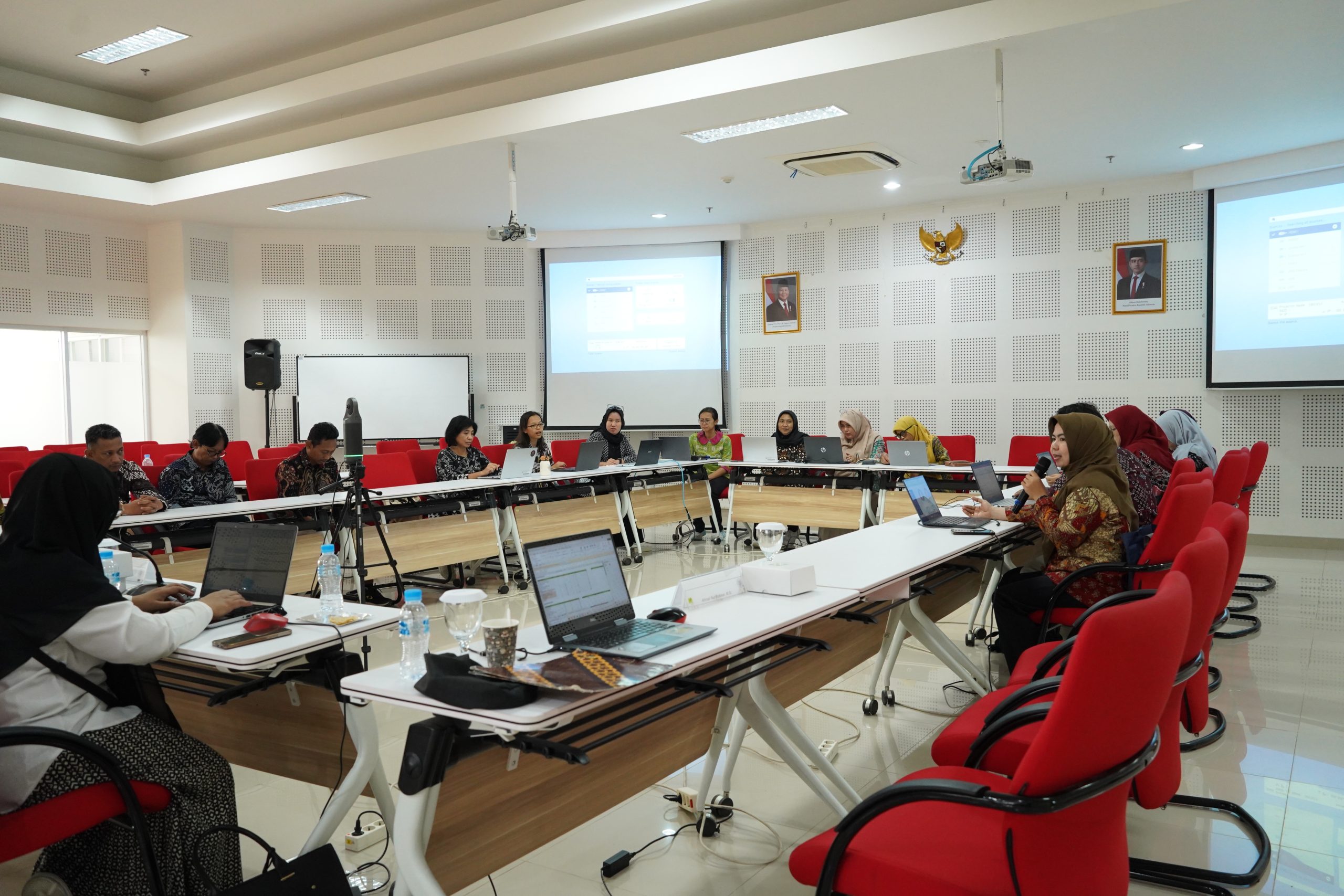
Yogyakarta, September 26, 2025 – The Archaeology Study Program, Faculty of Cultural Sciences, Universitas Gadjah Mada (FIB UGM), in collaboration with the Ministry of Marine Affairs and Fisheries (KKP), held the “UGM Archaeology Talkshow X Ministry of Marine Affairs and Fisheries.” The event took place in a hybrid format—offline at Soegondo Building, 7th floor (Room 709), and online via Zoom Meeting—featuring the overarching theme of maritime archaeology and Underwater Cultural Heritage (BMKT).

The talkshow presented three speakers from different fields. The first was Widya Nayati, M.A., Ph.D., from the Department of Archaeology UGM, who delivered a presentation titled “Ports: Centers of Commodity Exchange or Centers of Cultural Exchange?” highlighting the role of ports throughout history and their significance in cultural interactions. Next, Frista Yorhanita, S.Si., M.Si., Director of Marine Resources at the Ministry of Marine Affairs and Fisheries, discussed “BMKT: Marine Resources in Policy Perspective”, emphasizing the importance of sustainable marine resource governance. Meanwhile, from the Faculty of Law UGM, Dr. Jur. Any Andjarwati, S.H., M. Jur., presented “Legal Studies on BMKT”, addressing regulatory aspects and legal protection in the utilization of BMKT.

Following the presentations, the event continued with an interactive discussion session that allowed participants to deepen their insights on maritime archaeology, policy perspectives, and legal regulations supporting the preservation of BMKT. The talkshow concluded with a group photo session.

This activity not only served as an academic platform that brought together perspectives from archaeology, marine sciences, and law, but also underscored the importance of cross-sectoral collaboration in preserving Indonesia’s maritime heritage.

In line with the Sustainable Development Goals (SDGs), the event supported SDG 14: Life Below Water and SDG 11: Sustainable Cities and Communities, by emphasizing the preservation of maritime heritage alongside the sustainable use of marine resources. In addition, the talkshow also contributed to SDG 16: Peace, Justice, and Strong Institutions through the strengthening of transparent legal regulations that prioritize public interests.

[Public Relation of FIB UGM, Alma Syahwalani]

Interfaith Prayer at UGM: Nurturing the Hope for Peace Through Togetherness

News Release Wednesday, 1 October 2025

Yogyakarta, September 11, 2025 – Students of the Faculty of Cultural Sciences, Universitas Gadjah Mada (FIB UGM), took part in an Interfaith Prayer event held at UGM Religious Facilities, Jalan Podocarpus I, Sendowo, Sleman. Carrying the theme “Ruwat Bumi: Manunggaling Manah Kagem Rahayuning Nagari” (Purifying the Earth: Uniting Hearts for the Prosperity of the Nation), the event became a space of togetherness to pray for peace in Indonesia amidst a tense social and political climate.

The event was attended by interfaith leaders: Romo Prasetyo representing Hinduism, Reverend Risang Anggoro Elliarso representing Christianity, Romo Pasadhi Lan Pasani representing Buddhism, and Joko Purwono representing Islam. Each took turns leading the prayers in solemnity, accompanied by the symbolic lighting of candles by the participants.

The program began with opening remarks from the committee, followed by joint prayers, a discussion session (sarasehan), and a communal meal in a warm and friendly atmosphere. In addition to the UGM academic community, the event also involved local residents and representatives from the Yogyakarta Palace (Kraton).

From FIB UGM, two students—Bernadetta Rahayuning Tyas (Javanese Language, Literature, and Culture 2023) and I Putu Purnama Wisnu Aji (History 2023)—served as part of the Logistics Division, ensuring the smooth running of technical needs, from venue arrangements and sound system setup to other logistical preparations.

Bernadetta shared her positive impression of joining the event:

“It was a pleasant experience to take part in this activity, as I could interact with friends from different faiths. In response to the current tense situation, it is not only about voicing concerns through stories on social media but also through shared prayers. Our differences in faith do not prevent us from praying for and strengthening one another. My hope is that there will be no more bloodshed, and that the government will wisely use its authority by enacting policies that truly serve the people’s welfare,” she expressed.

This event stemmed from concerns over national incidents in late August 2025, when student demonstrations in Jakarta and Yogyakarta ended in violence, casualties, and damage to public facilities. The interfaith prayer gathering at UGM was initiated as an effort to unite hearts in maintaining peace, fostering solidarity, and reminding the government of its role as a servant of the people.

Aligned with the Sustainable Development Goals (SDGs), this activity reflects a commitment to SDG 16: Peace, Justice, and Strong Institutions. Through interfaith prayer, UGM’s academic community and the public demonstrate tangible efforts to strengthen peace, prevent conflict, and nurture inclusive dialogue spaces amidst diversity.

[Public Relations of FIB UGM, Alma Syahwalani]

Master of Literature Public Lecture Revealing the Invisible in English Pop Literature

SDGs 10: Reduced InequalitiesSDGs 16: Peace justice and strong institutionsSDGs 4: Quality EducationSDGs 5: Gender equality Thursday, 18 September 2025

Yogyakarta, 15/9/2025 – The Master’s Program in Literature, Faculty of Cultural Sciences, Universitas Gadjah Mada, held a public lecture titled “Make the Invisible Visible Again: Race, Gender, and Language in Popular Literature.” The event took place on Monday (15/9) at the Soegondo Auditorium, FIB UGM, featuring Dr. Ashika Prajnya Paramita, S.S., M.A. as the keynote speaker.

The lecture was attended by students and literature enthusiasts eager to explore how ideology operates within popular texts. With an engaging and communicative style, Dr. Ashika emphasized that literature is never a neutral narrative but always carries underlying ideologies, often hidden in plain sight.

Opening her talk with the questions “What’s visible?” and “What’s invisible?”, Dr. Ashika illustrated how everyday objects and cultural products that appear neutral are in fact loaded with ideological meaning. Examples ranged from the skin-tone bias in band-aids, beauty discourses in advertisements, to the privileging of certain languages over others. Quoting Antonio Gramsci, she reminded the audience that ideology operates through common sense—perceptions that society accepts as natural. “Everyday ideology is always around us. If we are not aware, we need to check,” she explained.

Dr. Ashika further examined how race and gender are represented in popular works, particularly in superhero films. She discussed debates surrounding Sam Wilson as Captain America and the assumption that Barack Obama’s presidency signaled the end of racism in the United States, while in reality, racial tensions persisted.

On gender, she highlighted how physical strength in superhero films is typically coded as masculine, while female characters are often given invisible or passive powers. Citing Judith Butler (1993), she reminded participants that “Gender is a kind of imitation for which there is no original,” stressing that masculinity and femininity are constructed and constantly shifting.

Bringing the discussion closer to home, Dr. Ashika invited the audience to critically read representations in the Indonesian film Satria Dewa: Gatotkaca (2022). She pointed out how white-skinned characters were often depicted as bosses, while darker-skinned characters appeared as security guards or lower-class workers. Language use also reinforced hierarchies, with Javanese accents assigned to “village folk,” while the protagonist spoke Jakarta urban slang.

“Literature is never just stories. Ideologies hide in plain sight. Reading critically is seeing power,” she concluded, marking the end of her main lecture.

The Q&A session was lively, with questions ranging from the representation of women in comics, ideological bias in reading literature, to the masculine standards in modern superheroes. Dr. Ashika underscored that ideological progress is never linear but rather messy and full of resistance. She also reminded the audience of the importance of readers’ critical awareness in examining their own biases.

This public lecture demonstrated that the study of popular literature goes beyond entertainment, offering critical reflections on power, representation, and ideology in everyday life. Through this event, the Master’s Program in Literature at UGM reaffirmed its commitment to providing an academic space that engages with contemporary issues while equipping students with critical perspectives in reading texts and culture.

Author: Marsya Kamila / Public Relations, Master’s Program in Literature

Exploring Ethnographic Archives: Workshop at FIB UGM with Marco Del Gallo

SDGs 11: Sustainable cities and communitiesSDGs 16: Peace justice and strong institutionsSDGs 4: Quality Education Wednesday, 10 September 2025

Yogyakarta, 28/8/2025 – The Faculty of Cultural Sciences at Universitas Gadjah Mada (FIB UGM) hosted a thought-provoking workshop titled “Archives of Ethnographic Encounters”  at the Multimedia Room, Margono Building. The event ran from 10 a.m. to 2 p.m. and featured Marco Del Gallo, a PhD candidate in Anthropology at the London School of Economics.

In this workshop, Marco shared his experience working with the personal photographic archive of the late Haswinar Arifin, an anthropology student and photographer who documented life in North Jakarta from the 1970s to the early 2000s. Through this material, Marco invited participants to reconsider the meaning of archives—not merely as collections of documents, but as living traces that hold stories, emotions, and social dynamics.

The discussion raised fundamental questions about the very definition of an archive. Are people, through the simple act of storing photographs, notes, or recordings, in fact producing historical documents for the future? If so, how should researchers engage with these materials—both their own and those created by others? This line of thought opened up a broader understanding of archives, extending beyond official documents to include photographs, sound recordings, videos, and creative writings that capture everyday experiences.

Marco also emphasized the ethical responsibility that comes with working on archives collected by others. Personal materials that enter the academic space bring their own dilemmas: how can intimacy be preserved when private archives are circulated publicly? Where do we draw the line between the researcher’s role, the rights of ownership, and the community represented in these archives? Such questions demand sensitivity to ethics, care, and fairness in collaborative ethnographic work.

Marco’s reflections stem from his doctoral research based on 26 months of fieldwork among fishing communities in North Jakarta. His work contributes to broader discussions on urbanism, capitalism, environmental transformation, collective politics, and labor. His presence at FIB UGM demonstrated how ethnographic experiences in the field can be woven into larger theoretical reflections through archival engagement.

The workshop ultimately became more than an academic gathering; it served as a reminder that archives are not static collections but living spaces of memory. They allow us to see how everyday life becomes history, and how preserving archives also means preserving collective memory for the future.

Healthy Relationships as the Main Topic in the Inaugural Lecture for New Undergraduate Students at FIB UGM

News ReleaseSDGs 10: Reduced InequalitiesSDGs 16: Peace justice and strong institutionsSDGs 3: Good health and well-beingSDGs 4: Quality EducationSDGs 5: Gender equality Tuesday, 19 August 2025

Yogyakarta, 19/8/2025 – The Faculty of Cultural Sciences at Gadjah Mada University (UGM) held a special inaugural lecture for the new undergraduate students of the 2025 academic year. The event featured the keynote speaker, Prof. Dr. Wening Udasmoro, S.S., M.Hum., DEA., who presented on the theme “Healthy Relationships, Strong Minds, Enthusiastic Learning.”

In her presentation, Prof. Wening introduced her book titled “Healthy Relationships,” which is based on the principles of positive thinking, collaboration, and inclusivity. She emphasized that collaboration is the key to mutual progress, while inclusivity means involving all parties without exception, including those from economically disadvantaged backgrounds, remote areas, and friends with disabilities. She asserted that healthy relationships should not only be applied among students but also between lecturers and in external collaborations such as community service and internships.

Furthermore, Prof. Wening highlighted that diverse backgrounds could lead to conflicts or violence, making awareness of justice, equality, and democracy crucial for creating a safe and comfortable academic environment. She elaborated on various forms of violence that need to be watched out for, ranging from verbal, psychological, sexual, symbolic, to intellectual violence.

During this occasion, Prof. Wening reminded the new FIB students that their selection from a large pool of applicants is a significant achievement, but it must be accompanied by humility and respect for others. She emphasized that UGM should no longer be known for the term “killer lecturers,” but rather as a University that upholds healthy relationships.

The event was interactive, featuring a question-and-answer session between the new students and Prof. Wening. The discussion was lively, with questions coming from various majors within FIB. The critical inquiries from students enriched the collective understanding of the importance of building healthy relationships in both academic and social life.

The inaugural lecture concluded with a collective call to build awareness in creating security, comfort, and a positive learning spirit. It is hoped that all new FIB UGM students can embark on their academic journey with strong minds, healthy relationships, and a sustainable enthusiasm for learning.

In line with the Sustainable Development Goals (SDGs), this event underscores the importance of access to education and the establishment of basic living standards. By fostering an inclusive academic environment, UGM aims to ensure that all students, regardless of their backgrounds, have access to quality education and the necessary support to thrive.

Prof. Wening’s emphasis on collaboration and inclusivity resonates with the SDG goal of ensuring access to clean water and sanitation, as well as the need for development assistance in underprivileged areas. By addressing these issues, UGM is not only contributing to the academic growth of its students but also to the broader societal development.

As the new academic year begins, the Faculty of Cultural Sciences at UGM is committed to nurturing a culture of respect, understanding, and collaboration among its students and faculty. This commitment is essential for creating a conducive learning environment that promotes personal and academic growth.

123456…29

Video UGM

[shtmlslider name='shslider_options']
Universitas Gadjah Mada

Faculty of Cultural Sciences
Universitas Gadjah Mada
Jl. Nusantara 1, Bulaksumur Yogyakarta 55281, Indonesia
   fib@ugm.ac.id
   +62 (274) 513096
   +62 (274) 550451

Work Units

  • Office of Journal & Publishing
  • INCULS
  • Information Technology and Database
  • Language Learning Center
  • Library Unit
  • Public Relations
  • Research

Facilities

  • Computer Laboratory
  • Gamelan
  • Guest House
  • Language Library
  • Library
  • Phonetics Library
  • Self Access Unit
  • Student Internet Centre

Importan Links

  • Journal of Humaniora
  • Subscriber Journal
  • Alumni Portal
  • Career
  • Departmens News
  • UGM Streaming

Contacts

  • Academic
  • Administration
  • Dean’s Office
  • Departments / Study Programs
  • Public Relations

© 2024 Faculty of Cultural Sciences Universitas Gadjah Mada

KEBIJAKAN PRIVASI/PRIVACY POLICY

[EN] We use cookies to help our viewer get the best experience on our website. -- [ID] Kami menggunakan cookie untuk membantu pengunjung kami mendapatkan pengalaman terbaik di situs web kami.I Agree / Saya Setuju