• About UGM
  • Academic Portal
  • IT Center
  • Library
  • Research
  • Webmail
  • Informasi Publik
  • English
    • Indonesia
Universitas Gadjah Mada Faculty of Cultural Sciences
Universitas Gadjah Mada
  • Home
  • Profile
    • History
    • Vision and Mission
    • Organizational structure
    • Administration
    • Staff
    • Faculty Members
  • Academic
    • Academic Calendar
    • Undergraduate Programs
      • Bachelor of Cultural Antrophology
      • Bachelor in Archaeolagy
      • Bachelor in History
      • Bachelor in Tourism
      • Bochetor in Korean Language and Culture
      • Bachelor in Indonesian Language and Culture
      • Bachelor in English
      • Bachelor in Arabic
      • Bachelor in Japanese Language and Culture
      • Bachelor in Javanese Language, Literature and Culture
      • Bachelor in French language and literature
    • Graduate Programs
      • Master in Antrophology
      • Master in ArchaeoIogy
      • Master in History
      • Master in Linguistics
      • Master in Literature
      • Master In American Studies
      • Master in Middle Eastern Cultural Studies
    • Post-Graduate Programs / S3
      • Doctor in Antropology
      • Doctor in American Studies
      • Doctor in Humanities
    • Student Service
  • KPPM
    • Research Information
    • Scientific / Academic Publications
    • Community Service
    • International Cooperation
    • Domestic Cooperation
  • Student Organizations
    • Student Executive Council
    • Semi-Autonomous Organizations
      • KAPALASASTRA
      • Christian Student Alliance
      • LINCAK
      • Saskine
      • Catholic Student Family
      • Dian Budaya
      • Sastra Kanuragan (sasgan)
      • Family of Muslim Cultural Sciences Students (KMIB)
      • Bejo Mulyo
    • Autonomous Organizations
      • Family of Anthropology Students (KEMANT)
      • English Department Student Association
      • Tourism Students Association (HIMAPA)
      • Family of Indonesian Literature Students (KMSI)
      • West Asian Literature Student Association (IMABA)
      • Association of Korean-Language Students (HIMAHARA)
      • Family of Regional Indonesian Literatures Students (KAMASUTRA)
      • The Family Body of History Students (BKMS)
      • The French Literature Students Association (HMSP)
      • Family of Anthropology Students
      • Japanese Student Association (HIMAJE)
  • Admission
    • Student Evaluation
  • Home
  • SDGs 16: Peace Justice and Strong Institutions
  • SDGs 16: Peace Justice and Strong Institutions
  • page. 3
Arsip:

SDGs 16: Peace Justice and Strong Institutions

Awakening Sensitivity: The Role of Social Scientists Amid an Increasingly Blurred Reality

News Release Tuesday, 14 April 2026

Amid the noise of everyday life, many things seem to unfold as if by default: traffic jams, crowded markets, and casual conversations in digital spaces. Yet for a social scientist, these are far from ordinary occurrences. They are living “texts,” rich with meaning and waiting to be interpreted more deeply.

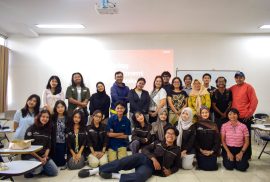
During a Social and Cultural Essay Writing Workshop held on Wednesday (April 8, 2026) by the Master’s Program in Literature at the Faculty of Cultural Sciences, Universitas Gadjah Mada, Prof. Dr. Agus Suwignyo, M.A. emphasized that the work of social scientists does not operate within fixed spatial boundaries. Their “laboratory” is life itself—a fluid, dynamic, and often unpredictable space.

According to Agus, social scientists inhabit a broad and ever-changing field of inquiry, as their object of study is human interaction across various dimensions of life. “All social phenomena—from traffic congestion to everyday habits—can serve as material for analysis that reflects social structures and public policy,” he explained.

He stressed that sensitivity is the key foundation of a social scientist’s work. With such sensitivity, seemingly mundane phenomena can be transformed into meaningful and critical analysis.

In the discussion session, participants highlighted the condition of social critics in Indonesia, who are perceived to face pressure from the state. Agus acknowledged that the situation is neither entirely hopeful nor entirely bleak. He argued that criticism will persist as long as social awareness remains alive within society.

“What matters is the courage to question reality while remaining grounded in one’s conscience,” he said.

He further asserted that subjectivity in social analysis is inevitable, but it must be anchored in rationality and a commitment to marginalized groups. This approach is essential for upholding social justice amid the complexities of power relations.

The discussion also addressed the shifting nature of social criticism—from what was once organic to forms that are increasingly complex due to interventions by various actors, including the state. In this context, social scientists are required to be more discerning in distinguishing between authentic, organic public voices and those that are manipulative.

Ultimately, being a social scientist is not only about analytical ability, but also about maintaining integrity. As reality becomes increasingly blurred, perhaps the only reliable compass is conscience—constantly reminding us that the primary task of social science is not only to understand humanity, but also to stand up for it.

[Master of Arts in Literature, Khotibul Umam]

The Song “Ondel-Ondel” and “Rumah Kita” Enlivens FIB UGM’s 80th Anniversary Senate Meeting

HEADLINESNews Release Monday, 30 March 2026

Yogyakarta, March 3, 2025 – A choir composed of students, lecturers, and administrative staff enlivened the Open Senate Meeting celebrating the 80th Anniversary of the Faculty of Cultural Sciences Universitas Gadjah Mada by performing two popular Indonesian songs, “Ondel-Ondel” and “Rumah Kita.” The performance created an atmosphere of togetherness while celebrating cultural diversity through specially prepared musical arrangements.

The performance was arranged and conducted by Muhammad Rasyid Ridho, who also served as the trainer and conductor. The choir was supported by several accompanying musicians, including Riski Puluhulawa on piano, Emilia Widya Pranasari on viola, Sekar Arrum Sri Kinanthi on violin, and Fairuz Aufa Anza on kendang.

The first song performed was “Ondel-Ondel,” popularized by Benyamin Sueb in 1971. The song is widely recognized as a lively representation of Betawi culture that developed amid the dynamic life of Jakarta. Through its simple yet energetic lyrics, the song portrays ondel-ondel as a cultural icon in the form of giant puppets that were once believed to symbolize protection for the community.

Over time, ondel-ondel has become not only part of tradition but also a symbol of identity and cultural pride for the Betawi people. The song also reminds audiences of the importance of appreciating cultural heritage and preserving local wisdom amid ongoing societal change.

The choir then performed “Rumah Kita,” a song popularized by Achmad Albar together with the legendary band God Bless. Widely known since the late 1980s, the song conveys a heartfelt message about the meaning of home as a space for togetherness.

In the context of the FIB UGM anniversary celebration, the song was interpreted as a symbol of unity among members of the academic community. The campus environment, particularly at Universitas Gadjah Mada, is seen as a shared home where people from diverse backgrounds come together to learn, create, and build their future.

This choir performance, involving members from different groups within the faculty, added vibrancy to the series of events commemorating the 80th anniversary of the Faculty of Cultural Sciences. Through music and performing arts, messages about the importance of unity, respect for diversity, and the preservation of local culture were warmly conveyed to the audience. These values form an essential foundation for fostering an inclusive and sustainable academic community.

[Public Relations of FIB UGM, Candra Solihin]

FIB UGM Honors Outstanding Lecturers and Staff on 80th Anniversary

HEADLINESNews Release Friday, 6 March 2026

Yogyakarta, March 3, 2026 – The Faculty of Cultural Sciences (FIB) Universitas Gadjah Mada presented awards to five outstanding members of its academic community during the 80th Anniversary (Dies Natalis) celebration at the FIB UGM Poerbatjaraka Auditorium. This initiative serves as an institutional appreciation for the dedication and achievements of both lecturers and educational staff in advancing science, education, and community development.

In the outstanding lecturer category, FIB UGM presented an award to Dr. Elan Ardri Lazuardi, S.Ant., M.A., from the Anthropology Study Program. Dr. Lazuardi possesses specialized expertise in medical anthropology and public health services. Throughout his career, he has received various prestigious academic recognitions. These include the High-Quality Scientific Article Award in Health and Medicine from the Ministry of Research and Technology in 2020, as well as the Dean’s Award for Outstanding PhD Theses from the University of New South Wales in the same year. Previously, he earned the Early Career Research Award for the best oral presentation category from the Australian Society for HIV, Viral Hepatitis, and Sexual Health Medicine in 2018.

The next recipient of the outstanding lecturer award is Dr. Raden Rucitarahma Ristiawan, S.Par., M.Sc., from the Tourism Study Program. This tourism and cultural landscape expert earned a doctorate in Cultural Geography from Wageningen University, the Netherlands, in 2024. His dissertation discusses the commodification of landscapes in the development of geopark tourism in Indonesia. Dr. Ristiawan has consistently researched community-based tourism practices from his undergraduate studies at UGM to his master’s program at the University of Glasgow, United Kingdom, in 2017.

The third lecturer to receive a similar award is Wildan Sena Utama, S.S., M.A., Ph.D., from the History Study Program. This historian focuses on modern international and transnational relations between Indonesia and the Afro-Asian world in the 20th century. Dr. Utama completed his doctoral education at the University of Bristol in 2023. His dissertation highlights the role of Indonesian figures in the Afro-Asian movement during the 1950s and 1960s to demonstrate the importance of South-South solidarity in the history of national independence, anti-imperialist movements, and efforts to build a more decolonial world order.

From the educational staff ranks, FIB UGM appreciated the performance of two staff members who are considered to have made major contributions to the smooth operation of the faculty. Dyah Ayu Retnowati, A.Md., received the outstanding award in the Academic and Student Affairs division. Meanwhile, Tri Iswanto received an award in the General Affairs division for his crucial dedication in supporting the smooth running of administrative services and activities within the faculty.

This appreciation is expected to boost the motivation of the entire academic community to continue innovating and providing the best service in the future. This step aligns with the higher education institution’s commitment to continuously building a high-quality, inclusive, and resilient learning ecosystem to produce human resources capable of bringing a positive impact to the advancement of civilization.

[Public Relations of FIB UGM, Candra Solihin]

Prof. Setiadi Discusses Humanitarian and Justice Reflections on Refugee Issues at Masjid Mardliyah Study Session Yogyakarta, Februar

News Release Friday, 27 February 2026

Yogyakarta, February 25, 2026 – The Dean of the Faculty of Cultural Sciences (FIB) at Universitas Gadjah Mada (UGM), Prof. Setiadi, S.Sos., M.Si., delivered a lecture at the Masjid Mardliyah UGM study session under the theme “Humanitarian and Justice Reflections on Refugee Issues.” . The discussion invited participants to examine forced migration not only from a policy perspective, but also through the lens of humanity and social justice.

In his presentation, Prof. Setiadi emphasized that the phenomenon of forced migration cannot be separated from social structures and power relations that often generate marginalization. He noted that when refugee issues arise, public discourse frequently shifts toward debates over who has the authority to address the matter, rather than focusing on substantive solutions and the protection of refugees themselves.

According to him, refugees are individuals striving to rebuild their life histories after being disconnected from their jobs, education, aspirations, and communities. Forced displacement can occur at both micro and macro levels due to conflict, discrimination, political pressure, or natural disasters. In this context, “fleeing” is fundamentally an act of survival in order to secure safety and continuity of life.

Conceptually, the term refugee in the international framework refers to the definition established by the United Nations High Commissioner for Refugees (UNHCR), which describes a refugee as a person who is outside their country of nationality due to a well-founded fear of persecution based on race, religion, nationality, membership in a particular social group, or political opinion, and who is unable or unwilling to return to that country. The definition also extends to individuals forced to leave their habitual residence due to external aggression, occupation, foreign domination, or events seriously disturbing public order. In addition, there are internally displaced persons who are compelled to relocate but remain within their country’s borders.

Prof. Setiadi further encouraged participants to view refugee issues as part of the broader historical dynamics of human life. Refugees are not merely statistical figures; they are individuals with dreams, hopes, and the right to rebuild a dignified future. The greatest challenges are not only administrative in nature, but also social barriers such as stigma, discrimination, and limited access to education and employment.

The study session also underscored the relevance of refugee issues to the Sustainable Development Goals (SDGs). Efforts to ensure protection and justice for refugees align with the global commitment to reducing inequalities (SDG 10) and promoting peace, justice, and strong institutions (SDG 16). Guaranteeing refugees’ access to quality education and decent livelihoods also supports the goals of ending poverty (SDG 1) and ensuring quality education (SDG 4), while international cooperation in addressing refugee crises reflects the importance of global partnerships (SDG 17).

Through this forum, the Dean of FIB UGM reaffirmed that reflecting on refugee issues is a moral imperative to build a more just and compassionate society, placing humanity at the core of policy and social action.

[Public Relation of FIB UGM, Alma Syahwalani]

FIB UGM Hosts Southeast Asia Oral History Workshop to Amplify Grassroots Perspectives

News Release Friday, 20 February 2026

The Faculty of Cultural Sciences at Universitas Gadjah Mada hosted the Workshop on Oral History in Southeast Asia, organized by SEASREP Foundation in collaboration with Sejarah Lisan on 9–11 February 2026 at the FIB UGM Multimedia Room. The program was designed for postgraduate students and early-career researchers in Southeast Asia to strengthen their methodological, ethical, and conceptual capacities in oral history research, amid ongoing challenges in historical production often shaped by political interests and archival limitations.

The workshop was organized in response to the growing need to document life histories, testimonies, and field narratives that are frequently absent from official records. Across Southeast Asia, state violence, the silencing of archives and media, and the revision of historical narratives have significantly influenced how history is produced and disseminated.

In recent years, the region has witnessed efforts to reassess past violence in Indonesia, the rise of ethno-nationalist interpretations in Malaysia, the dominance of single-hero narratives in Singapore, and disputes over heritage sites along the Thailand–Cambodia border. These developments place marginalized voices at risk of being erased from collective memory.

Oral history and social history offer approaches to address these gaps. However, their practice entails methodological and ethical challenges, particularly when research touches upon politically and legally sensitive issues, trauma, and unequal access to information.

The workshop was designed to address the limited formal training in oral history available in the region. Many young researchers learn the method through practice without systematic preparation in interview design, interpretation, ethics, preservation, and public engagement. Through context-based training focused on Southeast Asia, participants were encouraged to understand oral history not merely as a technical tool, but as a critical concept and practice for reexamining how history is produced.

The three-day program adopted a phased approach. The first day explored the values and methodologies of oral history, including the development of interview guidelines and preparation for fieldwork challenges. The second day focused on interpretation, transcription, preservation, and publication, complemented by panel discussions and an oral history performance session to explore alternative narrative forms. The third day highlighted participants’ research presentations and discussions on ethical issues, power relations, and researchers’ responsibilities within complex socio-political environments.

Participants were expected to have an existing or planned research project based on oral history interviews. While there were no disciplinary restrictions, participants were required to actively share their experiences and engage in collective discussions.

Through a combination of lectures, panels, workshops, performances, and student presentations, the organizers emphasized active participation and community building. The workshop aimed to establish a network of oral history researchers in Southeast Asia and Japan committed to collaboration and non-exploitative research practices.

By the end of the program, participants were expected to understand the full stages of oral history research and its potential challenges, be able to design context-sensitive and ethically grounded interviews, and gain a deeper awareness of power relations and researcher positionality in fieldwork. They were also encouraged to view oral history as a means of critically engaging with dominant state narratives and expanding historical representation.

The workshop underscores the importance of strengthening academic capacity that upholds diversity of voices and social responsibility. Building a collaborative and reflective research community represents a strategic step toward ensuring that history is written not only by those in power, but also by those who have long remained at the margins of dominant narratives.

[Public Relations of FIB UGM, Candra Solihin]

12345…34

Video UGM

[shtmlslider name='shslider_options']
Universitas Gadjah Mada

Faculty of Cultural Sciences
Universitas Gadjah Mada
Jl. Nusantara 1, Bulaksumur Yogyakarta 55281, Indonesia
   fib@ugm.ac.id
   +62 (274) 513096
   +62 (274) 550451

Work Units

  • Office of Journal & Publishing
  • INCULS
  • Information Technology and Database
  • Language Learning Center
  • Library Unit
  • Public Relations
  • Research

Facilities

  • Computer Laboratory
  • Gamelan
  • Guest House
  • Language Library
  • Library
  • Phonetics Library
  • Self Access Unit
  • Student Internet Centre

Importan Links

  • Journal of Humaniora
  • Subscriber Journal
  • Alumni Portal
  • Career
  • Departmens News
  • UGM Streaming

Contacts

  • Academic
  • Administration
  • Dean’s Office
  • Departments / Study Programs
  • Public Relations

© 2024 Faculty of Cultural Sciences Universitas Gadjah Mada

KEBIJAKAN PRIVASI/PRIVACY POLICY

[EN] We use cookies to help our viewer get the best experience on our website. -- [ID] Kami menggunakan cookie untuk membantu pengunjung kami mendapatkan pengalaman terbaik di situs web kami.I Agree / Saya Setuju