• About UGM
  • Academic Portal
  • IT Center
  • Library
  • Research
  • Webmail
  • Informasi Publik
  • English
    • Indonesia
Universitas Gadjah Mada Faculty of Cultural Sciences
Universitas Gadjah Mada
  • Home
  • Profile
    • History
    • Vision and Mission
    • Organizational structure
    • Administration
    • Staff
    • Faculty Members
  • Academic
    • Academic Calendar
    • Undergraduate Programs
      • Bachelor of Cultural Antrophology
      • Bachelor in Archaeolagy
      • Bachelor in History
      • Bachelor in Tourism
      • Bochetor in Korean Language and Culture
      • Bachelor in Indonesian Language and Culture
      • Bachelor in English
      • Bachelor in Arabic
      • Bachelor in Japanese Language and Culture
      • Bachelor in Javanese Language, Literature and Culture
      • Bachelor in French language and literature
    • Graduate Programs
      • Master in Antrophology
      • Master in ArchaeoIogy
      • Master in History
      • Master in Linguistics
      • Master in Literature
      • Master In American Studies
      • Master in Middle Eastern Cultural Studies
    • Post-Graduate Programs / S3
      • Doctor in Antropology
      • Doctor in American Studies
      • Doctor in Humanities
    • Student Service
  • KPPM
    • Research Information
    • Scientific / Academic Publications
    • Community Service
    • International Cooperation
    • Domestic Cooperation
  • Student Organizations
    • Student Executive Council
    • Semi-Autonomous Organizations
      • KAPALASASTRA
      • Christian Student Alliance
      • LINCAK
      • Saskine
      • Catholic Student Family
      • Dian Budaya
      • Sastra Kanuragan (sasgan)
      • Family of Muslim Cultural Sciences Students (KMIB)
      • Bejo Mulyo
    • Autonomous Organizations
      • Family of Anthropology Students (KEMANT)
      • English Department Student Association
      • Tourism Students Association (HIMAPA)
      • Family of Indonesian Literature Students (KMSI)
      • West Asian Literature Student Association (IMABA)
      • Association of Korean-Language Students (HIMAHARA)
      • Family of Regional Indonesian Literatures Students (KAMASUTRA)
      • The Family Body of History Students (BKMS)
      • The French Literature Students Association (HMSP)
      • Family of Anthropology Students
      • Japanese Student Association (HIMAJE)
  • Admission
    • Student Evaluation
  • Home
  • SDGs 12: Responsible Consumption and Production
  • SDGs 12: Responsible Consumption and Production
  • page. 19
Arsip:

SDGs 12: Responsible Consumption and Production

LITERARY EXPERT LECTURE “NAMAKU ALAM, DUNIA DAN PENCIPTAANNYA”

News ReleaseSDG 4 (Quality Education)SDGs 10: Reduced InequalitiesSDGs 11: Sustainable cities and communitiesSDGs 12: Responsible consumption and productionSDGs 16: Peace justice and strong institutionsSDGs 5: Gender equalitySDGs 8: Decent work and economic growthSDGs 9: Industry innovation and infrastructure Tuesday, 4 June 2024

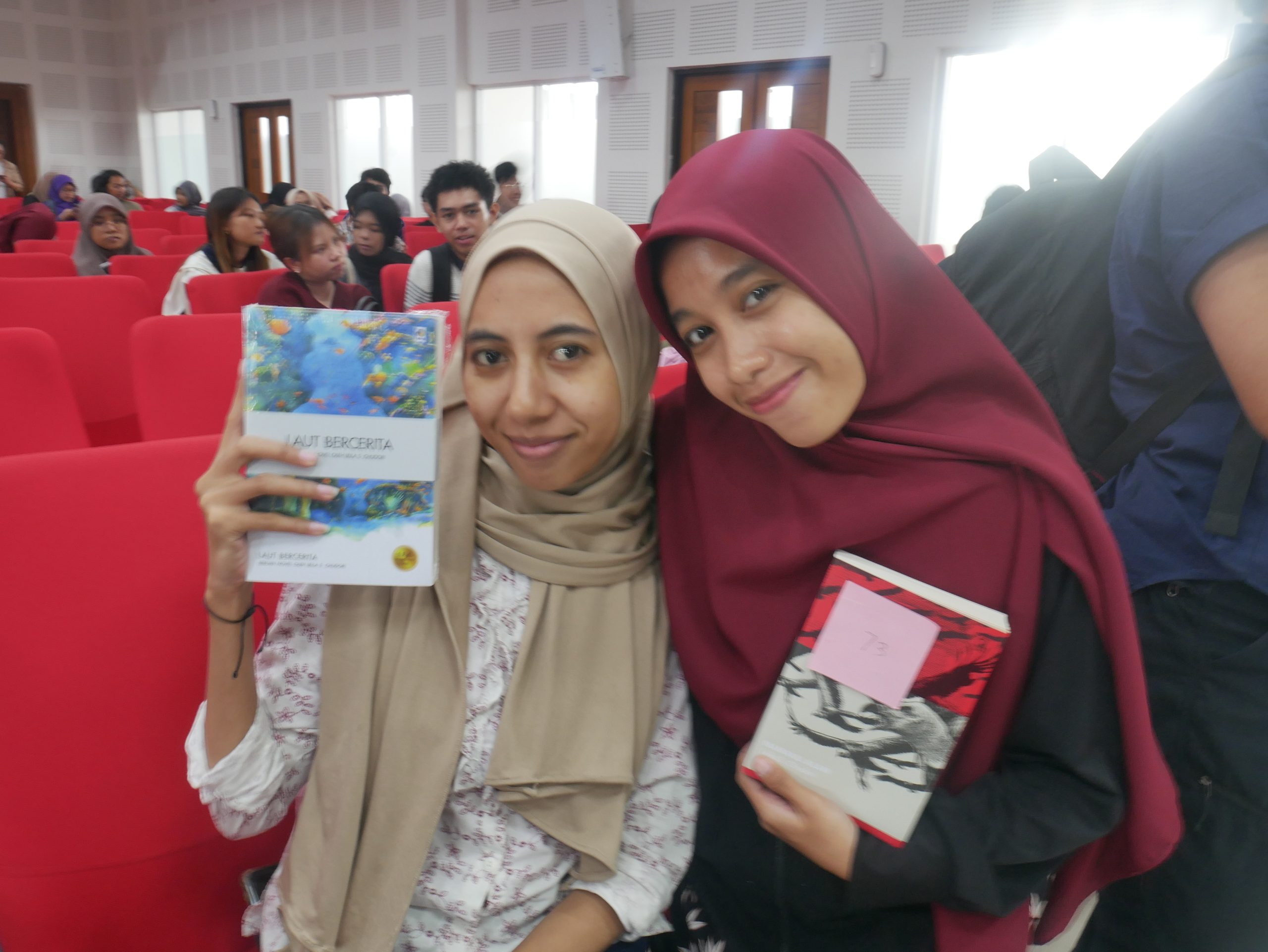
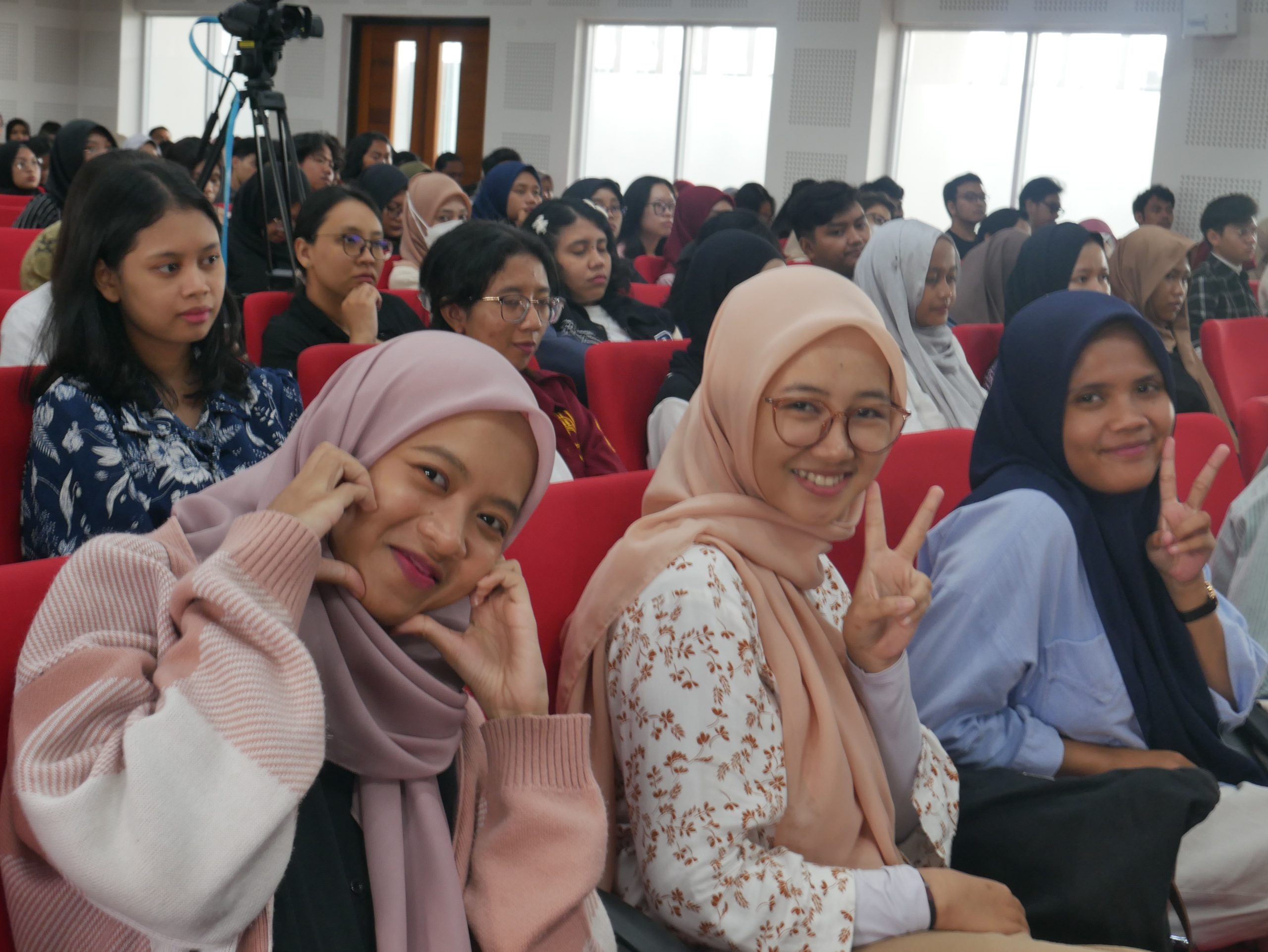
The Literary Expert Lecture was held on Monday, May 13, 2024 in the Auditorium Room of Soegondo Building 7th Floor and Zoom Meeting at 13.00-16.00 WIB. The three speakers that afternoon were Leila S. Chudori, T.A. Prapancha Hary, Dr. Sudibyo, M.Hum. Leila S. Chudori is a retired Tempo journalist and Indonesian writer who has written numerous short stories, novels, and television drama screenplays. Her books that have been published by KPG Publishers are Malam Terakhir, Pulang, Nadira, Laut Bercerita in softcover and hardcover versions, and most recently, Namaku Alam. Dr. Sudibyo, M.Hum. is an extraordinary lecturer at the History Study Program, Javanese Literature and Culture Study Program, as well as S2 and S3 Literature Study Programs at the Faculty of Cultural Sciences, Universitas Gadjah Mada. T.A. Prapancha Hary or familiarly called Mas Tatung, is a clinical psychologist and lecturer at a private university in Yogyakarta, as well as Abdi Dalem Kraton Yogyakarta. He was born and raised in Yogyakarta, pursuing his undergraduate and postgraduate education at the Faculty of Psychology, Gadjah Mada University.

Leila S. Chudori, as the first speaker, explained about her journey in writing the novel “Namaku Alam”. Since the beginning of writing Namaku Alam, Leila planned a storyline that contained a search, identity, and the process of finding answers. This begins with the characterization of the protagonist, the research process for novel writing, the initial design of the basic framework of the story to be written, the formation of the main character and important characters, the finalization of the basic framework of the story, and the concoction of several themes raised in the novel. Leila tries to show that in dark situations there is always hope. For example, Leila tries to show how people who are repressed in the past can still tell their stories through various ways and mediums.

Through the presentation of Dr. Sudibyo, M.Hum., he explained that in the novel “Namaku Alam” there are issues such as the entanglement of photographic memory, dystopia, and traumatic memory. The images of utopian successes in the novel, such as freedom from bullying, lead to failure, which in this case becomes dystopia. In “Namaku Alam”, traumatic memories are attempted to be negotiated, however, in this first volume, the negotiation is still unsuccessful, the nightmares experienced in the novel can be read as evidence of this failure. Alam’s strong photographic memory, in this case, makes her unable to escape her past traumatic experiences.

T.A. Prapancha Hary, seeks to answer whether Alam’s trauma can disappear or linger? In “Namaku Alam”, the first volume of the novel, according to Prapancha, the character Alam still retains his trauma. There is always a conflict between Alam and himself. Alam, in this situation, has an oedipus complex. Alam’s behavior, which always tries to protect the people around him, shows how Alam tries to be a “father” figure as a protector described in the oedipus complex phenomenon. Expressive expressions in the form of cursing by Alam in this novel actually show how his disappointment cannot be defeated which is then collected in the form of cursing. The hopes that are still kept by Alam in a difficult situation prove that this character has the talent of good emotional processing.

Soft Skill Training for Undergraduate Graduation Candidates of the Faculty of Cultural Sciences, Universitas Gadjah Mada, Period III Academic Year 2023/2024

News ReleaseSDG 4 (Quality Education)SDGs 10: Reduced InequalitiesSDGs 12: Responsible consumption and productionSDGs 16: Peace justice and strong institutionsSDGs 1: No povertySDGs 2: Zero HungerSDGs 3: Good health and well-beingSDGs 8: Decent work and economic growthSDGs 9: Industry innovation and infrastructure Tuesday, 4 June 2024

Praise to God Almighty, for His blessings and grace we gathered on Tuesday, May 21, 2024, at the Soegondo Auditorium on the 7th floor of the Faculty of Cultural Sciences UGM in good health and happiness, in the context of “Soft Skill Training for Undergraduate Graduation Candidates of the Faculty of Cultural Sciences” Universitas Gadjah Mada, Period III of the 2023/2024 Academic Year. Ferdeo, was the student in charge of guiding the softskill training that afternoon. To start the event, the audience listened to remarks delivered by the Head of the Community Service and Alumni Unit, Dr. Sajarwa, M.Hum. Next, there was also an announcement from the Coordinator of Academic and Student Affairs, Mr. Yusuf Sulistiyo, S.Pi., M.M. Next was the announcement made by the Career Development Center Team, which on this occasion was represented by Mr. Dama Qoriy Arjanto, S.S., M.Sc.

Moving on to the next agenda, the core agenda on that day, namely the debriefing session for undergraduate graduation candidates of the Faculty of Cultural Sciences, Universitas Gadjah Mada, Period III of the 2023/2024 Academic Year. In this session, the event was guided by a moderator, namely Dr. phil. Ramada Akmal, S.S., M.A., who is a lecturer at the Indonesian Language and Literature Study Program. The speaker who filled the session was Mr. Ari Bagus Panuntun, S.S., M.A., who is the owner and founder of the contemporary bookstore “Warung Sastra”, who is also a lecturer in the French Language and Literature Study Program. The session went smoothly and it is hoped that the knowledge that has been shared can be a blessing and useful for all prospective graduates. Amen. Before closing, the event was continued with socialization delivered by the team from Teleperformance.

Students of Arabic Literature in Gadjah Mada University took part in the Independent Study Program at Infinite Learning Batam (Web Development)

HEADLINESNews Release Friday, 16 February 2024

SDGs 4: Quality education | SDGs 8: Decent work and economic growth | SDGs 12: Responsible consumption and production | SDGs 16: Peace, justice and strong institutions | SDGs 17: Partnerships for the goals

27th of January 2024 – The “Infinite Learning – Web Development” program was designed to facilitate access to the quality education by providing learning experiences that reflect the actual situation in the industry. By encouraging participants to form challenge groups, this program not only aimed to produce developers with technical skills, but also encouraged collaboration and active participation in various industrial projects. Through the application of design thinking and SCRUM project management concepts, this program implicitly promoted responsible consumption and production practices, while forming individuals with adaptative, collaborative and communicative skills.

Intensive mentoring by two types of mentors, individual mentors and group mentors, played an important role in creating an inclusive and sustainable learning environment. With a focus on building individual skills, individual mentors provided guidance on participants’ performance, skills, self-motivation, and learning strategies. Meanwhile, the group mentor focused on group performance, research guidance, challenge project management, and application development. These two types of mentors worked together to build a strong partnership between mentor and participant, creating an environment that supports participants in facing the complex challenges of the future in the web development industry.

Puspa Argabima Klero: Successfully Overcoming Environmental Challenges and Becoming a Waste Processing Educational Tourism Destination by Students and Lecturer of Faculty of Cultural Sciences, UGM

HEADLINESNews Release Friday, 26 January 2024

Klero Hamlet, located in Sumberharjo Village, Prambanan Subdistrict, Sleman Regency, Special Region of Yogyakarta, is a hamlet with high potential in socio-cultural aspects and tourist attractions. However, they encounter a significant environmental challenge; the closing of the Piyungan Landfill as the final disposal site for waste from the Prambanan community. Consequently, unmanaged waste has become an important issue that needs to be solved.

Through a collaboration with various community elements, UGM students and UGM lecturer, Dr. Wulan Tri Astuti developed a waste processing center adopting the zero waste concept, named Puspa Argabima Klero. It was established on August 10, 2022, with the goal of taking the responsibility for consumption and production (SDGs 12 Responsible Consumption and Production). This community is led by Mas Eliyadi, one of the local heroes in Klero Hamlet. Through various training and collaborations, Puspa Argabima Klero has successfully managed waste from 60 households in the village through waste sorting, utilization of organic waste through maggot cultivation, and the sale of organic waste in collaboration with a third party, Rapel.

In the early days of Puspa Argabima Klero, the community faced various challenges. For example, the maggot cultivation cage, which was initially built to cultivate maggot larvae, was hit by rain, causing huge damage such as flood. This led the community to initiate the construction of non-permanent structures using bamboo and tiles. Not only that, the building collapsed due to a heavy storm. However, these challenges did not stop their spirit, as they lent some money to build a 3×6 meters semi-permanent building to continue the maggot cultivation.

Through this program that is supported by BPDLH (Environmental Management Fund Agency), Puspa Argabima Klero expanded the building to 6×6 meters, obtained 6 maggot cultivation racks which are facilitated with dry and wet shredding machines, and acquired an oven to produce the flagship product named Pupuk Kasgot by Puspa Argabima Klero, and dried maggot product named Dr. Magro. Through these facilities, Puspa Argabima Klero successfully generated income through the sale of inorganic waste, fresh maggot products, Pupuk Kasgot, and Dr. Magro products which has allowed them to repay the loans and start to generate income for the 15 members of Puspa Argabima Klero which includes 8 housewives. Puspa Argabima Klero also managed 4-5 tons of waste every month, with 5-9 quintals of organic waste is used as maggot feed.

Puspa Argabima Klero has gained attention from the surrounding villages for successfully being the example of integrated waste management. They turn organic and inorganic waste into products that are valuable for the community. Their achievements were acknowledged by the Prambanan Subdistrict on their first anniversary on August 10, 2023.

Starting from this, Puspa Argabima Klero has evolved to be an educational waste processing tourism destination which utilizes maggot cultivation. With support from BPDLH, UGM students, and alumni, they integrate products such as maggots and Pupuk Kasgot with fisheries, farm, and agriculture through a mini-farm. This mini-farm is constructed to provide feed for hens, fish, and plant fertilizer, while also served as an interactive educational facility for visitors.

Furthermore, through ongoing programs, Puspa Argabima Klero expanded the building and created 18 cubic meters of an education space. This innovation also involved floor casting to facilitate waste sorting activities. Through a collaboration with tourism stakeholders, Puspa Argabima Klero has  successfully attracted more than 650 visitors, including junior high school students and village government staffs in Kendal Regency, who are interested in learning about waste management. This additional income has positive impacts on both the development and sustainability of their program.

Photo 1: Maggot Cultivation Racks

Photo 2: Mini-Farm

Food Diversification by the Community Service Team of the Anthropology Department, Faculty of Cultural Sciences, Universitas Gadjah Mada, in Karangpatihan Village, Ponorogo

HEADLINESNews Release Tuesday, 16 January 2024

The current threat of a food crisis is being responded to by various parties. The development of alternative food such as the processing of konjac is being attempted by the Community Service Team of the Department of Anthropology. The team consists of Dr. Atik Triratnawati, M.A., Prof. Dr. Bambang Hudayana, M.A., Muhammad Zamzam Fauzanafi, M.A., along with two students named Eka Yuniati and Ferdy Azmal Fakhrani. This community service program is a continuation of the previous year’s program with the same theme, “Development of Konjac-based Culinary in Karangpatihan Village, Ponorogo Regency, East Java.” The continuation of the program took place in August 2023 in four hamlets: Krajan, Selodono, Dungus, and Jurugan.

Konjac, or in Indonesia is called porang, was chosen as an alternative food because it is a local Indonesian commodity which has great potential in the international market. For example, what has been done in Madiun, one kilogram of konjac can cost up to Rp. 14,000. One hectare of fertile land can produce around 80 tons of tubers for one harvest within two years. One of the most popular products made by konjac is shirataki rice, which has a high selling price. Konjac grows a lot in Ponorogo and there is one of the programs initiated by the Ponorogo Regional Government which aims to provide stimulants in the form of seeds and supporting the existence of a konjac farmer association. Other than that, Perhutani, which is a State-Owned Enterprise in the Form of Public Company which focuses on the task and authority to manage state forest resources, also provides access to farmers to plant konjac around perennial crops. Based on this fact, the community service team conducted training assistance in processing konjac-based food. In addition, a cooking competition was also held to motivate the locals to be more enthusiastic in creating innovations related to this food recipe. Then the activity was closed with a focus group discussion (FGD) to listen to the aspirations of women who joined the family welfare movement (PKK)  in the four hamlets, Karangpatihan Village, Pulung District, Ponorogo Regency. This program needs to be done because, until now, the society perceives that konjac can cause an itchy feeling. By implementing this community service program, the community will develop a new perspective that konjac has many benefits. Apart from that, we really hope that the dissemination of knowledge and skills can make konjac-based food into an alternative food in Ponorogo.


Image 1.1: Dawet porang: one of the konjac-based culinary that has been taught to the members of PKK in Karangpatihan Village, Pulung, Ponorogo


Image 1.2: Various kinds of konjac-based culinary made by one of the groups who participated in the competition.


Image 1.3: The winners of the development of a konjac-based culinary competition.


1…17181920

Video UGM

[shtmlslider name='shslider_options']
Universitas Gadjah Mada

Faculty of Cultural Sciences
Universitas Gadjah Mada
Jl. Nusantara 1, Bulaksumur Yogyakarta 55281, Indonesia
   fib@ugm.ac.id
   +62 (274) 513096
   +62 (274) 550451

Work Units

  • Office of Journal & Publishing
  • INCULS
  • Information Technology and Database
  • Language Learning Center
  • Library Unit
  • Public Relations
  • Research

Facilities

  • Computer Laboratory
  • Gamelan
  • Guest House
  • Language Library
  • Library
  • Phonetics Library
  • Self Access Unit
  • Student Internet Centre

Importan Links

  • Journal of Humaniora
  • Subscriber Journal
  • Alumni Portal
  • Career
  • Departmens News
  • UGM Streaming

Contacts

  • Academic
  • Administration
  • Dean’s Office
  • Departments / Study Programs
  • Public Relations

© 2024 Faculty of Cultural Sciences Universitas Gadjah Mada

KEBIJAKAN PRIVASI/PRIVACY POLICY

[EN] We use cookies to help our viewer get the best experience on our website. -- [ID] Kami menggunakan cookie untuk membantu pengunjung kami mendapatkan pengalaman terbaik di situs web kami.I Agree / Saya Setuju