• About UGM
  • Academic Portal
  • IT Center
  • Library
  • Research
  • Webmail
  • Informasi Publik
  • English
    • Indonesia
Universitas Gadjah Mada Faculty of Cultural Sciences
Universitas Gadjah Mada
  • Home
  • Profile
    • History
    • Vision and Mission
    • Organizational structure
    • Administration
    • Staff
    • Faculty Members
  • Academic
    • Academic Calendar
    • Undergraduate Programs
      • Bachelor of Cultural Antrophology
      • Bachelor in Archaeolagy
      • Bachelor in History
      • Bachelor in Tourism
      • Bochetor in Korean Language and Culture
      • Bachelor in Indonesian Language and Culture
      • Bachelor in English
      • Bachelor in Arabic
      • Bachelor in Japanese Language and Culture
      • Bachelor in Javanese Language, Literature and Culture
      • Bachelor in French language and literature
    • Graduate Programs
      • Master in Antrophology
      • Master in ArchaeoIogy
      • Master in History
      • Master in Linguistics
      • Master in Literature
      • Master In American Studies
      • Master in Middle Eastern Cultural Studies
    • Post-Graduate Programs / S3
      • Doctor in Antropology
      • Doctor in American Studies
      • Doctor in Humanities
    • Student Service
  • KPPM
    • Research Information
    • Scientific / Academic Publications
    • Community Service
    • International Cooperation
    • Domestic Cooperation
  • Student Organizations
    • Student Executive Council
    • Semi-Autonomous Organizations
      • KAPALASASTRA
      • Christian Student Alliance
      • LINCAK
      • Saskine
      • Catholic Student Family
      • Dian Budaya
      • Sastra Kanuragan (sasgan)
      • Family of Muslim Cultural Sciences Students (KMIB)
      • Bejo Mulyo
    • Autonomous Organizations
      • Family of Anthropology Students (KEMANT)
      • English Department Student Association
      • Tourism Students Association (HIMAPA)
      • Family of Indonesian Literature Students (KMSI)
      • West Asian Literature Student Association (IMABA)
      • Association of Korean-Language Students (HIMAHARA)
      • Family of Regional Indonesian Literatures Students (KAMASUTRA)
      • The Family Body of History Students (BKMS)
      • The French Literature Students Association (HMSP)
      • Family of Anthropology Students
      • Japanese Student Association (HIMAJE)
  • Admission
    • Student Evaluation
  • Home
  • Master of Linguistics
  • Master of Linguistics
  • page. 3
Arsip:

Master of Linguistics

Linguistics Student’s Content Goes Viral on Social Media

News ReleaseSDGs 12: Responsible consumption and productionSDGs 16: Peace justice and strong institutionsSDGs 17: Partnerships for the GoalsSDGs 8: Decent work and economic growthSDGs 9: Industry innovation and infrastructure Wednesday, 26 June 2024

Social media is an online platform where users can share content, communicate with other users, and participate in community activities. Some examples include Facebook, Instagram, TikTok, X, and LinkedIn. There were 139 million active social media users in Indonesia in January 2024. This number is equivalent to 49.9% of the population in the country. Not only personal use, but a number of institutions also use social media to introduce their institutions more widely to many people, one of which is the Faculty of Humanities, Universitas Gadjah Mada, the Faculty has several social media accounts such as Instagram, Tiktok, and Facebook. They often share their activities on these platforms and reap various responses from other users.

Recently, social media was shocked by Tiktok FIB UGM content about students of the Master of Linguistics study program who were presenting presentations in their respective regional languages. This was considered unique by netizens and received a positive response. They think that this is interesting and can preserve local languages. Until now, the content has been shared everywhere such as on Tiktok, Instagram, and X by well-known accounts such as indozone, undercover.id, fyifact, and many more. Many praised the skills of each presenter and did not forget the psycholinguistics course lecturer who had taken the initiative to give this assignment. To see the video and want to follow other daily activities, follow our social media accounts at fib.ugm!

Linguistics Students from Faculty of Cultural Sciences UGM Must Speak Regional Language during Presentation

HEADLINESNews ReleaseSDGs 10: Reduced InequalitiesSDGs 16: Peace justice and strong institutionsSDGs 17: Partnerships for the GoalsSDGs 4: Quality Education Saturday, 15 June 2024

Linguistics study program is one of the master level study programs at the Faculty of Cultural Sciences, Universitas Gadjah Mada. The vision of the study program is to become a linguistics study program with superior quality, national insight, active and responsive to language problems and linguistic development, and able to become a reference study program in the Asia Pacific region in 2025. To achieve this vision, one of the missions carried out by the study program is to educate linguistics graduates with a master’s degree who are able to apply the linguistic knowledge they have obtained to solve various social problems and are able to dialogue and partner with foreign scholars in an effort to establish mutually beneficial intercultural cooperation. This is evidenced by the requirement for students to use their respective regional languages when presenting in Psycholinguistics courses.

Psycholinguistics is a field that studies how humans create and use language. Psycholinguistic theory views language as a means of conveying information, focusing on the view that language is the result of human habits. In essence, psycholinguistics seeks to explain how language structures are formed, used and understood in the process of communication. From this focus, a psycholinguistics lecturer at the Faculty of Cultural Sciences, Universitas Gadjah Mada, Drs. Tatang Hariri, M.A., Ph.D., took the initiative to utilize the condition where his students come from various regions to introduce their respective native languages. This aims to be a direct example of how different languages occur and so that local languages are preserved and not lost.

Spring Semester: Mid-Term Examination

News ReleaseSDGs 4: Quality Education Wednesday, 12 June 2024

Seven week of lectures have passed and the students have to take their mid-term exam. The university had determined the mid-term exam period on the 1st–26th of April 2024 where the lecturers have the authority to organize the exam. The Master of Linguistics students batch 2023 shared their experience taking this examination.

“I am taking seven classes and I have to submit three papers for this mid-term exam,” said Tata and Ilham, Master of Linguistics students who take Social Linguistics as their field of interest. From the Descriptive Linguistics group, Damai said that she had to submit several papers and present her research. Similar to other students, Wanda, who chose Translation as her field of interest, said that she had to submit papers reviewing some journals and discussing a particular topic, write a thesis proposal, and take a practical exam.

The students expressed that the preparation for the exam was challenging. Gathering ideas, topics, and literature to construct the papers was tough and laborious but still enjoyable. “I was clueless about the things that I had to write but having a fun discussion with my friends helped me a lot to find enlightenment in making my masterpieces,” Ilham declared proudly.

“It is my second mid-term examination and I got the experience (from the previous semester) that made me more prepared. But still, it was stressful since I was the one who was a deadliner” said Damai while giggling.

In composing the papers, the students have several strategies such as making their own deadline for collecting the data and writing every part of the papers. Despite all the intricacy, according to Tata and Damai, this mid-term exam period would be another experience since they will join a field trip for Anthropological Linguistics and Dialectology where they need to collect the data by interviewing and observing a particular group of people as part of the mid-term examination.

The mid-term exam is finally over. The students hope that they will get good marks. “It’s not only about the good marks but I hope I can comprehend all the material and the things that I read and learned well. It is more important than only having a good grade without knowing the essence and mastering the lesson,” Ilham ended.

The Working Meeting of KALINGGA 2024

News ReleaseSDGs 17: Partnerships for the Goals Wednesday, 12 June 2024

To support the innovation and accommodate the aspirations of Master of Linguistics students in the Faculty of Cultural Sciences UGM, KALINGGA (Keluarga Mahasiswa Linguistik Gadjah Mada) has created several work programs for the next 1 year. The event was opened by Dr. Sailal Arimi advised KALINGGA to become a forum that could be useful for developing UGM Linguistics and have an impact on the general public. Chairperson of KALINGGA 2024 Yuliana Kristianti also said several things, one of which was that KALINGGA could be a place to channel various abilities and develop the portfolio of each individual member of KALINGGA 2024.

The first presentation was from the ‘Minat dan Bakat’ division which presented various activities to facilitate students channelling their hobbies and talents in the fields of arts and sports. Furthermore, the PSDM (Human Resources Development) division presented its work program to strengthen relations between Master of Linguistics students in various classes. There is also a Social and Community Action division which explains various social activities of Master of Linguistics students which can be useful for the general public. Then, the LITBANG (Research and Development) division conveyed programs related to Linguistics, one of which was making books. Followed by the MEDINFO (Media and Information) division which explained programs related to delivering various innovations in reporting activities on the timeline through the KALINGGA mascot named Lingga.

The next presentation was from the ADHUMJAR (Advocacy, Public Relations and Networking) division which delivered programs related to communication between students at the Master of Linguistics UGM and outside the Master of Linguistics UGM, one of the programs was creating a Masters of Linguistics Student Association throughout Indonesia. The presentation was closed by the BPH who said that KALINGGA members could work together to build a Masters in Linguistics at UGM together.

Through the working meeting activities, each division conveys its own work program so that the implementation objectives are correct, so that activities within the Master of Linguistics UGM can run effectively, and have an impact on the general public.

Students Gathering and the KALINGGA Handover Ceremony 2024

News ReleaseSDGs 17: Partnerships for the Goals Wednesday, 12 June 2024

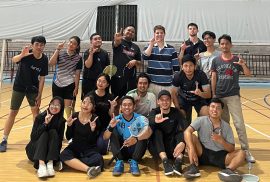
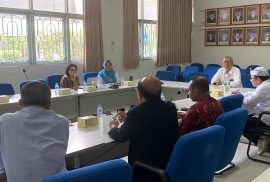
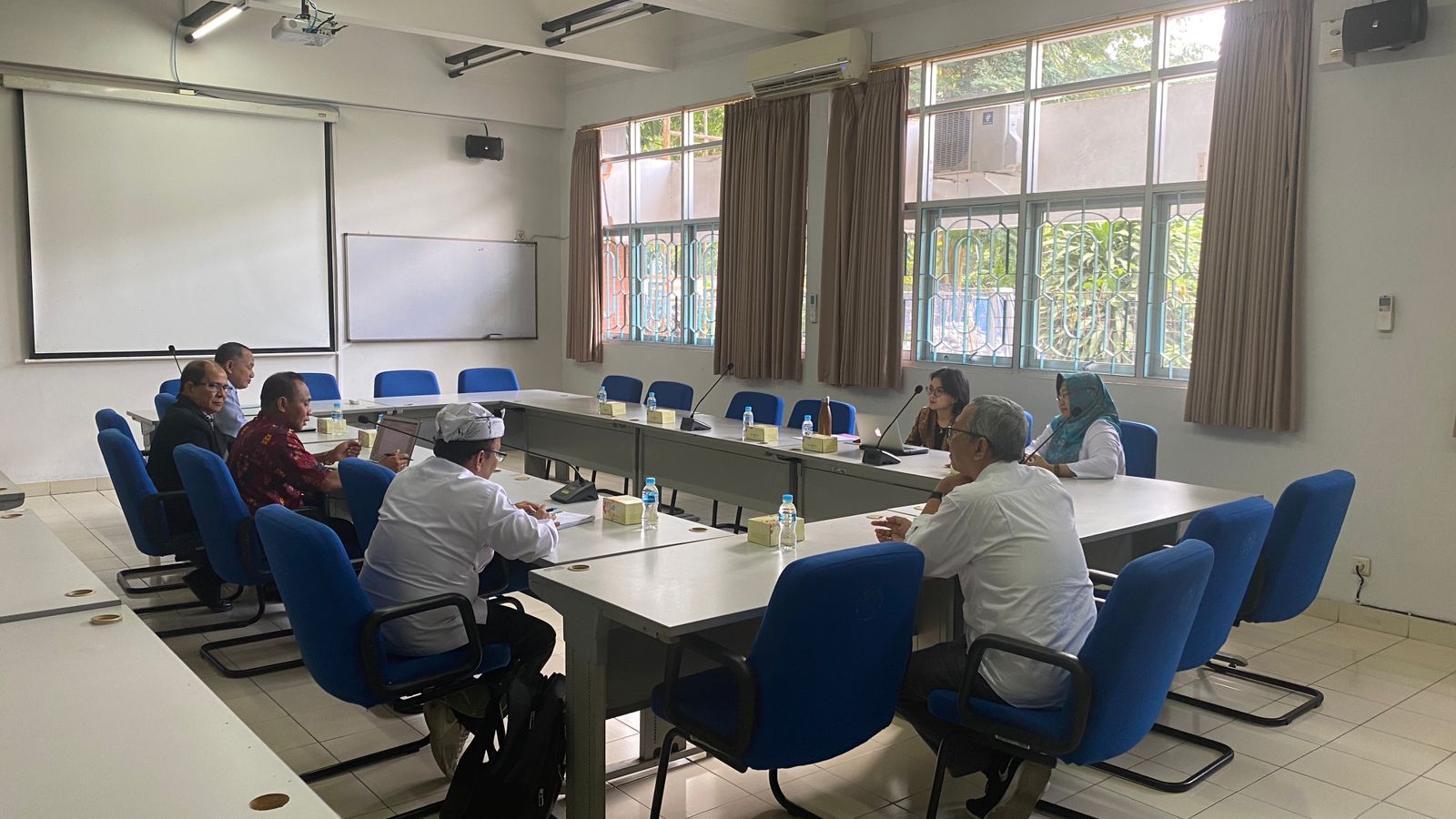
KALINGA, Dr. Suhandano, Dr. Sailal Arimi, and Drs. Tatang Hariri along with Master of Linguistics students across generations, carried out a ‘Students Gathering’ as well as the ‘The KALINGGA Handover Ceremony 2024’. In this activity, various discussions related to academic activity in the Master of Linguistics UGM took place actively, such as transparency of student assessments and holding a prayer room in the Soegondo building so that lectures took place more efficiently. On this occasion, Dr. Suhandano also said that there would be a new application related to assessment, namely ‘Sioba’. Furthermore, final semester assignments also need to provide options other than articles and there is also a need for thesis research mentoring by lecturers. It is hoped that through this activity students will be more motivated to publish journals and be fluent in compiling their theses so they can complete lectures on time.

The system of the Sustainable Development Goals (SDGs) embraced in September 2015 by the UN, the worldwide improvement motivation for the primary time alludes to culture. The benefits of keeping up and progressing culture are accomplished through socially educated and viable execution of advancement objectives. Thus, discussion forums between lecturers and students can be a good culture to support and improve the quality of the learning environment.

In this activity, the stewardship of KALINGGA for the next 1 year was also officially appointed by Dr. Suhandano, witnessed by the previous year’s KALINGGA Management and students from across generations who were present. In the next 1 year, KALINGGA is expected to become a forum that can accommodate the aspirations of Master of Linguistics students, support the growth of student achievement and innovation, including creating useful activities in the field of Linguistics and society.

1234

Video UGM

[shtmlslider name='shslider_options']
Universitas Gadjah Mada

Faculty of Cultural Sciences
Universitas Gadjah Mada
Jl. Nusantara 1, Bulaksumur Yogyakarta 55281, Indonesia
   fib@ugm.ac.id
   +62 (274) 513096
   +62 (274) 550451

Work Units

  • Office of Journal & Publishing
  • INCULS
  • Information Technology and Database
  • Language Learning Center
  • Library Unit
  • Public Relations
  • Research

Facilities

  • Computer Laboratory
  • Gamelan
  • Guest House
  • Language Library
  • Library
  • Phonetics Library
  • Self Access Unit
  • Student Internet Centre

Importan Links

  • Journal of Humaniora
  • Subscriber Journal
  • Alumni Portal
  • Career
  • Departmens News
  • UGM Streaming

Contacts

  • Academic
  • Administration
  • Dean’s Office
  • Departments / Study Programs
  • Public Relations

© 2024 Faculty of Cultural Sciences Universitas Gadjah Mada

KEBIJAKAN PRIVASI/PRIVACY POLICY

[EN] We use cookies to help our viewer get the best experience on our website. -- [ID] Kami menggunakan cookie untuk membantu pengunjung kami mendapatkan pengalaman terbaik di situs web kami.I Agree / Saya Setuju