• About UGM
  • Academic Portal
  • IT Center
  • Library
  • Research
  • Webmail
  • Informasi Publik
  • English
    • Indonesia
Universitas Gadjah Mada Faculty of Cultural Sciences
Universitas Gadjah Mada
  • Home
  • Profile
    • History
    • Vision and Mission
    • Organizational structure
    • Administration
    • Staff
    • Faculty Members
  • Academic
    • Academic Calendar
    • Undergraduate Programs
      • Bachelor of Cultural Antrophology
      • Bachelor in Archaeolagy
      • Bachelor in History
      • Bachelor in Tourism
      • Bochetor in Korean Language and Culture
      • Bachelor in Indonesian Language and Culture
      • Bachelor in English
      • Bachelor in Arabic
      • Bachelor in Japanese Language and Culture
      • Bachelor in Javanese Language, Literature and Culture
      • Bachelor in French language and literature
    • Graduate Programs
      • Master in Antrophology
      • Master in ArchaeoIogy
      • Master in History
      • Master in Linguistics
      • Master in Literature
      • Master In American Studies
      • Master in Middle Eastern Cultural Studies
    • Post-Graduate Programs / S3
      • Doctor in Antropology
      • Doctor in American Studies
      • Doctor in Humanities
    • Student Service
  • KPPM
    • Research Information
    • Scientific / Academic Publications
    • Community Service
    • International Cooperation
    • Domestic Cooperation
  • Student Organizations
    • Student Executive Council
    • Semi-Autonomous Organizations
      • KAPALASASTRA
      • Christian Student Alliance
      • LINCAK
      • Saskine
      • Catholic Student Family
      • Dian Budaya
      • Sastra Kanuragan (sasgan)
      • Family of Muslim Cultural Sciences Students (KMIB)
      • Bejo Mulyo
    • Autonomous Organizations
      • Family of Anthropology Students (KEMANT)
      • English Department Student Association
      • Tourism Students Association (HIMAPA)
      • Family of Indonesian Literature Students (KMSI)
      • West Asian Literature Student Association (IMABA)
      • Association of Korean-Language Students (HIMAHARA)
      • Family of Regional Indonesian Literatures Students (KAMASUTRA)
      • The Family Body of History Students (BKMS)
      • The French Literature Students Association (HMSP)
      • Family of Anthropology Students
      • Japanese Student Association (HIMAJE)
  • Admission
    • Student Evaluation
  • Home
  • Faculty of Cultural Sciences
  • Faculty of Cultural Sciences
  • page. 20
Arsip:

Faculty of Cultural Sciences

Welcoming new students of Linguistics FIB UGM 2024

HEADLINESNews ReleaseSDGs 11: Sustainable cities and communitiesSDGs 16: Peace justice and strong institutionsSDGs 3: Good health and well-being Monday, 12 August 2024

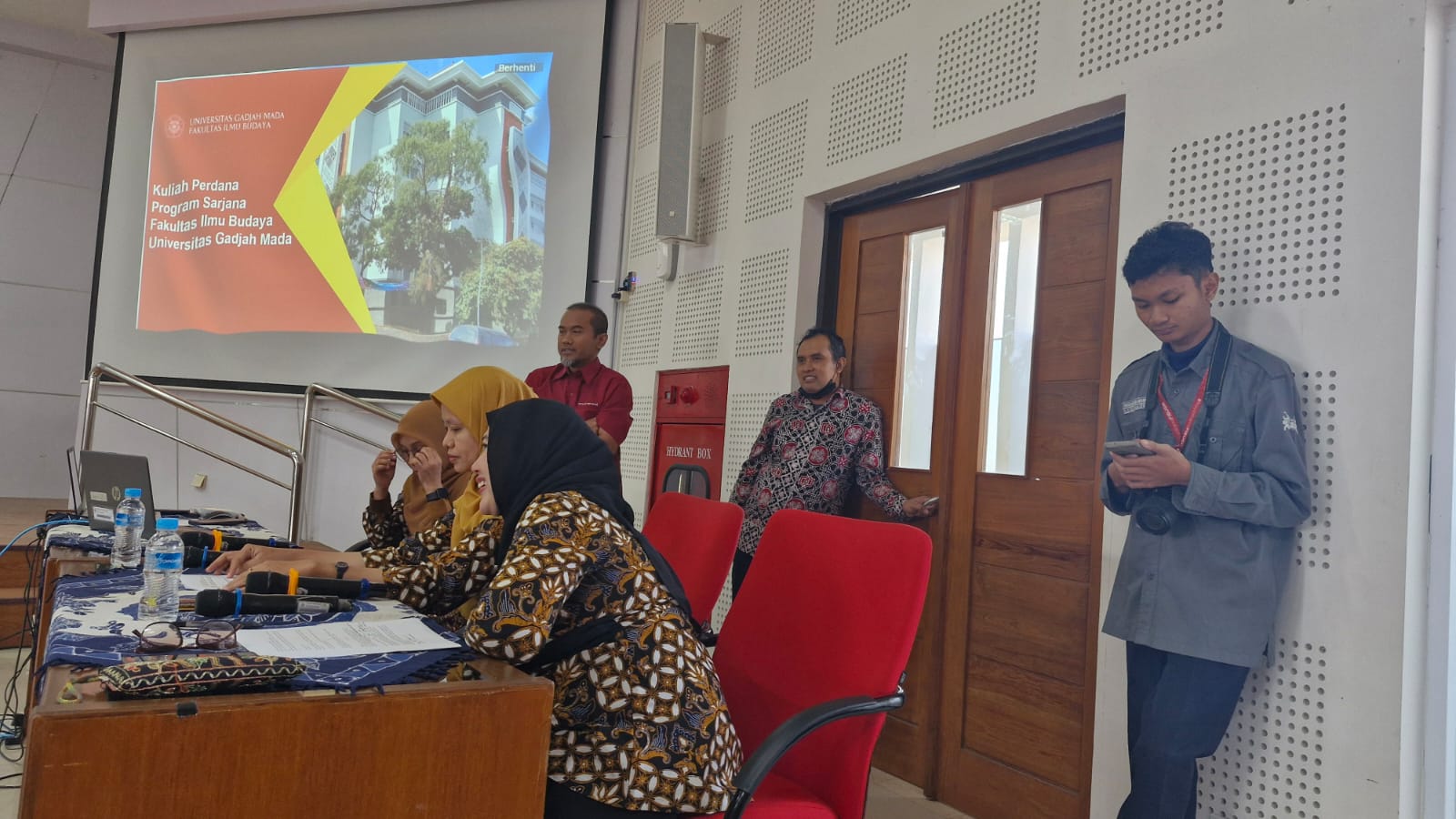
On Sunday, August 11, 2024, the Welcoming event for Linguistics 2024 students was successfully held at the Auditorium of the Faculty of Cultural Sciences, Universitas Gadjah Mada. The activity began with a warm welcome from the Head of HMJ Linguistics, Yuliana, who welcomed the new students. Furthermore, participants were introduced to the profile of KALINGGA (Keluarga Linguistik Gadjah Mada), a linguistics master graduate student association.

The event continued with the election of the new class president, followed by an ice breaking session involving a Kahoot game with questions about the material that had been presented previously. During this session, participants were also divided into groups based on their specialization concentration, namely descriptive, translation, or social linguistics.At the end of the event, participants conveyed their impressions and messages before taking a group photo to conclude the activity. The whole event went smoothly and successfully, marking the beginning of a promising journey for the new Linguistics 2024 students.

Participation of Faculty of Cultural Sciences in the Women’s Volleyball Match of the 69th Anniversary of FEB UGM

HEADLINESNews ReleaseSDGs 10: Reduced InequalitiesSDGs 11: Sustainable cities and communitiesSDGs 16: Peace justice and strong institutionsSDGs 17: Partnerships for the GoalsSDGs 3: Good health and well-being Friday, 9 August 2024

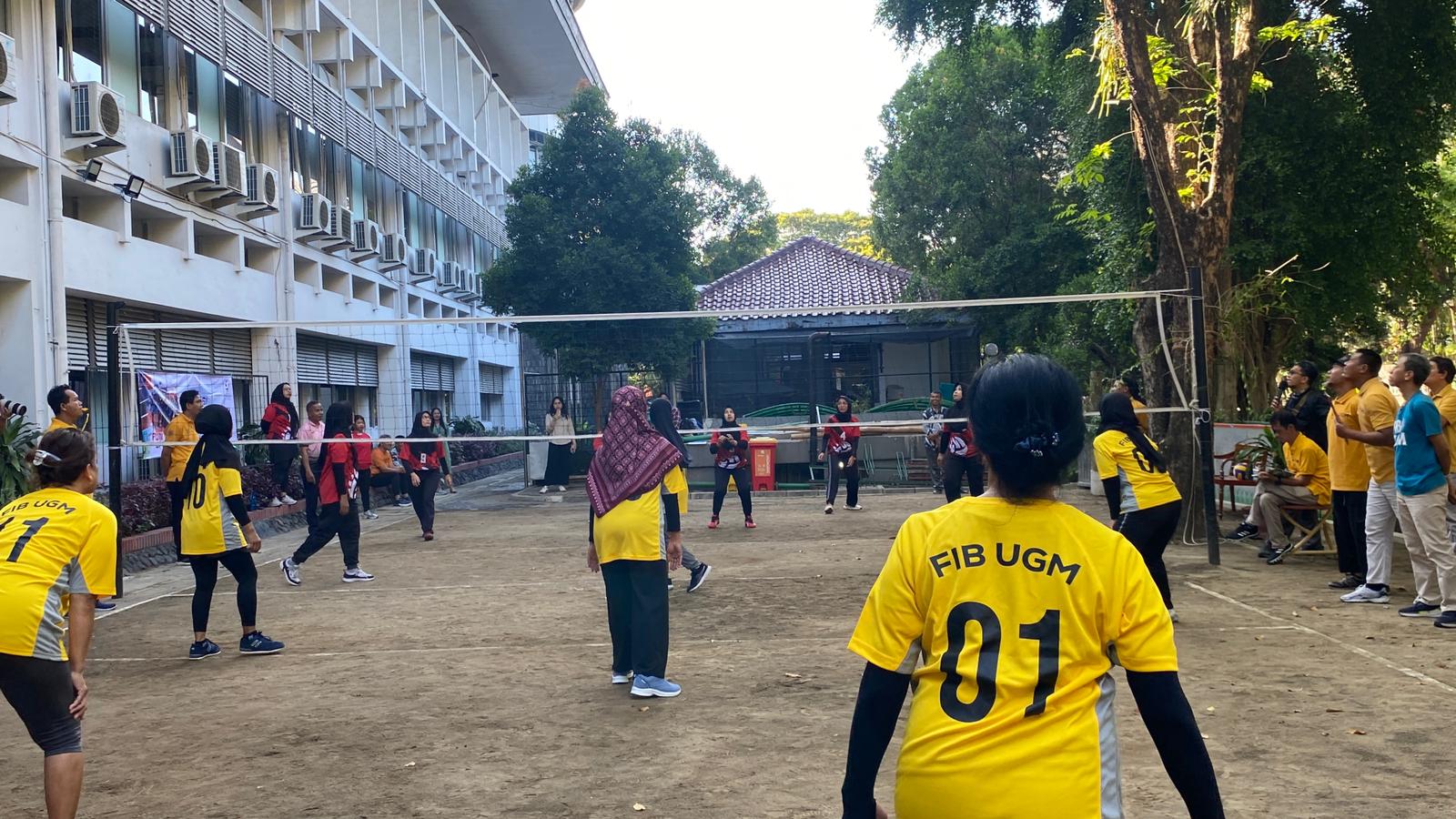
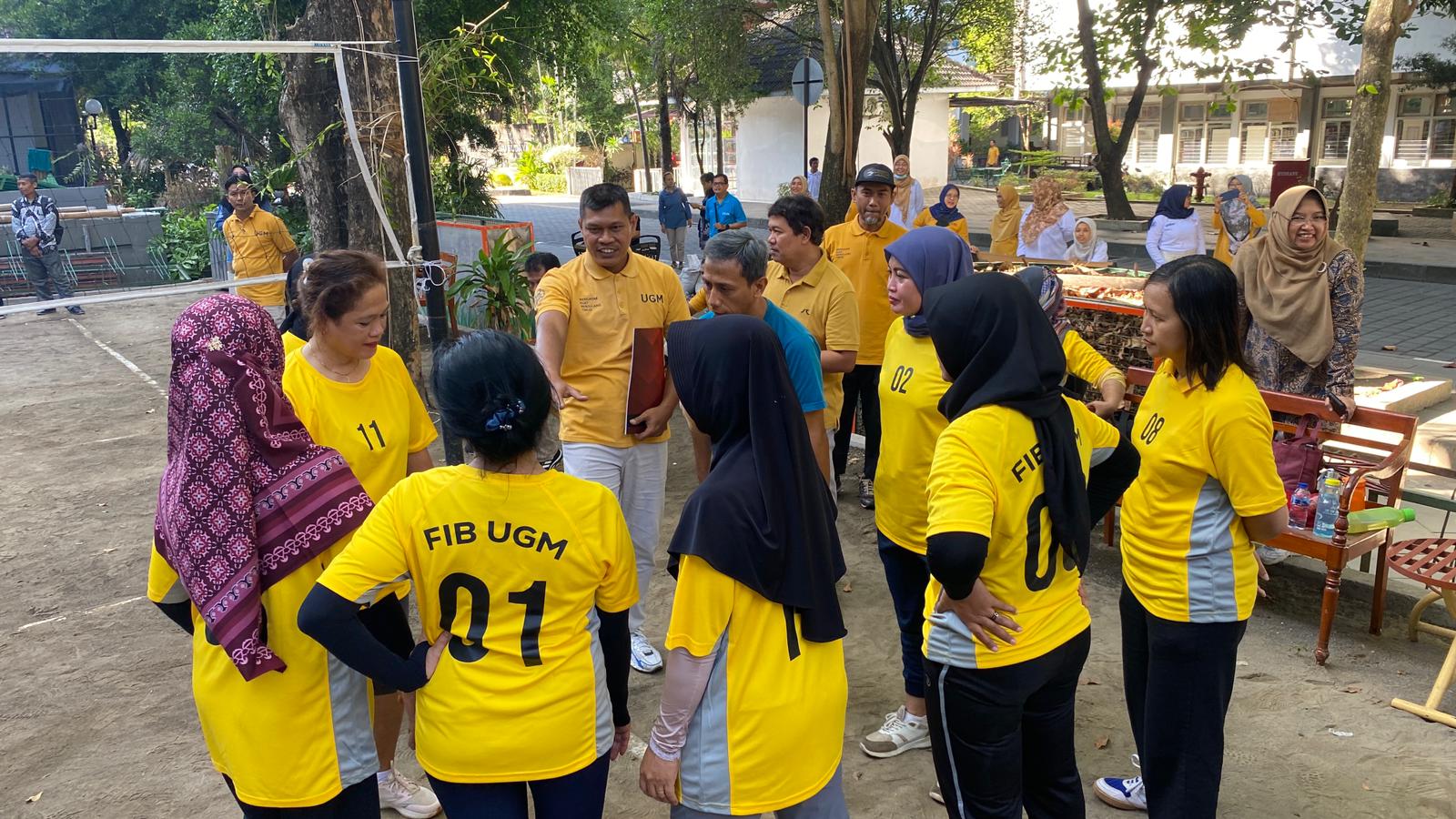
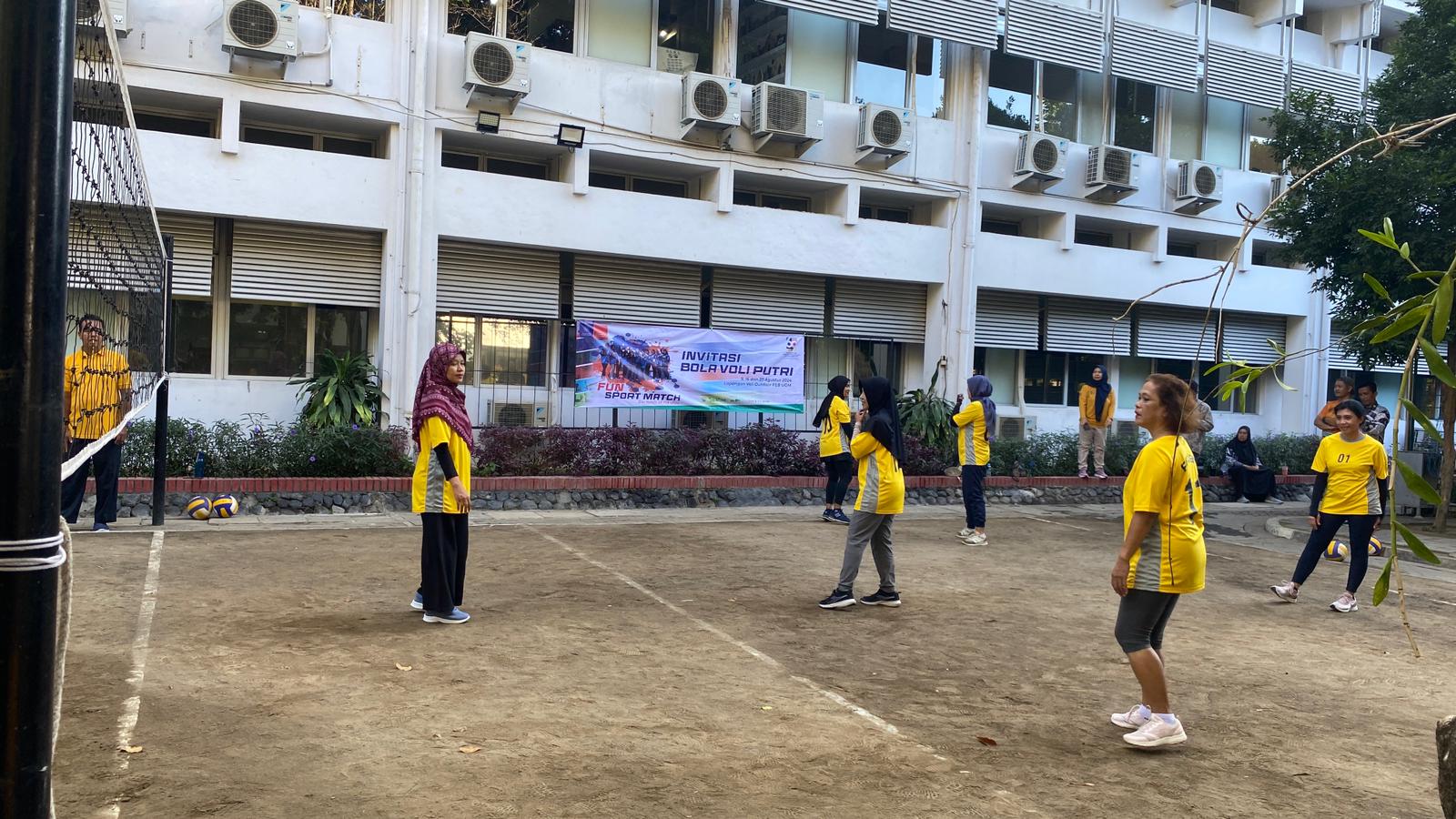
Friday, August 9, 2024 – In the framework of the 69th Anniversary of the Faculty of Economics & Business (FEB) Universitas Gadjah Mada (UGM), a women’s volleyball match was held which brought together the FEB UGM team with the Faculty of Cultural Sciences (FIB) UGM team. The match was held at 07.30 WIB at the FEB UGM Volleyball Court, which is located next to Pertamina Tower.

Although the match was won by the FEB UGM team, FIB UGM’s participation in this event received high appreciation. The FIB UGM team showed great spirit and enthusiasm, and enjoyed every moment of the game. The joy and spirit of sportsmanship shown by the UGM Faculty of Arts team added to the festive atmosphere in this 69th Anniversary celebration.

FIB UGM was very happy to be able to enliven the event organized by their neighboring faculty and hopes that similar activities can continue to strengthen relations between faculties and create more opportunities for collaboration in the future.

Socialization of New Student Admissions for Master of Literature for the Odd Semester FY 2024/2025

HEADLINESNews ReleaseSDGs 10: Reduced InequalitiesSDGs 16: Peace justice and strong institutionsSDGs 4: Quality Education Tuesday, 6 August 2024

On Monday, August 5, 2024, the Master of Literature Study Program, Faculty of Cultural Sciences, Universitas Gadjah Mada (UGM) has successfully held an online socialization of new student admissions. This activity was attended by all new students of odd semester 2024/2025 after they completed the registration stage. This socialization aims to introduce the lecture process and various important information related to the study program.

The event, which started at 10.00 WIB, went smoothly and was attended by many participants. Through the Whatsapp Group platform, new students were given the opportunity to interact directly with the study program, namely Dr. Aprinus Salam, M.Hum. as the head of the master of literature study program, and get a detailed explanation of the procedures for lectures and other academic activities. We hope that this activity provides optimal benefits and readiness for new students in starting their academic journey.

Get to know UGM Mental Health Ambassador: Ferdeo, Master Student of Anthropology at Faculty of Cultural Sciences

HEADLINESNews ReleaseSDGs 16: Peace justice and strong institutionsSDGs 3: Good health and well-beingSDGs 4: Quality EducationSDGs 8: Decent work and economic growth Thursday, 1 August 2024

FERDEO, S.Sos., is a student of the Master of Anthropology program at Universitas Gadjah Mada, Yogyakarta, since August 2023. He is very committed to growing through his experiences, and is passionate about education. With more than five years of experience as a public speaker, Ferdeo currently serves as a Mental Health Ambassador and Postgraduate Ambassador at his university. In his role as a mental health ambassador, he contributes to creating a campus environment that supports student well-being. In addition, Ferdeo is active in academic and cultural activities at the national and international levels and is a frequent MC and moderator in various faculty and university events.

Currently, Ferdeo is also active in various organizations. Since August 2023, Ferdeo has served as a Mental Health Ambassador in the Mental Health Ministry of BEM KM Universitas Gadjah Mada, which focuses on student mental health advocacy through psychological education, research studies, mental health service monitoring, and collaboration with related parties. In his role, Ferdeo initiated and leads the advocacy program “Journey to Joy”, which is open to the general public in Yogyakarta. He is also a frequent speaker and advocate of mental health discussions in the Universitas Gadjah Mada community, faculties, and surrounding high schools. In addition to being honored as Gadjah Mada University’s Mental Health Ambassador, Ferdeo was also selected as Gadjah Mada University’s Postgraduate Ambassador from the Faculty of Cultural Sciences.

Ferdeo also has a lot of work experience as a freelancer since 2020, where he performed various roles with high professionalism. As a speaker, Ferdeo delivers engaging presentations at events on a variety of topics. As a Master of Ceremony, he organizes events smoothly and elegantly, while his skills as a moderator enable productive discussions and collaborations. In addition, Ferdeo also contributes as a model, adding elegance and credibility to visual representations. With more than five years of experience, he has spoken at many events, ranging from school and university events to regional, national, and international platforms. Since 2021, Ferdeo has also been active as a photography model for various salons and boutiques, as well as appearing as a runway model and usher at various regional events.

From his many experiences and achievements, it can be seen that he has various skills that support his performance both in work and other activities. Ferdeo is highly skilled in public speaking, interpersonal communication, problem solving, critical thinking, adaptation, time management, and working to achieve targets. He even received an A certificate in public speaking skill development training from the Directorate of Student Affairs (DITMAWA) Unit of Universitas Gadjah Mada. With a combination of strong skills and dedication in various fields, Ferdeo shows outstanding commitment in academic, professional, and organizational roles. His active role as a Mental Health Ambassador, his involvement in national and international events, and his expertise as a speaker, moderator, and model, make him an inspiring and influential figure in his community. Ferdeo continues to strive to advance her field of interest and contribute significantly to the well-being and development of her community.

WHO CAN SPEAK AND WHAT WE CAN SPEAK ABOUT?

News ReleaseSDGs 10: Reduced InequalitiesSDGs 11: Sustainable cities and communitiesSDGs 16: Peace justice and strong institutionsSDGs 17: Partnerships for the GoalsSDGs 4: Quality EducationSDGs 5: Gender equality Wednesday, 31 July 2024

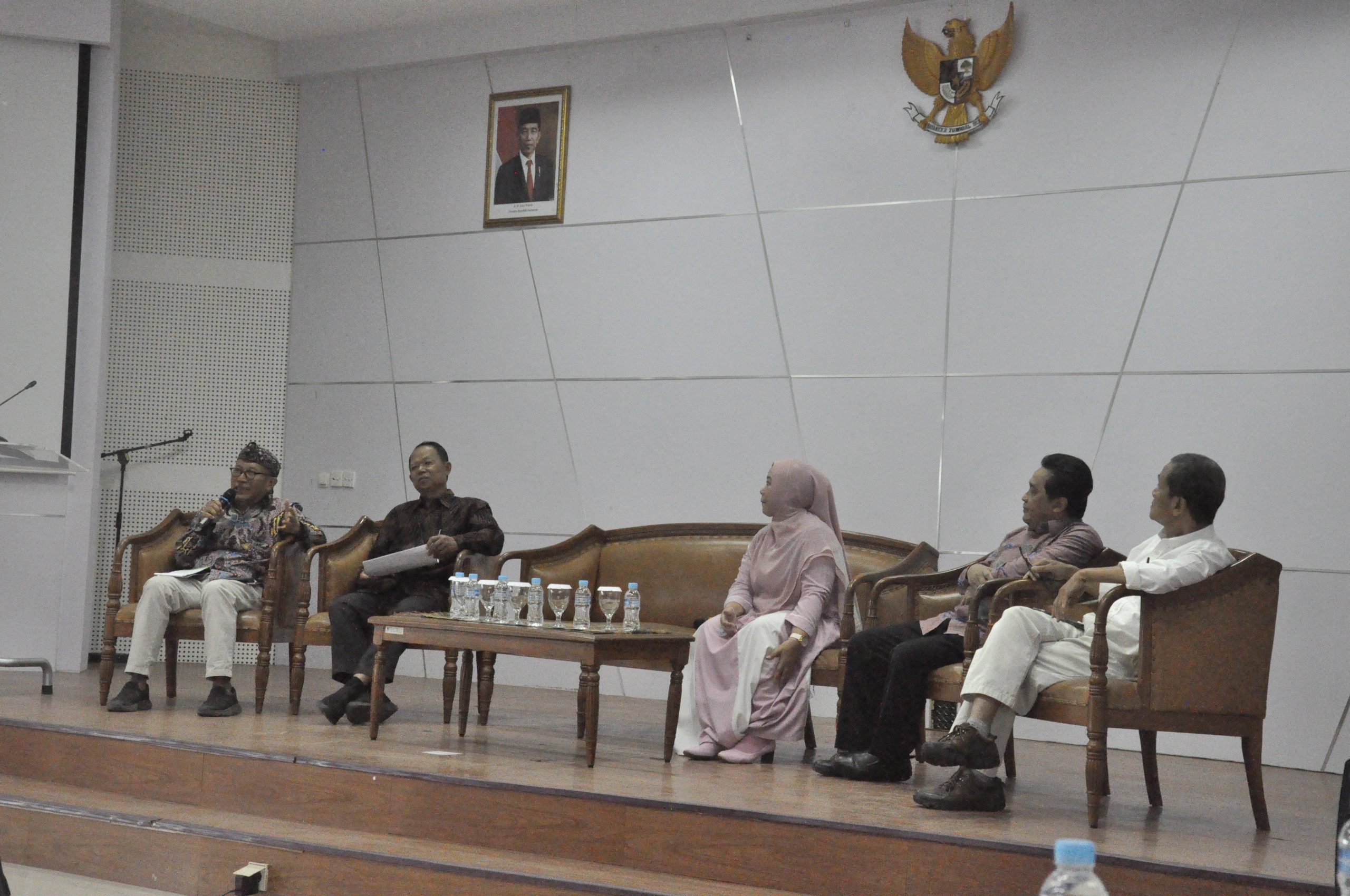
Decolonization is an important issue that continues to be studied in the social sciences these days. The effort to break away from Western hegemony, which is a legacy of colonialism, is a long road that is being traveled, especially for Global North thinkers. This effort was also evident in a forum entitled Who Can Speak and What We Can Speak About held at AAS, Gadjah Mada University, July 11, 2024.

In this forum, there were 6 speakers who presented their research results. The common threads of the presentations were about the fate of others, the struggle for human rights, and efforts to uncover the Global North-Global South power relations.

The first speaker was Lili Chen from the National University of East Timor. In her presentation, she explained the dynamics of life for LGBT people in Timor Leste. After independence from Indonesia, LGBT people in Timor Leste are quite progressive. Compared to Indonesia, this group is also much more accepted. This can be seen from the Pride Parade that they can participate in in Dili every year. However, this does not mean that their lives are completely safe. In a country with a highly religious Christian population, LGBT people are still discriminated against. However, there are efforts made by LGBT people to negotiate this. For example, they try to continue to explore pre-colonial local culture, which actually also recognizes the concept of gender outside heteronormativity.

Still related to gender issues, Carol Rodriguez Bello Dawonlay from the University of Philippines, discussed various indigenous women’s groups in the Philippines against child marriage and gender violence. Meanwhile, Anna Christi Suwardi from Mae Fah Luang University, also discussed the role of women in efforts to resolve conflicts in Southern Thailand.

Faryal Khan from the Bonn International Center for Conflict Studies (BICC) discussed the military conflict in South Waziristan, Pakistan. According to Khan, the conflict involving the state and various tribes became prolonged, because the state took a military approach to resolve it.

Faryal Khan’s presentation was also linked to that of Amjad Hassan from the National University of Modern Language Peshawar. Hassan, who is also from Pakistan, criticized the state’s approach to resolving various violent conflicts in Pakistan. According to Hassan, Pakistani policymakers, think tanks and intellectuals still take a Western approach, especially the realist, positivistic and capitalist modernity approach. This is highly ineffective as Pakistan will always fail to address the root cause of all modern conflicts, which is actually the West itself. According to Hassan, the West, especially America, is the elephant in the room that has failed to be identified. Therefore, it is important to map the extent of their interests behind these violent conflicts.

Meanwhile, Gopale Amarnath discussed the problem of health facilities in the Gadchiroli region of Maharashtra, India, which is an area of conflict between the government and left-wing extremists. According to Amarnath, the presence of these extremist groups has made the region discriminated in terms of health policy. Amarnath expressed concern about the poor health facilities and lack of doctors in the area. In addition, the lack of child care facilities, maternal delivery, and proper buildings, also complicates the problem. Moreover, the military also often enters hospitals or health centers to conduct inspections, which makes health workers worried.

In general, the forum also discussed research methods based on the spirit of decolonization. There are at least three points that researchers who go into the field should do. First, they should listen more. Second, research must be based on consent, or the agreement of both parties. Third, do no harm, or do not hurt the physical and emotional well-being of the group being visited.  This forum is very important because it shows how field research methods can explore problems in depth, but also based on empathy for affected communities. This is also a form of decolonization, especially of anthropological research methods that used to objectify the indigenous population. Decolonization is not only a result, but also a process.

Author: Ari Bagus Panuntun

1…1819202122…32

Video UGM

[shtmlslider name='shslider_options']
Universitas Gadjah Mada

Faculty of Cultural Sciences
Universitas Gadjah Mada
Jl. Nusantara 1, Bulaksumur Yogyakarta 55281, Indonesia
   fib@ugm.ac.id
   +62 (274) 513096
   +62 (274) 550451

Work Units

  • Office of Journal & Publishing
  • INCULS
  • Information Technology and Database
  • Language Learning Center
  • Library Unit
  • Public Relations
  • Research

Facilities

  • Computer Laboratory
  • Gamelan
  • Guest House
  • Language Library
  • Library
  • Phonetics Library
  • Self Access Unit
  • Student Internet Centre

Importan Links

  • Journal of Humaniora
  • Subscriber Journal
  • Alumni Portal
  • Career
  • Departmens News
  • UGM Streaming

Contacts

  • Academic
  • Administration
  • Dean’s Office
  • Departments / Study Programs
  • Public Relations

© 2024 Faculty of Cultural Sciences Universitas Gadjah Mada

KEBIJAKAN PRIVASI/PRIVACY POLICY

[EN] We use cookies to help our viewer get the best experience on our website. -- [ID] Kami menggunakan cookie untuk membantu pengunjung kami mendapatkan pengalaman terbaik di situs web kami.I Agree / Saya Setuju