• About UGM
  • Academic Portal
  • IT Center
  • Library
  • Research
  • Webmail
  • Informasi Publik
  • English
    • Indonesia
Universitas Gadjah Mada Faculty of Cultural Sciences
Universitas Gadjah Mada
  • Home
  • Profile
    • History
    • Vision and Mission
    • Organizational structure
    • Administration
    • Staff
    • Faculty Members
  • Academic
    • Academic Calendar
    • Undergraduate Programs
      • Bachelor of Cultural Antrophology
      • Bachelor in Archaeolagy
      • Bachelor in History
      • Bachelor in Tourism
      • Bochetor in Korean Language and Culture
      • Bachelor in Indonesian Language and Culture
      • Bachelor in English
      • Bachelor in Arabic
      • Bachelor in Japanese Language and Culture
      • Bachelor in Javanese Language, Literature and Culture
      • Bachelor in French language and literature
    • Graduate Programs
      • Master in Antrophology
      • Master in ArchaeoIogy
      • Master in History
      • Master in Linguistics
      • Master in Literature
      • Master In American Studies
      • Master in Middle Eastern Cultural Studies
    • Post-Graduate Programs / S3
      • Doctor in Antropology
      • Doctor in American Studies
      • Doctor in Humanities
    • Student Service
  • KPPM
    • Research Information
    • Scientific / Academic Publications
    • Community Service
    • International Cooperation
    • Domestic Cooperation
  • Student Organizations
    • Student Executive Council
    • Semi-Autonomous Organizations
      • KAPALASASTRA
      • Christian Student Alliance
      • LINCAK
      • Saskine
      • Catholic Student Family
      • Dian Budaya
      • Sastra Kanuragan (sasgan)
      • Family of Muslim Cultural Sciences Students (KMIB)
      • Bejo Mulyo
    • Autonomous Organizations
      • Family of Anthropology Students (KEMANT)
      • English Department Student Association
      • Tourism Students Association (HIMAPA)
      • Family of Indonesian Literature Students (KMSI)
      • West Asian Literature Student Association (IMABA)
      • Association of Korean-Language Students (HIMAHARA)
      • Family of Regional Indonesian Literatures Students (KAMASUTRA)
      • The Family Body of History Students (BKMS)
      • The French Literature Students Association (HMSP)
      • Family of Anthropology Students
      • Japanese Student Association (HIMAJE)
  • Admission
    • Student Evaluation
  • Home
  • SDGs 9: Industri inovasi dan infrastruktur
  • SDGs 9: Industri inovasi dan infrastruktur
  • page. 3
Arsip:

SDGs 9: Industri inovasi dan infrastruktur

Alihwahana Workshop “From Paper to Stage”: Reviving Javanese-Islamic Epics through Performing Arts

News Release Wednesday, 29 October 2025

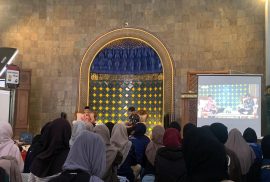
Yogyakarta, October 29, 2025 — The Study Program of Javanese Language, Literature, and Culture, Faculty of Cultural Sciences, Universitas Gadjah Mada (FIB UGM), held an event titled “From Paper to Stage: Alihwahana Workshop on Javanese-Islamic Epics from Literary Texts to Performance.” The workshop served as a learning platform for students to practice the process of alihwahana—the transformation of literary texts into creative and communicative performing arts.

The event opened with I Made Christian Wiranata Rediana as the master of ceremonies, who began the program with a joint prayer for its smooth running. The workshop then continued with an opening remark by Head of the Javanese Language, Literature, and Culture Study Program, Daru Winarti, M.Hum. In her speech, Daru expressed hope that this activity would serve as a space for students to enhance their artistic abilities while realizing that literary texts hold great potential to be brought to life on stage.

The workshop featured several experienced speakers in the fields of art and culture, including Kusnanta Riwus Ginanjar, S.Sn. (actor, playwright, director, and puppeteer of Wayang Golek Menak), Rinal Khaidar Ali, ST., M.Eng. (activist of Wayang Golek Menak), and Dr. Drs. Sudibyo, M.Hum. (Head of the Department of Language and Literature, FIB UGM). The event was moderated by Dr. Rudy Wiratama, lecturer at the Javanese Language, Literature, and Culture Study Program.

In his presentation, Kusnanta Riwus Ginanjar explained the four main characteristics of art, which he considers the foundation of creative processes: seni, senengan, seneb, and serem.

“Art brings joy and entertainment. However, art is also subjective (senengan), can evoke tragedy or fear (seneb), and has a side that can both enlighten and mislead (serem),” he explained.

Kusnanta emphasized that his experiences in theater, puppetry, and film have shaped his understanding of the meaning of alihwahana. According to him, ancient manuscripts should not remain locked away in archives but instead be revived and shared with the public through performing arts such as wayang kulit, wayang golek, or theater.

He further added that the process of alihwahana is not limited to classical manuscripts but can also be applied to modern literary works such as novels or stories. Through such adaptation, students are encouraged to broaden their perspectives on literature as a living source of cultural expression.

The “From Paper to Stage” Workshop was not only a platform for sharing artistic knowledge but also a reflection of FIB UGM’s academic commitment to promoting inclusive and quality education in line with the principles of the Sustainable Development Goals (SDGs). Through this activity, students were trained to think creatively, work collaboratively, and develop awareness of the importance of cultural preservation in the context of sustainability. The effort to bring Javanese manuscripts to life through performing arts represents a tangible implementation of humanistic education that values sustainability, creativity, and local wisdom.

In addition to enriching students’ learning experiences, this workshop also embodies the spirit of preserving local cultural continuity as part of sustainable community development. The synergy between art and education in this activity illustrates how the treasures of Javanese literature can remain relevant in modern society while strengthening Indonesia’s cultural identity—rooted in tradition yet open to innovation.

[Public Relations of FIB UGM, Alma Syahwalani]

Head of History Study Program FIB UGM Officially Opens History Week 2025: Highlighting the Theme “Industry in the Flow of History”

HEADLINESNews Release Monday, 27 October 2025

Yogyakarta, October 22, 2025 — The Head of the History Study Program, Faculty of Cultural Sciences, Universitas Gadjah Mada (FIB UGM), Dr. Mutiah Amini, M.Hum, officially opened the History Week 2025, which carries the theme “Industry in the Flow of History.” The opening ceremony took place at the Auditorium of Soegondo Building, 7th Floor, on Wednesday (22/10), attended by students from the Faculty of Cultural Sciences as well as representatives from various student organizations within and beyond FIB UGM.

History Week is an annual event organized by the Undergraduate History Study Program of FIB UGM as part of its efforts to enhance historical learning through both academic and non-academic approaches. The program serves as a platform for students to broaden their insights, channel their creativity, and foster awareness of historical and social issues relevant to today’s society.

The implementation of History Week 2025 is the result of collaboration and initiative by the Badan Keluarga Mahasiswa Sejarah (BKMS), the student association that oversees various activities of History students within FIB UGM. As one of BKMS’s largest programs, this event is not only intended for students of the History Study Program but is also open to the public, including academics from various universities across Indonesia. Through this event, students are encouraged to actively participate in developing historical studies oriented toward contemporary issues.

One of the main series of activities in History Week 2025 is the National Student History Seminar (SSMN), which adopts the overarching theme “Industry in the Flow of Indonesian History.” The seminar is designed to provide opportunities for students from diverse disciplines who have an interest in history to develop their academic writing and discussion skills. Several selected students will present their papers directly before the seminar participants in two panel sessions. Prior to these presentations, the event will begin with an introductory lecture delivered by a keynote speaker who is an expert in industrial history.

The discussions in this seminar cover a wide range of important topics related to the development of industry in Indonesia, including the historical evolution of industry, the dynamics of local industries, the impacts of industrialization on the environment and society, the history of social movements within industry, as well as the roles of local economic figures and women in the industrialization process. Through a historical perspective, this event seeks to foster a deeper understanding of how industry has become an integral part of Indonesia’s social, economic, and cultural development.

Overall, History Week 2025 aims to encourage students to understand industrial issues from a historical perspective while raising awareness of the importance of studying national industrial history as a key to comprehending today’s industrial dynamics. Moreover, the event aligns with the Sustainable Development Goals (SDGs), particularly Goal 4 (Quality Education) through the strengthening of historical literacy and academic research, Goal 8 (Decent Work and Economic Growth) by exploring the historical development of the industrial sector, and Goal 9 (Industry, Innovation, and Infrastructure) which emphasizes the importance of history as the foundation for future innovation and development. Thus, History Week 2025 stands not only as an academic platform but also as a tangible contribution from UGM History students to the global agenda of sustainable development.

[Public Relations of FIB UGM, Candra Solihin]

Seminar Antarabangsa KAJIAN MELAYU-JAWA (SEMEJA) IV

UGM and Universiti Kebangsaan Malaysia Strengthen Academic Networks in the Malay-Javanese Studies International Seminar

News ReleaseSDGs 11: Sustainable cities and communitiesSDGs 16: Peace justice and strong institutionsSDGs 17: Partnerships for the GoalsSDGs 4: Quality Education Wednesday, 2 July 2025

Yogyakarta, 1/7/2025 – The 4th International Seminar on Malay-Javanese Studies (SEMEJA 2025) was officially opened at the University Club of Gadjah Mada University (UGM) on July 1, 2025. The seminar brought together academics, researchers, and cultural observers from Indonesia and Malaysia. The opening ceremony commenced solemnly at 8:30 AM, starting with a prayer, followed by welcoming speeches from various dignitaries, including the Dean of the Faculty of Cultural Sciences at UGM and the Director of the Institute of Malay Civilization (ATMA) at Universiti Kebangsaan Malaysia (UKM).

In his welcoming address, Prof. Dr. Setiadi, S.Sos., M.Si., the Dean of the Faculty of Cultural Sciences at UGM, expressed his appreciation for the presence of all participants and partners from UKM, particularly ATMA. He emphasized the importance of continuing scientific collaboration that had been delayed due to the COVID-19 pandemic. “This seminar serves as a strategic platform to delve into the historical, cultural, linguistic, and civilizational ties between the Malay and Javanese communities. UGM believes that Malay-Javanese studies provide significant benefits in strengthening international academic networks and preserving our shared cultural heritage,” said Prof. Setiadi.

He also highlighted that this seminar is not only relevant for cultural and historical experts but also for academics from various fields who wish to develop scientific perspectives rooted in local and regional identities. This aligns with the Sustainable Development Goals (SDGs) of promoting quality education and fostering global partnerships.

This year, SEMEJA IV focuses on how cultural heritage can play a role in community empowerment and strengthening regional integration. The issues raised include language, arts, and culture; leadership and regional integration; heritage preservation as a catalyst for community development; strengthening heritage and sustainable development; and social solidarity through cross-border cultural cooperation.

With an inclusive theme and approach, SEMEJA IV is designed to foster meaningful dialogue, knowledge exchange, and strategic cooperation among academic institutions, local communities, and stakeholders from Indonesia and Malaysia. The seminar marks an important milestone in the efforts to preserve Malay-Javanese culture and create a shared space for academic integration and local values at both regional and global levels.

The opening ceremony also featured a cultural performance of Javanese dance by Ratnatraya, an art student organization from the Department of Javanese Language and Literature at UGM. This was followed by an inaugural speech by YBhg. Dato Haslina Abdul Hamid, the Secretary-General of the Malaysian Ministry of National Unity, and a keynote session led by Prof. Dr. Heddy Shri Ahimsa-Putra from UGM’s Graduate School.

The seminar is scheduled to last for two days, July 1 and 2, 2025, featuring a variety of scientific discussion sessions, community forums, and cultural performances. The presence of stakeholders from both countries is expected to pave the way for closer and more sustainable academic and cultural collaborations.

As part of the seminar’s commitment to the SDGs, particularly in education in developing countries, the event aims to leverage technology and cultural insights to enhance educational outcomes and community engagement. By fostering global partnerships, SEMEJA IV seeks to create a collaborative environment that empowers communities through shared knowledge and cultural understanding.

In conclusion, SEMEJA 2025 not only serves as a platform for academic discourse but also as a celebration of the rich cultural heritage shared by the Malay and Javanese peoples. The collaborative efforts between UGM and UKM exemplify the potential of academic partnerships in addressing global challenges while promoting local identities and cultural preservation.


[Public Relations of FIB UGM, Candra Solihin]

Crossing Horizons: Discovering Lithuania Through IISMA

HEADLINESNews ReleaseSDGs 17: Partnerships for the GoalsSDGs 4: Quality EducationSDGs 9: Industry innovation and infrastructure Friday, 9 May 2025

Yogyakarta, 8/5/2025 – Rr. Rachma Amalia Putri, a student of English Studies Program UGM, was enrolled in Indonesian International Student Mobility Awards (IISMA) 2024. IISMA is a mobility program under the Ministry of Education, Culture, Research, and Technology. After a rigorous selection process, Putri was accepted for IISMA at Vytautas Magnus University (VMU), Lithuania. 

Putri was very enthusiastic for this studying opportunity. “Studying abroad is a stepping stone towards greater opportunities in academics and non-academic fields. I want to get firsthand experiences from the professors, as they are not only experts in their fields but also active practitioners,” she mentioned.

Putri noted that the experience studying abroad was beyond her expectations. At VMU, she took four courses: Introduction to Sociolinguistics, Media and Popular Culture, Creative and Feature Writing, as well as Lithuanian as a Foreign Language A1. Putri enjoyed her learning process, especially due to the dedication of lecturers at VMU. She was also grateful for the opportunity to collaborate with other international students. 

Outside the classroom, Putri encountered many valuable experiences. She joined Kaunas Muslim Sister, a community for muslim women in Kaunas to share their experiences as a minority. During her stay at VMU, Putri was also given the opportunity to share Indonesian culture in Lithuanian schools. She was also appointed as the moderator in the Alumni Day event to celebrate the re-establishment of VMU. Putri and her IISMA fellows also held a charity event to promote Batik, Weaving Cultures: Batik Day and Charity Gala. 

From the exchange at VMU, Putri learned many things: how to survive in a new environment, be independent in any situations, and be an ambassador of Indonesian culture. After graduating, Putri planned to pursue a master’s degree abroad in order to fulfil her dream of being a lecturer, a way to dedicate her knowledge for Indonesia.

[Public Relation of English Literature, Sekar Ajiningsih]

Sharing Study on Public Relations between FIB and FISIPOL UGM

HEADLINESNews ReleaseSDGs 17: Partnerships for the GoalsSDGs 9: Industry innovation and infrastructure Thursday, 8 May 2025

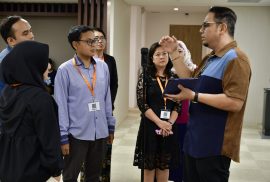
Yogyakarta, 16 April 2025 — The Unit of Public Relations and Cooperation of the Faculty of Cultural Sciences (FIB UGM) visited the Faculty of Social and Political Sciences (FISIPOL UGM) with the aim of increasing the capacity and insight of public relations. This sharing study activity was designed as a learning and discussion forum focused on best practices in public relations management, social media handling, and partnership collaboration. The event held from 10.00-12.00 WIB.

From the Faculty of Arts UGM, there were seven representatives from the Public Relations and Cooperation Unit who were accompanied by the Head of the Administrative Office Erika Purnawati, S.Kom., M.Cs. While from FISIPOL UGM, the visit was received by Paminto, M.Si, as the Head of Administrative Office who represented the Dean along with two representatives of the media relations division of FISIPOL UGM. The meeting was characterised by a spirit of creativity and innovation, where participants exchanged ideas and experiences that could improve practice in their respective fields.

During the session, participants engaged in discussions on the importance of effective communication strategies in public relations. They explored various methods to enhance outreach and engagement with the public, highlighting the role of creativity in crafting compelling and relevant narratives for diverse audiences.

The discussion also addressed the challenges of managing social media platforms, emphasising the need for adaptability and continuous learning. Participants acknowledged that while social media is a powerful tool for public relations, it requires strategic planning and execution to fully maximise its potential. The event concluded with a Q&A session, where both sides were encouraged to exchange innovative ideas for future partnerships and public relations projects.

Overall, the sharing study on public relations and collaboration between FIB UGM and FISIPOL UGM served as a valuable opportunity to learn from each other’s strengths. The event not only provided meaningful insights into best practices but also fostered a spirit of collaboration and innovation among participants. It reflected the commitment of both faculties to enhance their public engagement efforts and to contribute positively to society through effective communication and collaboration.

[Public Relation Faculty of Cultural Sciences, Bulan Churniati]

12345

Video UGM

[shtmlslider name='shslider_options']
Universitas Gadjah Mada

Faculty of Cultural Sciences
Universitas Gadjah Mada
Jl. Nusantara 1, Bulaksumur Yogyakarta 55281, Indonesia
   fib@ugm.ac.id
   +62 (274) 513096
   +62 (274) 550451

Work Units

  • Office of Journal & Publishing
  • INCULS
  • Information Technology and Database
  • Language Learning Center
  • Library Unit
  • Public Relations
  • Research

Facilities

  • Computer Laboratory
  • Gamelan
  • Guest House
  • Language Library
  • Library
  • Phonetics Library
  • Self Access Unit
  • Student Internet Centre

Importan Links

  • Journal of Humaniora
  • Subscriber Journal
  • Alumni Portal
  • Career
  • Departmens News
  • UGM Streaming

Contacts

  • Academic
  • Administration
  • Dean’s Office
  • Departments / Study Programs
  • Public Relations

© 2024 Faculty of Cultural Sciences Universitas Gadjah Mada

KEBIJAKAN PRIVASI/PRIVACY POLICY

[EN] We use cookies to help our viewer get the best experience on our website. -- [ID] Kami menggunakan cookie untuk membantu pengunjung kami mendapatkan pengalaman terbaik di situs web kami.I Agree / Saya Setuju