• About UGM
  • Academic Portal
  • IT Center
  • Library
  • Research
  • Webmail
  • Informasi Publik
  • English
    • Indonesia
Universitas Gadjah Mada Faculty of Cultural Sciences
Universitas Gadjah Mada
  • Home
  • Profile
    • History
    • Vision and Mission
    • Organizational structure
    • Administration
    • Staff
    • Faculty Members
  • Academic
    • Academic Calendar
    • Undergraduate Programs
      • Bachelor of Cultural Antrophology
      • Bachelor in Archaeolagy
      • Bachelor in History
      • Bachelor in Tourism
      • Bochetor in Korean Language and Culture
      • Bachelor in Indonesian Language and Culture
      • Bachelor in English
      • Bachelor in Arabic
      • Bachelor in Japanese Language and Culture
      • Bachelor in Javanese Language, Literature and Culture
      • Bachelor in French language and literature
    • Graduate Programs
      • Master in Antrophology
      • Master in ArchaeoIogy
      • Master in History
      • Master in Linguistics
      • Master in Literature
      • Master In American Studies
      • Master in Middle Eastern Cultural Studies
    • Post-Graduate Programs / S3
      • Doctor in Antropology
      • Doctor in American Studies
      • Doctor in Humanities
    • Student Service
  • KPPM
    • Research Information
    • Scientific / Academic Publications
    • Community Service
    • International Cooperation
    • Domestic Cooperation
  • Student Organizations
    • Student Executive Council
    • Semi-Autonomous Organizations
      • KAPALASASTRA
      • Christian Student Alliance
      • LINCAK
      • Saskine
      • Catholic Student Family
      • Dian Budaya
      • Sastra Kanuragan (sasgan)
      • Family of Muslim Cultural Sciences Students (KMIB)
      • Bejo Mulyo
    • Autonomous Organizations
      • Family of Anthropology Students (KEMANT)
      • English Department Student Association
      • Tourism Students Association (HIMAPA)
      • Family of Indonesian Literature Students (KMSI)
      • West Asian Literature Student Association (IMABA)
      • Association of Korean-Language Students (HIMAHARA)
      • Family of Regional Indonesian Literatures Students (KAMASUTRA)
      • The Family Body of History Students (BKMS)
      • The French Literature Students Association (HMSP)
      • Family of Anthropology Students
      • Japanese Student Association (HIMAJE)
  • Admission
    • Student Evaluation
  • Home
  • SDGs 8: Pekerjaan Layak dan Pertumbuhan Ekonomi
  • (Page 10)
Arsip:

SDGs 8: Pekerjaan Layak dan Pertumbuhan Ekonomi

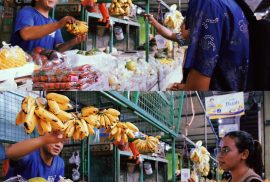
The Moment of TIAS Students Bargaining at Kranggan Market, Yogyakarta: Learning Language, Culture, Healthy Living, and Supporting Local Economy

HEADLINESNews ReleaseSDGs 11: Sustainable cities and communitiesSDGs 3: Good health and well-beingSDGs 4: Quality EducationSDGs 8: Decent work and economic growth Thursday, 6 February 2025

Yogyakarta, 16/1/2025 – TIAS 2024 students shopped at Kranggan Market in a series of Indonesian language learning. The students practiced bargaining with fruit vendors in Indonesian. In doing this activity, students were accompanied by teachers and part-time students. By bargaining, students are expected to train their focus in listening and speaking Indonesian.

This out-of-class learning activity also gave TIAS students a new experience. Previously, the TIAS students had never been to a traditional market. One of the TIAS students expressed her amazement at traditional markets because she found the prices in traditional markets cheaper than in supermarkets. The student also said that she would find it easier to adopt a healthy lifestyle because of the affordable price of fruit. This activity provides long-term benefits for TIAS students considering that these students will study at UGM for several years to pursue bachelor/master/doctoral degrees. In addition, this activity was not only welcomed enthusiastically by TIAS students, but also fruit vendors. The vendors were entertained and amazed by the TIAS students’ ability to bargain. In addition, the students did not only buy fruit, but also traditional snacks. The students did not hesitate to taste traditional culinary in Kranggan Market, such as jenang, fried foods, and so on.

This out-of-class learning shows that language learning is not only limited in the classroom, but also outside the classroom considering that students will interact directly with the community during their stay in Indonesia. This activity is expected to build the confidence of TIAS students in dialoguing with friends, lecturers, and the community in Indonesian.

[Public Relation INCULS, Decika Syahda Maharani translated by Public Relation Faculty of Cultural Sciences, Bulan Churniati]
MAGANG GEMILANG #5 – French Language and Literature Be A Good Exporter: Developing Export-Ready Products

News ReleaseSDGSSDGs 12: Responsible consumption and productionSDGs 8: Decent work and economic growth Monday, 14 October 2024

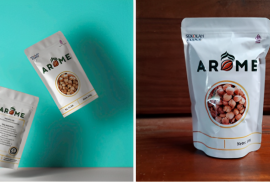
Tuesday, June 18, 2024 – “Be A Good Exporter” is an Independent Study program organised by the National Export School Foundation. This semester-long program is part of the *Merdeka Belajar Kampus Merdeka* (MBKM) initiative. One of the key activities in this program involves developing export-ready products, carried out in collaboration with the Export Start-up Team (TSE), formed at the beginning of the program. The goal is to create products that meet international market demands and have the potential to become successful export items.

Together with TSE, the author worked on developing a dried cardamom product sourced from local Indonesian farmers. Throughout the development process, the author and the team conducted market research and devised strategies tailored to relevant target markets. They then worked on product development, brand building, and digital marketing strategies suited to international markets. Additionally, the team simulated business matching sessions, studied payment methods and required documentation, and explored logistics options for exporting products. Through this comprehensive process, the author gained insights into the full cycle of preparing a product for export. Furthermore, the program provided valuable knowledge on national and international export-import regulations.

The “Be A Good Exporter” program contributes to the SDGs, particularly SDG 8 (Decent Work and Economic Growth) and SDG 12 (Responsible Consumption and Production). By empowering local farmers and developing cardamom products for international markets, this program supports inclusive and sustainable economic growth, while also promoting fair and responsible trade practices.

[Public Relations of FIB UGM, Author: Katherine Valencia Pangestu, Editor: Rifal Fadlurrahman, Aldiza Pramudhita]

1…8910

Video UGM

[shtmlslider name='shslider_options']
Universitas Gadjah Mada

Faculty of Cultural Sciences
Universitas Gadjah Mada
Jl. Nusantara 1, Bulaksumur Yogyakarta 55281, Indonesia
   fib@ugm.ac.id
   +62 (274) 513096
   +62 (274) 550451

Work Units

  • Office of Journal & Publishing
  • INCULS
  • Information Technology and Database
  • Language Learning Center
  • Library Unit
  • Public Relations
  • Research

Facilities

  • Computer Laboratory
  • Gamelan
  • Guest House
  • Language Library
  • Library
  • Phonetics Library
  • Self Access Unit
  • Student Internet Centre

Importan Links

  • Journal of Humaniora
  • Subscriber Journal
  • Alumni Portal
  • Career
  • Departmens News
  • UGM Streaming

Contacts

  • Academic
  • Administration
  • Dean’s Office
  • Departments / Study Programs
  • Public Relations

© 2024 Faculty of Cultural Sciences Universitas Gadjah Mada

KEBIJAKAN PRIVASI/PRIVACY POLICY

[EN] We use cookies to help our viewer get the best experience on our website. -- [ID] Kami menggunakan cookie untuk membantu pengunjung kami mendapatkan pengalaman terbaik di situs web kami.I Agree / Saya Setuju