• About UGM
  • Academic Portal
  • IT Center
  • Library
  • Research
  • Webmail
  • Informasi Publik
  • English
    • Indonesia
Universitas Gadjah Mada Faculty of Cultural Sciences
Universitas Gadjah Mada
  • Home
  • Profile
    • History
    • Vision and Mission
    • Organizational structure
    • Administration
    • Staff
    • Faculty Members
  • Academic
    • Academic Calendar
    • Undergraduate Programs
      • Bachelor of Cultural Antrophology
      • Bachelor in Archaeolagy
      • Bachelor in History
      • Bachelor in Tourism
      • Bochetor in Korean Language and Culture
      • Bachelor in Indonesian Language and Culture
      • Bachelor in English
      • Bachelor in Arabic
      • Bachelor in Japanese Language and Culture
      • Bachelor in Javanese Language, Literature and Culture
      • Bachelor in French language and literature
    • Graduate Programs
      • Master in Antrophology
      • Master in ArchaeoIogy
      • Master in History
      • Master in Linguistics
      • Master in Literature
      • Master In American Studies
      • Master in Middle Eastern Cultural Studies
    • Post-Graduate Programs / S3
      • Doctor in Antropology
      • Doctor in American Studies
      • Doctor in Humanities
    • Student Service
  • KPPM
    • Research Information
    • Scientific / Academic Publications
    • Community Service
    • International Cooperation
    • Domestic Cooperation
  • Student Organizations
    • Student Executive Council
    • Semi-Autonomous Organizations
      • KAPALASASTRA
      • Christian Student Alliance
      • LINCAK
      • Saskine
      • Catholic Student Family
      • Dian Budaya
      • Sastra Kanuragan (sasgan)
      • Family of Muslim Cultural Sciences Students (KMIB)
      • Bejo Mulyo
    • Autonomous Organizations
      • Family of Anthropology Students (KEMANT)
      • English Department Student Association
      • Tourism Students Association (HIMAPA)
      • Family of Indonesian Literature Students (KMSI)
      • West Asian Literature Student Association (IMABA)
      • Association of Korean-Language Students (HIMAHARA)
      • Family of Regional Indonesian Literatures Students (KAMASUTRA)
      • The Family Body of History Students (BKMS)
      • The French Literature Students Association (HMSP)
      • Family of Anthropology Students
      • Japanese Student Association (HIMAJE)
  • Admission
    • Student Evaluation
  • Home
  • SDGs 8: Decent work and economic growth
  • SDGs 8: Decent work and economic growth
  • page. 4
Arsip:

SDGs 8: Decent work and economic growth

Korean Language and Culture Program Promotes Career Readiness through Public Lecture with Korean Industry Practitioner

News Release Friday, 27 February 2026

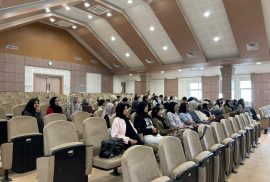
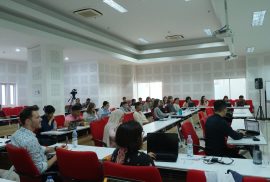
Yogyakarta, 24 February 2026 – The Korean Language and Culture Study Program, Faculty of Cultural Sciences, Universitas Gadjah Mada held a public lecture on Tuesday, 24 February 2026. The event took place following the scholarship award ceremony and was conducted alongside the Academic Korean Language class.

The lecture was delivered by Mr. Ahn Gyeong Hwan, Operations Director of PT. Komitrando. On this occasion, he presented a session titled Work Strategies in Korean Companies in Indonesia and Understanding Workplace Culture, which explored career opportunities in Korean companies, required qualifications, and the dynamics of Korean work culture (K-Work Culture).

Mr. Ahn explained that Indonesia–Korea cooperation is currently entering an increasingly strategic phase, marked by expanding collaboration across various sectors, from manufacturing to finance and information technology. He emphasized that in a professional context, language can be understood as a “tool” that facilitates work processes. While tasks may still be completed without such a tool, possessing the right tool—in this case, Korean language proficiency—makes work more effective, efficient, and value-added.

He further outlined the profile sought by Korean companies: individuals who can serve as a “bridge,” demonstrate strong business communication skills, understand hierarchy and workplace ethics within Korean corporate culture, and exhibit responsibility and teamwork.

In the concluding session, Mr. Ahn shared practical tips on CV preparation, writing a motivation letter, and strategies for job interviews. Students followed the lecture attentively, reflecting strong interest in career opportunities within Korean companies.

Through this public lecture, students gained not only a broader understanding of employment opportunities in Korean companies but also more concrete insight into industry expectations for graduates of Korean Language and Culture. The session is expected to broaden students’ perspectives on career readiness, strengthen awareness of the importance of applicable language competence in business contexts, and encourage continuous professional development. The event thus represents a strategic step in bridging academia and the professional world.

Author: Eunike Serafia N.S

UGM Campus Mosque Study Highlights the Strengthening of Human Resources and Quality Education as Pillars of National Independence

News Release Monday, 23 February 2026

Yogyakarta, February 20, 2026 – The Campus Mosque of Universitas Gadjah Mada (UGM) held a public lecture featuring Panut Mulyono, Rector of UGM for the 2017–2022 period, Professor of Chemical Engineering at the Faculty of Engineering UGM, and Chair of the Forum of Indonesian Rectors (2021–2022). In his lecture, Prof. Panut addressed the role of Natural Resources (SDA) and Human Resources (SDM) as fundamental capital for national development.

In his presentation, he emphasized that Indonesia is a nation blessed with a large population and abundant natural resources. However, these advantages must be managed properly through the development of high-quality human resources.

“With strong nationalism and a solid work ethic, we can achieve rapid progress,” he stated. He stressed that excellent human resources can only be produced through quality education.

Prof. Panut also highlighted the importance of learning from prominent national education figures such as Ki Hajar Dewantara, who laid the foundation of Indonesia’s educational philosophy. He further quoted Nelson Mandela, who once said that education is the most powerful weapon to change the world.

According to him, education plays a strategic role in determining a nation’s progress and independence. A country with a weak education system will struggle to advance and may even decline. Conversely, quality education serves as a tool to accelerate national progress, particularly in mastering science and technology and enhancing global competitiveness.

From an Islamic perspective, Prof. Panut connected the importance of education with Qur’anic teachings, particularly Surah Al-‘Alaq (1–5), which emphasizes the command to read and seek knowledge as part of worship to Allah SWT. He also referred to Surah Al-Mujadilah verse 11, which highlights the virtue of those who pursue knowledge.

Furthermore, he underlined the crucial role of higher education institutions in continuously improving and innovating within the higher education sector to achieve national independence more swiftly. Universities are expected not only to serve as centers of learning but also to generate tangible impacts in addressing socio-economic challenges, fostering inclusive innovation, and contributing more significantly to sustainable development.

This study aligns with the Sustainable Development Goals (SDGs), particularly SDG 4 (Quality Education), which promotes inclusive and equitable quality education; SDG 8 (Decent Work and Economic Growth), through the enhancement of human resource quality and work ethic; and SDG 9 (Industry, Innovation, and Infrastructure), by strengthening the mastery of science and technology to drive national advancement.

Through this forum, the UGM Campus Mosque serves not only as a spiritual space but also as an intellectual platform that fosters strategic ideas for Indonesia’s progress toward becoming an independent and globally competitive nation.

[Public Relation of FIB UGM, Alma Syahwalani]

Indonesian Language Student Wins Daesang at Global Start-Up Competition in South Korea

News ReleaseSchoolarship Thursday, 19 February 2026

An undergraduate student of the Indonesian Language and Literature Study Program, Faculty of Cultural Sciences, M Deni Maulana, has won the prestigious Daesang (대상) award at the Global Inbound Start-Up Idea Competition held in South Korea. The accolade was awarded for his innovative, contextual, and practical educational start-up concept designed to address the needs of international students.

The global competition brought together 45 participants from 20 universities across various countries. It was organized by Jeonbuk National University, Jeonbuk State, and the Global Innovation Start-Up Center (GISC). The event series took place from November 13 to December 3, 2025, and was held onsite at The May Hotel Jeonju, Jeonbuk State, South Korea. The competition stages included idea submission, concept presentation, mentoring sessions, and final evaluation by a panel of professional judges.

At the international forum, Deni represented Indonesia with a conceptually strong and strategically competitive proposal. He earned the Daesang award for his start-up idea, LinguaLoka, which addresses cross-cultural communication challenges, particularly the gap in understanding dialects and everyday speech varieties that are often overlooked in formal language learning.

Drawing on his academic background in Indonesian Language and Literature and his interest in the Indonesian for Foreign Speakers (BIPA) program, Deni developed LinguaLoka as a local dialect-based language learning application. His experience as an exchange student in South Korea and as an Indonesian language tutor for Korean students significantly shaped the idea. Through direct interaction, he observed that foreign language learners frequently struggle to understand language in everyday conversational contexts, while mastery of dialects often becomes the key to effective social communication.

“Language learning cannot rely solely on formal structures. Dialects and everyday speech contexts play a crucial role in building meaningful communication,” said Deni Maulana.

Conceptually, LinguaLoka features several key components, including real-life conversation simulations, a peer-to-peer language exchange feature, and an educational dialect-guessing game. The application is designed to facilitate Indonesian and Korean students in learning formal language while also becoming familiar with regional dialects used in daily life in both countries.

The panel of judges assessed LinguaLoka as having strong educational value, global development potential, and sustainability as a culture-based educational start-up. Deni’s background as a humanities student was considered a conceptual advantage, as he was able to integrate linguistic studies, BIPA teaching experience, and the practical needs of international students.

This achievement underscores the strategic role of language and literature students in generating cross-disciplinary innovations relevant to global challenges. Through culture-based educational approaches, such innovations are expected to strengthen cross-cultural understanding and foster the development of inclusive and sustainable learning ecosystems at the international level.

Source: M. Deni Maulana
[Public Relations of FIB UGM, Candra Solihin]

From Literature to the Global Stage: A UGM Master’s Student at the Korea Youth Summit 2026

News Release Thursday, 19 February 2026

It may seem uncommon for a humanities student to be involved in an international forum centered on business and innovation. Yet that is precisely what makes the story of Kharisma Qurrota Ayun compelling. A Master’s student in Literature at Universitas Gadjah Mada (UGM), Kharisma took part in the Korea Youth Summit 2026, organized by Youth Break the Boundaries from February 2–5, 2026, in South Korea.

Rather than attending as a project delegate, Kharisma contributed from behind the scenes as a member of the organizing committee. Far from being a secondary role, her position highlights an important point: global forums are not sustained by ideas alone, but also by the cultural fluency, communication skills, and coordination that make international collaboration possible. Her involvement invites a broader reflection on how the humanities, often perceived as distant from business and technology, play a vital role in knowledge diplomacy and cross-cultural engagement.

The summit’s central agenda, the International Symposium, brought together 34 young innovators from New Zealand, Vietnam, Indonesia, Morocco, Bangladesh, Mexico, and Uzbekistan. Participants presented business-driven solutions to pressing global challenges, including green economic transitions and community-based empowerment initiatives. The symposium functioned not merely as a competition of ideas, but as a shared learning space where diverse perspectives met and evolved.

In this context, Kharisma’s academic training in literary studies proved unexpectedly relevant. Literature sharpens the ability to interpret narratives, understand cultural nuances, and engage with different worldviews, skills that are indispensable in multinational settings. In global conversations, persuasive storytelling and cultural sensitivity are often as important as technical feasibility. Her background equipped her to navigate complex intercultural dynamics while supporting the event’s overall coordination.

As part of the organizing team, she helped ensure the smooth execution of the symposium, facilitated communication among international participants, and maintained the flow of the program. The role demanded meticulous planning, adaptability, and intercultural competence: qualities that reflect the emerging practice of youth-led global diplomacy.

Kharisma’s experience underscores a broader message: humanities graduates are not confined to classrooms or textual analysis. They are equally positioned to contribute to global innovation ecosystems. Her journey illustrates that literature is not only about studying texts, but about cultivating the capacity to “read” societies, bridge differences, and shape meaningful dialogue.

From Yogyakarta to South Korea, her participation signals the growing presence of Indonesian youth in international arenas. It also reminds us that transformative global initiatives rely not only on groundbreaking ideas and capital investment, but on empathy, narrative intelligence, and collaboration across cultures.

[Master of Arts in Literature, Khotibul Umam]

The Ghibli Anime Film “Kiki’s Delivery Serviceand” Reflections on the Life of Young Migrants

News Release Monday, 2 February 2026

The Studio Ghibli anime film Kiki’s Delivery Service, directed by Hayao Miyazaki, presents a story that remains relevant to the realities of young migrants, particularly university students. Through a simple yet meaningful narrative, the film invites audiences to reflect on the process of growing up, independence, and the importance of maintaining mental well-being during the transition into adulthood.

Kiki’s Delivery Service follows the journey of Kiki, a 13-year-old young witch who decides to leave home and live away from her family in order to learn independence. In an unfamiliar city, Kiki struggles to survive by running a delivery service using her ability to fly. At the beginning of her journey, she is portrayed as enthusiastic, confident, and optimistic about her new life.

However, as time passes, Kiki begins to face various challenges. Feelings of exhaustion, self-doubt, and the tendency to compare herself with others lead her into an identity crisis. This condition even affects her magical abilities, causing her to lose her power. Through this conflict, Kiki’s Delivery Service illustrates that the process of growing up does not always run smoothly and is not solely about achievements, but also about failure, uncertainty, and learning to accept oneself.

Kiki’s experiences closely resonate with the lives of young migrants, especially students who live far from their families. The initial excitement of gaining freedom often turns into the realization that independent living comes with great responsibility. Academic pressure, demands for productivity, and constant exposure to others’ achievements frequently generate feelings of insecurity and stagnation. In such circumstances, a supportive environment and a strong support system play a crucial role in maintaining emotional balance.

More than mere entertainment, the anime film Kiki’s Delivery Service conveys an important message about giving oneself space to rest. The film emphasizes that feeling tired is not a sign of failure, but a natural part of the growth process. This message aligns with the Sustainable Development Goals (SDGs), particularly Goal 3, Good Health and Well-being, which highlights the importance of mental health as a component of individual well-being. In addition, the film also reflects SDG Goal 4 on Quality Education, especially learning through life experiences, as well as SDG Goal 8 on Decent Work and Economic Growth, as seen in Kiki’s efforts to work independently and adapt to a new environment.

Through Kiki’s story, the film encourages students and young migrants to recognize that everyone grows at their own pace. Taking time to breathe, understand oneself, and accept the process are essential steps in the journey toward adulthood.

[Public Relations FIB UGM, Alma Syahwalani]

Source: Studio Ghibli anime film Kiki’s Delivery Service directed by Hayao Miyazaki (released in 1989)

Photo source: Kiki’s Delivery Service Original 1989 Japanese B5 Chirashi Handbill – Posteritati Movie Poster Gallery

123456…34

Video UGM

[shtmlslider name='shslider_options']
Universitas Gadjah Mada

Faculty of Cultural Sciences
Universitas Gadjah Mada
Jl. Nusantara 1, Bulaksumur Yogyakarta 55281, Indonesia
   fib@ugm.ac.id
   +62 (274) 513096
   +62 (274) 550451

Work Units

  • Office of Journal & Publishing
  • INCULS
  • Information Technology and Database
  • Language Learning Center
  • Library Unit
  • Public Relations
  • Research

Facilities

  • Computer Laboratory
  • Gamelan
  • Guest House
  • Language Library
  • Library
  • Phonetics Library
  • Self Access Unit
  • Student Internet Centre

Importan Links

  • Journal of Humaniora
  • Subscriber Journal
  • Alumni Portal
  • Career
  • Departmens News
  • UGM Streaming

Contacts

  • Academic
  • Administration
  • Dean’s Office
  • Departments / Study Programs
  • Public Relations

© 2024 Faculty of Cultural Sciences Universitas Gadjah Mada

KEBIJAKAN PRIVASI/PRIVACY POLICY

[EN] We use cookies to help our viewer get the best experience on our website. -- [ID] Kami menggunakan cookie untuk membantu pengunjung kami mendapatkan pengalaman terbaik di situs web kami.I Agree / Saya Setuju