• About UGM
  • Academic Portal
  • IT Center
  • Library
  • Research
  • Webmail
  • Informasi Publik
  • English
    • Indonesia
Universitas Gadjah Mada Faculty of Cultural Sciences
Universitas Gadjah Mada
  • Home
  • Profile
    • History
    • Vision and Mission
    • Organizational structure
    • Administration
    • Staff
    • Faculty Members
  • Academic
    • Academic Calendar
    • Undergraduate Programs
      • Bachelor of Cultural Antrophology
      • Bachelor in Archaeolagy
      • Bachelor in History
      • Bachelor in Tourism
      • Bochetor in Korean Language and Culture
      • Bachelor in Indonesian Language and Culture
      • Bachelor in English
      • Bachelor in Arabic
      • Bachelor in Japanese Language and Culture
      • Bachelor in Javanese Language, Literature and Culture
      • Bachelor in French language and literature
    • Graduate Programs
      • Master in Antrophology
      • Master in ArchaeoIogy
      • Master in History
      • Master in Linguistics
      • Master in Literature
      • Master In American Studies
      • Master in Middle Eastern Cultural Studies
    • Post-Graduate Programs / S3
      • Doctor in Antropology
      • Doctor in American Studies
      • Doctor in Humanities
    • Student Service
  • KPPM
    • Research Information
    • Scientific / Academic Publications
    • Community Service
    • International Cooperation
    • Domestic Cooperation
  • Student Organizations
    • Student Executive Council
    • Semi-Autonomous Organizations
      • KAPALASASTRA
      • Christian Student Alliance
      • LINCAK
      • Saskine
      • Catholic Student Family
      • Dian Budaya
      • Sastra Kanuragan (sasgan)
      • Family of Muslim Cultural Sciences Students (KMIB)
      • Bejo Mulyo
    • Autonomous Organizations
      • Family of Anthropology Students (KEMANT)
      • English Department Student Association
      • Tourism Students Association (HIMAPA)
      • Family of Indonesian Literature Students (KMSI)
      • West Asian Literature Student Association (IMABA)
      • Association of Korean-Language Students (HIMAHARA)
      • Family of Regional Indonesian Literatures Students (KAMASUTRA)
      • The Family Body of History Students (BKMS)
      • The French Literature Students Association (HMSP)
      • Family of Anthropology Students
      • Japanese Student Association (HIMAJE)
  • Admission
    • Student Evaluation
  • Home
  • SDGs 4: Quality Education
  • (Page 32)
Arsip:

SDGs 4: Quality Education

Scientific Article Writing Workshop Encourages High-Quality Academic Publications

News Release Sunday, 15 March 2026

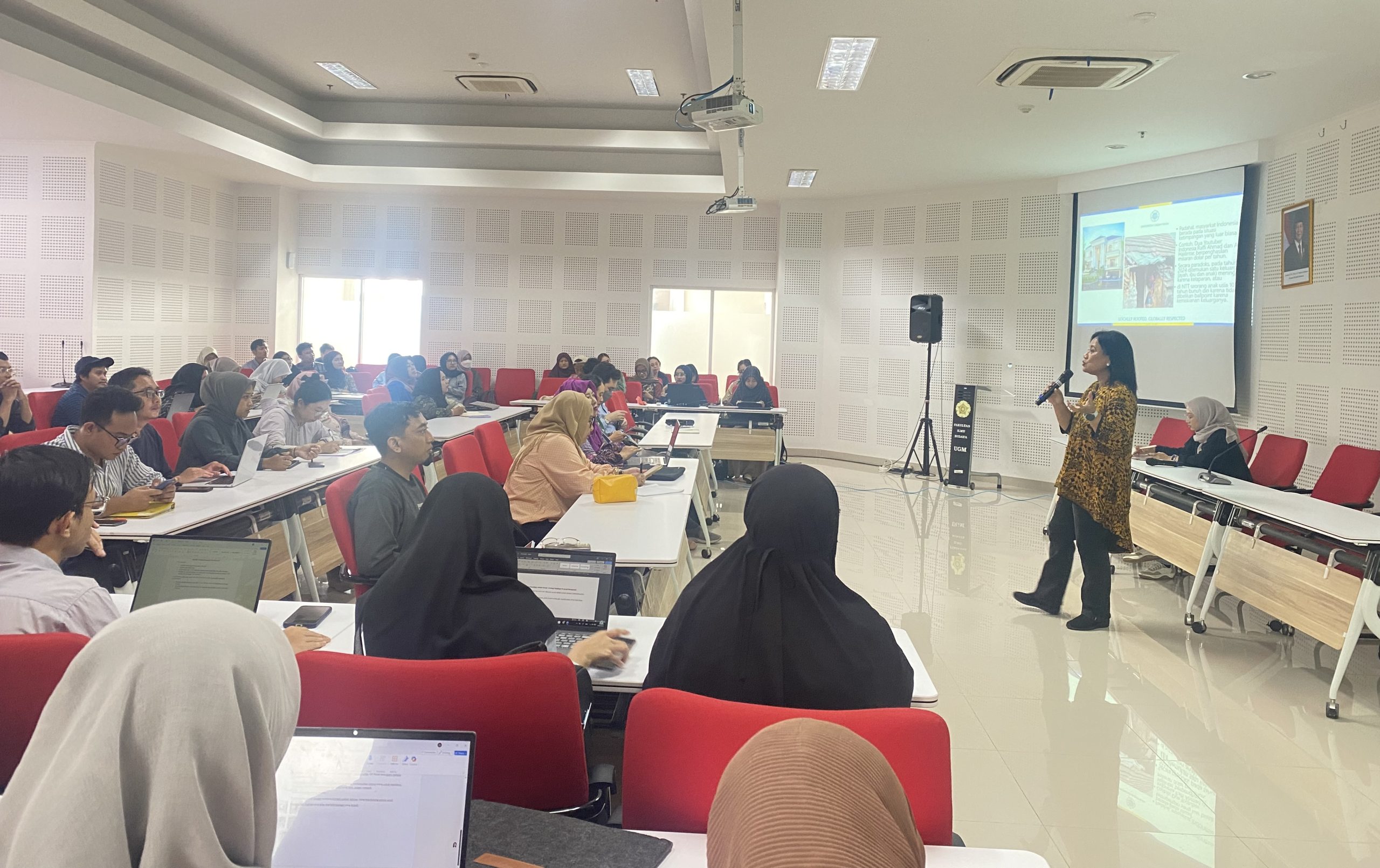
Efforts to strengthen the academic capacity of students and researchers in producing high-quality scientific publications continue to be promoted on campus. The Master’s Program in Literature at the Faculty of Cultural Sciences, Universitas Gadjah Mada organized a “Scientific Article Writing Workshop: Strategies for Publishing in Reputable Journals” on Monday, February 23, 2026, in Room 709 Soegondo, Faculty of Cultural Sciences UGM.

The event, which took place from 12:30 to 15:00 WIB, featured a scholar in cultural and gender studies, Wening Udasmoro, as the main speaker. The workshop aimed to enhance the ability of young academics to write scientific articles capable of competing in reputable international journals.

In her presentation, Wening emphasized that academic publishing is not merely about techniques or quick strategies to get articles accepted by journals. According to her, writing in reputable journals is an important process for testing the intellectual quality of an academic before a broader scholarly community.

She stressed that academic publication should be viewed as a process of learning and intellectual development rather than simply fulfilling administrative academic requirements. Through publication, scholars’ ideas can be read and critically examined by researchers from various universities and countries, thereby enriching academic discourse.

During the session, participants were introduced to the importance of problematization in research. Wening explained that strong research generally begins with social or cultural phenomena that attract attention and generate scholarly questions.

She illustrated how contemporary phenomena—such as the display of luxurious lifestyles on social media—can become entry points for research relevant to current social dynamics. Researchers are encouraged not merely to find objects that have not yet been analyzed but to develop new perspectives that make their research academically significant.

In addition to formulating research problems, participants were also equipped with an understanding of the importance of a strong literature review. The workshop highlighted that scientific research must be built upon a dialogue with theories and previous studies.

Several theoretical frameworks can be used to analyze social phenomena, including the concept of conspicuous consumption, the symbolic value of goods (sign value), and modern consumer culture. These theoretical frameworks help researchers interpret social phenomena in a more critical and systematic way.

Through this training, it is hoped that postgraduate students will be able to produce scientific articles that not only meet academic standards but also contribute to the advancement of knowledge and provide solutions to various social issues.

The workshop was enthusiastically welcomed by the Master’s students in Literature who attended. The discussion was highly interactive, particularly when participants explored strategies for identifying research topics with novelty and academic relevance.

Through initiatives such as this, the Faculty of Cultural Sciences UGM seeks to strengthen a critical, reflective, and productive academic culture in producing high-quality scientific publications at both national and international levels.
Author: Khotibul Umam

Prof. Suhandano Highlights Language Study Challenges in the Digital Age at UGM Faculty of Arts’ 80th Anniversary

News Release Thursday, 12 March 2026

Yogyakarta, March 3, 2026 – The Head of the Department of Languages and Literature at the Faculty of Cultural Sciences, Universitas Gadjah Mada (FIB UGM), Professor Suhandano, highlighted the developments and challenges of language studies in the digital era. This scientific speech was delivered during the Open Senate Meeting commemorating the 80th Anniversary of the UGM Faculty of Cultural Sciences. In his address, he emphasized that linguistic studies possess a vast scope and significant potential to contribute to understanding various societal issues.

Professor Suhandano explained that contemporary language studies do not only focus on the internal structure of language but also on its relationship with various aspects of life. In micro-linguistics, research covers fields such as phonology, morphology, syntax, and semantics. Meanwhile, macro-linguistics examines language in connection with other disciplines, such as discourse analysis, sociolinguistics, neurolinguistics, anthropological linguistics, computational linguistics, and forensic linguistics.

According to Professor Suhandano, language as an object of study is dynamic and constantly evolves alongside societal changes. Consequently, perspectives in language study continue to expand as new issues emerge within social life.

He also touched upon the evolution of linguistic thought dating back to Ancient Greece. The philosopher Plato, for instance, questioned the relationship between words and the objects they name. From these thoughts, two distinct views emerged: one that perceives the relationship between words and objects as logical, and another that views it as arbitrary—formed through the consensus of the speech community.

Meanwhile, Aristotle viewed language as a tool for thought. He identified three main components in a proposition: onoma, rema, and logos, which in modern linguistic studies are equivalent to nouns, verbs, and sentences.

Professor Suhandano emphasized that language functions not only as a system of signs but also as a means to understand the world. “Language reflects how its speakers perceive the world and how they think about their surroundings,” he stated during the scientific speech.

This perspective opens opportunities for linguistic studies to contribute to various research themes relevant to societal needs. He cited that food security—a theme that might initially seem far removed from language studies—can actually be analyzed through a linguistic lens to understand how society perceives and discusses food.

To develop such studies, Professor Suhandano believes that cross-disciplinary collaboration is a vital step. “Linguistics needs to work hand-in-hand with other sciences to address these themes,” he noted.

On that occasion, he also highlighted the position of FIB UGM, which has long been recognized as a primary reference for the development of language studies in Indonesia. Numerous academic works produced by the faculty have become benchmarks in linguistic research, including M. Ramlan’s work on Indonesian morphology and syntax.

Interest in language studies at the faculty continues to grow. Students from various regions in Indonesia, and even from abroad, come to study linguistics with a diverse range of research topics.

As the faculty enters its 80th year, the construction of new buildings at FIB UGM is expected to support increasingly developing academic activities. With more adequate facilities, it is hoped that education, research, and community service activities can be carried out more optimally.

Amidst the rapid changes of the digital era, Professor Suhandano believes that language studies still hold great potential for growth. Through research and cross-disciplinary collaboration, linguistic studies are expected to provide meaningful contributions to understanding societal dynamics and encourage the development of knowledge that benefits collective life.

[Public Relations of FIB UGM, Candra Solihin]

Two New Lecturers Officially Join the Anthropology Study Program

News Release Tuesday, 10 March 2026

The Department of Anthropology is proud and delighted to announce the addition of two new lecturers who will strengthen academic activities, research, and community service within the study program. The presence of these two lecturers is expected to make a significant contribution to the development of anthropology and improve the quality of learning for students.

Both lecturers have academic backgrounds and research experience relevant to the field of anthropology. With their expertise, they are expected to enrich scientific perspectives, encourage research collaboration, and bring innovative learning approaches to the classroom.

The first lecturer to join is Dr. Des Christy, S.Ant., M.A., a PhD graduate from Radboud University Nijmegen with a dissertation titled “Navigating Shifting Tides: The Sociality of Fishing in North Shields, UK, in the face of the EU Common Fisheries Policy” and has participated in a postdoctoral researcher program at the Nijmegen School of Management. Her areas of interest include maritime anthropology, environmental governance, urban sustainability, and ethnography in Europe. Second, Michael Haryo Bagus Raditya, M.A., who is currently completing his studies in the Doctoral Program at the Asia Institute, Faculty of Arts, University of Melbourne, Victoria, Australia. His research interests include dangdut, popular music studies, ethnomusicology, performing arts, performance studies, contemporary dance, anthropology of art, and Asian cultural studies.

The addition of these lecturers is part of efforts to strengthen the academic capacity of the study program. Hopefully, their presence can provide new energy for scientific development, improve the quality of education, and expand research and cooperation networks. In addition, students are also expected to take advantage of this opportunity to learn from the experience and expertise of the new lecturers, whether through lectures, research activities, or academic discussions. With the addition of these two new lecturers, the Anthropology Study Program is optimistic that it can continue to grow and make a broader contribution to the development of science and understanding of social and cultural dynamics in society.

FIB UGM Launches Book Documenting 80 Years of the Faculty’s History

HEADLINESNews Release Tuesday, 10 March 2026

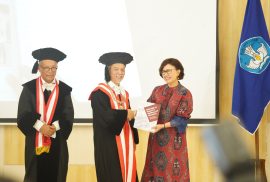
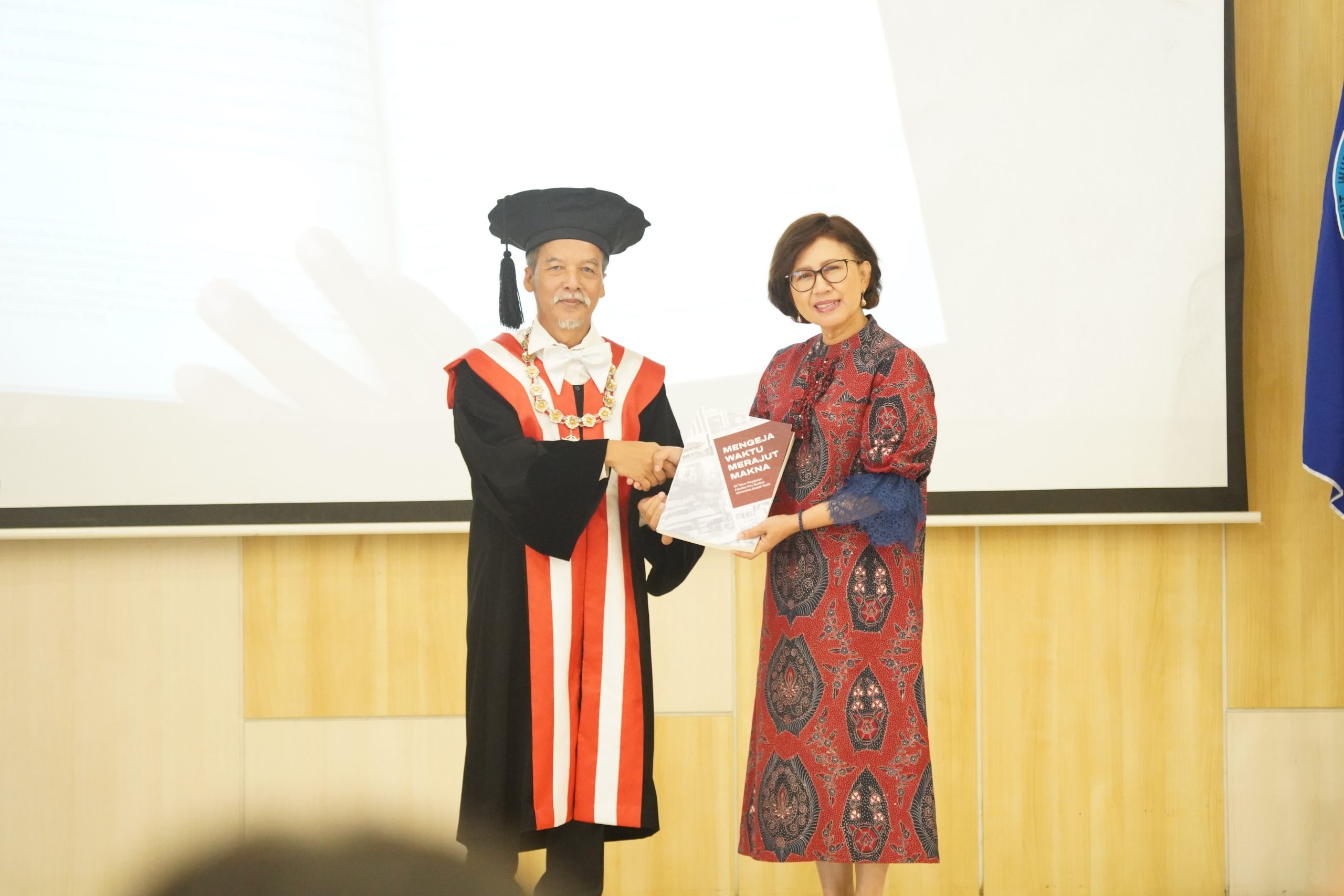
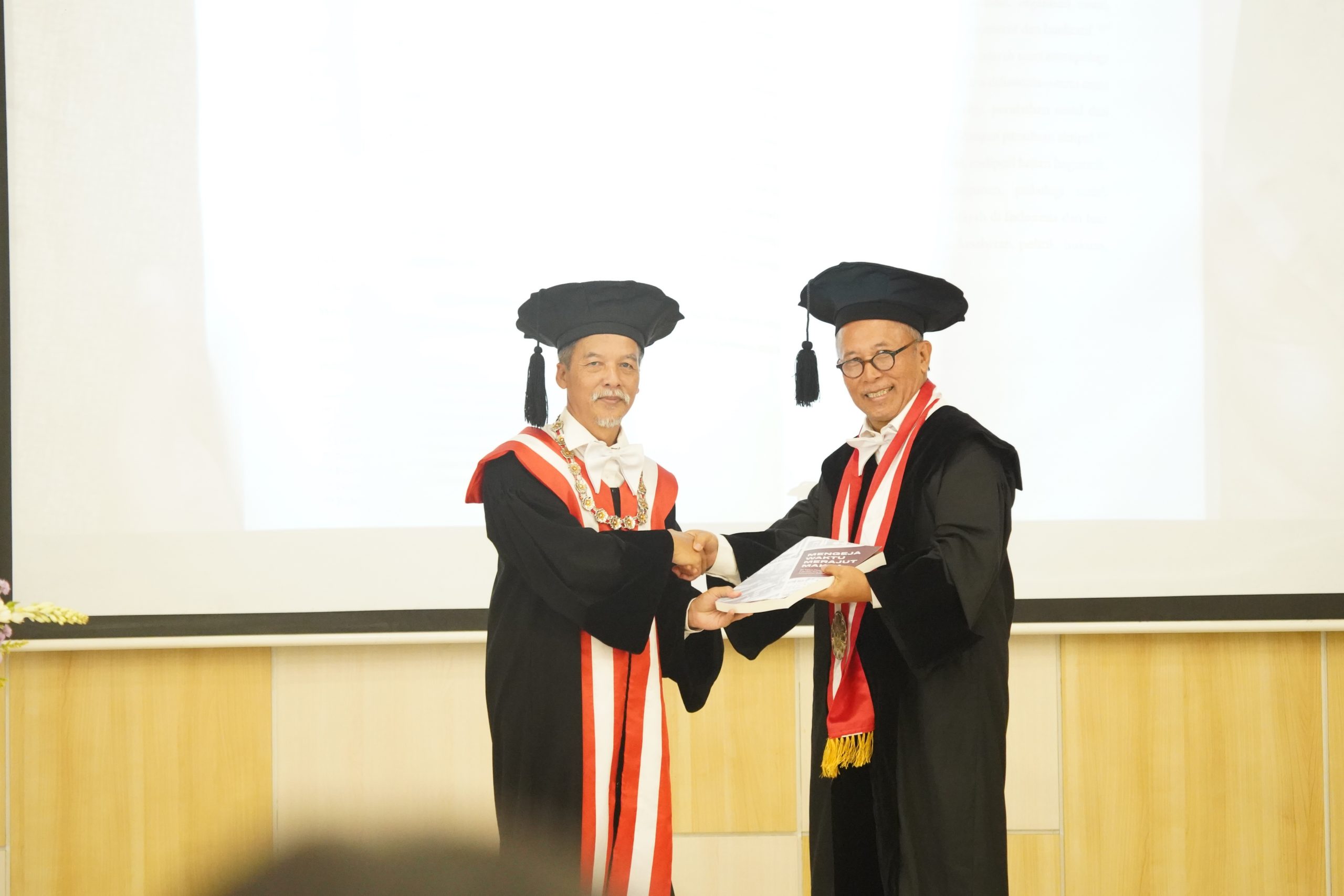
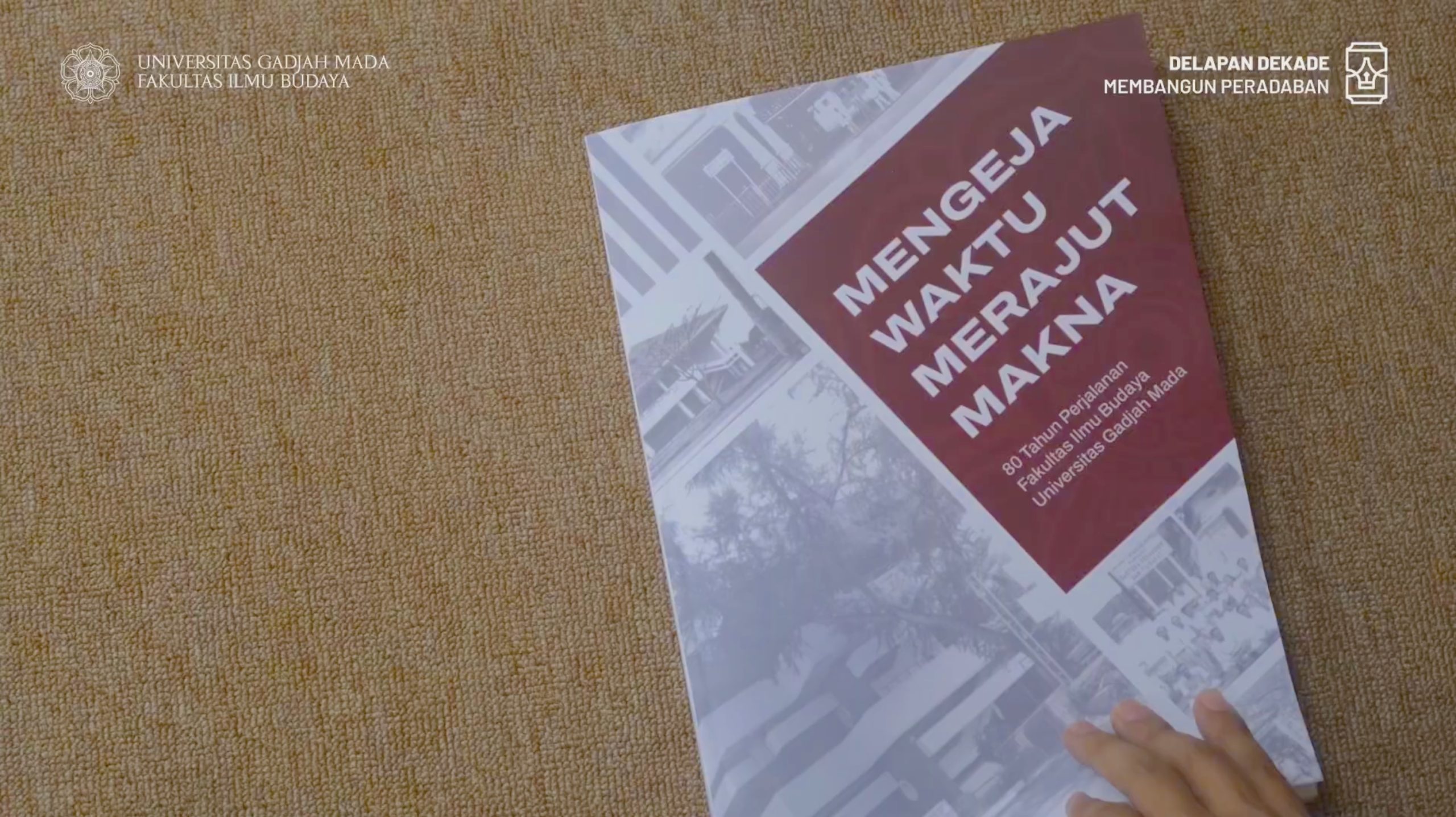
Yogyakarta, March 3, 2026 – Coinciding with its 80th anniversary, the Faculty of Cultural Sciences (FIB) at Universitas Gadjah Mada launched a historical book titled Mengeja Waktu Merajut Warna, 80 Tahun Perjalanan Fakultas Ilmu Budaya Universitas Gadjah Mada. The book was presented to the Chair of the FIB Senate, Professor Bambang Hudayana, M.A., and UGM Rector Professor Ova Emilia, Ph.D., as part of an effort to document the faculty’s long journey in developing literary and cultural studies in Indonesia.

The book was written by a team consisting of Abdul Wahid, Tatag Andriawan, Soraya Anugra Lia, and Lenna Aurelia Amalia. Although the writing process was completed within a relatively short period, it is expected to serve as an initial step in reconstructing the institutional history of FIB UGM over the past eight decades.

In the book’s introduction, the authors explain that this work represents an early effort to document more comprehensively the history of the Faculty of Cultural Sciences as one of Indonesia’s oldest higher education institutions in the fields of literature and culture. Through this historical exploration, the book also seeks to understand the meaning behind the transformations experienced by the faculty over time.

“This book is the first attempt to comprehensively reconstruct the 80-year journey of the Faculty of Cultural Sciences as the oldest higher education institution in Indonesia in the field of literature and culture, while also seeking meaning from this long historical process,” the authors wrote.

As a study of institutional history, the book explains the development of the Faculty of Cultural Sciences at UGM as an organization shaped by internal dynamics as well as external changes, including government policies, developments in higher education, and social dynamics. The institutional history approach does not merely record a chronology of events but also explains how an institution evolves and responds to changes over time.

Writing institutional history also plays an important role in preserving institutional memory. This memory includes physical aspects such as buildings, classrooms, organizational structures, and institutional artifacts, as well as non-physical aspects such as norms, rules, and workplace culture that develop within the institution.

For an academic institution, institutional memory has strategic value as it provides a basis for reflection in understanding the formation of collective identity while helping to shape future development.

In its preparation, the book was written chronologically to help readers understand the faculty’s development. The periodization used in the book is based on the changes in the faculty’s name throughout its history.

The discussion is divided into four main chapters. The first chapter covers the early development period from 1946 to 1955. The second chapter discusses the period of the Faculty of Letters and Culture from 1955 to 1982. The third chapter explores the Faculty of Letters period from 1982 to 2001. The fourth chapter discusses the Faculty of Cultural Sciences period from 2001 to 2025.

The authors acknowledge that the book still has limitations and does not yet fully capture the complexity of the faculty’s long history. Therefore, they hope the publication will serve as a starting point for more in-depth research on institutional and academic development within FIB UGM.

“We realize that this book is far from complete, let alone perfect. With humility, we hope it will receive constructive input so that it can be improved in the future,” the authors wrote.

The authors also expressed their gratitude to various parties who supported the writing process, particularly the FIB UGM Dean’s Office for the 2021–2026 period, which entrusted the team with the project.

The publication of this book is expected to serve as a reflection for the academic community to better understand the institution’s journey while strengthening its commitment to advancing knowledge, culture, and academic contributions to society.

[Public Relations of FIB UGM, Candra Solihin]

FIB UGM Honors Outstanding Lecturers and Staff on 80th Anniversary

HEADLINESNews Release Friday, 6 March 2026

Yogyakarta, March 3, 2026 – The Faculty of Cultural Sciences (FIB) Universitas Gadjah Mada presented awards to five outstanding members of its academic community during the 80th Anniversary (Dies Natalis) celebration at the FIB UGM Poerbatjaraka Auditorium. This initiative serves as an institutional appreciation for the dedication and achievements of both lecturers and educational staff in advancing science, education, and community development.

In the outstanding lecturer category, FIB UGM presented an award to Dr. Elan Ardri Lazuardi, S.Ant., M.A., from the Anthropology Study Program. Dr. Lazuardi possesses specialized expertise in medical anthropology and public health services. Throughout his career, he has received various prestigious academic recognitions. These include the High-Quality Scientific Article Award in Health and Medicine from the Ministry of Research and Technology in 2020, as well as the Dean’s Award for Outstanding PhD Theses from the University of New South Wales in the same year. Previously, he earned the Early Career Research Award for the best oral presentation category from the Australian Society for HIV, Viral Hepatitis, and Sexual Health Medicine in 2018.

The next recipient of the outstanding lecturer award is Dr. Raden Rucitarahma Ristiawan, S.Par., M.Sc., from the Tourism Study Program. This tourism and cultural landscape expert earned a doctorate in Cultural Geography from Wageningen University, the Netherlands, in 2024. His dissertation discusses the commodification of landscapes in the development of geopark tourism in Indonesia. Dr. Ristiawan has consistently researched community-based tourism practices from his undergraduate studies at UGM to his master’s program at the University of Glasgow, United Kingdom, in 2017.

The third lecturer to receive a similar award is Wildan Sena Utama, S.S., M.A., Ph.D., from the History Study Program. This historian focuses on modern international and transnational relations between Indonesia and the Afro-Asian world in the 20th century. Dr. Utama completed his doctoral education at the University of Bristol in 2023. His dissertation highlights the role of Indonesian figures in the Afro-Asian movement during the 1950s and 1960s to demonstrate the importance of South-South solidarity in the history of national independence, anti-imperialist movements, and efforts to build a more decolonial world order.

From the educational staff ranks, FIB UGM appreciated the performance of two staff members who are considered to have made major contributions to the smooth operation of the faculty. Dyah Ayu Retnowati, A.Md., received the outstanding award in the Academic and Student Affairs division. Meanwhile, Tri Iswanto received an award in the General Affairs division for his crucial dedication in supporting the smooth running of administrative services and activities within the faculty.

This appreciation is expected to boost the motivation of the entire academic community to continue innovating and providing the best service in the future. This step aligns with the higher education institution’s commitment to continuously building a high-quality, inclusive, and resilient learning ecosystem to produce human resources capable of bringing a positive impact to the advancement of civilization.

[Public Relations of FIB UGM, Candra Solihin]

1…3031323334…143

Video UGM

[shtmlslider name='shslider_options']
Universitas Gadjah Mada

Faculty of Cultural Sciences
Universitas Gadjah Mada
Jl. Nusantara 1, Bulaksumur Yogyakarta 55281, Indonesia
   fib@ugm.ac.id
   +62 (274) 513096
   +62 (274) 550451

Work Units

  • Office of Journal & Publishing
  • INCULS
  • Information Technology and Database
  • Language Learning Center
  • Library Unit
  • Public Relations
  • Research

Facilities

  • Computer Laboratory
  • Gamelan
  • Guest House
  • Language Library
  • Library
  • Phonetics Library
  • Self Access Unit
  • Student Internet Centre

Importan Links

  • Journal of Humaniora
  • Subscriber Journal
  • Alumni Portal
  • Career
  • Departmens News
  • UGM Streaming

Contacts

  • Academic
  • Administration
  • Dean’s Office
  • Departments / Study Programs
  • Public Relations

© 2024 Faculty of Cultural Sciences Universitas Gadjah Mada

KEBIJAKAN PRIVASI/PRIVACY POLICY

[EN] We use cookies to help our viewer get the best experience on our website. -- [ID] Kami menggunakan cookie untuk membantu pengunjung kami mendapatkan pengalaman terbaik di situs web kami.I Agree / Saya Setuju