• About UGM
  • Academic Portal
  • IT Center
  • Library
  • Research
  • Webmail
  • Informasi Publik
  • English
    • Indonesia
Universitas Gadjah Mada Faculty of Cultural Sciences
Universitas Gadjah Mada
  • Home
  • Profile
    • History
    • Vision and Mission
    • Organizational structure
    • Administration
    • Staff
    • Faculty Members
  • Academic
    • Academic Calendar
    • Undergraduate Programs
      • Bachelor of Cultural Antrophology
      • Bachelor in Archaeolagy
      • Bachelor in History
      • Bachelor in Tourism
      • Bochetor in Korean Language and Culture
      • Bachelor in Indonesian Language and Culture
      • Bachelor in English
      • Bachelor in Arabic
      • Bachelor in Japanese Language and Culture
      • Bachelor in Javanese Language, Literature and Culture
      • Bachelor in French language and literature
    • Graduate Programs
      • Master in Antrophology
      • Master in ArchaeoIogy
      • Master in History
      • Master in Linguistics
      • Master in Literature
      • Master In American Studies
      • Master in Middle Eastern Cultural Studies
    • Post-Graduate Programs / S3
      • Doctor in Antropology
      • Doctor in American Studies
      • Doctor in Humanities
    • Student Service
  • KPPM
    • Research Information
    • Scientific / Academic Publications
    • Community Service
    • International Cooperation
    • Domestic Cooperation
  • Student Organizations
    • Student Executive Council
    • Semi-Autonomous Organizations
      • KAPALASASTRA
      • Christian Student Alliance
      • LINCAK
      • Saskine
      • Catholic Student Family
      • Dian Budaya
      • Sastra Kanuragan (sasgan)
      • Family of Muslim Cultural Sciences Students (KMIB)
      • Bejo Mulyo
    • Autonomous Organizations
      • Family of Anthropology Students (KEMANT)
      • English Department Student Association
      • Tourism Students Association (HIMAPA)
      • Family of Indonesian Literature Students (KMSI)
      • West Asian Literature Student Association (IMABA)
      • Association of Korean-Language Students (HIMAHARA)
      • Family of Regional Indonesian Literatures Students (KAMASUTRA)
      • The Family Body of History Students (BKMS)
      • The French Literature Students Association (HMSP)
      • Family of Anthropology Students
      • Japanese Student Association (HIMAJE)
  • Admission
    • Student Evaluation
  • Home
  • SDGs 4 Pendidikan Berkualitas
  • (Page 5)
Arsip:

SDGs 4 Pendidikan Berkualitas

Strengthening Academic Governance and Inclusivity: Hearing Department of Cultural Anthropology UGM 2026

News Release Thursday, 30 July 2026

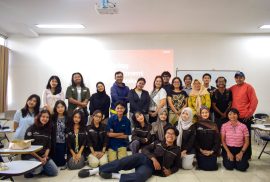
On Thursday, 18 June 2026, the Cultural Anthropology Student Family (KEMANT) of Universitas Gadjah Mada held its annual Hearing Department event in Room 201 of the Poerbatjaraka Building, Faculty of Cultural Sciences (FIB) UGM, Yogyakarta. Running from 1:00 PM to 3:00 PM WIB, the interactive dialogue was hosted by MC [Name] and moderated by Dionysius Nugroho Danumurti. The session was attended by student representatives across various cohorts alongside faculty members, including Agung Wicaksono, Sita Hidayah, Agus Indiyanto, Mubarika Dyah Fitri Nugraheni, Suzie Handajani, Atik Triratnawati, and Elan Lazuardi. The forum served as a communicative platform to gather, review, and address critical student feedback ranging from academic affairs and curriculum management to student organization governance and campus facility availability.

Through a presentation of pre-collected feedback slides, students highlighted several key issues affecting their daily learning environment. Core discussions focused on the disproportionate workload for introductory courses, course quota limitations during course registration (“War KRS”) that disadvantage internal anthropology students, clarity regarding the role and responsiveness of teaching assistants, and the need for greater transparency in grading. In response, the department welcomed the input constructively and committed to using these written recommendations as an official framework to push for policy improvements at both the faculty and university levels. Beyond classroom learning, the department outlined the strategic reasoning behind rescheduling the Integrated Fieldwork (TPL) to mid-year, primarily to mitigate the risks of natural disasters and extreme weather conditions typically affecting research sites toward the end of the year.

In addition to academic topics, the forum addressed physical infrastructure and internal organizational management. Students emphasized the importance of enhancing building accessibility for individuals with disabilities, reconfiguring classrooms to better facilitate group discussions, creating safe and comfortable public spaces, and optimizing place-of-worship facilities within the faculty grounds. Meanwhile, KEMANT officers took the opportunity to present a transparent financial report of the organization’s funds and introduced an updated leadership election mechanism designed to be more democratic, open, and accountable to all members.

The implementation of this participatory forum aligns closely with the Sustainable Development Goals (SDGs) within higher education. First, it directly advances SDG 4 (Quality Education) through a sustained commitment to improving teaching quality, ensuring fair curriculum adjustments, and fostering a conducive learning environment. Second, the emphasis on providing disability-friendly and fully accessible campus facilities reflects a concrete effort to support SDG 10 (Reduced Inequalities). Lastly, the hearing embodies SDG 16 (Peace, Justice, and Strong Institutions) by establishing a transparent, accountable, and responsive institutional governance framework for the entire academic community.

Author: Zayyan Faadia Ayutty

Field Trip the Master’s Program in Anthropology, UGM to the Bonokeling Indigenous Community

News Release Monday, 27 July 2026

As part of the implementation of experiential learning, students in the Master’s Program in Anthropology at the Faculty of Humanities (FIB), UGM, conducted a field trip on Wednesday, June 17, 2026 to the Bonokeling Indigenous Community in Pekuncen Village, Jatilawang Subdistrict, Banyumas Regency, Central Java. This activity was a field component of the “Traditional Governance Systems” course taught by Dr. Sita Hidayah, M.A. The objective was to deepen students’ understanding of traditional governance practices, community management, and the dynamics of the relationship between traditional systems and formal government through an ethnographic approach.

The students were welcomed by Ki Soemitro, Chair of the Village Customary Council, and Pak Narso, Head of Pekuncen Village. The meeting served as a forum for dialogue on the history of the Bonokeling community, the structure of customary leadership, and the community’s close connection to their ancestors through the concept of anak-putu—a spiritual and genealogical bond that forms the foundation of both the identity and social system of the Bonokeling community. Ki Soemitro explained that the survival of the indigenous community depends not only on written rules but also on the moral adherence of all anak-putu to the values inherited from Kyai Bonokeling. This system has proven capable of preserving traditional governance across generations amid the tide of modernization.

In addition to discussions, the students observed the architecture of traditional houses, communal spatial arrangements, and the conduct of traditional rituals. These observations and discussions revealed that indigenous communities possess the capacity for effective collective governance without relying entirely on formal bureaucratic structures. The Village Head explained that the formal government and traditional institutions do not compete with one another but rather complement each other. Village development policies are always consulted with traditional institutions to preserve and respect sacred spaces and the community’s cultural values. Conversely, various internal community issues—such as family disputes, social conflicts, or violations of customary norms—are resolved through customary deliberation before resorting to state legal mechanisms.

The Bonokeling community is open to technology, such as cell phones, yet remains vigilant to ensure that the values of individualism and consumerism do not supplant the principles of collective living inherited from their ancestors. Amid the tide of globalization, they face various challenges, ranging from adapting to state administrative regulations to the pressure of cultural commercialization through the tourism industry. In response, Ki Soemitro explained that the Bonokeling community employs a strategy of cultural resistance through a process of prudent negotiation. They comply with state administrative requirements to ensure the civil rights of their citizens, while still preserving Kejawen spiritual practices and value systems in their daily lives. Furthermore, traditional institutions strictly limit the commercialization of rituals to ensure that the sacred nature of traditions does not degenerate into mere tourist spectacles.

This activity provides a learning experience that goes beyond classroom instruction. Through direct observation, dialogue, and reflection with the indigenous community, students gain a more comprehensive understanding of traditional governance practices as a living, dynamic social system that continually adapts to the changing times.

Author: Dewi Widyastuti

The 2nd CAUGM Officially Opens; UGM and Chung-Ang University Students Celebrate Cultural Collaboration

News Release Friday, 24 July 2026

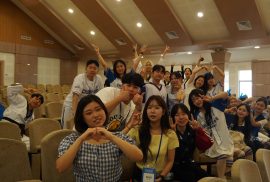
The Korean Language and Culture Study Program at FIB UGM, in collaboration with Chung-Ang University (CAU), held the opening ceremony for the “2nd CAUGM” on Tuesday, July 21, 2026. The opening ceremony took place in the Poerbatjaraka Building Auditorium. This cultural exchange program will run from July 20 through August 1.

The event was attended by 24 students from Chung-Ang University and 70 students from the Korean Language and Culture Program at FIB, UGM. Over the course of two weeks, participants will take part in various activities, such as cultural exchange classes, language exchange sessions, and collaborative activities designed to strengthen cross-cultural understanding between Indonesian and South Korean students.

At today’s opening ceremony, students from both countries presented lively cultural performances. Students from Chung-Ang University performed K-Pop dances and songs, a taekwondo demonstration, and traditional Korean musical instrument performances. Equally captivating, UGM students also presented traditional Indonesian cultural performances, including the Edan-edanan dance, the Sintren dance, singing, and pencak silat.

In addition, one of the main events in this series of collaborative activities is the Korean Festival, which will be open to the public on July 25. The general public and the campus community are invited to attend and experience Korean culture firsthand.

Through this series of activities, students not only gain academic experience but also have the opportunity to interact directly with participants from other countries. This type of cultural exchange is expected to broaden their global perspective, improve their cross-cultural communication skills, and strengthen ties among students from both institutions.

Author: Juleha (朱殷萱Chu Yin Hsuan)

Gamasutra Revives the Sounds of Classical Gamelan at the UGM Gamelan Festival

News Release Wednesday, 22 July 2026

“Gamelan Mahasiswa Sastra Nusantara,” better known as Gamasutra, once again enlivened the Gamelan Festival organized by the Faculty of Philosophy on Saturday, July 18, 2026. This festival is an annual event held as part of the Faculty of Philosophy’s anniversary celebrations. This year’s festival featured 52 gamelan groups, both from within and outside Gadjah Mada University. The event took place over two consecutive days, Saturday and Sunday, July 18–19, 2026.

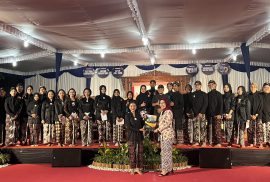
Gamasutra performed six gendhing pieces: “Ladrang Sumyar,” “Lagon Emplek-emplek Ketepu,” “Lagon Kembang Jagung,” “Lancaran Aku Duwe Pitik,” “Ketawang Manggung Sore,” and “Ayak-ayak Pamungkas RRI.” “These gendhing pieces were performed with the intention of reviving a repertoire that hasn’t been performed in a long time, and to reintroduce traditional children’s songs,” said Yanuar, a student in the Department of Javanese Language, Literature, and Culture at the Faculty of Cultural Sciences who initiated this repertoire.

Each of these pieces has a different meaning. “Lagon Emplek-emplek Ketepu,” “Lagon Kembang Jagung,” and “Lancaran Aku Duwe Pitik” are children’s songs with cheerful rhythms. “Ladrang Sumyar,” which serves as the main piece in Gamasutra’s performance, is presented with a distinctly different feel. “Unlike Ladrang Sumyar, which is usually performed in the laras pelog pathet barang, we perform it in laras slendro pathet manyura,” said Yanuar. These pieces are also reconstructions of old recordings from RRI Yogyakarta, RRI Kraton Yogyakarta, SMKI Yogyakarta, and Karawitan Condong Raos.

Gamasutra’s participation in the Karawitan Festival is part of the efforts by students at the Faculty of Humanities, UGM, to continue revitalizing, preserving, and reintroducing the richness of Javanese karawitan to the wider public. Through a repertoire ranging from classical gendhing to children’s songs, Gamasutra demonstrates its commitment to maintaining the continuity of the karawitan art tradition amid the changing times.


[Humas FIB, Maylafaizza Nafisha Zifa]

Analyzing the Middle East Conflict from a Geopolitical Perspective and Indonesia’s Interests

News Release Monday, 20 July 2026

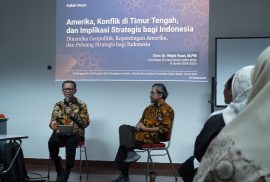
On Monday, July 20, 2026, the American Studies Program at the Faculty of Cultural Sciences, UGM, held a public lecture titled “The United States, the Middle East Conflict, and Implications for Indonesia: Geopolitical Dynamics, U.S. Interests, and Strategic Opportunities for Indonesia.” The public lecture featured Dr. Wajid Fauzi, M.PM., as the speaker. He is currently a Ph.D. student in American Studies and is set to graduate on July 22. He also served as Indonesia’s Ambassador Extraordinary and Plenipotentiary to Yemen (2012–2016) and Syria (2019–2025).

The lecture covered the Middle East as a region that has become a focal point for the study of international politics, the role of the United States in the region, and the strategic implications for Indonesia’s interests. The guest lecture was opened by Dr. Achmad Munjid, M.A., Ph.D., a lecturer in the American Studies Program. He emphasized that it is crucial for the public to recognize the significant impact that the current conflict between the United States and the Middle East has on Indonesia. This is also the reason why this public lecture was organized.

The presentation was then followed by a talk by Dr. Wajid Fauzi, M.PM. He encouraged participants to take a holistic view of the Middle East—not only through the lens of its wars and conflicts, but also by examining the layers beneath the surface. These include energy routes, trade routes, rivalries among regional powers, and competition among major nations with interests in the region.

Dr. Wajid Fauzi explained that the Middle East is not merely a region of conflict, but a geopolitical arena where global interests converge, power struggles unfold, and the quest for international legitimacy takes place. “Geopolitics teaches us that geography is not merely about the location of a country or the boundaries of a region, but rather a factor that shapes the distribution of power, economic interests, military strategies, and can even influence another country’s foreign policy toward that region,” he emphasized. He concluded that, in other words, geography is not a neutral factor but a source of advantage.

Conflicts in the Middle East also have implications for Indonesia, such as in foreign policy, the protection of Indonesian citizens, energy security, trade, food security, and national security. Indonesia is expected to continue pursuing an independent and active foreign policy and to serve as a “bridge builder” or diplomatic mediator in maintaining international peace.


[Humas FIB, Maylafaizza Nafisha Zifa]

1…34567…54

Video UGM

[shtmlslider name='shslider_options']
Universitas Gadjah Mada

Faculty of Cultural Sciences
Universitas Gadjah Mada
Jl. Nusantara 1, Bulaksumur Yogyakarta 55281, Indonesia
   fib@ugm.ac.id
   +62 (274) 513096
   +62 (274) 550451

Work Units

  • Office of Journal & Publishing
  • INCULS
  • Information Technology and Database
  • Language Learning Center
  • Library Unit
  • Public Relations
  • Research

Facilities

  • Computer Laboratory
  • Gamelan
  • Guest House
  • Language Library
  • Library
  • Phonetics Library
  • Self Access Unit
  • Student Internet Centre

Importan Links

  • Journal of Humaniora
  • Subscriber Journal
  • Alumni Portal
  • Career
  • Departmens News
  • UGM Streaming

Contacts

  • Academic
  • Administration
  • Dean’s Office
  • Departments / Study Programs
  • Public Relations

© 2024 Faculty of Cultural Sciences Universitas Gadjah Mada

KEBIJAKAN PRIVASI/PRIVACY POLICY

[EN] We use cookies to help our viewer get the best experience on our website. -- [ID] Kami menggunakan cookie untuk membantu pengunjung kami mendapatkan pengalaman terbaik di situs web kami.I Agree / Saya Setuju