• About UGM
  • Academic Portal
  • IT Center
  • Library
  • Research
  • Webmail
  • Informasi Publik
  • English
    • Indonesia
Universitas Gadjah Mada Faculty of Cultural Sciences
Universitas Gadjah Mada
  • Home
  • Profile
    • History
    • Vision and Mission
    • Organizational structure
    • Administration
    • Staff
    • Faculty Members
  • Academic
    • Academic Calendar
    • Undergraduate Programs
      • Bachelor of Cultural Antrophology
      • Bachelor in Archaeolagy
      • Bachelor in History
      • Bachelor in Tourism
      • Bochetor in Korean Language and Culture
      • Bachelor in Indonesian Language and Culture
      • Bachelor in English
      • Bachelor in Arabic
      • Bachelor in Japanese Language and Culture
      • Bachelor in Javanese Language, Literature and Culture
      • Bachelor in French language and literature
    • Graduate Programs
      • Master in Antrophology
      • Master in ArchaeoIogy
      • Master in History
      • Master in Linguistics
      • Master in Literature
      • Master In American Studies
      • Master in Middle Eastern Cultural Studies
    • Post-Graduate Programs / S3
      • Doctor in Antropology
      • Doctor in American Studies
      • Doctor in Humanities
    • Student Service
  • KPPM
    • Research Information
    • Scientific / Academic Publications
    • Community Service
    • International Cooperation
    • Domestic Cooperation
  • Student Organizations
    • Student Executive Council
    • Semi-Autonomous Organizations
      • KAPALASASTRA
      • Christian Student Alliance
      • LINCAK
      • Saskine
      • Catholic Student Family
      • Dian Budaya
      • Sastra Kanuragan (sasgan)
      • Family of Muslim Cultural Sciences Students (KMIB)
      • Bejo Mulyo
    • Autonomous Organizations
      • Family of Anthropology Students (KEMANT)
      • English Department Student Association
      • Tourism Students Association (HIMAPA)
      • Family of Indonesian Literature Students (KMSI)
      • West Asian Literature Student Association (IMABA)
      • Association of Korean-Language Students (HIMAHARA)
      • Family of Regional Indonesian Literatures Students (KAMASUTRA)
      • The Family Body of History Students (BKMS)
      • The French Literature Students Association (HMSP)
      • Family of Anthropology Students
      • Japanese Student Association (HIMAJE)
  • Admission
    • Student Evaluation
  • Home
  • SDGs 4 Pendidikan Berkualitas
  • SDGs 4 Pendidikan Berkualitas
  • page. 4
Arsip:

SDGs 4 Pendidikan Berkualitas

Department of Anthropology Hold a Rohingya Refugee Film

News Release Tuesday, 10 March 2026

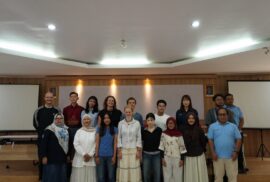
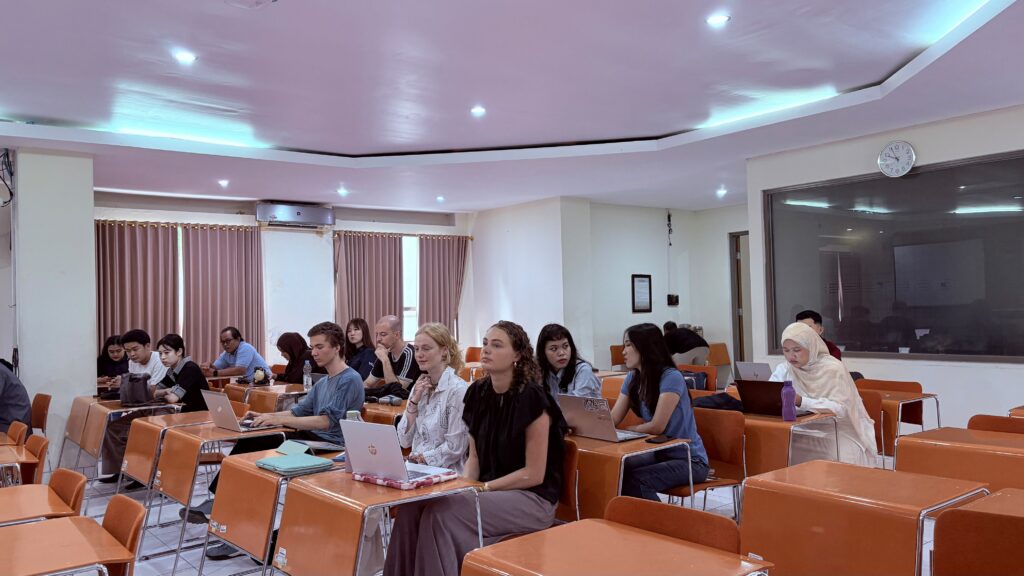
Human migration and displacement are increasingly relevant issues in this era of global cross-regional relations. On Friday, February 13, 2026, the Department of Anthropology at Gadjah Mada University held a film screening and discussion on this topic. When The Water Horse Seeks a New Home is a short film by director Andrianus “Oetjoe” Merdhi, who has produced many films about various communities in Indonesia. The film was also produced with the assistance of Gerhard Hoffstaedter from the University of Brisbane and Prof. Dr. Antje Missbach (Mbak Antje) from the University of Bielefeld. Broadly speaking, this film tells the story of the experiences of Rohingya refugees who crossed the sea to seek asylum in Aceh, Indonesia. The screening was attended by Mbak Antje and facilitated by Dr. Realisa Darathea Masardi (Mbak Lisa) as the event organizer from the Department of Anthropology at UGM.

The film begins with an exposition from the perspective of a Rohingya migrant who fled to Aceh. During their journey, the group faced many challenges, such as engine failure that forced them to drift at sea for several days, unable to control their direction. They received assistance from several patrol officers in the waters they crossed, but no one gave them permission to dock. After a long journey, they finally arrive on the coast of Aceh.

Upon arrival, many local residents express their rejection of their presence. During negotiations with residents over where to live, the refugees wait on the coast, near their boat, not allowed to go far. After that, they settle in a crowded and squalid refugee camp. The residents’ rejection was actually justified, due to concerns about the behavior of the Rohingya refugees. However, there were also residents who empathized with these refugees. After the refugees moved to the camp, he found a hippopotamus toy belonging to one of the refugee children. Some time later, he tried to return the toy, but it turned out that the child and her family had left the camp and could not be contacted.

The empathy shown stems from a sense of shared destiny, because he himself was once a refugee. The Aceh war forced him to leave his home and family. So, he has experienced what the Rohingya refugees are experiencing today. This perspective shows the human side of this conflict, and reveals that many similar experiences have been endured by communities in Indonesia itself.

After the screening, Ms. Antje opened a discussion and QnA session with the audience. A lively discussion ensued, focusing on how civilians can respond and help these refugees. The discussion also touched on how the state can handle this crisis, balancing the interests of its citizens with providing humanitarian assistance to refugees. After the discussion, the event concluded with the Department of Anthropology presenting a memento to Ms. Antje.

Author: Amadeus Abhirama Paramanindita

Prof. Ova Emilia Encourages Innovation and New Leaps in Her Remarks at the 80th Anniversary of FIB UGM

News Release Saturday, 7 March 2026

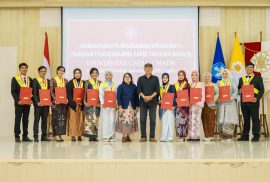
Yogyakarta, March 3, 2026  – The Rector of Universitas Gadjah Mada, Ova Emilia, encouraged the emergence of various innovations and new leaps in the development of humanities scholarship during her remarks at the 80th Dies Natalis celebration of the Faculty of Cultural Sciences of Universitas Gadjah Mada (FIB UGM). The eight-decade milestone of the faculty was seen as an important moment to reflect on past achievements while strengthening the contribution of the humanities to the development of civilization.

In her speech, Prof. Ova Emilia expressed pride in the faculty progress report presented by Setiadi. She emphasized that the Dies Natalis celebration is not merely a commemoration of the institution’s age, but also an opportunity to remember the struggles of the founders and predecessors who laid a strong foundation for the development of FIB UGM.

“Eighty years is a mature age, yet at the same time it demands agility to continuously adapt and innovate,” she stated.

According to her, the various achievements attained by FIB UGM demonstrate continuous progress, both nationally and internationally. The academic community, she added, bears the responsibility to continuously produce breakthroughs and new leaps so that the faculty can not only survive but also thrive in facing future challenges.

Since its establishment in 1946, FIB UGM has demonstrated resilience through its ability to adapt and innovate amid changing times. This strength is reflected in the contributions of its alumni as well as numerous scholarly works and innovations that have produced tangible impacts on society.

Prof. Ova Emilia likened FIB UGM to a teak tree that grows stronger as it ages. The older a teak tree becomes, the stronger and higher the quality of its wood. This analogy reflects the maturity and resilience of the faculty in carrying out its role as an institution for humanities education.

She also highlighted several academic achievements attained by the faculty, including international recognition received by its lecturers and the success of several study programs that rank among the top three nationally. These accomplishments, she noted, serve as both pride and motivation to further enhance the quality of education and research.

In addition, the improvement of research performance within the faculty has also drawn attention. Despite relatively limited internal budget allocations, the number of research projects produced remains high due to funding support from various national and international partners. This, she explained, reflects strong public trust in the university.

“The substantial funding obtained from external partners for the implementation of the tridharma activities reflects public trust in the university,” she explained.

She also underscored the strong tradition of community engagement within UGM, which receives broad support from various partners. Every community service initiative carried out by the university, she noted, consistently receives positive responses from stakeholders who wish to contribute.

On this occasion, Prof. Ova Emilia expressed her gratitude to the founders, predecessors, professors, academic community members, educational staff, alumni, and partners who have significantly contributed to building and advancing FIB UGM to its current achievements. She hopes that the values of scholarship and humanity cultivated on campus will continue to grow and contribute positively to national development.

The 80th Dies Natalis celebration of FIB UGM also reflects the faculty’s commitment to supporting the Sustainable Development Goals (SDGs). Strengthening humanities education aligns with SDG 4 (Quality Education) through the development of inclusive and high-quality higher education. Furthermore, research collaborations with various national and international partners support SDG 17 (Partnerships for the Goals), while innovations in research and knowledge development contribute to SDG 9 (Industry, Innovation, and Infrastructure).

Closing her remarks, Prof. Ova Emilia delivered a pantun as an expression of appreciation and hope for the faculty’s future:

Attending a celebration by riding a vehicle,

Wearing a dark red kebaya,

Eight decades mark a time of maturity,

May the Faculty of Cultural Sciences always prosper.

Happy Anniversary, FIB UGM!

[Public Relations of FIB UGM, Alma Syahwalani]

Dr. Arsanti Wulandari, M.Hum., Becomes Speaker in FGD “Islam in Javanese Babad: Efforts to Revitalize Mataraman Islam”

News Release Monday, 2 March 2026

Dr. Arsanti Wulandari, M.Hum., lecturer in the Javanese Language, Literature, and Culture Study Program in the field of Philology, was one of the speakers at the Focus Group Discussion (FGD) entitled “Islam in Javanese Babad: Efforts to Revitalize Mataraman Islam”. The event was organized by PPM Aswaja Nusantara in the PPM Aswaja Nusantara Mlangi Hall on Friday (February 6, 2026) from 1:30 p.m. to 4:30 p.m.

In her presentation, Dr. Arsanti Wulandari, M.Hum. explained the connection between literary works, particularly Babad Ngayogyakarta, and the development and existence of Islam in the Yogyakarta Palace. She explained that Babad Ngayogyakarta was written during the reign of Sri Sultan Hamengkubuwana (HB) V and was transcribed again during the reign of HB VII. The manuscript was written in Javanese script and contains expressions of Islamic teachings that developed within the Yogyakarta Palace.

The chronicle covers the period of HB IV-V, starting from the childhood of HB IV until the coronation of HB V. During this period, Prince Diponegoro is also described as the guardian of HB IV until the outbreak of the Diponegoro war. Prince Diponegoro is also described as a figure who upheld Islamic teachings and revived them in the life of the Yogyakarta Sultanate.

One example cited was Prince Diponegoro’s role in providing Islamic education to Hamengkubuwana IV. This education included the obligation to study the Qur’an, understand fiqh, and instill values of struggle. Dr. Arsanti Wulandari, M.Hum. also explained that Diponegoro’s concept of struggle was reflected in the war against colonialism, which was based on the spirit of upholding Islamic teachings, including the call of sabilullah as a motivator for the troops.

Through a study of the literary work Babad Ngayogyakarta, various important information can be found, ranging from historical facts, literary forms, to information about the existence of Islam in Java. He described the existence of Islam at that time in three (3) words, namely manjing ‘enter’, ajur ‘melt’, and ajer ‘walk together’.

Information related to literature and history of the past can be found in various manuscripts. In this case, philology plays an important role in uncovering the information contained in ancient manuscripts so that it can be understood and utilized by today’s society. In addition, philological studies are also part of efforts to preserve and protect regional languages, literature, and cultures in Indonesia.

This FGD activity is in line with the Sustainable Development Goals (SDGs), particularly point 4 on quality education, point 11 on sustainable cities and communities, and point 17 on partnerships to achieve development goals.

Author : Haryo Untoro
Editor : Haryo Untoro

Prof. Setiadi Discusses Humanitarian and Justice Reflections on Refugee Issues at Masjid Mardliyah Study Session Yogyakarta, Februar

News Release Friday, 27 February 2026

Yogyakarta, February 25, 2026 – The Dean of the Faculty of Cultural Sciences (FIB) at Universitas Gadjah Mada (UGM), Prof. Setiadi, S.Sos., M.Si., delivered a lecture at the Masjid Mardliyah UGM study session under the theme “Humanitarian and Justice Reflections on Refugee Issues.” . The discussion invited participants to examine forced migration not only from a policy perspective, but also through the lens of humanity and social justice.

In his presentation, Prof. Setiadi emphasized that the phenomenon of forced migration cannot be separated from social structures and power relations that often generate marginalization. He noted that when refugee issues arise, public discourse frequently shifts toward debates over who has the authority to address the matter, rather than focusing on substantive solutions and the protection of refugees themselves.

According to him, refugees are individuals striving to rebuild their life histories after being disconnected from their jobs, education, aspirations, and communities. Forced displacement can occur at both micro and macro levels due to conflict, discrimination, political pressure, or natural disasters. In this context, “fleeing” is fundamentally an act of survival in order to secure safety and continuity of life.

Conceptually, the term refugee in the international framework refers to the definition established by the United Nations High Commissioner for Refugees (UNHCR), which describes a refugee as a person who is outside their country of nationality due to a well-founded fear of persecution based on race, religion, nationality, membership in a particular social group, or political opinion, and who is unable or unwilling to return to that country. The definition also extends to individuals forced to leave their habitual residence due to external aggression, occupation, foreign domination, or events seriously disturbing public order. In addition, there are internally displaced persons who are compelled to relocate but remain within their country’s borders.

Prof. Setiadi further encouraged participants to view refugee issues as part of the broader historical dynamics of human life. Refugees are not merely statistical figures; they are individuals with dreams, hopes, and the right to rebuild a dignified future. The greatest challenges are not only administrative in nature, but also social barriers such as stigma, discrimination, and limited access to education and employment.

The study session also underscored the relevance of refugee issues to the Sustainable Development Goals (SDGs). Efforts to ensure protection and justice for refugees align with the global commitment to reducing inequalities (SDG 10) and promoting peace, justice, and strong institutions (SDG 16). Guaranteeing refugees’ access to quality education and decent livelihoods also supports the goals of ending poverty (SDG 1) and ensuring quality education (SDG 4), while international cooperation in addressing refugee crises reflects the importance of global partnerships (SDG 17).

Through this forum, the Dean of FIB UGM reaffirmed that reflecting on refugee issues is a moral imperative to build a more just and compassionate society, placing humanity at the core of policy and social action.

[Public Relation of FIB UGM, Alma Syahwalani]

UGM Campus Mosque Study Highlights the Strengthening of Human Resources and Quality Education as Pillars of National Independence

News Release Monday, 23 February 2026

Yogyakarta, February 20, 2026 – The Campus Mosque of Universitas Gadjah Mada (UGM) held a public lecture featuring Panut Mulyono, Rector of UGM for the 2017–2022 period, Professor of Chemical Engineering at the Faculty of Engineering UGM, and Chair of the Forum of Indonesian Rectors (2021–2022). In his lecture, Prof. Panut addressed the role of Natural Resources (SDA) and Human Resources (SDM) as fundamental capital for national development.

In his presentation, he emphasized that Indonesia is a nation blessed with a large population and abundant natural resources. However, these advantages must be managed properly through the development of high-quality human resources.

“With strong nationalism and a solid work ethic, we can achieve rapid progress,” he stated. He stressed that excellent human resources can only be produced through quality education.

Prof. Panut also highlighted the importance of learning from prominent national education figures such as Ki Hajar Dewantara, who laid the foundation of Indonesia’s educational philosophy. He further quoted Nelson Mandela, who once said that education is the most powerful weapon to change the world.

According to him, education plays a strategic role in determining a nation’s progress and independence. A country with a weak education system will struggle to advance and may even decline. Conversely, quality education serves as a tool to accelerate national progress, particularly in mastering science and technology and enhancing global competitiveness.

From an Islamic perspective, Prof. Panut connected the importance of education with Qur’anic teachings, particularly Surah Al-‘Alaq (1–5), which emphasizes the command to read and seek knowledge as part of worship to Allah SWT. He also referred to Surah Al-Mujadilah verse 11, which highlights the virtue of those who pursue knowledge.

Furthermore, he underlined the crucial role of higher education institutions in continuously improving and innovating within the higher education sector to achieve national independence more swiftly. Universities are expected not only to serve as centers of learning but also to generate tangible impacts in addressing socio-economic challenges, fostering inclusive innovation, and contributing more significantly to sustainable development.

This study aligns with the Sustainable Development Goals (SDGs), particularly SDG 4 (Quality Education), which promotes inclusive and equitable quality education; SDG 8 (Decent Work and Economic Growth), through the enhancement of human resource quality and work ethic; and SDG 9 (Industry, Innovation, and Infrastructure), by strengthening the mastery of science and technology to drive national advancement.

Through this forum, the UGM Campus Mosque serves not only as a spiritual space but also as an intellectual platform that fosters strategic ideas for Indonesia’s progress toward becoming an independent and globally competitive nation.

[Public Relation of FIB UGM, Alma Syahwalani]

123456…41

Video UGM

[shtmlslider name='shslider_options']
Universitas Gadjah Mada

Faculty of Cultural Sciences
Universitas Gadjah Mada
Jl. Nusantara 1, Bulaksumur Yogyakarta 55281, Indonesia
   fib@ugm.ac.id
   +62 (274) 513096
   +62 (274) 550451

Work Units

  • Office of Journal & Publishing
  • INCULS
  • Information Technology and Database
  • Language Learning Center
  • Library Unit
  • Public Relations
  • Research

Facilities

  • Computer Laboratory
  • Gamelan
  • Guest House
  • Language Library
  • Library
  • Phonetics Library
  • Self Access Unit
  • Student Internet Centre

Importan Links

  • Journal of Humaniora
  • Subscriber Journal
  • Alumni Portal
  • Career
  • Departmens News
  • UGM Streaming

Contacts

  • Academic
  • Administration
  • Dean’s Office
  • Departments / Study Programs
  • Public Relations

© 2024 Faculty of Cultural Sciences Universitas Gadjah Mada

KEBIJAKAN PRIVASI/PRIVACY POLICY

[EN] We use cookies to help our viewer get the best experience on our website. -- [ID] Kami menggunakan cookie untuk membantu pengunjung kami mendapatkan pengalaman terbaik di situs web kami.I Agree / Saya Setuju