• About UGM
  • Academic Portal
  • IT Center
  • Library
  • Research
  • Webmail
  • Informasi Publik
  • English
    • Indonesia
Universitas Gadjah Mada Faculty of Cultural Sciences
Universitas Gadjah Mada
  • Home
  • Profile
    • History
    • Vision and Mission
    • Organizational structure
    • Administration
    • Staff
    • Faculty Members
  • Academic
    • Academic Calendar
    • Undergraduate Programs
      • Bachelor of Cultural Antrophology
      • Bachelor in Archaeolagy
      • Bachelor in History
      • Bachelor in Tourism
      • Bochetor in Korean Language and Culture
      • Bachelor in Indonesian Language and Culture
      • Bachelor in English
      • Bachelor in Arabic
      • Bachelor in Japanese Language and Culture
      • Bachelor in Javanese Language, Literature and Culture
      • Bachelor in French language and literature
    • Graduate Programs
      • Master in Antrophology
      • Master in ArchaeoIogy
      • Master in History
      • Master in Linguistics
      • Master in Literature
      • Master In American Studies
      • Master in Middle Eastern Cultural Studies
    • Post-Graduate Programs / S3
      • Doctor in Antropology
      • Doctor in American Studies
      • Doctor in Humanities
    • Student Service
  • KPPM
    • Research Information
    • Scientific / Academic Publications
    • Community Service
    • International Cooperation
    • Domestic Cooperation
  • Student Organizations
    • Student Executive Council
    • Semi-Autonomous Organizations
      • KAPALASASTRA
      • Christian Student Alliance
      • LINCAK
      • Saskine
      • Catholic Student Family
      • Dian Budaya
      • Sastra Kanuragan (sasgan)
      • Family of Muslim Cultural Sciences Students (KMIB)
      • Bejo Mulyo
    • Autonomous Organizations
      • Family of Anthropology Students (KEMANT)
      • English Department Student Association
      • Tourism Students Association (HIMAPA)
      • Family of Indonesian Literature Students (KMSI)
      • West Asian Literature Student Association (IMABA)
      • Association of Korean-Language Students (HIMAHARA)
      • Family of Regional Indonesian Literatures Students (KAMASUTRA)
      • The Family Body of History Students (BKMS)
      • The French Literature Students Association (HMSP)
      • Family of Anthropology Students
      • Japanese Student Association (HIMAJE)
  • Admission
    • Student Evaluation
  • Home
  • SDGs 3: Good Health and Well-being
  • SDGs 3: Good Health and Well-being
  • page. 2
Arsip:

SDGs 3: Good Health and Well-being

Matragama: Nurturing a Literary Community in the Land of a Thousand Temples

News Release Wednesday, 20 May 2026

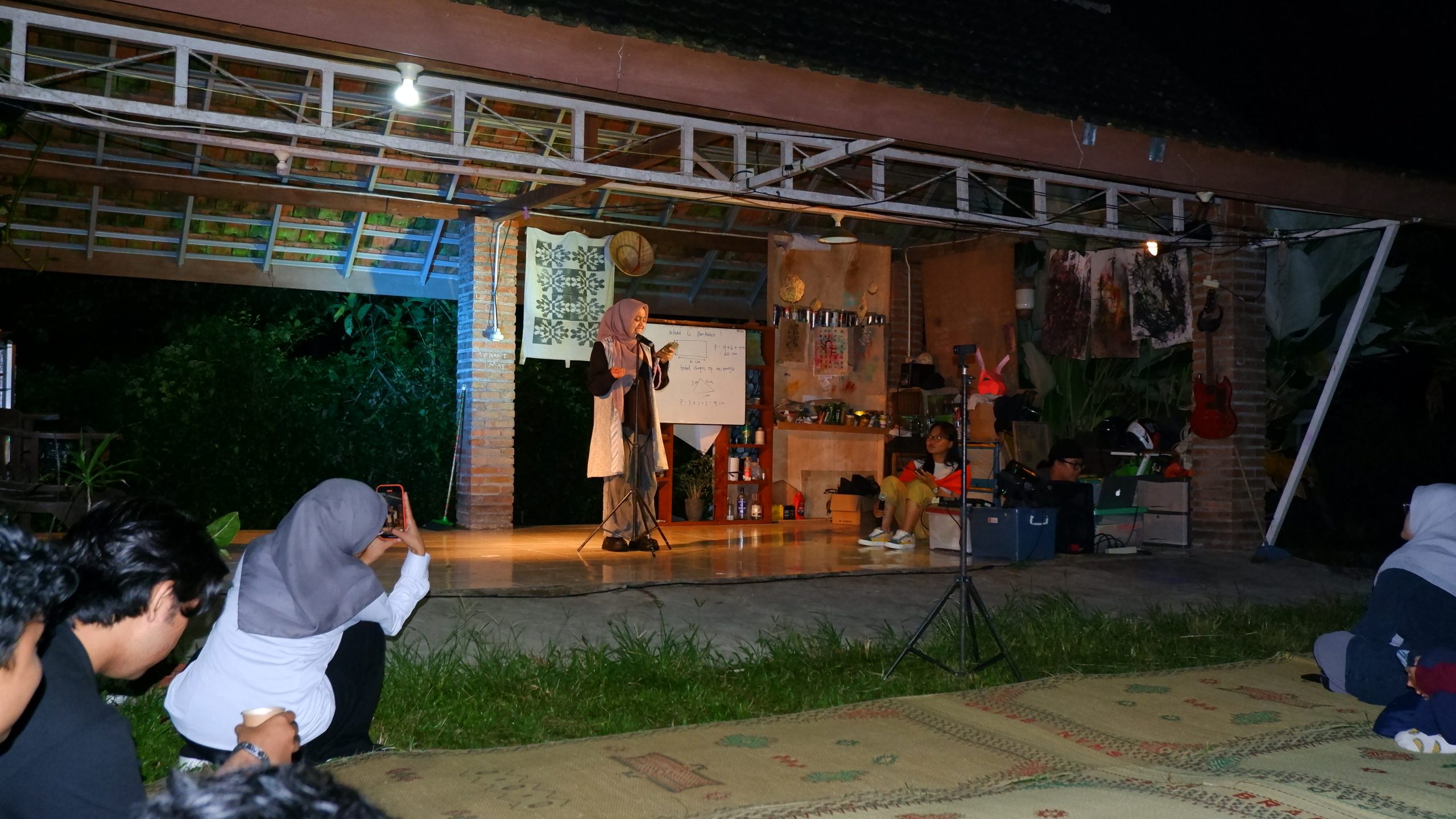
Yogyakarta, May 16, 2026 – At Pondok A. Salam Kalimasada in Pakem, Sleman, Yogyakarta, a new chapter of Matragama became more than merely an organizational agenda. It transformed into a gathering space for people who believe that literature still needs to be nurtured collectively. Since 6:00 PM WIB, people arrived one by one, bringing voices, stories, laughter, and memories. They sat on woven mats in the cold night air, while the dim light in the corner of the lodge made every conversation feel more intimate. The event was attended by the extended Matragama family from various generations, doctoral students of Humanities Studies, and invited guests from Middle Eastern Cultural Studies, American Studies, Linguistics, History, Anthropology, and various circles within the Faculty of Cultural Sciences at UGM.

Since its establishment in 2022 under the leadership of Billy, Matragama has continued moving forward through a relay of generations. Leadership was then continued by Awan in the second generation, and now enters a new phase with Brian steering the third generation. That evening marked a sign that the relay had not stopped. Amid the cold air of Pakem and the warmth of conversations beginning to grow, Matragama seemed to be rediscovering its flame.

The head of Matragama, Giandra Febrian Haidar, opened the event in a calm yet confident tone. In his remarks, he expressed hope that literature would not remain confined to classrooms alone, but would also grow in gathering spaces, through long nights, and among people who still wish to listen to one another.

The Head of UGM’s Master’s Program in Literature, Aprinus Salam, was also present and delivered warm remarks. Before the students and invited guests, he emphasized the importance of organizing and building communities as part of intellectual and cultural processes. According to him, literature cannot live in isolation. It grows through encounters, conversations, and collective work. Aprinus also stated that Pondok A. Salam Kalimasada could serve as a venue for literary and artistic activities—an open house for anyone wishing to keep the pulse of culture alive.

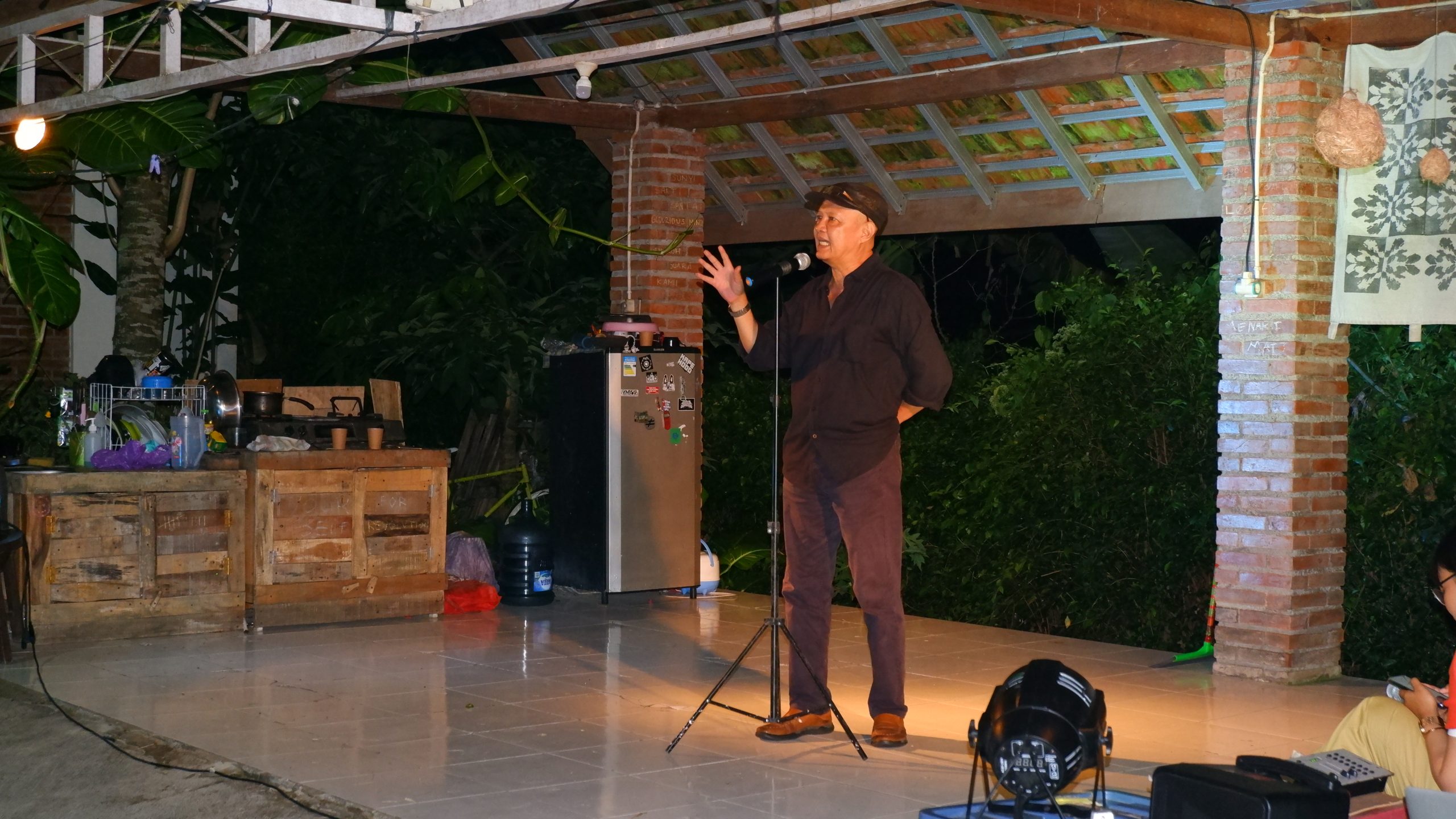
After the opening session, warmly guided by Pute as the host, poem after poem began to be recited. Short stories were brought to life through voices. Under the theme Little Candles at the Foot of Merapi, moments of silence felt deeply meaningful, as though everyone was gathering something from within themselves. The readers appeared one after another: M. Iqbal Saputra, Romzul Falah, Awabeen Samsuding, Ella Manikam, Nuzul Ilmiawan, Islahudin Muhammad, Khatibul Umam, and several invited guests. They did not merely read poetry, but also shared anxieties and inner experiences with the audience.

At times, the sound of crickets slipped between the poetry readings. Some listeners bowed their heads in silence as the poems were recited. Then a light drizzle fell gently, as though helping preserve the calm and warmth of the night. As the rain grew heavier, some participants slowly moved to the terrace and inside the lodge while continuing to listen attentively. Words continued floating through the night air, mingling with the cold winds from the slopes of Mount Merapi and the aroma of coffee and boiled soybeans wafting from the lodge.

In between sessions, M. Iqbal Saputra, a committee member from the technical division, shared his reflections on the importance of literary appreciation nights such as this. According to him, events like the launch of Matragama are something that should exist amidst the turbulence of changing times. He said that poetry, storytelling, and even simple discussions are efforts to become whole human beings again—to see life from various perspectives and then determine one’s path, whether through writing, action, or perhaps simply through a smile.

One of the evening’s most captivating moments came through a dramatic reading by Luthfi, a doctoral student in Humanities at UGM. The dramatic performance transformed the text from mere writing into a moving body, a pulsating voice, and emotions vividly alive before the audience’s eyes. The invited guests were swept into the intimate yet energetic atmosphere.

In the middle of the appreciation night, Rini Febriani Hauri read her short story titled The Three Deaths of Dayang Temulun in a calm and rhythmic voice. The climax of the event came when Rini’s short story was discussed collectively. The discussion was moderated by Giandra, featuring Ricky Yudhistira Nasution, a doctoral student in Humanities at UGM, as the speaker. The short story, which won Second Place in the 2025 International HB Jassin Award, was explored through the lens of magical realism—a landscape where bodies, earth, trees, mist, and memories coexist without rigid boundaries between the real and the supernatural. The discussion unfolded warmly. It examined how literature operates within collective memory, myth, the body, and human history. Participants listened enthusiastically; some remained silent in contemplation, while others immersed themselves in endless interpretive possibilities.

The night grew later, yet no one truly wished to leave. After the entire series of events concluded, the atmosphere became more relaxed. Some people sang together, while others chatted freely, joked, and shared long laughter. Some sat in circles discussing books and literature, while others simply enjoyed the night while exchanging unfinished life stories beyond the formal forum. It was there that Matragama truly felt alive—not in banners, event schedules, or ceremonial formalities, but in encounters and conversations that continued glowing deep into the night.

Several invited guests from various departments and communities within UGM’s Faculty of Cultural Sciences also shared reflections and hopes for Matragama. Representatives from Middle Eastern Cultural Studies, American Studies, Linguistics, History, and Anthropology expressed hopes that inter-organizational bonds would continue warmly. They also wished for Matragama to have a long life and remain consistent as a shared space for nurturing literature, art, and culture.

At the foot of Merapi that night, literature appeared like little candles—not grand, but enough to keep the warmth of encounters and conversations alive. The drizzle still fell softly as people slowly began leaving Pondok Kalimasada one by one.

Author: Rini Febriani Hauri

Speech by Prof. Dr. Atik Triratnawati, “Masuk Angin: A Blessing or a Curse?”

News Release Thursday, 30 April 2026

Yogyakarta, April 26, 2026 — Prof. Dr. Atik Triratnawati conducted a community service activity by delivering a lecture related to her field at Teladan State High School in Yogyakarta. The title of her lecture posed the question “Masuk Angin (Catching a Cold): A Blessing or a Curse?” and opened up a relevant discussion in the health and well-being sector. The term “masuk angin” has long been part of Indonesian society. The public’s understanding of “masuk angin” highlights the importance of an inclusive and culturally-based approach to health.

Many people still rely on traditional methods such as scraping therapy, herbal remedies, and rest as initial treatments. These practices reflect local wisdom that has the potential to support the healthcare system, provided they are balanced with appropriate medical education. “Masuk angin” is described as a Javanese concept of illness caused by an excess of wind elements within the body. Javanese cosmology forms the basis for health and illness; in medical anthropology, this is referred to as the hot-cold theory.

Prof. Atik explains that “masuk angin” is not a disease or sickness. However, she notes that “masuk angin” falls under magico-religious models—meaning this condition arises from spiritual or supernatural causes, so its treatment follows accordingly, such as scraping therapy (kerokan/pijat), consuming herbal remedies (jamu), and other practices. Additionally, it is referred to as holistic models, where health is viewed as the result of a balance among various aspects of life—not merely the physical. Physical conditions may be influenced by psychological, social, environmental, or spiritual factors, such as stress or an unhealthy lifestyle. She also explained that “wind entering the body” is categorized into several types: ordinary (mild) wind, severe wind, and “kasep” wind (sedentary wind). Her interpretations regarding “masuk angin” include health disorders (illness), failure to adapt, a reflection of low bodily resilience, a signal to rest, and “angin duduk” as a result of magical influences.

Prof. Atik focuses on the field of health from an anthropological perspective. This is because health literacy is key to building a community that is aware of its physical condition. Appropriate education can help the public distinguish between mild symptoms and serious illnesses requiring medical intervention. Additionally, a culture-based approach helps reach communities with limited access to formal healthcare services. By integrating local knowledge into the healthcare system, it is hoped that no group will be left behind.

This discussion underscores that traditional practices such as “catching a chill” are not always an obstacle to health development; rather, they can serve as a bridge toward a more inclusive and sustainable healthcare system. Collaboration among healthcare professionals, academics, and the community is key to achieving this goal.

Author: Dewi Widyastuti
Photo: Prof. Dr. Atik Triratnawati, M.A.

Fun-Minton: IKMASA’s Initiative to Foster a Healthy and Collaborative Space for Students

News ReleaseStudent's Activity Wednesday, 29 April 2026

Yogyakarta, April 18, 2026 – Amid the demands of academic life, IKMASA, through its Department of Interests and Talents under the Dur Mufassal Cabinet, organized Fun-Minton as a refreshing activity for students. Held at the Sendowo Sports Hall from 3:30 to 6:00 PM, the event created a warm atmosphere filled with enthusiasm and a strong sense of togetherness.

Fun-Minton was open to all Arabic Literature students, regardless of their badminton skills, including those who simply wished to participate in a casual and enjoyable manner. Participants were welcome to attend directly at the venue in sports attire. Beyond promoting physical activity, this event also served as a platform to strengthen relationships among members and to foster a supportive environment within the Arabic Literature community. The interactions that took place throughout the event contributed to a positive and enjoyable atmosphere.

Through Fun-Minton, students are encouraged to maintain a healthy balance between academic and non-academic activities while also reinforcing a sense of solidarity. This initiative reflects IKMASA’s commitment to providing a productive, healthy, and collaborative space for all its members.

Author: Indana Zulfa Maulida

Syawalan of the English Department

News Release Friday, 10 April 2026

Amidst the warm and heartfelt ambience of Eid Al-Fitr, the English Department program conducted a Syawalan event at Gadjah Mada University Club (UC), Universitas Gadjah Mada. It was held on Thursday, 31st March 2026, as an annual occasion for lecturers and former lecturers to seek and offer forgiveness while also fostering the bond within the English Department family. Not just Syawalan, this year’s event is particularly special because it also marks the farewell of a recently retired lecturer, Dra. Rio Rini Diah Moehkardi, M.A.

The attendance at this event includes lecturers and retired lecturers from the English Department, along with their families. Throughout the event, they get to talk and reminisce about the memories they shared as part of the English Department family. The Eid atmosphere remains lively, with many hands greeting each other warmly.

The event began with a greeting and speech from Dr. Adi Sutrisno, M.A., a former Head of the English Department. He proceeds to give a word on the ups and downs the English Department has faced due to the lecturers that must leave—whether to study abroad or retire—one by one. Thankfully, owing to the contribution and hard work from the remaining lecturers, they managed to bounce back and maintain the major’s credibility.

He also pays tribute to Dra. Rio Rini Diah Moehkardi, M.A., for her remarkable contribution to the English Department. In this opportunity, Mr. Adi, as a representative of the English Department, handed over a token of appreciation for Mrs. Rio: a memory book filled with words and thoughts from lecturers and students of the English Department. Mrs. Rio expresses her gratitude upon receiving the gift, thanking her fellow lecturers who accompany and enrich her experience in the English Department.

Congrats on your retirement, Mrs. Rio! Thank you for being a part of the English Department family. We hope you will stay healthy, happy, and lively as ever.

Author: Gulma Zahra Auradatu

Visiting Lecture: Aging in a Digitalizing World A Story from the German-Polish Border

News Release Tuesday, 7 April 2026

What happens if technology continues to advance regardless of its users’ age?

Undeniably, technology has now permeated various aspects of human life. The rapid expansion of technology, supported by massive infrastructure development for networks and the internet, has made adapting to technology increasingly commonplace. Looking at our own country, it is no longer unusual for children and the elderly to be familiar with smartphones or devices in their daily lives. Technological innovation, which shows no signs of stopping, forces us to keep up with the latest updates regardless of age. This is increasingly evident in the adoption of technology and apps for accessing public services like hospitals. While systems for booking appointments and recording medical records in real-time offer convenience, transparency, and comfort, they often overlook one crucial aspect: the users themselves. Hospital visitors or patients, predominantly the elderly, are forced to adapt without consideration for their specific conditions.

The digital divide—the disparity in access to and adaptation of technology—is often understood as a limitation related to gender, age, or geopolitical factors, and now requires re-examination. Socially, the adoption of technology and digitalization does not always align with the development of supporting infrastructure, particularly among the elderly. This served as the catalyst for the Visiting Lecture “Ageing and Digital Welfare on the German-Polish Border,” held on April 1, 2026. The lecture, delivered by Dr. Katharina Schneider from the Katholische Hochschule für Sozialwesen Berlin, Germany, shared preliminary findings from field research in a retirement community regarding the responses of retirees or the elderly to digitalization efforts in their lives. The process of digitizing elderly health data, intended to facilitate access and monitoring for the government, private sector, or family members in caregiving, is not without challenges. The reluctance of the elderly to participate in digitization efforts is closely tied to social support and conditions; this is a particular issue in Germany, where many elderly individuals without family must navigate technological adaptation on their own.

Through her observations, Katharina Schneider noted that the conditions of elderly care in Germany and in developing countries in Southeast Asia are starkly contrasting. The willingness to use gadgets or smartphones to support daily life is voluntary, whereas resistance is more commonly encountered among German seniors. Several questions regarding the ideas and methods for achieving the digital welfare envisioned by the state versus the reality on the ground sparked discussion and reflection on future care practices, particularly in developing countries like Indonesia. To what extent can the care provided to our parents and grandparents ensure their well-being in old age?

Author: Okky Chandra Baskoro (Dept. of Anthropology)

1234…18

Video UGM

[shtmlslider name='shslider_options']
Universitas Gadjah Mada

Faculty of Cultural Sciences
Universitas Gadjah Mada
Jl. Nusantara 1, Bulaksumur Yogyakarta 55281, Indonesia
   fib@ugm.ac.id
   +62 (274) 513096
   +62 (274) 550451

Work Units

  • Office of Journal & Publishing
  • INCULS
  • Information Technology and Database
  • Language Learning Center
  • Library Unit
  • Public Relations
  • Research

Facilities

  • Computer Laboratory
  • Gamelan
  • Guest House
  • Language Library
  • Library
  • Phonetics Library
  • Self Access Unit
  • Student Internet Centre

Importan Links

  • Journal of Humaniora
  • Subscriber Journal
  • Alumni Portal
  • Career
  • Departmens News
  • UGM Streaming

Contacts

  • Academic
  • Administration
  • Dean’s Office
  • Departments / Study Programs
  • Public Relations

© 2024 Faculty of Cultural Sciences Universitas Gadjah Mada

KEBIJAKAN PRIVASI/PRIVACY POLICY

[EN] We use cookies to help our viewer get the best experience on our website. -- [ID] Kami menggunakan cookie untuk membantu pengunjung kami mendapatkan pengalaman terbaik di situs web kami.I Agree / Saya Setuju