• About UGM
  • Academic Portal
  • IT Center
  • Library
  • Research
  • Webmail
  • Informasi Publik
  • English
    • Indonesia
Universitas Gadjah Mada Faculty of Cultural Sciences
Universitas Gadjah Mada
  • Home
  • Profile
    • History
    • Vision and Mission
    • Organizational structure
    • Administration
    • Staff
    • Faculty Members
  • Academic
    • Academic Calendar
    • Undergraduate Programs
      • Bachelor of Cultural Antrophology
      • Bachelor in Archaeolagy
      • Bachelor in History
      • Bachelor in Tourism
      • Bochetor in Korean Language and Culture
      • Bachelor in Indonesian Language and Culture
      • Bachelor in English
      • Bachelor in Arabic
      • Bachelor in Japanese Language and Culture
      • Bachelor in Javanese Language, Literature and Culture
      • Bachelor in French language and literature
    • Graduate Programs
      • Master in Antrophology
      • Master in ArchaeoIogy
      • Master in History
      • Master in Linguistics
      • Master in Literature
      • Master In American Studies
      • Master in Middle Eastern Cultural Studies
    • Post-Graduate Programs / S3
      • Doctor in Antropology
      • Doctor in American Studies
      • Doctor in Humanities
    • Student Service
  • KPPM
    • Research Information
    • Scientific / Academic Publications
    • Community Service
    • International Cooperation
    • Domestic Cooperation
  • Student Organizations
    • Student Executive Council
    • Semi-Autonomous Organizations
      • KAPALASASTRA
      • Christian Student Alliance
      • LINCAK
      • Saskine
      • Catholic Student Family
      • Dian Budaya
      • Sastra Kanuragan (sasgan)
      • Family of Muslim Cultural Sciences Students (KMIB)
      • Bejo Mulyo
    • Autonomous Organizations
      • Family of Anthropology Students (KEMANT)
      • English Department Student Association
      • Tourism Students Association (HIMAPA)
      • Family of Indonesian Literature Students (KMSI)
      • West Asian Literature Student Association (IMABA)
      • Association of Korean-Language Students (HIMAHARA)
      • Family of Regional Indonesian Literatures Students (KAMASUTRA)
      • The Family Body of History Students (BKMS)
      • The French Literature Students Association (HMSP)
      • Family of Anthropology Students
      • Japanese Student Association (HIMAJE)
  • Admission
    • Student Evaluation
  • Home
  • SDGs 17: Partnerships for the Goals
  • SDGs 17: Partnerships for the Goals
  • page. 58
Arsip:

SDGs 17: Partnerships for the Goals

Introducing Archaeology Through Archaeology Goes To School #1 to SMP Negeri 2 Ngaglik

News ReleaseSDGs 10: Reduced InequalitiesSDGs 11: Sustainable cities and communitiesSDGs 16: Peace justice and strong institutionsSDGs 17: Partnerships for the GoalsSDGs 4: Quality EducationSDGs 5: Gender equalitySDGs 8: Decent work and economic growthSDGs 9: Industry innovation and infrastructure Monday, 10 June 2024

On Wednesday, May 22, 2024, the Archaeology Student Association (HIMA UGM), Faculty of Cultural Sciences UGM, through the Community Service Division held the Archaeology Goes To School #1 work program, which is an introduction to archaeology by providing material exposure and games related to archaeology to students of SMP Negeri 2 Ngaglik, Sleman Regency, Yogyakarta Special Region Province. This activity also collaborates with Mandira Brick, as a maker of disassembly game products in the form of miniature temples as educational games for the general public, including students. The activity took place from 10:00 WIB – 12:00 WIB and was two-way interactive interspersed with question and answer sessions and game sessions that divided students in a class into six groups to develop a miniature temple disassembly game.

The activity began with an opening session in a classroom of SMP Negeri 2 Ngaglik with a warm welcome by HIMA UGM students to students. This was followed by a general introduction session about UGM Archaeology and information about the HIMA UGM organization. As for the session after the general introduction, it continued with the presentation of material about Classical Archaeology with the aim of introducing students to restoration and conservation in the treatment of cultural heritage.

“Since our audience is junior high school students, we provide quite basic material about restoration, conservation, the restoration process and how to care for cultural heritage buildings, especially temple buildings. So we provide materials, such as: “The definition of restoration and conservation followed by the process of restoration activities in stages, ending with how to care for the restored temple so that it remains sustainable,” said Arya Sena Prasetio, Chief Executive of Archaeology Goes To School # 1 from the Community Service Division of HIMA UGM, explaining the reason for the presentation of material on Classical Archaeology.

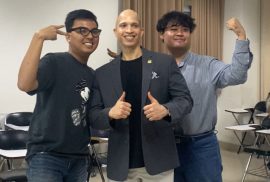
After the material presentation session and interactive question and answer session ended, the students were divided into six groups of five people each to play with the miniature Sukuh Temple and Ratu Boko Temple presented by the Mandira Brick team. Six sets of Mandira disassembly toys were assembled by each group, guided by HIMA UGM students in the process. The toys were then given to the school of SMP Negeri 2 Ngaglik as a continuation of temple restoration and conservation lessons as a means of further learning. The event then ended with a photo documentation session with the students and closing by HIMA UGM students and the Mandira Brick team accompanied by a symbolic plaque and Mandira toys.

“Hopefully with the implementation of Archaeology Goes To School, it can introduce archaeology to school children and provide broader insights into the importance of cultural heritage, as well as motivate students to study more diligently with the existence of new learning media through Mandira Brick,” said Sena about his expectations from the activity

Public Lecture: Globalization, Nationalism, and Cosmopolitanism by Prof. Carla Jones, Ph.D.

News ReleaseSDGs 11: Sustainable cities and communitiesSDGs 16: Peace justice and strong institutionsSDGs 17: Partnerships for the GoalsSDGs 4: Quality EducationSDGs 9: Industry innovation and infrastructure Monday, 10 June 2024

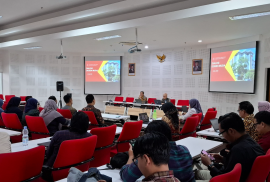
On Wednesday, April 25, 2024, the UGM Master of American Studies Program held a Public Lecture on the theme of Globalization, which was presented by Prof. Carla Jones, Ph.D, Professor of Anthropology at the University of Colorado Boulder, United States. This public lecture was held online through the Zoom application which was attended by 20 students who were a combination of students of the Master of American Studies Program and the Middle Eastern Cultural Studies Program, Faculty of Cultural Sciences UGM. In this session, the topic raised in the discussion was “Globalization, Nationalism, and Cosmopolitanism”, which discussed how the impact of globalization on nationalism. The occurrence of mutual influence and the fading of borders between countries causes questions about nationalism.

Prof. Carla explained that in the era of Globalization, it creates a zone of continuous cultural interaction and exchange throughout the world, which can also be referred to as “ecumenism of globalization”. Globalization also creates a situation where previously isolated cultures are constantly colliding. The impact of this global cultural flow is: Homogeneity and cultural chaos. Homogeneity in this context refers to the commonalities that arise when cultures share ideas, goods and media. This then creates confusion and challenges due to the mixing and similarity of cultures.

In addition to this, Prof. Carla also explained about the concept of globalization from Arjun Appadurai, an Indian-American anthropologist. He explained, according to Appadurai, there are five dimensions of cultural flow in globalization: Ethnoscapes (movement or movement of people such as tourists, refugees etc.), Technoscapes: (the movement of technology such as factories, machines, etc.), Financescapes (the movement of money), Mediascapes (the movement of information and images such as TV, newspapers, etc.), Ideoscapes (the spread of ideas and ideology). The 120-minute public lecture then ended with a question and answer session and an open discussion where participants could respond to what had been presented by the speaker.

Japanese Language and Culture Study Program Holds Socialization of Work in Japan with Marimo Group

News ReleaseSDGs 10: Reduced InequalitiesSDGs 17: Partnerships for the GoalsSDGs 8: Decent work and economic growthSDGs 9: Industry innovation and infrastructure Monday, 10 June 2024

On Tuesday, March 19, 2024, the UGM Japanese Language and Culture Study Program held a socialization of working in Japan together with Marimo Group. The activity which was carried out on the basis of this collaboration was attended by representatives of Marimo Group, Manager of International Human Resource Development Marimo Holdings Inc. Kanakuchi Yuya and Tatang Hariri, Ph. D. as Head of the Japanese Language and Culture Study Program along with final year students and alumni of BKJ Study Program.

The activity began with the introduction of Marimo Group to the socialization participants. Marimo Group is a company engaged in the property sector with headquarters in Hiroshima City, Japan which now has more than 21,000 mansion units throughout Japan. Currently, Marimo is opening opportunities for final year students or alumni of BKJ Study Program who are interested in working in Japan. Marimo can assist applicants in finding suitable jobs according to their interests and talents. Jobs that are generally in demand are in the field of translation and hospitality, but it does not rule out the possibility if you want to apply in a field that is not offered.

Being with Marimo as a partner in working abroad can certainly make a sense of security and comfort when working. Feelings of homesickness while working can also be relieved because, with connections from Marimo we can still meet with Indonesians. This good opportunity is expected to be utilized by academics and alumni to gain experience in the world of work.

Arabic Literature UGM x Dompet Dhuafa Yogyakarta: The Struggle of Palestinian Women and Children amidst the Israeli Onslaught

News ReleaseSDGs 16: Peace justice and strong institutionsSDGs 17: Partnerships for the GoalsSDGs 1: No povertySDGs 3: Good health and well-beingSDGs 4: Quality EducationSDGs 8: Decent work and economic growth Monday, 10 June 2024

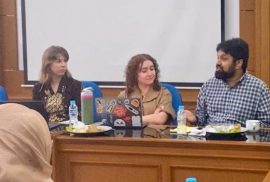
Yogyakarta, Tuesday, March 26, 2024 – The Arabic Literature Study Program of Universitas Gadjah Mada (UGM) together with Dompet Dhuafa Yogyakarta held a talk show themed The Struggle of Palestinian Women and Children Amid the Israeli Onslaught. The event was held from 11:00 a.m. to 1:00 p.m. in Room 709 Soegondo Building, Faculty of Cultural Sciences, Universitas Gadjah Mada.

The event was attended by more than 100 participants consisting of students, lecturers, and a team from Dompet Dhuafa. The activity began with the opening, singing the national anthem Indonesia Raya and Gadjah Mada hymn, remarks from Dr. Zulfa Purnamawati, S.S., M.Hum. as Head of the Arabic Literature Department of UGM, remarks from Imam Hidayat, S.Pd.i, M.Pd. as a representative of Dompet Dhuafa, presentation of material guided by the moderator, question and answer session, closing, and ended with donations for the Palestinian people.

The main speaker of the event was Miss Fatma Alghusain, Executive Director of Amna Carefund. Miss Fatma is a female activist in Palestine who works to help the Palestinian people, especially women and children who are victims. In this event, Miss Fatma shared the spirit of struggle and resistance of the Palestinian people amidst the Israeli onslaught.

The current situation in Palestine is getting worse, especially after the recent Israeli attacks on Gaza and Rafah. Palestinians face difficulties in accessing health services as well as damaged infrastructure and lack of shelter due to the blockade and genocide carried out by Israel. In addition, they also lack proper food, water and clothing supplies. This is very much felt by Palestinians, especially pregnant women and children.

Thus, this event is expected to make a valuable contribution in strengthening solidarity and awareness of the urgency of the struggle for human rights, especially in conflict-affected areas such as Palestine.

Strengthening Synergy: MECRI Journal of KBTT UGM in Collaboration with Ittihad Mudarrisi Al-Lughah Al-Arabiyah (IMLA) Indonesia

News ReleaseSDGs 10: Reduced InequalitiesSDGs 11: Sustainable cities and communitiesSDGs 16: Peace justice and strong institutionsSDGs 17: Partnerships for the GoalsSDGs 4: Quality EducationSDGs 8: Decent work and economic growthSDGs 9: Industry innovation and infrastructure Monday, 10 June 2024

The Middle Eastern Culture & Religion Issues (MECRI) journal of the UGM Master of Middle Eastern Cultural Studies Program has officially signed a cooperation agreement with Ittihad Mudarrisi Al-Lughah Al-Arabiyah (IMLA) Indonesia on Friday, March 8, 2024 at Discovery Hotel, Ancol Jakarta. The signing was attended by Prof. Dr. Sangidu, M.Hum. as the ex-officio Chairperson of the Master of Middle Eastern Cultural Studies Program and Dr. Imam Wicaksono, Lc., M.A. as the Managing Editor of the MECRI Journal, while from the IMLA side it was attended by the Chairman, Prof. Dr. Uril Bahruddin, M.A.

MECRI Journal and IMLA Indonesia establish editorial board cooperation in the form of involving IMLA Indonesia as a bestari partner and quality assurance of national and international journal publications online and Open Journal System (OJS). In this historic moment, the Professor of UIN Malik Ibrahim Malang said that the association of lecturers with Arabic Language and Literature journals needs to synergize in improving the quality of education in Indonesia. The entire academic community is obliged to make research-based innovations in the study of Arabic language and literature. With this collaboration, it is hoped that the UGM MECRI Journal can become one of the platforms for the development of scientific publications in Indonesia so that academics and researchers will find it easier to publish scientific papers in the future.

1…5657585960…64

Video UGM

[shtmlslider name='shslider_options']
Universitas Gadjah Mada

Faculty of Cultural Sciences
Universitas Gadjah Mada
Jl. Nusantara 1, Bulaksumur Yogyakarta 55281, Indonesia
   fib@ugm.ac.id
   +62 (274) 513096
   +62 (274) 550451

Work Units

  • Office of Journal & Publishing
  • INCULS
  • Information Technology and Database
  • Language Learning Center
  • Library Unit
  • Public Relations
  • Research

Facilities

  • Computer Laboratory
  • Gamelan
  • Guest House
  • Language Library
  • Library
  • Phonetics Library
  • Self Access Unit
  • Student Internet Centre

Importan Links

  • Journal of Humaniora
  • Subscriber Journal
  • Alumni Portal
  • Career
  • Departmens News
  • UGM Streaming

Contacts

  • Academic
  • Administration
  • Dean’s Office
  • Departments / Study Programs
  • Public Relations

© 2024 Faculty of Cultural Sciences Universitas Gadjah Mada

KEBIJAKAN PRIVASI/PRIVACY POLICY

[EN] We use cookies to help our viewer get the best experience on our website. -- [ID] Kami menggunakan cookie untuk membantu pengunjung kami mendapatkan pengalaman terbaik di situs web kami.I Agree / Saya Setuju