• About UGM
  • Academic Portal
  • IT Center
  • Library
  • Research
  • Webmail
  • Informasi Publik
  • English
    • Indonesia
Universitas Gadjah Mada Faculty of Cultural Sciences
Universitas Gadjah Mada
  • Home
  • Profile
    • History
    • Vision and Mission
    • Organizational structure
    • Administration
    • Staff
    • Faculty Members
  • Academic
    • Academic Calendar
    • Undergraduate Programs
      • Bachelor of Cultural Antrophology
      • Bachelor in Archaeolagy
      • Bachelor in History
      • Bachelor in Tourism
      • Bochetor in Korean Language and Culture
      • Bachelor in Indonesian Language and Culture
      • Bachelor in English
      • Bachelor in Arabic
      • Bachelor in Japanese Language and Culture
      • Bachelor in Javanese Language, Literature and Culture
      • Bachelor in French language and literature
    • Graduate Programs
      • Master in Antrophology
      • Master in ArchaeoIogy
      • Master in History
      • Master in Linguistics
      • Master in Literature
      • Master In American Studies
      • Master in Middle Eastern Cultural Studies
    • Post-Graduate Programs / S3
      • Doctor in Antropology
      • Doctor in American Studies
      • Doctor in Humanities
    • Student Service
  • KPPM
    • Research Information
    • Scientific / Academic Publications
    • Community Service
    • International Cooperation
    • Domestic Cooperation
  • Student Organizations
    • Student Executive Council
    • Semi-Autonomous Organizations
      • KAPALASASTRA
      • Christian Student Alliance
      • LINCAK
      • Saskine
      • Catholic Student Family
      • Dian Budaya
      • Sastra Kanuragan (sasgan)
      • Family of Muslim Cultural Sciences Students (KMIB)
      • Bejo Mulyo
    • Autonomous Organizations
      • Family of Anthropology Students (KEMANT)
      • English Department Student Association
      • Tourism Students Association (HIMAPA)
      • Family of Indonesian Literature Students (KMSI)
      • West Asian Literature Student Association (IMABA)
      • Association of Korean-Language Students (HIMAHARA)
      • Family of Regional Indonesian Literatures Students (KAMASUTRA)
      • The Family Body of History Students (BKMS)
      • The French Literature Students Association (HMSP)
      • Family of Anthropology Students
      • Japanese Student Association (HIMAJE)
  • Admission
    • Student Evaluation
  • Home
  • SDGs 10: Reduced Inequalities
  • SDGs 10: Reduced Inequalities
  • page. 14
Arsip:

SDGs 10: Reduced Inequalities

A Century of A.A. Navis: Magister Sastra UGM and Toko Buku Natan Revitalizing Literary Heritage through Discussions and Book Launches

HEADLINESNews ReleaseSDGs 10: Reduced InequalitiesSDGs 11: Sustainable cities and communitiesSDGs 16: Peace justice and strong institutionsSDGs 17: Partnerships for the GoalsSDGs 4: Quality Education Thursday, 10 April 2025

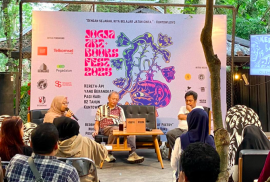
Yogyakarta, March 23, 2025 – In an effort to revive the intellectual legacy of one of Indonesia’s greatest literary figures, Toko Buku Natan in collaboration with the Master’s Program in Literature at Universitas Gadjah Mada (UGM) held the Centennial Commemoration of A.A. Navis at Rumah Budaya Ndalem Natan, Kotagede, Yogyakarta. This event attracted literature enthusiasts, academics, and cultural figures eager to explore A.A. Navis’ critical thoughts and contributions to national literary development. Featuring a series of activities, including academic discussions, book launches, an art exhibition, and musical performances, the commemoration became a reflective moment that delved deeper into the social, cultural, and linguistic aspects of Navis’ works.

As one of the most influential figures in Indonesian literature, A.A. Navis gained widespread recognition for his classic short story, Robohnya Surau Kami (The Collapse of Our Mosque), which offered a profound critique of societal structures. Set during the harmonious spirit of Ramadan, this event brought together various stakeholders to discuss Navis’ legacy and critical thoughts, featuring renowned speakers such as Dhianita Kusuma Pertiwi (writer and curator), Prof. Dr. Aprinus Salam (academic and literary scholar), and Nasir Tamara, M.A., M.Sc., Ph.D. (cultural expert). The discussion was further enriched by a cello performance by Lintang Pramudia Swara, providing an aesthetic and immersive experience for the participants.

One of the event’s key highlights was the launch of the book “Kesalahan dan Kejahatan dalam Berbahasa” (Errors and Crimes in Language) by Prof. Dr. Aprinus Salam. This book critically examines language awareness within social and legal contexts. Drawing from his extensive academic and professional experience as an expert witness in various linguistic cases, Prof. Aprinus presents this book as a primary reference for linguistic studies and the role of language in Indonesia’s legal practices.

During the discussion, Prof. Aprinus Salam explored the contrast between social critiques in the works of A.A. Navis and Pramoedya Ananta Toer, highlighting how Navis focused more on critiquing societal structures, while Pramoedya directed his criticisms toward the government and power structures. Meanwhile, Dhianita Kusuma Pertiwi shared her research and archival experience for the 100 Years of A.A. Navis exhibition, held in Jakarta and at UNESCO in Paris. She traced Navis’ educational background at INS Kayutanam, an institution that played a crucial role in shaping his critical thinking, not only in literature but also in music and visual arts.

At the same time, Nasir Tamara, M.A., M.Sc., Ph.D. connected A.A. Navis’ intellectual lineage to the Académie française in Europe, particularly France, which was heavily influenced by the ideas of René Descartes. Citing Descartes’ philosophy “Cogito, ergo sum” (I think, therefore I am), Nasir Tamara emphasized that intellectual awareness and critical thinking are the foundations of a true thinker and writer. This perspective aligns with A.A. Navis’ approach to literary discourse, where he not only documented reality but also challenged, questioned, and inspired social change.

As part of the celebration, Lintang Pramudia Swara delivered a cello performance, enriching participants’ reflective experience. Meanwhile, an art exhibition by renowned artist Anagard featured 11 portraits of prominent Minangkabau figures, including A.A. Navis, Tan Malaka, Sutan Sjahrir, Buya Hamka, and Asrul Sani. This exhibition provided a visual narrative of the intellectual contributions and roles of Minangkabau figures in Indonesia’s national history.

The event also served as a space for literary appreciation, featuring poetry readings by Afnan Malay and a recital of Gurindam 12 by Raja Ali Haji, performed by Nasir Tamara, further enriching the significance and atmosphere of this literary celebration.

During the reflective session, Prof. Aprinus Salam presented two thought-provoking statements for participants to ponder. The first, “Your tongue is sharper than a sword,” underscored the extraordinary power of words in shaping, influencing, and even overturning societal structures. The second, “Words are only sharper for those who are sensitive,” highlighted language as not merely a communication tool but a profound expression with transformative power for those attuned to social and humanitarian realities.

This event was part of a broader initiative to honor great figures in Indonesian literature, following the centennial commemoration of Pramoedya Ananta Toer held earlier. Through the centennial of A.A. Navis, the discussion reinforced awareness of literacy, intellectual heritage, and its relevance to younger generations. Prof. Aprinus Salam emphasized that language possesses transformative power, envisioning a future where short story writers and poets stage protests by reciting poetry in front of legislative buildings, proving that words wield more power than physical weapons.

The event concluded with a communal iftar (breaking of the fast), not only fostering solidarity but also offering a profound reflection on the role of literature in shaping social and cultural consciousness. Toko Buku Natan, in collaboration with the Master’s Program in Literature at UGM, remains committed to facilitating academic discussions, literary forums, and various literacy initiatives to support intellectual and cultural development in Indonesia.

[Public Relations Magister of Literature, Anisa Dien Rahmawati]

Middle Eastern Culture & Religion Issues Journal Achieves SINTA 4 Accreditation: Enhancing Research on Middle Eastern Languages, Literature, and Culture for Sustainable Development Goals (SDGs)

HEADLINESNews ReleaseSDGs 10: Reduced InequalitiesSDGs 16: Peace justice and strong institutionsSDGs 4: Quality EducationSDGs 5: Gender equality Wednesday, 26 March 2025

Yogyakarta, 26/3/2025 – The Middle Eastern Culture & Religion Issues (MECRI) Journal has reached an important milestone by receiving SINTA 4 accreditation on Friday, March 21, 2025. Established in 2022, the journal is managed by the Middle Eastern Cultural Studies program within the Department of Intercultural Studies at the Faculty of Cultural Sciences, Universitas Gadjah Mada (FIB UGM). MECRI focuses on the study of language, literature, culture, and religion in the Middle East, providing a valuable platform for researchers to explore the complex interactions between culture and religion and their impact on global society. This accreditation reinforces MECRI’s position as a leading reference journal in cross-cultural studies, particularly regarding the Sustainable Development Goals (SDGs), especially SDG 4, which emphasizes quality education. 

As an academic platform, MECRI offers researchers, academics, professionals, practitioners, and students a space to share ideas through high-quality empirical and theoretical research articles. Topics covered include social, political, cultural, literary, linguistic, and religious studies related to Middle Eastern Studies. The journal publishes articles regularly in July and December and follows a strict peer-review process conducted by a team of editors and reviewers from leading universities in Indonesia and abroad. MECRI also establishes strategic partnerships with Ittihad Mudarrisin Lugah Arabiyyah (IMLA) Indonesia—a national organization that oversees Arabic language teachers—and the International Center for Arab Studies and Training (ICAST) in Egypt. These collaborations not only ensure the maintenance of academic quality but also enhance the journal’s relevance to the development of global science. 

The SINTA 4 accreditation represents a significant opportunity for MECRI to further promote cross-cultural dialogue through research on Middle Eastern language, literature, religion, and culture. The published articles enrich academic understanding and offer practical solutions to various global challenges. With a broad range of topics, MECRI has featured numerous insightful articles on contemporary issues in the Middle East, such as feminism, social inequality, cultural diplomacy, and peace efforts. These studies contribute to the achievement of several other SDGs, including SDG 5 on gender equality, SDG 10 on reducing social inequality, and SDG 16 on peace and justice. 

As part of its commitment to the SDGs, MECRI continues to strive to be a research platform that promotes cross-cultural understanding for a more inclusive world. With this achievement, MECRI is poised to advance as a leading force in innovative and globally impactful Middle Eastern studies.

[Public Relations Master of Middle East Faculty of Cultural Sciences UGM, Nafila Azzahra]

More Than Just a Place to Learn: INCULS Becomes a Second Home for GMIF 2024 Students

HEADLINESNews ReleaseSDGs 10: Reduced InequalitiesSDGs 16: Peace justice and strong institutionsSDGs 17: Partnerships for the GoalsSDGs 4: Quality Education Tuesday, 25 March 2025

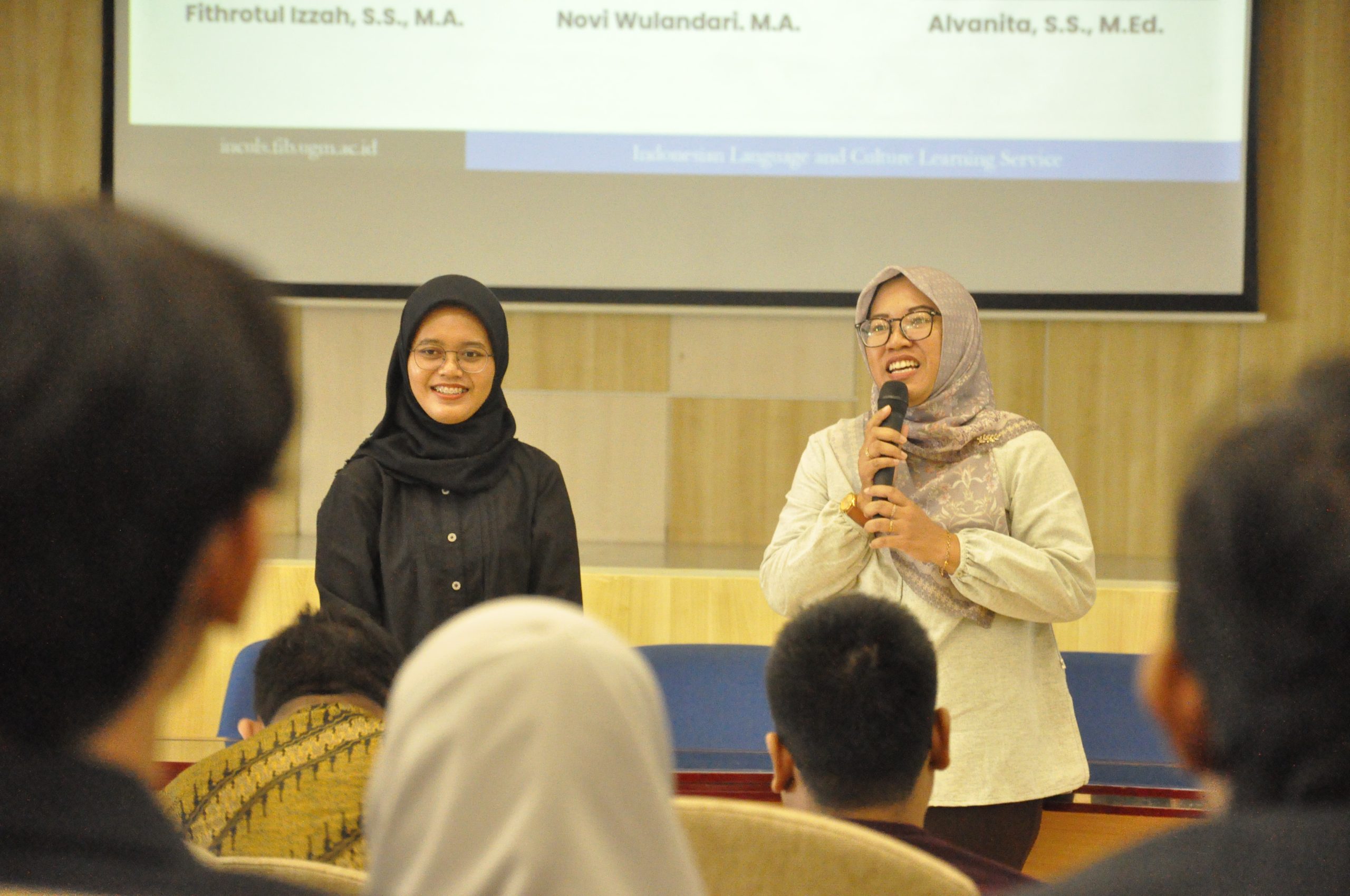
Yogyakarta, 25/3/2025 – For the past four months, GMIF 2024 students have been immersed in their studies at INCULS, refining their Indonesian language skills in reading, listening, writing, speaking, grammar, and vocabulary. However, their learning experience extended far beyond the classroom. Through educational excursions to the Chocolate Monggo Museum & Factory, UGM Museum, and Grhatama Pustaka Library, they gained a deeper understanding of Indonesian culture.

As their time at INCULS drew to a close, students were assigned a final reading task to reflect on their experiences. The overall sentiment was overwhelmingly positive, with many praising the quality of instruction. Irakiza Gideon shared his appreciation:

“Their patience and encouragement fostered an environment that nurtured my growth. Now, I can confidently communicate in Indonesian, which is a testament to the effectiveness of their teaching.”

INCULS is not merely a language center; it is a place where students receive guidance from experienced educators while being immersed in Indonesian culture. Many students highlighted the warmth and unwavering support of their lecturers, tutors, and staff.

“Every lecturer is incredibly kind, approachable, and always willing to help,” one student noted.

For some, INCULS became more than an academic institution—it became a home away from home.

“INCULS was not just a place where I learned Indonesian; it was where I found a second family.”
“The lecturers and staff do not simply teach; they cultivate an environment that feels as welcoming as family.”

When describing INCULS in English, many students simply called it “home”:

“INCULS provided not only education but also a profound sense of belonging.”

As their journey at INCULS comes to an end, GMIF students unanimously agree that their experience here is one they will cherish for a lifetime. Their heartfelt testimonials further reinforce INCULS’ reputation as a premier institution for Indonesian language and cultural studies, offering a welcoming and enriching environment for international students.

[Public Relations of INCULS, Decika Syahda Maharani]

From Pakistan to Ethiopia: INCULS Successfully Concludes the GMIF 2024 Program

HEADLINESNews ReleaseSDGs 10: Reduced InequalitiesSDGs 16: Peace justice and strong institutionsSDGs 17: Partnerships for the GoalsSDGs 4: Quality Education Tuesday, 25 March 2025

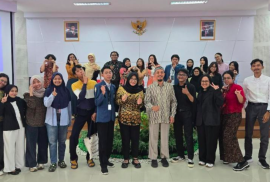
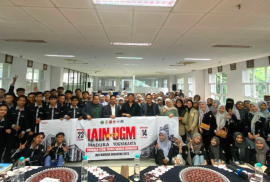
Yogyakarta, 28/2/2025 – INCULS marked the successful conclusion of the GMIF 2024 Program with a closing ceremony held in Room 709 of the Soegondo Building, Faculty of Cultural Sciences, UGM. The program welcomed 14 students from diverse national backgrounds, with the majority—nine students—hailing from Pakistan, while the remaining participants came from Uganda, Malawi, Kenya, Yemen, and Ethiopia.

During the event, Dr. Wulan Tri Astuti, S.S., M.A., Coordinator of INCULS, presented a comprehensive report summarizing the students’ activities throughout the program. Over the course of approximately four months, GMIF students undertook beginner-level Indonesian language courses, covering Reading, Vocabulary, Listening, Speaking, Writing, and Grammar, amounting to a total of 12 credits. Beyond classroom instruction, they engaged in cultural and educational excursions, including reading activities at Grhatama Pustaka Library, reading and listening exercises at the UGM Museum, and writing practice at the Chocolate Monggo Museum & Factory.

The ceremony also featured remarks from lecturer representative Ilfat Isroi Nirwani, S.S., M.A., and INCULS tutor Iqbal Tafqy Aunika. Representing the GMIF students, Muhammad Aarif delivered a heartfelt speech reflecting on their journey. The event concluded with the presentation of certificates and a video screening that captured memorable moments from the GMIF 2024 students’ time at INCULS.

With the program officially concluded, the students depart not only with improved Indonesian language skills but also with lasting memories and a deeper connection to Indonesian culture.

[INCULS Admin, FIB UGM, Decika Syahda Maharani]

AMERICAN STUDIES STUDENTS AND ALUMNI ASSOCIATION (ASSAA) COLLABORATES WITH AMERICAN STUDIES SOCIETY INDONESIA (ASSINDO) TO HOST “LECTURE SERIES AND THANKSGIVING LUNCH 2024

News ReleaseSDGSSDGs 10: Reduced InequalitiesSDGs 4: Quality EducationSTICKY NEWSSustainable Development Goals Monday, 30 December 2024

In a significant effort to promote access to education and cultural diversity, the American Studies Students and Alumni Association (ASSAA) in collaboration with the American Studies Society Indonesia (ASSINDO) successfully organized a series of events titled “Lecture Series and Thanksgiving Lunch 2024.” This event, held online via Zoom, focused on the theme “The Evolution of American Identity in a Multicultural Society,” reflecting the importance of education for sustainability and equal access to knowledge in developing countries.

Lecture Series Documentation

The Lecture Series commenced on Wednesday, November 6, 2024, with two engaging sessions. The first session featured Dr. Suzie Handajani, M.A., who discussed “Asian Americans: From Mainstream Media to Social Media.” This session highlighted the representation of Asian Americans in various media forms, emphasizing the need for cultural diversity in narratives that shape American identity.

Following Dr. Handajani’s presentation, Tino Torres, a graduate student from the City University of New York, presented on “American Identity Through a New York City Lens: A Reflection on Diversity and Cultural Contrasts.” His insights provided a unique perspective on how New York City, as a melting pot of cultures, influences the understanding of American identity.

Lecture Series Documentation

The second session took place on Thursday morning, November 7, 2024. Dr. Nur Saktiningrum, M.A., led a discussion on “Navigating Diversity: The Role of Intersectionality in Shaping American Identity.” This session underscored the importance of recognizing various intersecting identities in understanding the complexities of American culture.

Lecture Series Documentation

Prof. Dr. H. Nuriadi, S.S., M.Hum., followed with a fascinating exploration titled “Exploring The Use Of Pronoun Thou, Thee, Thy, Or Thine: A Fact From The American Quakers.” His presentation delved into the historical and cultural significance of language in shaping identity, further enriching the discourse on cultural diversity.

Participants in the Lecture Series included students and faculty from various universities across Indonesia, showcasing the event’s commitment to equal access to education and fostering a collaborative learning environment. The diverse audience reflected the cultural richness and academic engagement present in the field of American Studies.

Movie Discussion Documentation

On the afternoon of Thursday, November 7, the event culminated in a Movie Discussion and Thanksgiving Lunch. This gathering was attended by esteemed guests, including faculty members from the Faculty of Cultural Sciences, graduate students from American Studies, English Literature students, and representatives from ASSINDO. The event provided a platform for networking and sharing experiences among attendees.

The Movie Discussion, moderated by Ahdi Sakha, was characterized by a warm atmosphere and enthusiastic participation. Dr. Aris Munandar, M.Hum., opened the session with a heartfelt welcome, expressing gratitude for the opportunity to gather as an academic community during this festive occasion.

Following the discussion, attendees enjoyed a Thanksgiving Lunch, which served as a perfect opportunity for participants to reconnect, share experiences, and reminisce about their time in the American Studies program. This gathering not only celebrated academic achievements but also reinforced the bonds of community and cultural exchange.

The successful execution of the “Lecture Series and Thanksgiving Lunch 2024” exemplifies the commitment of ASSAA and ASSINDO to promote access to education, cultural diversity, and sustainable practices in the field of American Studies. As the world continues to evolve, such initiatives play a crucial role in fostering understanding and appreciation of diverse cultures, particularly in developing countries.

[Public Relation Faculty of Cultural Sciences UGM, Sandya Kirani]

1…1213141516…18

Video UGM

[shtmlslider name='shslider_options']
Universitas Gadjah Mada

Faculty of Cultural Sciences
Universitas Gadjah Mada
Jl. Nusantara 1, Bulaksumur Yogyakarta 55281, Indonesia
   fib@ugm.ac.id
   +62 (274) 513096
   +62 (274) 550451

Work Units

  • Office of Journal & Publishing
  • INCULS
  • Information Technology and Database
  • Language Learning Center
  • Library Unit
  • Public Relations
  • Research

Facilities

  • Computer Laboratory
  • Gamelan
  • Guest House
  • Language Library
  • Library
  • Phonetics Library
  • Self Access Unit
  • Student Internet Centre

Importan Links

  • Journal of Humaniora
  • Subscriber Journal
  • Alumni Portal
  • Career
  • Departmens News
  • UGM Streaming

Contacts

  • Academic
  • Administration
  • Dean’s Office
  • Departments / Study Programs
  • Public Relations

© 2024 Faculty of Cultural Sciences Universitas Gadjah Mada

KEBIJAKAN PRIVASI/PRIVACY POLICY

[EN] We use cookies to help our viewer get the best experience on our website. -- [ID] Kami menggunakan cookie untuk membantu pengunjung kami mendapatkan pengalaman terbaik di situs web kami.I Agree / Saya Setuju