• About UGM
  • Academic Portal
  • IT Center
  • Library
  • Research
  • Webmail
  • Informasi Publik
  • English
    • Indonesia
Universitas Gadjah Mada Faculty of Cultural Sciences
Universitas Gadjah Mada
  • Home
  • Profile
    • History
    • Vision and Mission
    • Organizational structure
    • Administration
    • Staff
    • Faculty Members
  • Academic
    • Academic Calendar
    • Undergraduate Programs
      • Bachelor of Cultural Antrophology
      • Bachelor in Archaeolagy
      • Bachelor in History
      • Bachelor in Tourism
      • Bochetor in Korean Language and Culture
      • Bachelor in Indonesian Language and Culture
      • Bachelor in English
      • Bachelor in Arabic
      • Bachelor in Japanese Language and Culture
      • Bachelor in Javanese Language, Literature and Culture
      • Bachelor in French language and literature
    • Graduate Programs
      • Master in Antrophology
      • Master in ArchaeoIogy
      • Master in History
      • Master in Linguistics
      • Master in Literature
      • Master In American Studies
      • Master in Middle Eastern Cultural Studies
    • Post-Graduate Programs / S3
      • Doctor in Antropology
      • Doctor in American Studies
      • Doctor in Humanities
    • Student Service
  • KPPM
    • Research Information
    • Scientific / Academic Publications
    • Community Service
    • International Cooperation
    • Domestic Cooperation
  • Student Organizations
    • Student Executive Council
    • Semi-Autonomous Organizations
      • KAPALASASTRA
      • Christian Student Alliance
      • LINCAK
      • Saskine
      • Catholic Student Family
      • Dian Budaya
      • Sastra Kanuragan (sasgan)
      • Family of Muslim Cultural Sciences Students (KMIB)
      • Bejo Mulyo
    • Autonomous Organizations
      • Family of Anthropology Students (KEMANT)
      • English Department Student Association
      • Tourism Students Association (HIMAPA)
      • Family of Indonesian Literature Students (KMSI)
      • West Asian Literature Student Association (IMABA)
      • Association of Korean-Language Students (HIMAHARA)
      • Family of Regional Indonesian Literatures Students (KAMASUTRA)
      • The Family Body of History Students (BKMS)
      • The French Literature Students Association (HMSP)
      • Family of Anthropology Students
      • Japanese Student Association (HIMAJE)
  • Admission
    • Student Evaluation
  • Home
  • SDGs 10: Reduced Inequalities
  • SDGs 10: Reduced Inequalities
Arsip:

SDGs 10: Reduced Inequalities

Guest Lecture by Dr. Irma Budginaitė-Mačkinė Discusses Lithuania in Post-Soviet Ambiguity

News Release Monday, 11 May 2026

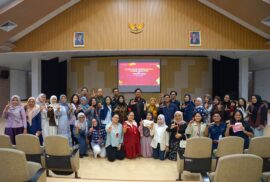
During the final meeting of the first half of the Postcolonialism course, students of the Master’s Program in Literature at Universitas Gadjah Mada had the opportunity to attend a guest lecture titled Baltic Postcolonialism, delivered by Dr. Irma Budginaitė-Mačkinė, Associate Professor of Sociology at Vilnius University, Lithuania. Dr. Irma visited Indonesia as part of a research mobility scheme funded by Project MARS: Non-Western Migration from Global Perspectives.

The lecture was organized by Dr. Arifah Arum Candra Hayuningsih, the lecturer responsible for the first half of the Postcolonialism course. The guest lecture for the Master’s Program in Literature was held on Monday (27/4/2026) at Soegondo Building Room 224, Faculty of Cultural Sciences, Universitas Gadjah Mada.

Postcolonialism is one of the compulsory courses designed to provide students with an understanding of the dynamics of colonialism and its impacts on various aspects of life, including language, literature, economics, politics, and culture. The course does not only focus on countries in Asia and Africa, but also covers other regions such as the Caribbean, Kenya, India, Vietnam, and Eastern Europe, including Lithuania, which experienced forms of domination different from classical colonialism.

These diverse colonial experiences gave rise to postcolonial thinkers who sought to critique and deconstruct colonial hegemony through reflective and critical ideas. Figures such as Aimé Césaire, Albert Memmi, Frantz Fanon, Ngũgĩ wa Thiong’o, Trinh T. Minh-ha, Chandra Talpade Mohanty, and Édouard Glissant contributed diverse perspectives in understanding colonialism and the process of decolonization.

In her presentation, the academic, whose interdisciplinary background spans political science and sociology, highlighted Lithuania’s ambiguous position within postcolonial studies, particularly in the post-Soviet context. To understand this ambiguity, Lithuania must be viewed within a post-imperial framework, as a country transitioning from the rule of the Russian Empire and later the Soviet Union into the post-Soviet era. Lithuania cannot easily be categorized as a “colonized” nation in the classical colonial sense, yet it still experienced forms of colonial-like domination.

Geographically, Lithuania covers an area of approximately 65,300 km², roughly half the size of Java Island, with a population of around 2.9 million people, comparable to the population of Yogyakarta City. Its national language, Lithuanian, belongs to the Baltic branch of the Indo-European language family and remains an important part of the country’s national identity despite historical pressures.

Historically, Lithuania was once part of a political union through the Polish–Lithuanian Commonwealth in 1569. However, in 1795, the country lost its sovereignty and became part of the Russian Empire. Since then, various policies demonstrated that the domination imposed upon Lithuania was neither simple nor singular, but systematic and complex.

During her presentation, the sociologist, who has conducted scientific research for more than a decade, also discussed the perspective of historian Darius Staliūnas, who described Russian domination in Lithuania as extending into many aspects of life. Politically, Lithuania was placed under external control that restricted national sovereignty. Socially, repression in the form of censorship and limitations on freedom became part of the people’s lived experience. Economically, exploitation and the redirection of economic orientation served the interests of the imperial center.

In the spheres of culture, language, and religion, this domination manifested through policies promoting Russification. The Russian government promoted Orthodox Christianity, limited the influence of the Catholic Church, and at one point prohibited the use of the Latin alphabet. These policies reflected systematic attempts to displace Lithuania’s local identity. Furthermore, education and knowledge were also used as instruments of control to shape public ways of thinking according to the interests of those in power.

As a response to these pressures, Lithuanians demonstrated various forms of resistance, one of which was large-scale migration. Between 1865 and 1915, around 700,000 Lithuanians left their country and migrated to regions such as the United States, the United Kingdom, Canada, Brazil, Argentina, and Germany. This migration can be understood as an indirect form of resistance against the domination they experienced.

Following the collapse of the Soviet Union, Lithuania entered a post-Soviet transition phase marked by the restoration of political independence in 1990 and the end of direct external control. Nevertheless, the effects of previous domination continue to be felt today. Like many other Eastern European countries, Lithuania faces challenges as a relatively less-developed nation that is not yet fully modernized and is still striving to catch up with Western countries.

Therefore, Lithuania’s experience demonstrates that colonialism does not always take the form of explicit geographical occupation, but can also be recognized through complex and layered power relations. This ambiguity makes Lithuania a compelling case in postcolonial studies, while also expanding the scope of postcolonial analysis beyond the Global South.


[Magister Sastra, Selvia Parwati Putri]

Universitas Gadjah Mada and Universitas Islam Darussalam Community Service Program (PkM)

News Release Wednesday, 6 May 2026

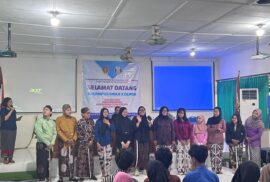
Ciamis, 25 April 2026 — The Department of Intercultural Studies, Faculty of Cultural Sciences, Universitas Gadjah Mada held a Community Service Program (PkM) and Expert Lecture at Universitas Islam Darussalam on 25–26 April 2026. The event brought lecturers, students, and the pesantren community together in a setting that combined academic discussion with everyday interaction.

The visit also continued an existing connection between the two institutions, especially through Prof. Dr. K.H. Fadlil Munawwar Manshur. In his remarks, he described the program as more than a formal academic agenda. For him, it was a form of silaturahim, where knowledge is shared in a more personal and open way.

The delegation was led by Prof. Dr. Aris Munandar, who spoke about the role of American Studies in reading global influence. He pointed out that influence does not always come in direct or visible forms. In many cases, it appears through everyday habits such as academic writing, publication systems, and standards that scholars gradually follow. 

Therefore, according to him, the American Studies program plays an important role in helping scholars critically recognize and navigate these subtle influences, which often emerge through habits in academic writing, publication systems, and scholarly standards.

Several speakers then presented their topics in parallel sessions. Dr. Mahmudah discussed feminism in Arabic literature and its place in Islamic education. Dr. Amin Basuki focused on how American academic patterns can be seen in SINTA-indexed journals, especially in the way articles are structured and evaluated. Dr. Muhammad Zakki Masykur talked about Arabic and the works of Javanese ulama which showed that local traditions remain active in knowledge production. Meanwhile, Dr. Stedi Wardoyo explained how morality in Japanese society often grows from family life and social habits, not only from religion.

Outside the formal sessions, the program also included shared activities such as joining the Shalawat Burdah gathering with the pesantren community. Moments like this made the visit feel less formal and more connected. It showed that community service is not only about delivering material, but also about building relationships.

As an institution that provides education from early levels to university, Universitas Islam Darussalam also offers space for future collaboration, especially in character education. This program, in a simple way, shows that academic cooperation can grow through meeting, talking, and spending time together.

Speech by Prof. Dr. Atik Triratnawati, “Masuk Angin: A Blessing or a Curse?”

News Release Thursday, 30 April 2026

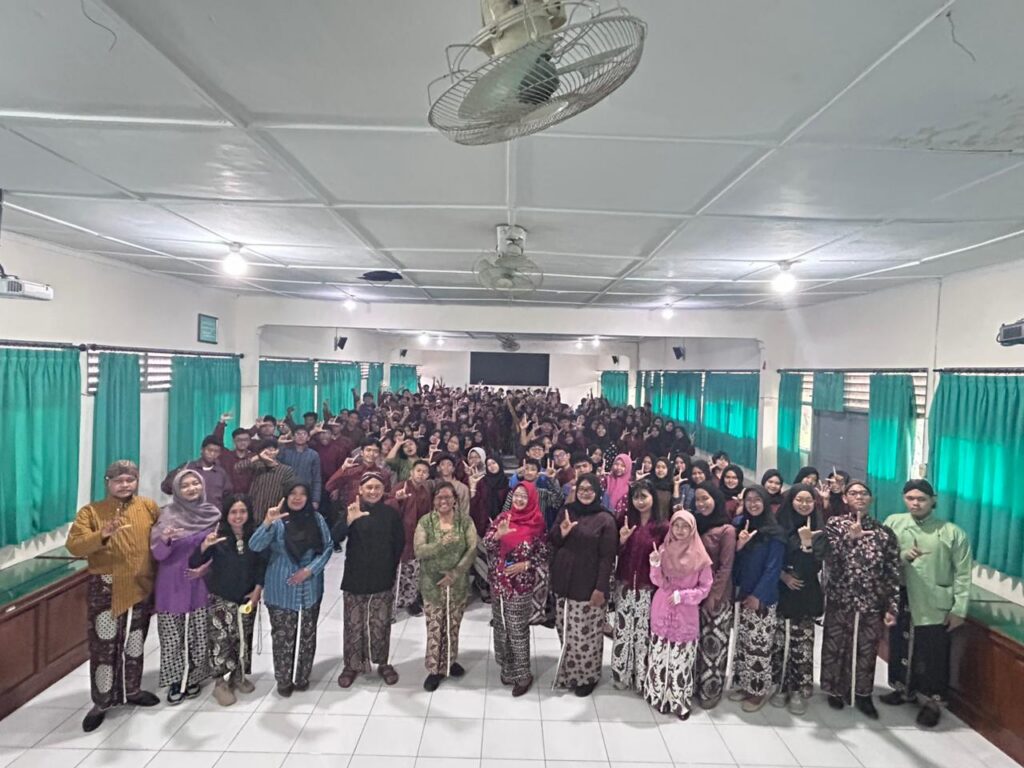
Yogyakarta, April 26, 2026 — Prof. Dr. Atik Triratnawati conducted a community service activity by delivering a lecture related to her field at Teladan State High School in Yogyakarta. The title of her lecture posed the question “Masuk Angin (Catching a Cold): A Blessing or a Curse?” and opened up a relevant discussion in the health and well-being sector. The term “masuk angin” has long been part of Indonesian society. The public’s understanding of “masuk angin” highlights the importance of an inclusive and culturally-based approach to health.

Many people still rely on traditional methods such as scraping therapy, herbal remedies, and rest as initial treatments. These practices reflect local wisdom that has the potential to support the healthcare system, provided they are balanced with appropriate medical education. “Masuk angin” is described as a Javanese concept of illness caused by an excess of wind elements within the body. Javanese cosmology forms the basis for health and illness; in medical anthropology, this is referred to as the hot-cold theory.

Prof. Atik explains that “masuk angin” is not a disease or sickness. However, she notes that “masuk angin” falls under magico-religious models—meaning this condition arises from spiritual or supernatural causes, so its treatment follows accordingly, such as scraping therapy (kerokan/pijat), consuming herbal remedies (jamu), and other practices. Additionally, it is referred to as holistic models, where health is viewed as the result of a balance among various aspects of life—not merely the physical. Physical conditions may be influenced by psychological, social, environmental, or spiritual factors, such as stress or an unhealthy lifestyle. She also explained that “wind entering the body” is categorized into several types: ordinary (mild) wind, severe wind, and “kasep” wind (sedentary wind). Her interpretations regarding “masuk angin” include health disorders (illness), failure to adapt, a reflection of low bodily resilience, a signal to rest, and “angin duduk” as a result of magical influences.

Prof. Atik focuses on the field of health from an anthropological perspective. This is because health literacy is key to building a community that is aware of its physical condition. Appropriate education can help the public distinguish between mild symptoms and serious illnesses requiring medical intervention. Additionally, a culture-based approach helps reach communities with limited access to formal healthcare services. By integrating local knowledge into the healthcare system, it is hoped that no group will be left behind.

This discussion underscores that traditional practices such as “catching a chill” are not always an obstacle to health development; rather, they can serve as a bridge toward a more inclusive and sustainable healthcare system. Collaboration among healthcare professionals, academics, and the community is key to achieving this goal.

Author: Dewi Widyastuti
Photo: Prof. Dr. Atik Triratnawati, M.A.

UGM Inaugurates Professor Mutiah Amini, Highlights Urban Social Space Realities

News Release Wednesday, 22 April 2026

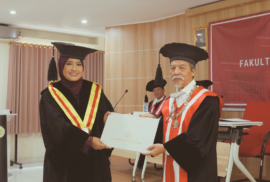
Yogyakarta, April 21, 2026 — Universitas Gadjah Mada (UGM) inaugurated Prof. Dr. Mutiah Amini, M.Hum. as a Professor of Urban Social History at the Faculty of Cultural Sciences. The inauguration ceremony took place at the UGM Central Building. In her inaugural speech, Professor Amini sharply highlighted the gap between city comfort slogans and the reality of the residents’ social spaces.

The inaugural speech was titled “History and Citizens’ Imagination of Urban Social Space.” Professor Amini chose the word imagination as a reflection of various social phenomena in contemporary public spaces. She observed the contradiction between citizens sleeping on the streets seeking pity and the various prideful acronyms used by city governments. Slogans such as Bandung Bermartabat, Semarang Kota ATLAS, Surabaya HEBAT, and Yogyakarta Berhati Nyaman seem to imply the promise of a perfect urban space to live in.

“From this reflection, it is certainly important to question whether the abbreviations or acronyms created remain the aspiration of all city governments and their citizens today. Or conversely, are these acronyms merely a fleeting hope?” explained Professor Amini, introducing her ideas.

Professor Amini then referred to Kartini’s thoughts on comfortable urban spaces as a starting point for discussion. She explained that the idea of creating urban social spaces since the colonial era has actually brought significant impacts that are often overlooked. Society became increasingly aware of the boundaries between private and public spaces. The function of the house during modernization slowly shifted. Houses often lost their role as a place that provides comfort and a sense of belonging for families, turning simply into a physical space for temporary shelter.

Citizens’ imagination of a healthy and harmonious urban space continued to live on until the independence period. The complexity of public spaces raised various concerns regarding floods, evictions, and domestic and industrial waste issues. The middle class then used mass media to voice their resignation through opinion columns. Pleas such as “where should we turn” commonly appeared in newspapers to demand the restoration of lakes and other public spaces.

Unlike the middle class, the urban poor had their own way of realizing their collective imagination. This group tended to occupy available urban public spaces. Professor Amini cited Lefebvre’s view, which refers to this phenomenon as a space of representation. The space is brought to life through various symbols and imaginations of its users as a way to manifest the collective memory of city residents.

Historical facts show that Kartini had thought about urban humanitarian and social issues comprehensively since over a century ago. Professor Amini emphasized this as an important self-criticism for modern-era historians. Kartini paved the way for the idea that all government policy formulations must be drafted carefully and comprehensively.

Urban regional planning ultimately demands a balance between physical development and the fulfillment of basic human rights. The provision of an aesthetic, harmonious, and healthy living space is an absolute prerequisite for the sustainability of a just social system. Inclusive spatial planning policies are the main key to ensuring a city is truly capable of supporting and adequately protecting all its residents for future generations.

[Public Relations of FIB UGM, Candra Solihin]

UPDATE ON THE NEW BOOK COLLECTION AT THE FIB UGM LIBRARY

News Release Monday, 20 April 2026

The Faculty of Cultural Studies Library is pleased to announce a new book collection designed to broaden horizons, foster a love of reading, and support the knowledge and personal development of our patrons. This collection includes 12 books in the field of literature and 8 books in the social sciences, all tailored to meet readers’ needs.

Literature Collection

The latest collection in the field of literature features 12 compelling novels by various national and international authors, spanning diverse genres and narrative perspectives, including contemporary fiction, historical and cultural novels, young adult novels, and literary works addressing social and humanitarian themes.

The 12 novel titles soon to be available at the Faculty of Cultural Sciences library are as follows:

  • As Long As The Lemon Tree Grow by Zoulfa Katouh
  • Semua Ikan di Langit by Ziggy Zezsyazeoviennazabrizkie
  • Seporsi Mie Ayam Sebelum Mati by Brian Khrisna
  • Aroma Karsa by Dee Lestari
  • Gadis Kretek by Ratih Kumala
  • Mosquerade Hotel by Keigo Higashino
  • Pasta Kacang Merah by Durian Sukegawa
  • 24 Jam Bersama Gaspar by Sabda Armandio
  • Kapan Nanti by Ziggy Zezsyazeoviennazabrizkie
  • Dawuk by Mahfud Ikhwan
  • Satine by Ika Natassa
  • Gelombang by Dee Lestari

Social Sciences Collection

The new book collection in the social sciences features 8 books covering history, social realities, leadership, and personal development. 

The 8 titles are as follows.

  • Ratu Adil Ramalan Jayabaya & Sejarah Perlawanan Wong Cilik
  • Hidup Bersama Raksasa Manusia Dan Pendudukan Perkebunan Sawit
  • Sejarah Korea Semenanjung Korea Dari Masa Ke Masa
  • Leaders Eat Last
  • Keseharian Orang Buangan Di Kamp Colonial
  • Dari Industri Gula Hingga Batik Pekalongan
  • Sila Ke-6: Kreatif Sampai Mati
  • Sukses Sidang Skripsi

The new book collection is now available and can be accessed through the library’s circulation services starting in April 2026. Detailed information regarding titles, authors, and classification numbers can be viewed through the Open Access Catalog Online (opac.lib.ugm.ac.id). 

The library invites all patrons to utilize this latest book collection as a source of reading, learning, and inspiration. Come on, let’s go to the library!

 Author: Arifah Nur F.

123…17

Video UGM

[shtmlslider name='shslider_options']
Universitas Gadjah Mada

Faculty of Cultural Sciences
Universitas Gadjah Mada
Jl. Nusantara 1, Bulaksumur Yogyakarta 55281, Indonesia
   fib@ugm.ac.id
   +62 (274) 513096
   +62 (274) 550451

Work Units

  • Office of Journal & Publishing
  • INCULS
  • Information Technology and Database
  • Language Learning Center
  • Library Unit
  • Public Relations
  • Research

Facilities

  • Computer Laboratory
  • Gamelan
  • Guest House
  • Language Library
  • Library
  • Phonetics Library
  • Self Access Unit
  • Student Internet Centre

Importan Links

  • Journal of Humaniora
  • Subscriber Journal
  • Alumni Portal
  • Career
  • Departmens News
  • UGM Streaming

Contacts

  • Academic
  • Administration
  • Dean’s Office
  • Departments / Study Programs
  • Public Relations

© 2024 Faculty of Cultural Sciences Universitas Gadjah Mada

KEBIJAKAN PRIVASI/PRIVACY POLICY

[EN] We use cookies to help our viewer get the best experience on our website. -- [ID] Kami menggunakan cookie untuk membantu pengunjung kami mendapatkan pengalaman terbaik di situs web kami.I Agree / Saya Setuju