• About UGM
  • Academic Portal
  • IT Center
  • Library
  • Research
  • Webmail
  • Informasi Publik
  • English
    • Indonesia
Universitas Gadjah Mada Faculty of Cultural Sciences
Universitas Gadjah Mada
  • Home
  • Profile
    • History
    • Vision and Mission
    • Organizational structure
    • Administration
    • Staff
    • Faculty Members
  • Academic
    • Academic Calendar
    • Undergraduate Programs
      • Bachelor of Cultural Antrophology
      • Bachelor in Archaeolagy
      • Bachelor in History
      • Bachelor in Tourism
      • Bochetor in Korean Language and Culture
      • Bachelor in Indonesian Language and Culture
      • Bachelor in English
      • Bachelor in Arabic
      • Bachelor in Japanese Language and Culture
      • Bachelor in Javanese Language, Literature and Culture
      • Bachelor in French language and literature
    • Graduate Programs
      • Master in Antrophology
      • Master in ArchaeoIogy
      • Master in History
      • Master in Linguistics
      • Master in Literature
      • Master In American Studies
      • Master in Middle Eastern Cultural Studies
    • Post-Graduate Programs / S3
      • Doctor in Antropology
      • Doctor in American Studies
      • Doctor in Humanities
    • Student Service
  • KPPM
    • Research Information
    • Scientific / Academic Publications
    • Community Service
    • International Cooperation
    • Domestic Cooperation
  • Student Organizations
    • Student Executive Council
    • Semi-Autonomous Organizations
      • KAPALASASTRA
      • Christian Student Alliance
      • LINCAK
      • Saskine
      • Catholic Student Family
      • Dian Budaya
      • Sastra Kanuragan (sasgan)
      • Family of Muslim Cultural Sciences Students (KMIB)
      • Bejo Mulyo
    • Autonomous Organizations
      • Family of Anthropology Students (KEMANT)
      • English Department Student Association
      • Tourism Students Association (HIMAPA)
      • Family of Indonesian Literature Students (KMSI)
      • West Asian Literature Student Association (IMABA)
      • Association of Korean-Language Students (HIMAHARA)
      • Family of Regional Indonesian Literatures Students (KAMASUTRA)
      • The Family Body of History Students (BKMS)
      • The French Literature Students Association (HMSP)
      • Family of Anthropology Students
      • Japanese Student Association (HIMAJE)
  • Admission
    • Student Evaluation
  • Home
  • Faculty of Cultural Sciences UGM
  • Faculty of Cultural Sciences UGM
  • page. 8
Arsip:

Faculty of Cultural Sciences UGM

Master of Literature Public Lecture Revealing the Invisible in English Pop Literature

SDGs 10: Reduced InequalitiesSDGs 16: Peace justice and strong institutionsSDGs 4: Quality EducationSDGs 5: Gender equality Thursday, 18 September 2025

Yogyakarta, 15/9/2025 – The Master’s Program in Literature, Faculty of Cultural Sciences, Universitas Gadjah Mada, held a public lecture titled “Make the Invisible Visible Again: Race, Gender, and Language in Popular Literature.” The event took place on Monday (15/9) at the Soegondo Auditorium, FIB UGM, featuring Dr. Ashika Prajnya Paramita, S.S., M.A. as the keynote speaker.

The lecture was attended by students and literature enthusiasts eager to explore how ideology operates within popular texts. With an engaging and communicative style, Dr. Ashika emphasized that literature is never a neutral narrative but always carries underlying ideologies, often hidden in plain sight.

Opening her talk with the questions “What’s visible?” and “What’s invisible?”, Dr. Ashika illustrated how everyday objects and cultural products that appear neutral are in fact loaded with ideological meaning. Examples ranged from the skin-tone bias in band-aids, beauty discourses in advertisements, to the privileging of certain languages over others. Quoting Antonio Gramsci, she reminded the audience that ideology operates through common sense—perceptions that society accepts as natural. “Everyday ideology is always around us. If we are not aware, we need to check,” she explained.

Dr. Ashika further examined how race and gender are represented in popular works, particularly in superhero films. She discussed debates surrounding Sam Wilson as Captain America and the assumption that Barack Obama’s presidency signaled the end of racism in the United States, while in reality, racial tensions persisted.

On gender, she highlighted how physical strength in superhero films is typically coded as masculine, while female characters are often given invisible or passive powers. Citing Judith Butler (1993), she reminded participants that “Gender is a kind of imitation for which there is no original,” stressing that masculinity and femininity are constructed and constantly shifting.

Bringing the discussion closer to home, Dr. Ashika invited the audience to critically read representations in the Indonesian film Satria Dewa: Gatotkaca (2022). She pointed out how white-skinned characters were often depicted as bosses, while darker-skinned characters appeared as security guards or lower-class workers. Language use also reinforced hierarchies, with Javanese accents assigned to “village folk,” while the protagonist spoke Jakarta urban slang.

“Literature is never just stories. Ideologies hide in plain sight. Reading critically is seeing power,” she concluded, marking the end of her main lecture.

The Q&A session was lively, with questions ranging from the representation of women in comics, ideological bias in reading literature, to the masculine standards in modern superheroes. Dr. Ashika underscored that ideological progress is never linear but rather messy and full of resistance. She also reminded the audience of the importance of readers’ critical awareness in examining their own biases.

This public lecture demonstrated that the study of popular literature goes beyond entertainment, offering critical reflections on power, representation, and ideology in everyday life. Through this event, the Master’s Program in Literature at UGM reaffirmed its commitment to providing an academic space that engages with contemporary issues while equipping students with critical perspectives in reading texts and culture.

Author: Marsya Kamila / Public Relations, Master’s Program in Literature

Creative Writing Workshop: Exploring the Art of Flash Fiction with Alexandra Masri Do

SDGs 10: Reduced InequalitiesSDGs 17: Partnerships for the GoalsSDGs 4: Quality EducationSDGs 5: Gender equality Thursday, 18 September 2025

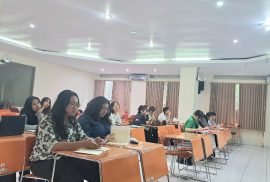
Yogyakarta, 11/9/2025 – The Master’s Program in Literature, Faculty of Cultural Sciences, Universitas Gadjah Mada, hosted a two-day creative writing workshop on flash fiction, held on Tuesday (9/9) and Thursday (11/9) at Soegondo Building, Room 125, FIB UGM.

The event featured international creative writer Alexandra Masri Do, widely known as Maz Do, who holds a Master of Fine Arts (MFA) degree in fiction from Cornell University, USA. Currently in Yogyakarta on a Fulbright scholarship for creative writing and research, Maz Do has published short stories in renowned literary journals such as Guernica, The Baffler, and McSweeney’s Quarterly Concern. The workshop was attended by around 20 participants, not only from the Master’s Program in Literature at UGM but also from various backgrounds outside the program who shared an interest in creative writing.

The first session, titled “Flash Fiction: Discover the Art of Short-Form Storytelling”, introduced the fundamentals of flash fiction as a compact narrative form capable of delivering depth within brevity. Alexandra opened the workshop with a provocative exercise called the Lying Exercise by Steven Doung.

She emphasized that this practice is essential because writing fiction, in a positive sense, involves “lying” by creating new realities through imagination. “Fiction is a lie, but it is a lie that reveals truth. As writers, we invent, we fabricate—but through this act of lying, we reach something deeply human and meaningful,” Maz Do explained.

Through this exercise, participants were encouraged to realize that the “lies” crafted in fiction can, in fact, serve as gateways to broader truths. Following this, Maz Do elaborated on key elements such as shape, perspective, and how a story can be viewed as a series of questions that challenge readers’ expectations.

The second session, titled “Generative Creative Workshop: Write Your Own Flash Fiction”, focused more on practice and story development. Participants engaged in simple yet imaginative exercises such as the Chair Exercise, which connected words to visuals and personal memories. Starting with the word “chair”, participants explored synonyms, compared the visual images that arose, and linked them to personal memories. From these associations, they were asked to compose short sentences and share them in group discussions.

Enthusiasm was evident throughout both days of the workshop. The atmosphere was dynamic, filled with discussions, partner activities, and reflective sharing. The presence of participants from diverse backgrounds—academics, students, and literary enthusiasts alike—brought unique perspectives into the creative process.

The workshop provided valuable insights into how a short narrative can powerfully evoke readers’ imagination. More than just theory, Maz Do equipped participants with practical skills in writing, revising, and sharpening literary sensitivity.

Through this program, the Master’s Program in Literature, FIB UGM reaffirms its commitment to creating open, innovative, and internationally engaged learning spaces. With guidance from Maz Do, flash fiction has proven to be a refreshing medium for exploring imagination and enriching today’s literary practice.

Author: Marsya Kamila / Public Relations, Master’s Program in Literature

Winning the Javanese Script Literacy Competition in the Hadeging Kadipaten Pakualaman Ngayogyakarta

News ReleaseSDGs 11: Sustainable cities and communitiesSDGs 17: Partnerships for the GoalsSDGs 4: Quality Education Thursday, 28 August 2025

Yogyakarta, 17/5/2025 – A student of the Javanese Language, Literature, and Culture study program, class of 2023, Maysa Putri Fatihah, won the 1st runner-up prize in the Javanese Script Literacy competition. This competition was held by Pura Pakualaman in the framework of the 219th (in Javanese year) Hadeging Kadipaten Pakualaman Ngayogyakarta. This year, the Hadeging Kadipaten Pakualaman event carries the theme ‘Manggala Gati Wiwaraning Rat’.

This Javanese Script Literacy Competition is divided into two categories, namely General and Students. For the general category, the competition is to translate Latin text into Javanese script and draw rerenggan/illustrations according to the participants’ interpretation of the contents of the text. The questions are in the form of macapat songs from the Sestra Ageng Adidarma manuscript text collected by the Widyapustaka Pakualaman Library. This text contains 6 verses of the Durma song, all of which must be depicted in the renggan, but only the first verse is translated. The text was given when the registration was announced, so participants could prepare illustration ideas well in advance.

On the day of the event, participants were given 5 hours to complete the work. During the process, participants were prohibited from opening their cellphones, copying letters, or plagiarizing images. The committee only provided drawing paper with Pakualaman stickers to minimize cheating.

Maysa’s work itself has a deep meaning. She mentioned in the description of her rerenggan that the color red symbolizes courage, while blue symbolizes peace and noble character. In the ornament under the renggan, a circle is depicted which has the meaning of rat or universe. In addition, there are ornaments of cannons, arrows, and spears as weapons of war. These weapons of war symbolize a source of strength or support to achieve victory.

Apart from Maysa, there were 2 other students from the 2023 batch who took part in this competition, namely Rafi Nur Fauzy and Rafif Wicaksono. Both are among the top 10 nominees with the best works. By participating in this competition, it is hoped that students can love and appreciate the literary works left by our ancestors more.

“It certainly feels happy to have the opportunity to participate in the Javanese script literacy competition and win. It’s great to meet great people there (especially philologists). Alhamdulillah, I was able to bring home the trophy from Pakualaman and make my parents proud. Hopefully, my other friends will be motivated so that in the next opportunity they can participate and compete together,” said Maysa.

Authors: Haryo Untoro

FIB UGM Holds Gender and Sexuality Class to Explore Identity and Diversity in Society

HEADLINESNews Release Wednesday, 20 August 2025

Yogyakarta, August 20, 2025 — The Cultural Anthropology Study Program, Faculty of Cultural Sciences (FIB), Universitas Gadjah Mada, has once again opened its Gender and Sexuality class, a regular part of the department’s semester curriculum. This semester, the class is scheduled every Wednesday from 7:15 to 9:45 a.m., running from August 20 to December 5, 2025, at the R. Soegondo Building, Faculty of Cultural Sciences, UGM.

The course aims to provide a critical understanding of the distinctions between sex, gender, and sexuality. Through this class, students are encouraged to grasp why these distinctions have become increasingly significant amid the changing dynamics of modern society.

A wide range of topics are discussed, including sexual taboos, sexual identity, and expressions of gender in everyday life. The course also examines how gender identity intersects with other aspects such as social class, ethnicity, race, age, and religion. Using an intersectional approach, students are guided to understand how multiple identities shape individual experiences within society.

Beyond theoretical discussion, the course also highlights the social and cultural implications of gender and sexuality issues, especially in the context of Indonesia and Southeast Asia. Students are encouraged to think critically, question social norms, and appreciate the diversity of human experiences while remaining grounded in local contexts.

The Gender and Sexuality class is open to students from the Cultural Anthropology Study Program and other departments within the Faculty of Cultural Sciences, UGM. It serves as an important academic space for anyone interested in exploring gender, sexuality, and identity studies from an anthropological perspective, while broadening their understanding of the complexities of contemporary social life.

Photo: Freepik.com

[Public Relations of FIB UGM, Candra Solihin]

UGM History Department Hosts International Conference on Ontology and Environmental History

News ReleaseSDGs 11: Sustainable cities and communitiesSDGs 13: Climate ActionSDGs 15: Life on landSDGs 4: Quality EducationSDGs 6: Clean water and sanitation Monday, 30 June 2025

The Faculty of Cultural Sciences at Gadjah Mada University (UGM) successfully held the “Conference on Locality, Ontology, and Environmental History” on June 25-26, 2025, at the Multimedia Room, Margono Building, UGM. This event served as an interdisciplinary academic discussion platform aimed at re-evaluating how locality and traditional knowledge can contribute to global environmental issues, aligning with the Sustainable Development Goals (SDGs) such as education for sustainability, air quality, climate change, and ecosystem preservation.

The conference was inaugurated by Dr. Mimi Savitri, the Vice Dean for Research, Community Service, and Cooperation at the Faculty of Cultural Sciences. In her opening remarks, she emphasized the importance of collaboration between academics and communities in re-examining the relationship between humans and nature from local and ontological perspectives. This collaboration is crucial for addressing pressing environmental challenges and fostering sustainable practices.

The event also featured welcoming speeches from Farabi Fakih of the UGM History Department and Prof. Diana Suhardiman from KITLV, who highlighted the significance of integrating local wisdom into contemporary environmental discourse. Their insights underscored the need for a holistic approach to understanding the intricate connections between culture, history, and the environment.

The conference included six thematic discussion panels, covering a wide range of issues from climate change, water and land management, power and environment, local knowledge, urban social movements, to historical reflections on the Cretaceous period and the Anthropocene. These discussions aimed to bridge the gap between scientific research and local practices, fostering a deeper understanding of environmental sustainability.

For instance, the first panel showcased studies on climate adaptation based on the spiritual-ecological practices of farmers in Playen, Gunungkidul, as well as the management of the Wonosadi Customary Forest. These case studies illustrated how traditional practices can inform modern environmental strategies, contributing to the SDGs related to climate action and ecosystem preservation.

Meanwhile, the fifth panel addressed the issue of urban segregation in Yogyakarta, which has shifted from racial divides to competition for access to water resources. This discussion highlighted the critical need for equitable resource management in urban settings, emphasizing the role of local communities in advocating for their rights and environmental justice.

Overall, the conference served as a significant platform that brought together science, activism, and local wisdom, embodying the spirit of decolonizing knowledge in addressing the global environmental crisis. By fostering dialogue among diverse stakeholders, the event aimed to inspire innovative solutions that prioritize sustainability and the well-being of both people and the planet.

The success of this conference reflects UGM’s commitment to advancing education for sustainability and promoting interdisciplinary collaboration in tackling climate change and enhancing air quality. As the world faces increasing environmental challenges, initiatives like this are essential for cultivating a more sustainable future.


[Public Relations of FIB UGM, Candra Solihin]

1…678910…50

Video UGM

[shtmlslider name='shslider_options']
Universitas Gadjah Mada

Faculty of Cultural Sciences
Universitas Gadjah Mada
Jl. Nusantara 1, Bulaksumur Yogyakarta 55281, Indonesia
   fib@ugm.ac.id
   +62 (274) 513096
   +62 (274) 550451

Work Units

  • Office of Journal & Publishing
  • INCULS
  • Information Technology and Database
  • Language Learning Center
  • Library Unit
  • Public Relations
  • Research

Facilities

  • Computer Laboratory
  • Gamelan
  • Guest House
  • Language Library
  • Library
  • Phonetics Library
  • Self Access Unit
  • Student Internet Centre

Importan Links

  • Journal of Humaniora
  • Subscriber Journal
  • Alumni Portal
  • Career
  • Departmens News
  • UGM Streaming

Contacts

  • Academic
  • Administration
  • Dean’s Office
  • Departments / Study Programs
  • Public Relations

© 2024 Faculty of Cultural Sciences Universitas Gadjah Mada

KEBIJAKAN PRIVASI/PRIVACY POLICY

[EN] We use cookies to help our viewer get the best experience on our website. -- [ID] Kami menggunakan cookie untuk membantu pengunjung kami mendapatkan pengalaman terbaik di situs web kami.I Agree / Saya Setuju