• About UGM
  • Academic Portal
  • IT Center
  • Library
  • Research
  • Webmail
  • Informasi Publik
  • English
    • Indonesia
Universitas Gadjah Mada Faculty of Cultural Sciences
Universitas Gadjah Mada
  • Home
  • Profile
    • History
    • Vision and Mission
    • Organizational structure
    • Administration
    • Staff
    • Faculty Members
  • Academic
    • Academic Calendar
    • Undergraduate Programs
      • Bachelor of Cultural Antrophology
      • Bachelor in Archaeolagy
      • Bachelor in History
      • Bachelor in Tourism
      • Bochetor in Korean Language and Culture
      • Bachelor in Indonesian Language and Culture
      • Bachelor in English
      • Bachelor in Arabic
      • Bachelor in Japanese Language and Culture
      • Bachelor in Javanese Language, Literature and Culture
      • Bachelor in French language and literature
    • Graduate Programs
      • Master in Antrophology
      • Master in ArchaeoIogy
      • Master in History
      • Master in Linguistics
      • Master in Literature
      • Master In American Studies
      • Master in Middle Eastern Cultural Studies
    • Post-Graduate Programs / S3
      • Doctor in Antropology
      • Doctor in American Studies
      • Doctor in Humanities
    • Student Service
  • KPPM
    • Research Information
    • Scientific / Academic Publications
    • Community Service
    • International Cooperation
    • Domestic Cooperation
  • Student Organizations
    • Student Executive Council
    • Semi-Autonomous Organizations
      • KAPALASASTRA
      • Christian Student Alliance
      • LINCAK
      • Saskine
      • Catholic Student Family
      • Dian Budaya
      • Sastra Kanuragan (sasgan)
      • Family of Muslim Cultural Sciences Students (KMIB)
      • Bejo Mulyo
    • Autonomous Organizations
      • Family of Anthropology Students (KEMANT)
      • English Department Student Association
      • Tourism Students Association (HIMAPA)
      • Family of Indonesian Literature Students (KMSI)
      • West Asian Literature Student Association (IMABA)
      • Association of Korean-Language Students (HIMAHARA)
      • Family of Regional Indonesian Literatures Students (KAMASUTRA)
      • The Family Body of History Students (BKMS)
      • The French Literature Students Association (HMSP)
      • Family of Anthropology Students
      • Japanese Student Association (HIMAJE)
  • Admission
    • Student Evaluation
  • Home
  • SDGs 17: Partnerships for the Goals
  • page. 60
Arsip:

SDGs 17: Partnerships for the Goals

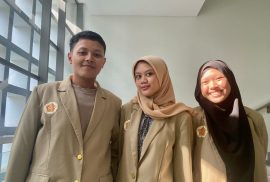
Meet Haybah Shabira, Student of Faculty of Humanities UGM Finalist of Student Debate League

News ReleaseSDGs 17: Partnerships for the GoalsSDGs 4: Quality Education Monday, 10 June 2024

On Monday, June 3, 2024, Public Relations of Faculty of Cultural Sciences UGM had the opportunity to interview one of the students of Faculty of Cultural Sciecnes UGM, Haybah Shabira, who successfully passed the Semifinal selection of Student Debate League organized by PT IDN Media on May 31, 2024. The Student Debate League competition was held to celebrate the tenth anniversary of PT IDN Times as well as an initiative to encourage students’ ability to think critically and express their opinions and aspirations as a young generation. The competition invited a number of universities such as Diponegoro University, Syarif Hidayatullah State Islamic University Jakarta, Telkom University, Sepuluh Nopember Institute of Technology, Mataram University, Bogor Agricultural University, Padjajaran University, and others, to participate in the debate competition.

As a student of Archaeology UGM Class of 2023 from Aceh, Haybah has been involved in the world of competitive debate since the beginning of the first semester through participating in the Gadjah Mada Debating Society (GMDS) UGM and has participated in various English debate and Indonesian debate competitions. At the Student Debate League competition, he was initially interested in registering for the competition, but because the quota of representatives from the debate organization he joined was filled early, he was unable to register directly. Fortunately, one of the representatives withdrew and Haybah immediately took her place to have the opportunity to run as a representative.

As one of the representatives of the GMDS UGM organization, Haybah joined a team consisting of two different faculty students Nawfal Aulia Luthfurrahman from the Faculty of Economics and Business Class of 2023 and Meira Davina Jasmine from the Faculty of Law Class of 2023. Despite being from different faculties, they were still excited to compete together.

During the competition, they conducted research on debate motions that had been used in previous debate competitions as a learning reference. After conducting research, they will compile arguments and divide their respective work roles such as the role of the first speaker who presents the basic direction of the debate, followed by the next speaker who presents problem identification, and the last speaker who provides a solution presentation.

“So, we have a solid and clear structure for our debate and until the preparation for the final, nothing has changed, except maybe coaching from our seniors at GMDS UGM,” said Haybah explaining the preparation for the final stage.

With the final stage held on Thursday, June 6, 2024, at IDN Media Headquarters, DKI Jakarta, Haybah and members of the Student Debate League team are now representing Gadjah Mada University to compete with Bogor Agricultural University.

“I want to prove that, you know, the result of UGM’s upbringing and make UGM proud and inspire my friends, especially from my neighborhood in Aceh to encourage the courage of my friends that if you lose it’s okay, because you will reach the level that you are capable enough to reach that level.” Haybah answered about her hopes and enthusiasm to share inspiration for her friends and students to dare to try to jump into the competition.
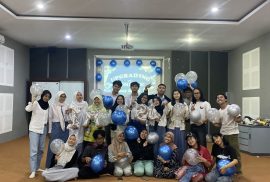
Upgrading and Bonding Activities of the Faculty of Cultural Sciences UGM Student Senate 2024

News ReleaseSDGs 17: Partnerships for the GoalsSDGs 4: Quality Education Monday, 10 June 2024

On Thursday, May 23, 2024, the Faculty of Cultural Sciences UGM Student Senate held an internal Upgrading and Bonding activity aimed at strengthening relationships between fellow administrators and students who are part of the management of the Faculty of Cultural Sciences UGM Student Senate. The activity carried out at the beginning of this management is expected to synchronize the performance of the management based on solidarity and togetherness for the implementation of management for one period. The event was held in Room A201, Siti Baroroh Building, Faculty of Cultural Sciences UGM.

The event began with an opening by Aisyah Muthmainnah Alamsyah, as Chairperson of the Student Senate for the 2024/2025 Period, with the presentation of information about the things that need to be done by the Student Senate of FIB UGM during one period as well as the rules that apply binding for each board. The presentation of information through presentations was then continued with a sharing session that presented the Chairman of the Faculty of Cultural Sciences UGM Student Senate 2023/2024, I Putu Adhimas Radiansyah Aryawan and the Honorary Board of the Faculty of Cultural Sciences UGM Student Senate 2023/2024, Ajeng Purwaniaratih Puspitaningrum. In the opportunity to share experiences, the two former administrators of the Faculty of Arts UGM Student Senate emphasized the importance of thorough knowledge of the functions and work of the Faculty of Cultural Sciences UGM Student Senate as a legislative body that oversees the Faculty of Cultural Sciences UGM Student Executive Board (LEM). They also mentioned the importance of communication and strengthening relationships not only with LEM FIB UGM, but also with Semi-Autonomous Bodies (BSO) and Department Student Associations (HMJ) in the faculty environment.

After the experience sharing session was over, the activity continued with a joint play session conducted by the entire committee to enliven the activity. With this fun interactive play session, the administrators can strengthen the sense of equality needed to support optimal organizational performance.

Kick-Off Microcredential Development for University Leaders through UGM Online

News ReleaseSDGs 17: Partnerships for the GoalsSDGs 4: Quality EducationSDGs 9: Industry innovation and infrastructure Monday, 10 June 2024

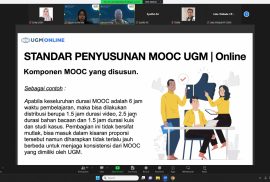
Tuesday, May 21, 2024, Faculty of Cultural Sciences UGM participated in a webinar on the Kick-Off of Micro Credential Development for University Leaders through UGM Online organized by the Directorate of Academic Studies and Innovation, Universitas Gadjah Mada. This activity aims to introduce the term Micro Credential which is a certificate or recognition given to individuals after completing a course or learning module that focuses on certain competencies or skills. In conjunction with the learning management system portal through UGM Online, to form a new educational ecosystem to support continuing education and lifelong learning for students and alumni by obtaining online learning resources. Microcredentials that are delivered through the types of online learning classes offered are usually short in duration and highly focused. They are designed to enhance certain skills or master specific competencies to the point of recognition for learning credits.

Microcredentials are divided into six different classes, namely:

  • Technical Skills Class
  • Professional Development Class
  • Soft Skills Class
  • Compliance and Regulatory Class
  • Entrepreneurship Class
  • Industry Specific Classes

Each class is designed with a specific focus to develop different skills. This specific skill development is able to support each individual to deepen their knowledge and insight in a specific focus for career advancement and improve individual competence. Module or course development of micro credentialing modules is developed from courses that are then packaged and reproduced according to the principles of micro credentialing. Lecturers can develop micro credential modules from their expertise, which has strategic value in the community/market to be accessed widely and massively. The module may be different from the material in the course and what is taught to students.

Technical Guidance for Writing Javanese Children’s Stories by Lecturers of Javanese Literature and Culture – Wiwien Widyawati Rahayu

News ReleaseSDGs 17: Partnerships for the GoalsSDGs 4: Quality EducationSDGs 8: Decent work and economic growth Monday, 10 June 2024

Leveling is the determination of the equivalence of books for readers with reading levels. Non-textbook is a type of book that aims to provide enrichment of knowledge, insights and skills for textbooks from certain scientific studies. From this limitation, “Nontext Book Leveling” is an important tool that should be known, understood, and applied for writers/authors of nontext books.

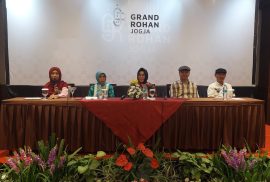
The topic was delivered by Wiwien Widyawati Rahayu, lecturer of Javanese Language, Literature, and Culture study program, Department of Language and Literature, Faculty of Cultural Sciences UGM at the “Technical Guidance on Writing Javanese Children’s Stories” organized by Yogyakarta Language Center (BBY) at Grand Rohan Hotel Yogyakarta on May 18, 2024 at 08.00-16.00 WIB. Bimtek is a series of activities that began with a proposal writing competition which was attended by 375 people / titles. From the assessment of three judges, including Wiwien Widyawati Rahayu, 97 titles were selected. This proposal contains not only the chosen theme, topic, title, and level but also contains a description of the character and his characterization, a synopsis of the story, as well as a draft of the contents of the script per page along with a description of the illustrations that must be included. Why does it have to be this detailed? Because through what is written by the proposer, it will be known that it is suitable for the age level chosen.

With the guidance, it is hoped that the discrepancies found in the 97 selected proposals can be recognized, consulted, and corrected by the authors. The suitability is based on the classification of readers, including early readers (A: 0-7 years), early readers (B1, B2, B3: 6-10 years), intermediate readers (C: 10-13 years), intermediate readers (D: 13-15 years), and advanced readers (E: 16 years and above). Of the five classifications, only three were presented (except for intermediate and advanced readers) in detail because they were adjusted to the provisions set by BBY as a requirement for the competition level.

The participants, who were children’s story writers, came from various districts in Yogyakarta. The diversity of professions, such as formal and non-formal educators, civil servants outside the field of education, students, journalists, retirees, professional writers, housewives, entrepreneurs, and private employees proves that writing activities occur widely in society. This can be used as additional evidence that being a writer is a professional choice that can be pursued and relied upon for all time.

At the end of her presentation, Wiwien said that, “writing non-textbooks is an opportunity for all of us as long as we are able to identify the disparity between the curriculum objectives to be achieved and the availability of textbooks, as well as existing learning practices. This needs to be known, considering that the function of non-textbooks is to complement and strengthen existing textbooks”.

The activities that have been carried out are related to the sustainable development goals (SDGs), namely Quality Education (4) because the participants/writers involved in the technical guidance can improve their writing competencies in accordance with the reader’s level; Decent Work and Economic Growth (8) because with the competencies gained, the technical guidance participants can recognize the opportunity that writing can be used as a profession; Partnership to achieve goals (17) because the relationship between participants with various professions, academics as resource persons, and institutions as stakeholders can take place well because they are aware of their own capacities so that relations of mutual need and complementarity are realized to achieve goals.

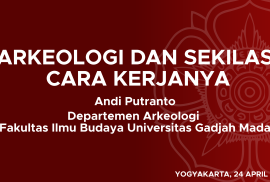
Lecturer of Archaeology FIB UGM as a resource person for the Evaluation and Preparation of Standard Operating Procedures for Technical Activities of BPK Region X

News ReleaseSDGs 16: Peace justice and strong institutionsSDGs 17: Partnerships for the GoalsSDGs 4: Quality EducationSDGs 9: Industry innovation and infrastructure Monday, 10 June 2024

The evaluation and preparation of the BPK Region X Technical POS was held on April 23-26, 2024 at the Solia Zigna Hotel, Surakarta. This activity is part of the 2024 work program of BPK Region X, which in the previous year had compiled POS Technical Activities for several types of main tasks and functions of the working groups within BPK Region X. Participants who attended were all staff from the BPK Region X office from each working group. The activity began with a presentation from a resource person related to the main task of the BPK (Cultural Preservation Center), namely the Preservation of Cultural Heritage and Cultural Promotion Objects, especially the Protection aspect which includes Cultural Heritage and Intangible Cultural Heritage.

Given that the Development and Utilization tasks are currently under the newly inaugurated MCB (Museum and Cultural Heritage) office. On this occasion, material was presented on aspects related to preservation activities in accordance with academic principles and rules according to the scientific field of archaeology. At the beginning of the presentation, the challenges of the field of archaeology in the future, especially those related to the preservation of cultural heritage, the parties who are stakeholders and have an interest in cultural heritage, were presented.

Changes in the scientific paradigm and also the condition of society also affect the scheme of involvement of stakeholders with an interest in cultural heritage. The development of research methods in the academic world needs to be conveyed to the participants in an effort to maintain the scientific spirit of each working group’s activities at the CPC. The presentation was closed with discussion and questions from the participants.

1…5859606162…70

Video UGM

[shtmlslider name='shslider_options']
Universitas Gadjah Mada

Faculty of Cultural Sciences
Universitas Gadjah Mada
Jl. Nusantara 1, Bulaksumur Yogyakarta 55281, Indonesia
   fib@ugm.ac.id
   +62 (274) 513096
   +62 (274) 550451

Work Units

  • Office of Journal & Publishing
  • INCULS
  • Information Technology and Database
  • Language Learning Center
  • Library Unit
  • Public Relations
  • Research

Facilities

  • Computer Laboratory
  • Gamelan
  • Guest House
  • Language Library
  • Library
  • Phonetics Library
  • Self Access Unit
  • Student Internet Centre

Importan Links

  • Journal of Humaniora
  • Subscriber Journal
  • Alumni Portal
  • Career
  • Departmens News
  • UGM Streaming

Contacts

  • Academic
  • Administration
  • Dean’s Office
  • Departments / Study Programs
  • Public Relations

© 2024 Faculty of Cultural Sciences Universitas Gadjah Mada

KEBIJAKAN PRIVASI/PRIVACY POLICY

[EN] We use cookies to help our viewer get the best experience on our website. -- [ID] Kami menggunakan cookie untuk membantu pengunjung kami mendapatkan pengalaman terbaik di situs web kami.I Agree / Saya Setuju