• About UGM
  • Academic Portal
  • IT Center
  • Library
  • Research
  • Webmail
  • Informasi Publik
  • English
    • Indonesia
Universitas Gadjah Mada Faculty of Cultural Sciences
Universitas Gadjah Mada
  • Home
  • Profile
    • History
    • Vision and Mission
    • Organizational structure
    • Administration
    • Staff
    • Faculty Members
  • Academic
    • Academic Calendar
    • Undergraduate Programs
      • Bachelor of Cultural Antrophology
      • Bachelor in Archaeolagy
      • Bachelor in History
      • Bachelor in Tourism
      • Bochetor in Korean Language and Culture
      • Bachelor in Indonesian Language and Culture
      • Bachelor in English
      • Bachelor in Arabic
      • Bachelor in Japanese Language and Culture
      • Bachelor in Javanese Language, Literature and Culture
      • Bachelor in French language and literature
    • Graduate Programs
      • Master in Antrophology
      • Master in ArchaeoIogy
      • Master in History
      • Master in Linguistics
      • Master in Literature
      • Master In American Studies
      • Master in Middle Eastern Cultural Studies
    • Post-Graduate Programs / S3
      • Doctor in Antropology
      • Doctor in American Studies
      • Doctor in Humanities
    • Student Service
  • KPPM
    • Research Information
    • Scientific / Academic Publications
    • Community Service
    • International Cooperation
    • Domestic Cooperation
  • Student Organizations
    • Student Executive Council
    • Semi-Autonomous Organizations
      • KAPALASASTRA
      • Christian Student Alliance
      • LINCAK
      • Saskine
      • Catholic Student Family
      • Dian Budaya
      • Sastra Kanuragan (sasgan)
      • Family of Muslim Cultural Sciences Students (KMIB)
      • Bejo Mulyo
    • Autonomous Organizations
      • Family of Anthropology Students (KEMANT)
      • English Department Student Association
      • Tourism Students Association (HIMAPA)
      • Family of Indonesian Literature Students (KMSI)
      • West Asian Literature Student Association (IMABA)
      • Association of Korean-Language Students (HIMAHARA)
      • Family of Regional Indonesian Literatures Students (KAMASUTRA)
      • The Family Body of History Students (BKMS)
      • The French Literature Students Association (HMSP)
      • Family of Anthropology Students
      • Japanese Student Association (HIMAJE)
  • Admission
    • Student Evaluation
  • Home
  • SDGs 17: Partnerships for the Goals
  • page. 22
Arsip:

SDGs 17: Partnerships for the Goals

Get To Know The Tutor: Iqbal Tafqy Aunika

HEADLINESNews ReleaseSDGs 17: Partnerships for the GoalsSDGs 4: Quality Education Thursday, 17 April 2025

Yogyakarta, 17/4/2025 – Behind the warm class meetings and intimate cross-cultural discussions is the story of a young tutor who made teaching his calling. Iqbal Tafqy Aunika, a History student in the class of 2022, started his journey with Gadjah Mada University’s Indonesian Culture and Language Service (INCULS) in June 2024. The decision to join was not solely because of academic interest but rather because of the challenges faced when teaching Scout extracurriculars. When he realized he had never taught Indonesian in theory, Iqbal saw this opportunity as a space to learn, grow, and go beyond his comfort zone.

For more than a year, Iqbal has been a teacher for students from various programs, such as the Gadjah Mada Immersion Fellowship (GMIF) and Kokushikan. However, being a tutor is not just about delivering material for Iqbal. He believes that the key to learning lies in relationships between people. Therefore, he always starts by getting to know students’ hobbies and interests and then uses that as a bridge to build closeness. This approach makes the class atmosphere more fluid and makes students feel welcome, even when cultural differences are stark.

Iqbal often uses flexible methods by combining communicative and grammatical approaches, balancing them with class situations, and inserting humor to make the lessons feel light. He does not hesitate to explore the city with students, introducing Yogyakarta as a living cultural learning space. “If we know what they like, learning is no longer rigid. They become more courageous in asking questions and discussing things, and they are interested in getting to know Indonesia more deeply,” he explained.

There are certainly challenges, especially in beginner classes. The process of understanding students is often slow at first. However, Iqbal faces it with patience and creativity. One experience that left a lasting impression was when a student from Pakistan asked about slang words in Indonesian. Instead of laughing, Iqbal used it to discuss language ethics and social context. This kind of dialogue opens up space for mutual respect while also showing the complexity of culture more honestly.

For him, being a tutor is also being the face of Indonesia. When introducing batik, for example, Iqbal shows the motif or pattern and conveys the philosophy behind it. In this way, he hopes that international students will learn about Bahasa Indonesia and capture the values ​​that shape Indonesian society. “We are, indirectly, cultural delegates,” as said. He believes that from the small classroom, the first impression of Indonesia emerges that can stay in the students’ memories for a long time.

The INCULS experience also taught Iqbal a profound lesson. He became more sensitive to differences, learned to appreciate other cultures, and realized the importance of building equal relationships. He still maintains communication with students he has taught, strengthening the bonds that have been formed not only as teachers but also as friends.

Iqbal is committed to continuing to tutor during his studies. According to him, INCULS is not just a place to teach but a space for growth that opens up new horizons. He hopes that in the future, INCULS can introduce Indonesia from a broader perspective, from traditional dances and clothing to daily life that is rich in local values.

“You can learn Bahasa Indonesia from anywhere,” he said. He says the most important thing is the spirit to understand and the courage to open yourself up. In language, there is culture, and in culture, there is the way we humanize humans.

[Public Relation of INCULS UGM, Thareeq Arkan Falakh]
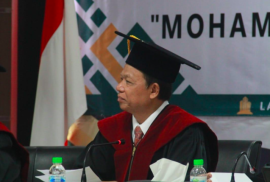
Professor from the Faculty of Cultural Studies UGM Examined a Dissertation on Quranic Education for International Students at UIN Sunan Ampel Surabaya

HEADLINESNews ReleaseSDGs 16: Peace justice and strong institutionsSDGs 17: Partnerships for the GoalsSDGs 4: Quality Education Thursday, 17 April 2025

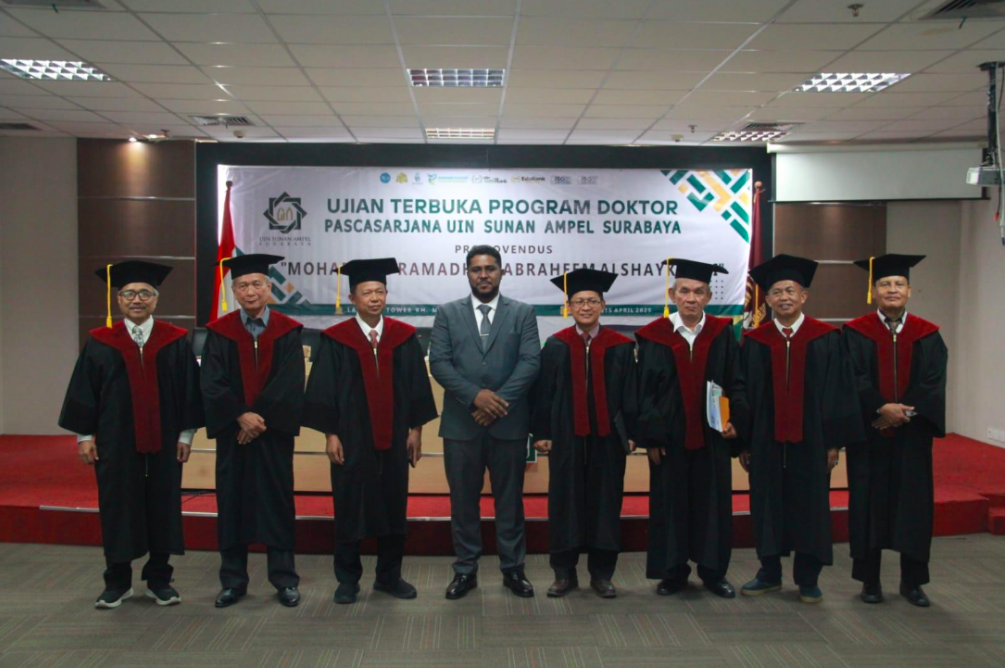
Yogyakarta, 16/4/2025 – On April 15, 2025, an Open Session of the Dissertation Examination took place in the Open Session Room on the 3rd Floor of the KH. Mahrus Aly Tower at UIN Sunan Ampel Surabaya. This event highlighted academic collaboration across campuses and countries. Professor Sangidu, M.Hum., a professor from the Faculty of Cultural Sciences at Universitas Gadjah Mada (FIB UGM), was invited as a guest examiner, further strengthening the scientific partnership between the two esteemed institutions. The dissertation under examination was authored by Mohammed Ramadhan Abraheem Al-Shaykh Ali, an international student from Libya. His research focused on the principles of education illustrated in the stories of Sayyidina Ibrahim and Luqman Al-Hakim, exploring their relevance in shaping human character through the values of the Qur’an.

This dissertation research thoroughly examines the educational methods found in the Qur’an, particularly through the inspiring stories of Ibrahim and Luqman Al-Hakim. Utilizing content analysis, the researcher deconstructs relevant verses to uncover principles, approaches, and effective educational methods that contribute to shaping human behavior and morality. This study emphasizes that the Qur’an not only provides guidance to the right path but also offers solutions to psychological conflicts by integrating spiritual strength, reason, and self-control. These concepts have been relevant since the beginning of creation and continue to be significant today.

The presence of the Professor from the Faculty of Cultural Sciences UGM as a guest examiner at this forum exemplifies cross-institutional and international collaboration in developing Islamic education with a global perspective. This initiative aligns with the Sustainable Development Goals (SDGs), particularly focusing on quality education (SDG 4), strengthening institutions (SDG 16), and fostering collaboration (SDG 17). By integrating Qur’anic values with sustainable development principles, we enrich the curriculum and enhance the role of Islamic universities in shaping a generation that is not only intellectually capable but also spiritually aware and socially responsible. This synergy aims to promote a more just, inclusive, and sustainable future while reinforcing Indonesia’s position as a hub for the advancement of progressive Islamic education on the global stage.

[Public Relation of Middle East Studies, Nafila Azzahra]

Professor from the Faculty of Cultural Studies UGM Offers a New Perspective at the National Seminar on Linguistics and Islamic Studies Held at Pondok Modern Tazakka Batang

HEADLINESNews ReleaseSDGs 16: Peace justice and strong institutionsSDGs 17: Partnerships for the GoalsSDGs 4: Quality Education Tuesday, 15 April 2025

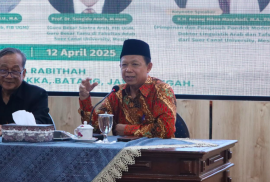
Yogyakarta, 15/4/2025 – The National Seminar titled “Modern Linguistics and Its Relevance to Islamic Studies and Humanities” was successfully held on Saturday, April 12, 2025, at the Rabithah Hall of Pondok Modern Tazakka in Batang. The event featured Prof. Dr. Sangidu, M.Hum., a Professor at the Faculty of Cultural Sciences, Universitas Gadjah Mada (UGM), as the main speaker. He discussed the interpretation of QS. Al-Fath: 29 through a linguistic and humanities lens. The seminar was inaugurated by KH Anang Rikza Masyhadi, the keynote speaker, who emphasized the importance of integrating modern science with religious values to support the Sustainable Development Goals (SDGs), particularly in the areas of quality education and cultural preservation.

In his presentation, Prof. Dr. Sangidu utilized a semiotic theoretical framework to examine QS. Al-Fath: 29, employing two reading methods: heuristic and hermeneutic. The heuristic method, drawing from Al-Maroghi’s interpretation, is used to understand the literal meaning of each word. In contrast, the hermeneutic method, or retroactive approach, references interpretations from Ibn Kathir, Sayyid Quthb’s *Fi Zhilalil Quran*, and other sources to uncover the deeper meaning of the verse. This approach illustrates how modern linguistics can serve as a relevant analytical tool for understanding religious texts in a contextual and multidimensional manner.

The seminar provided a scientific forum focused on integrating modern linguistics into Islamic studies and the humanities, with the aim of enhancing the quality of education. By adopting an innovative approach to understanding religious texts, the seminar sought to enrich the curriculum for Islamic religious education and improve teaching quality. Participants—including academics, teachers, and students—welcomed the ideas presented during the event. In addition to facilitating scientific discussions, the seminar also strengthened the partnership between the Middle Eastern Cultural Studies Program at FIB UGM and Pondok Modern Tazakka. Through collaboration, the seminar is expected to make a significant contribution to the development of education grounded in religious values, while also supporting the achievement of the Sustainable Development Goals (SDGs) in Indonesia.

[Public Relation of Middle East Studies, Nafila Azzahra]

UGM Campus Tour Guiding Training: Synergy of Lecturers, Students, and Alumni of Tourism Study Program of Faculty of Arts UGM in Supporting the New System of Campus Visit at UGM

HEADLINESNews ReleaseSDGs 17: Partnerships for the GoalsSDGs 4: Quality Education Friday, 11 April 2025

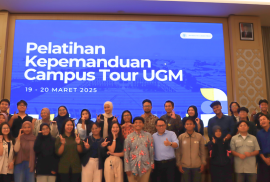
Yogyakarta, 10/4/2025 – In order to welcome the new system of campus visit implementation, Universitas Gadjah Mada (UGM) held UGM Campus Tour Activity Guiding Training which lasted for two days, namely on Thursday, March 20, 2025 online through Zoom and Friday, March 21, 2025 offline in Multimedia Room 1, UGM Main Office (Balairung). This training was held as part of UGM’s efforts to realize a campus tour system that is more coordinated, informative, and representative of university values.

This activity is an important part of the implementation of UGM’s new policy in organizing campus tours, which were previously decentralized in each faculty and business unit. Now, the implementation is consolidated through a centralized system that involves student representatives from all faculties as guides. Therefore, the students involved are required to have good story telling skills, understand the values of UGM, and have basic visitor management skills, so this training is a crucial step in the process.

Understanding Values and Basic Guiding Techniques

The first day of the training was opened online by the committee, followed by remarks from Mohamad Rachmadian Narotama, ST, M.Sc., Ph.D., lecturer in Tourism Study Program at Faculty of Arts UGM as well as the Head of UGM Campus Tour Task Force Team. In his speech, he emphasized the importance of the guide’s role in the new UGM Campus Tour scheme which is not only as an introduction, but also as an ambassador of information and representation of university values.

The first session presented Runavia Mulyasari, S.Ant., M.A. and Popi Irawan, S.S., M.Sc., Ph.D., both lecturers of Tourism Study Program and members of the UGM Campus Tour Task Force, who provided an in-depth understanding of the interpretation of UGM values in the context of guiding and the basics of guiding.

Meanwhile, Runavia Mulyasari, S.Ant., M.A. explained the importance of attitude, communication skills, and code of ethics that must be owned by campus tour guides. The participants were introduced to the principles of hospitality and professionalism as the key to maintaining UGM’s image in the eyes of visitors.

The next session was filled with a sharing session entitled “The Art of Telling Stories about Daily Activities” presented by Evander Dwi Pramana, S.Par, an alumnus of UGM Tourism Study Program who is now active as a guiding practitioner. In this session, participants were not only invited to hear field experiences, but also to share stories about campus life which could later be developed into story telling material for campus tour visitors.

Deepening SOPs and Guiding Practices

Meanwhile, offline training activities began with remarks from Popi Irawan, who emphasized the importance of this training in ensuring the quality of the campus visitor experience in the future. The first session was filled by Runavia Mulyasari, who explained the Standard Operating Procedure (SOP) developed by the Task Force Team for campus tour guiding activities. Not only one-way, this session also encouraged participants to actively discuss to complete the SOP, such as dealing with emergency conditions and the limits of guide intervention.

The second session was a hands-on guiding practice facilitated by Evander. Through a paired method, participants practiced being a guide and a visitor alternately. Open discussions were also held to discuss effective guiding strategies in various situations. This practice also honed the participants’ skills in delivering information in an interesting, relevant and communicative manner.

Synergy for Sustainable Tourism

The active involvement of lecturers, students, and alumni of the UGM Faculty of Arts Tourism Study Program in this activity shows a commitment to sustainable education that is in line with the goals of SDG 4: Quality Education and SDG 17: Partnerships to Achieve Goals. Collaboration across generations and faculties is an important foundation in creating a campus tour ecosystem at UGM that is inclusive, informative, and meaningful.

With this training, it is expected that all students involved as guides can be the best representation of UGM. Not only as a higher education institution, but also as an open, friendly, and inspiring life learning space.

[Public Relations of Tourism, Muhammad Alif]

A Century of A.A. Navis: Magister Sastra UGM and Toko Buku Natan Revitalizing Literary Heritage through Discussions and Book Launches

HEADLINESNews ReleaseSDGs 10: Reduced InequalitiesSDGs 11: Sustainable cities and communitiesSDGs 16: Peace justice and strong institutionsSDGs 17: Partnerships for the GoalsSDGs 4: Quality Education Thursday, 10 April 2025

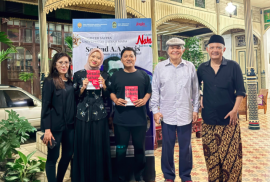
Yogyakarta, March 23, 2025 – In an effort to revive the intellectual legacy of one of Indonesia’s greatest literary figures, Toko Buku Natan in collaboration with the Master’s Program in Literature at Universitas Gadjah Mada (UGM) held the Centennial Commemoration of A.A. Navis at Rumah Budaya Ndalem Natan, Kotagede, Yogyakarta. This event attracted literature enthusiasts, academics, and cultural figures eager to explore A.A. Navis’ critical thoughts and contributions to national literary development. Featuring a series of activities, including academic discussions, book launches, an art exhibition, and musical performances, the commemoration became a reflective moment that delved deeper into the social, cultural, and linguistic aspects of Navis’ works.

As one of the most influential figures in Indonesian literature, A.A. Navis gained widespread recognition for his classic short story, Robohnya Surau Kami (The Collapse of Our Mosque), which offered a profound critique of societal structures. Set during the harmonious spirit of Ramadan, this event brought together various stakeholders to discuss Navis’ legacy and critical thoughts, featuring renowned speakers such as Dhianita Kusuma Pertiwi (writer and curator), Prof. Dr. Aprinus Salam (academic and literary scholar), and Nasir Tamara, M.A., M.Sc., Ph.D. (cultural expert). The discussion was further enriched by a cello performance by Lintang Pramudia Swara, providing an aesthetic and immersive experience for the participants.

One of the event’s key highlights was the launch of the book “Kesalahan dan Kejahatan dalam Berbahasa” (Errors and Crimes in Language) by Prof. Dr. Aprinus Salam. This book critically examines language awareness within social and legal contexts. Drawing from his extensive academic and professional experience as an expert witness in various linguistic cases, Prof. Aprinus presents this book as a primary reference for linguistic studies and the role of language in Indonesia’s legal practices.

During the discussion, Prof. Aprinus Salam explored the contrast between social critiques in the works of A.A. Navis and Pramoedya Ananta Toer, highlighting how Navis focused more on critiquing societal structures, while Pramoedya directed his criticisms toward the government and power structures. Meanwhile, Dhianita Kusuma Pertiwi shared her research and archival experience for the 100 Years of A.A. Navis exhibition, held in Jakarta and at UNESCO in Paris. She traced Navis’ educational background at INS Kayutanam, an institution that played a crucial role in shaping his critical thinking, not only in literature but also in music and visual arts.

At the same time, Nasir Tamara, M.A., M.Sc., Ph.D. connected A.A. Navis’ intellectual lineage to the Académie française in Europe, particularly France, which was heavily influenced by the ideas of René Descartes. Citing Descartes’ philosophy “Cogito, ergo sum” (I think, therefore I am), Nasir Tamara emphasized that intellectual awareness and critical thinking are the foundations of a true thinker and writer. This perspective aligns with A.A. Navis’ approach to literary discourse, where he not only documented reality but also challenged, questioned, and inspired social change.

As part of the celebration, Lintang Pramudia Swara delivered a cello performance, enriching participants’ reflective experience. Meanwhile, an art exhibition by renowned artist Anagard featured 11 portraits of prominent Minangkabau figures, including A.A. Navis, Tan Malaka, Sutan Sjahrir, Buya Hamka, and Asrul Sani. This exhibition provided a visual narrative of the intellectual contributions and roles of Minangkabau figures in Indonesia’s national history.

The event also served as a space for literary appreciation, featuring poetry readings by Afnan Malay and a recital of Gurindam 12 by Raja Ali Haji, performed by Nasir Tamara, further enriching the significance and atmosphere of this literary celebration.

During the reflective session, Prof. Aprinus Salam presented two thought-provoking statements for participants to ponder. The first, “Your tongue is sharper than a sword,” underscored the extraordinary power of words in shaping, influencing, and even overturning societal structures. The second, “Words are only sharper for those who are sensitive,” highlighted language as not merely a communication tool but a profound expression with transformative power for those attuned to social and humanitarian realities.

This event was part of a broader initiative to honor great figures in Indonesian literature, following the centennial commemoration of Pramoedya Ananta Toer held earlier. Through the centennial of A.A. Navis, the discussion reinforced awareness of literacy, intellectual heritage, and its relevance to younger generations. Prof. Aprinus Salam emphasized that language possesses transformative power, envisioning a future where short story writers and poets stage protests by reciting poetry in front of legislative buildings, proving that words wield more power than physical weapons.

The event concluded with a communal iftar (breaking of the fast), not only fostering solidarity but also offering a profound reflection on the role of literature in shaping social and cultural consciousness. Toko Buku Natan, in collaboration with the Master’s Program in Literature at UGM, remains committed to facilitating academic discussions, literary forums, and various literacy initiatives to support intellectual and cultural development in Indonesia.

[Public Relations Magister of Literature, Anisa Dien Rahmawati]

1…2021222324…70

Video UGM

[shtmlslider name='shslider_options']
Universitas Gadjah Mada

Faculty of Cultural Sciences
Universitas Gadjah Mada
Jl. Nusantara 1, Bulaksumur Yogyakarta 55281, Indonesia
   fib@ugm.ac.id
   +62 (274) 513096
   +62 (274) 550451

Work Units

  • Office of Journal & Publishing
  • INCULS
  • Information Technology and Database
  • Language Learning Center
  • Library Unit
  • Public Relations
  • Research

Facilities

  • Computer Laboratory
  • Gamelan
  • Guest House
  • Language Library
  • Library
  • Phonetics Library
  • Self Access Unit
  • Student Internet Centre

Importan Links

  • Journal of Humaniora
  • Subscriber Journal
  • Alumni Portal
  • Career
  • Departmens News
  • UGM Streaming

Contacts

  • Academic
  • Administration
  • Dean’s Office
  • Departments / Study Programs
  • Public Relations

© 2024 Faculty of Cultural Sciences Universitas Gadjah Mada

KEBIJAKAN PRIVASI/PRIVACY POLICY

[EN] We use cookies to help our viewer get the best experience on our website. -- [ID] Kami menggunakan cookie untuk membantu pengunjung kami mendapatkan pengalaman terbaik di situs web kami.I Agree / Saya Setuju