• About UGM
  • Academic Portal
  • IT Center
  • Library
  • Research
  • Webmail
  • Informasi Publik
  • English
    • Indonesia
Universitas Gadjah Mada Faculty of Cultural Sciences
Universitas Gadjah Mada
  • Home
  • Profile
    • History
    • Vision and Mission
    • Organizational structure
    • Administration
    • Staff
    • Faculty Members
  • Academic
    • Academic Calendar
    • Undergraduate Programs
      • Bachelor of Cultural Antrophology
      • Bachelor in Archaeolagy
      • Bachelor in History
      • Bachelor in Tourism
      • Bochetor in Korean Language and Culture
      • Bachelor in Indonesian Language and Culture
      • Bachelor in English
      • Bachelor in Arabic
      • Bachelor in Japanese Language and Culture
      • Bachelor in Javanese Language, Literature and Culture
      • Bachelor in French language and literature
    • Graduate Programs
      • Master in Antrophology
      • Master in ArchaeoIogy
      • Master in History
      • Master in Linguistics
      • Master in Literature
      • Master In American Studies
      • Master in Middle Eastern Cultural Studies
    • Post-Graduate Programs / S3
      • Doctor in Antropology
      • Doctor in American Studies
      • Doctor in Humanities
    • Student Service
  • KPPM
    • Research Information
    • Scientific / Academic Publications
    • Community Service
    • International Cooperation
    • Domestic Cooperation
  • Student Organizations
    • Student Executive Council
    • Semi-Autonomous Organizations
      • KAPALASASTRA
      • Christian Student Alliance
      • LINCAK
      • Saskine
      • Catholic Student Family
      • Dian Budaya
      • Sastra Kanuragan (sasgan)
      • Family of Muslim Cultural Sciences Students (KMIB)
      • Bejo Mulyo
    • Autonomous Organizations
      • Family of Anthropology Students (KEMANT)
      • English Department Student Association
      • Tourism Students Association (HIMAPA)
      • Family of Indonesian Literature Students (KMSI)
      • West Asian Literature Student Association (IMABA)
      • Association of Korean-Language Students (HIMAHARA)
      • Family of Regional Indonesian Literatures Students (KAMASUTRA)
      • The Family Body of History Students (BKMS)
      • The French Literature Students Association (HMSP)
      • Family of Anthropology Students
      • Japanese Student Association (HIMAJE)
  • Admission
    • Student Evaluation
  • Home
  • Post by
  • page. 65
Post by :

Humas FIB

Halal Bihalal of the English Literature UGM

HEADLINESNews ReleaseSDGs 17: Partnerships for the Goals Monday, 21 April 2025

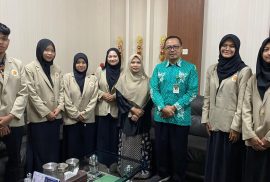
Yogyakarta, 14/4/2025 – On Monday, April 14, 2025, the English Studies Program held its annual Halal Bihalal gathering at UC Hotel UGM. This event is a cherished tradition following Eid al-Fitr, held each year to foster togetherness and maintain strong bonds within the academic community. In addition to this event, active lecturers also took part in anjangsana—an annual routine to visit the homes of retired English Studies Program faculty members.

The event was attended by active and retired lecturers of the English Studies Program, along with their families. It served as a meaningful occasion to seek and offer forgiveness in the spirit of Eid, while strengthening the relationships among the academic community.

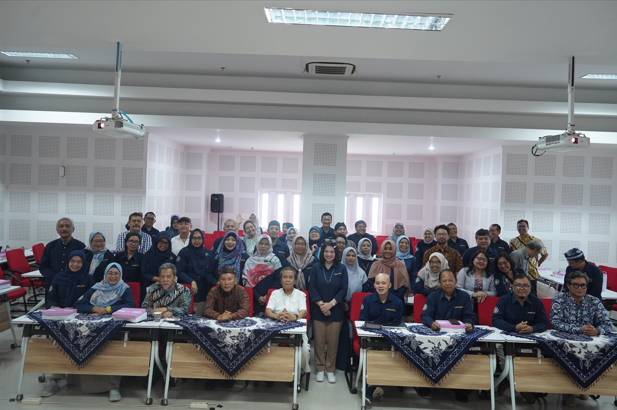
The program began with opening remarks from the Head of the English Literature Study Program, Dr. Adi Sutrisno, M.A., who emphasized the importance of maintaining familial ties within the members of the English Studies Program. The gathering continued with a lunch and casual gathering session, followed by a group photo to capture the warmth and joy of the moment. 

[Public Relation of English Literature FIB UGM, Sekar Ajiningsih]

Get To Know The Tutor: Iqbal Tafqy Aunika

HEADLINESNews ReleaseSDGs 17: Partnerships for the GoalsSDGs 4: Quality Education Thursday, 17 April 2025

Yogyakarta, 17/4/2025 – Behind the warm class meetings and intimate cross-cultural discussions is the story of a young tutor who made teaching his calling. Iqbal Tafqy Aunika, a History student in the class of 2022, started his journey with Gadjah Mada University’s Indonesian Culture and Language Service (INCULS) in June 2024. The decision to join was not solely because of academic interest but rather because of the challenges faced when teaching Scout extracurriculars. When he realized he had never taught Indonesian in theory, Iqbal saw this opportunity as a space to learn, grow, and go beyond his comfort zone.

For more than a year, Iqbal has been a teacher for students from various programs, such as the Gadjah Mada Immersion Fellowship (GMIF) and Kokushikan. However, being a tutor is not just about delivering material for Iqbal. He believes that the key to learning lies in relationships between people. Therefore, he always starts by getting to know students’ hobbies and interests and then uses that as a bridge to build closeness. This approach makes the class atmosphere more fluid and makes students feel welcome, even when cultural differences are stark.

Iqbal often uses flexible methods by combining communicative and grammatical approaches, balancing them with class situations, and inserting humor to make the lessons feel light. He does not hesitate to explore the city with students, introducing Yogyakarta as a living cultural learning space. “If we know what they like, learning is no longer rigid. They become more courageous in asking questions and discussing things, and they are interested in getting to know Indonesia more deeply,” he explained.

There are certainly challenges, especially in beginner classes. The process of understanding students is often slow at first. However, Iqbal faces it with patience and creativity. One experience that left a lasting impression was when a student from Pakistan asked about slang words in Indonesian. Instead of laughing, Iqbal used it to discuss language ethics and social context. This kind of dialogue opens up space for mutual respect while also showing the complexity of culture more honestly.

For him, being a tutor is also being the face of Indonesia. When introducing batik, for example, Iqbal shows the motif or pattern and conveys the philosophy behind it. In this way, he hopes that international students will learn about Bahasa Indonesia and capture the values ​​that shape Indonesian society. “We are, indirectly, cultural delegates,” as said. He believes that from the small classroom, the first impression of Indonesia emerges that can stay in the students’ memories for a long time.

The INCULS experience also taught Iqbal a profound lesson. He became more sensitive to differences, learned to appreciate other cultures, and realized the importance of building equal relationships. He still maintains communication with students he has taught, strengthening the bonds that have been formed not only as teachers but also as friends.

Iqbal is committed to continuing to tutor during his studies. According to him, INCULS is not just a place to teach but a space for growth that opens up new horizons. He hopes that in the future, INCULS can introduce Indonesia from a broader perspective, from traditional dances and clothing to daily life that is rich in local values.

“You can learn Bahasa Indonesia from anywhere,” he said. He says the most important thing is the spirit to understand and the courage to open yourself up. In language, there is culture, and in culture, there is the way we humanize humans.

[Public Relation of INCULS UGM, Thareeq Arkan Falakh]

Professor from the Faculty of Cultural Studies UGM Examined a Dissertation on Quranic Education for International Students at UIN Sunan Ampel Surabaya

HEADLINESNews ReleaseSDGs 16: Peace justice and strong institutionsSDGs 17: Partnerships for the GoalsSDGs 4: Quality Education Thursday, 17 April 2025

Yogyakarta, 16/4/2025 – On April 15, 2025, an Open Session of the Dissertation Examination took place in the Open Session Room on the 3rd Floor of the KH. Mahrus Aly Tower at UIN Sunan Ampel Surabaya. This event highlighted academic collaboration across campuses and countries. Professor Sangidu, M.Hum., a professor from the Faculty of Cultural Sciences at Universitas Gadjah Mada (FIB UGM), was invited as a guest examiner, further strengthening the scientific partnership between the two esteemed institutions. The dissertation under examination was authored by Mohammed Ramadhan Abraheem Al-Shaykh Ali, an international student from Libya. His research focused on the principles of education illustrated in the stories of Sayyidina Ibrahim and Luqman Al-Hakim, exploring their relevance in shaping human character through the values of the Qur’an.

This dissertation research thoroughly examines the educational methods found in the Qur’an, particularly through the inspiring stories of Ibrahim and Luqman Al-Hakim. Utilizing content analysis, the researcher deconstructs relevant verses to uncover principles, approaches, and effective educational methods that contribute to shaping human behavior and morality. This study emphasizes that the Qur’an not only provides guidance to the right path but also offers solutions to psychological conflicts by integrating spiritual strength, reason, and self-control. These concepts have been relevant since the beginning of creation and continue to be significant today.

The presence of the Professor from the Faculty of Cultural Sciences UGM as a guest examiner at this forum exemplifies cross-institutional and international collaboration in developing Islamic education with a global perspective. This initiative aligns with the Sustainable Development Goals (SDGs), particularly focusing on quality education (SDG 4), strengthening institutions (SDG 16), and fostering collaboration (SDG 17). By integrating Qur’anic values with sustainable development principles, we enrich the curriculum and enhance the role of Islamic universities in shaping a generation that is not only intellectually capable but also spiritually aware and socially responsible. This synergy aims to promote a more just, inclusive, and sustainable future while reinforcing Indonesia’s position as a hub for the advancement of progressive Islamic education on the global stage.

[Public Relation of Middle East Studies, Nafila Azzahra]

Learning Communication Strategies and Institutional Reputation Management from Fisipol UGM

Agenda Wednesday, 16 April 2025

Yogyakarta, 16/4/25 — In an effort to enhance institutional communication management capacity, the Public Relations and Cooperation Unit of the Faculty of Cultural Sciences (FIB), Universitas Gadjah Mada (UGM), conducted a benchmarking visit to the Faculty of Social and Political Sciences (Fisipol) UGM on Wednesday, April 16, 2025. The primary aim of this visit was to study and analyze best practices implemented by Fisipol, particularly in the domains of social media management, digital communication strategies, and institutional reputation management, all of which are handled by the Faculty Secretary unit of Fisipol UGM.

During the visit, the FIB UGM team was received by Velina Aulia, the Social Media Manager and Alumni Relations Officer at the Fisipol Faculty Secretary. The session began with a comprehensive presentation outlining the organizational structure and workflow of the Faculty Secretary unit. The Faculty Secretary reports directly to the Dean and works in parallel with the Vice Deans responsible for academic affairs, research, finance, and human resources. This structural arrangement highlights the strategic significance of communication in supporting the faculty’s vision and mission, while also maintaining effective engagement with both internal and external stakeholders.

In the presentation, the Faculty Secretary team elaborated on the various digital platforms they manage. Instagram serves as the primary channel for dynamic and interactive content dissemination, while LinkedIn is utilized to engage alumni and professional partners. WhatsApp Business is designated for public-facing communications, whereas WhatsApp groups are used to distribute internal information among staff, faculty members, and students. Additionally, Fisipol UGM manages a knowledge-focused YouTube channel, operated by a dedicated division.

When elaborating on their content strategy, the Faculty Secretary introduced several communication pillars that form the foundation of their publication approach. The first pillar, “Good News Fisipol,” focuses on academic and student achievements, which tend to generate high levels of engagement. The second, “Info Fisipol,” delivers academic and service-related announcements using formal and standardized language. The third, “Sudut Fisipol” (Fisipol Corner), features lighter, narrative-driven, and personalized content, such as compelling stories from student activities or daily life within the Fisipol academic community.

Furthermore, the Faculty Secretary emphasized the importance of responsiveness in public communication, with a standard response time of no more than 24 hours. Nonetheless, in addressing negative feedback, a selective policy is applied—responses are only issued if the issue in question is collective in nature and has broader implications for the institution.

One notable aspect of Fisipol’s communication practices is their ability to craft meaningful narratives from seemingly ordinary events. Moments such as orchid planting, the presence of campus cats, or other routine campus occurrences are thoughtfully incorporated into communication content to foster emotional resonance and strengthen the connection between the institution and its audience.

This benchmarking visit provided valuable insights for the FIB UGM Public Relations and Cooperation team, particularly in understanding how strategic communication and institutional reputation management can be carried out in a structured, data-driven manner that aligns with the evolving dynamics of the digital era. It is hoped that the lessons learned from this visit will contribute to the advancement of communication and cooperation practices within FIB UGM in the near future.

[Public Relation of Faculty of Cultural Sciences, Muhammad Ebid El Hakim]

Doctoral Promotion Open Examination of Dr. Ronidin: Exploring the Expression of “Minangkabau Tabedo” in Post-Conflict Literature

Agenda Wednesday, 16 April 2025

Yogyakarta, 16/4/25 — The Doctoral Promotion Open Examination of Dr. Ronidin was held on Tuesday, April 15, 2025, at the Faculty of Cultural Sciences, Universitas Gadjah Mada. The session took place in the Multimedia Room, 2nd Floor of the Margono Building, at 10.00 AM (WIB). This academic agenda marked the culmination of his doctoral journey in the Humanities Study Program at the Faculty of Cultural Sciences, UGM.

In this open examination, Dr. Ronidin defended his dissertation entitled “The Expression of Minangkabau Tabedo in Novels by Minangkabau Authors Post-PRRI to the First Half of the New Order: A Genetic Structuralism Study.” The examination was supervised by Dr. Sudibyo, M.Hum. as Promoter, and Dr. Novi Siti Kussuji Indrastuti, M.Hum. as Co-Promoter, and chaired by the Dean of the Faculty of Cultural Sciences UGM, Prof. Dr. Setiadi, M.Si.

This dissertation delves deeply into how the historical events of the PRRI (Revolutionary Government of the Republic of Indonesia) and the political transition during the early New Order period shaped cultural expressions and worldviews of Minangkabau authors through the medium of novels. Utilizing Lucien Goldmann’s genetic structuralism approach, reinforced by Lotman’s narrative theory, this research demonstrates how the Minangkabau tabedo worldview—characterized by difficult and dilemmatic social conditions—is reflected in literary texts.

The study examines five novels by Minangkabau authors: Dari Puncak Bukit Talang by Soewardi Idris, Panggilan Tanah Kelahiran by Dt. B. Nurdin Jacub, Saraswati Si Gadis dalam Sunyi by A.A. Navis, Warisan by Chairul Harun, and Bako by Darman Moenir. These novels depict the realities of Minangkabau society post-PRRI, amidst state hegemony and the shifting of traditional values, such as the role of the maternal uncle in the matrilineal system, the role of religion, and the relationship between the village and the diaspora.

Dr. Ronidin emphasizes that the Minangkabau tabedo phenomenon emerges as a representation of the tension between traditional values eroded by political realities and modernity introduced from external influences. In these novels, complex social realities are metaphorically portrayed through characters and narrative relationships, structurally reflecting the sociological conditions of Minangkabau society during that era.

This open examination not only affirms Dr. Ronidin’s intellectual capacity as an academic but also contributes significantly to Indonesian literary studies, particularly in understanding literature as a mirror of a society’s socio-political dynamics.

[Public Relation of Faculty of Cultural Sciences, Muhammad Ebid El Hakim]

1…6364656667…216

Video UGM

[shtmlslider name='shslider_options']
Universitas Gadjah Mada

Faculty of Cultural Sciences
Universitas Gadjah Mada
Jl. Nusantara 1, Bulaksumur Yogyakarta 55281, Indonesia
   fib@ugm.ac.id
   +62 (274) 513096
   +62 (274) 550451

Work Units

  • Office of Journal & Publishing
  • INCULS
  • Information Technology and Database
  • Language Learning Center
  • Library Unit
  • Public Relations
  • Research

Facilities

  • Computer Laboratory
  • Gamelan
  • Guest House
  • Language Library
  • Library
  • Phonetics Library
  • Self Access Unit
  • Student Internet Centre

Importan Links

  • Journal of Humaniora
  • Subscriber Journal
  • Alumni Portal
  • Career
  • Departmens News
  • UGM Streaming

Contacts

  • Academic
  • Administration
  • Dean’s Office
  • Departments / Study Programs
  • Public Relations

© 2024 Faculty of Cultural Sciences Universitas Gadjah Mada

KEBIJAKAN PRIVASI/PRIVACY POLICY

[EN] We use cookies to help our viewer get the best experience on our website. -- [ID] Kami menggunakan cookie untuk membantu pengunjung kami mendapatkan pengalaman terbaik di situs web kami.I Agree / Saya Setuju