• About UGM
  • Academic Portal
  • IT Center
  • Library
  • Research
  • Webmail
  • Informasi Publik
  • English
    • Indonesia
Universitas Gadjah Mada Faculty of Cultural Sciences
Universitas Gadjah Mada
  • Home
  • Profile
    • History
    • Vision and Mission
    • Organizational structure
    • Administration
    • Staff
    • Faculty Members
  • Academic
    • Academic Calendar
    • Undergraduate Programs
      • Bachelor of Cultural Antrophology
      • Bachelor in Archaeolagy
      • Bachelor in History
      • Bachelor in Tourism
      • Bochetor in Korean Language and Culture
      • Bachelor in Indonesian Language and Culture
      • Bachelor in English
      • Bachelor in Arabic
      • Bachelor in Japanese Language and Culture
      • Bachelor in Javanese Language, Literature and Culture
      • Bachelor in French language and literature
    • Graduate Programs
      • Master in Antrophology
      • Master in ArchaeoIogy
      • Master in History
      • Master in Linguistics
      • Master in Literature
      • Master In American Studies
      • Master in Middle Eastern Cultural Studies
    • Post-Graduate Programs / S3
      • Doctor in Antropology
      • Doctor in American Studies
      • Doctor in Humanities
    • Student Service
  • KPPM
    • Research Information
    • Scientific / Academic Publications
    • Community Service
    • International Cooperation
    • Domestic Cooperation
  • Student Organizations
    • Student Executive Council
    • Semi-Autonomous Organizations
      • KAPALASASTRA
      • Christian Student Alliance
      • LINCAK
      • Saskine
      • Catholic Student Family
      • Dian Budaya
      • Sastra Kanuragan (sasgan)
      • Family of Muslim Cultural Sciences Students (KMIB)
      • Bejo Mulyo
    • Autonomous Organizations
      • Family of Anthropology Students (KEMANT)
      • English Department Student Association
      • Tourism Students Association (HIMAPA)
      • Family of Indonesian Literature Students (KMSI)
      • West Asian Literature Student Association (IMABA)
      • Association of Korean-Language Students (HIMAHARA)
      • Family of Regional Indonesian Literatures Students (KAMASUTRA)
      • The Family Body of History Students (BKMS)
      • The French Literature Students Association (HMSP)
      • Family of Anthropology Students
      • Japanese Student Association (HIMAJE)
  • Admission
    • Student Evaluation
  • Home
  • SDGs 9: Industri inovasi dan infrastruktur
  • SDGs 9: Industri inovasi dan infrastruktur
Arsip:

SDGs 9: Industri inovasi dan infrastruktur

Participation of Women in Renewable Energy (POWERE): The Role of Anthropology in Supporting Renewable Energy from Indonesia’s Coastal Regions

News Release Tuesday, 9 December 2025

The Anthropology Laboratory for Research and Action (LAURA) represents Universitas Gadjah Mada in the Participation of Women in Renewable Energy (POWERE) project. This initiative is funded by the UKRI Ayrton Challenge and involves several universities, including the University of Sussex, Universitas Indonesia, and Universitas Gadjah Mada. POWERE addresses issues of unequal access and the impacts of climate change in island and coastal communities. It introduces innovation through the use of floating photovoltaic systems (FPV) as an alternative renewable energy source, while also emphasizing gender perspectives and economic conditions in off-grid coastal communities. The project is not only focused on developing physical infrastructure but also building social infrastructure by strengthening gender inclusivity in the seaweed-based economy across coastal and island areas in South Sulawesi. Led by Prof. Raminder Kaur (US), Dr. Muhammad Zamzam Fauzanafi (UGM), Dr. Mia Siscawati (UI), Dr. Bradley Parrish (US), and Prof. Peter Newell (US), POWERE stands as a comprehensive multidisciplinary collaboration centered on renewable energy.

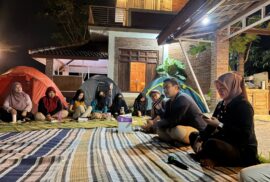
Since mid-year, the POWERE team has conducted preliminary studies in several locations, including Rannu, Katingting, and Biawasa, and presented the findings at the World Conference on Governance and Social Sciences at Hasanuddin University on 11–12 November 2025. The initial studies explored topics such as community-based infrastructure design, sensory ethnography, feminist perspectives on gender, climate change, and women’s resilience, renewable energy and social infrastructure, as well as climate adaptation challenges faced by seaweed-farming women. The broad range of issues emerging from solar energy development and its social implications continues to pose challenges for the project moving forward.

In addition to the Project Leads, the initiative involves postdoctoral researchers such as Dr. Diah Irawaty, Dr. Runavia Mulyasari, Dr. Chu Chun Yu, Dr. Agung Iswadi, and Monika Swastyastu, M.A., who contribute to ongoing research throughout the project. POWERE receives support from both governmental and non-governmental organizations, including CARE Indonesia, Aquatera, Development Finance International, Auroville Consulting, and the Ministry of Marine Affairs and Fisheries of the Republic of Indonesia, serving as financial partners and policy collaborators. Entering the first stage of the three-year program, the POWERE team has published newsletters in both Indonesian and English, accessible through the University of Sussex website and the Department of Anthropology. For the latest updates, readers may follow the official Instagram account @powere.women, which regularly shares photos and videos documenting project activities.

Writer: Okky Chandra Baskoro

Embracing the Future and a Great Career: Master of Middle Eastern Cultural Studies Holds Inspiring Alumni Event

News Release Tuesday, 2 December 2025

Friday, November 21, 2025 – The Master of Middle Eastern Cultural Studies program at Gadjah Mada University held an Inspiring Alumni event as part of its efforts to provide insight and inspiration to students and alumni who are preparing to enter the professional world. M. Asykari Muslim (Owner and CEO of Hayfa Academy), an alumnus and speaker at this event, presented a theme titled “Middle Eastern Entrepreneurs: The Synergy of Science, Technology, and Creativity in the Digital Age.” The event, at 709 of the Soegondo building, aimed to connect the current generation of students with alumni who have had successful careers in various fields, while also strengthening the academic and professional networks between the two parties.


The inspiring Alumni event began with a speech from Dr. Mahmudah, M.Hum., Secretary of the Middle Eastern Cultural Studies Master’s Department. In her speech, Dr. Mahmudah, M.Hum. emphasized the importance of building bridges between the academic world and the professional world through the firsthand experiences of successful alumni. “Through this event, we hope that students can gain a realistic picture of career opportunities in the professional world and understand how the skills they acquire in college can be applied in real life,” she said.

The alumni motivated the participants to continue developing themselves, to remain adaptable to the changing times, and to take advantage of every opportunity available. “As KBTT alumni, we must take advantage of all available opportunities, from our ability to speak Arabic or other languages. Look for opportunities to work, don’t be afraid to try, take advantage of available technology. If we want to build something, whatever it is, whether it’s a business or something else, we must use knowledge as a starting point, because without knowledge, no idea will last long,” said M. Asykari Muslim, M.A.

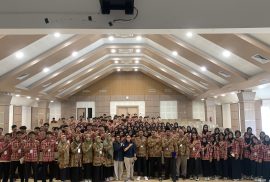
The question and answer session provided an opportunity for students to interact directly with alumni, deepen their understanding of the world of work, and build connections that will be useful for their future career development. The event concluded with the presentation of certificates of appreciation to alumni who shared their experiences and knowledge during the event. The event ended with a group photo and the hope that such activities will continue to be held in the future to strengthen the relationship between the study program and alumni and encourage students to be better prepared for the future.

[Jesica Amanda Florantika]

FIB UGM Wins 1st Place in the Growing Business Category at KMI Expo 2025 through the Mandira Heritage Team

News Release Monday, 1 December 2025

Yogyakarta, 22 November 2025 — The Faculty of Cultural Sciences (FIB) of Universitas Gadjah Mada has once again achieved an impressive accomplishment at a national-level entrepreneurship event. In the competition organized by the Directorate of Learning and Student Affairs of the Ministry of Higher Education, Science, and Technology (Kemendiktisaintek), the FIB Mandira Heritage Team secured 1st Place in the Growing Business Category at the 2025 KMI Expo, the culminating event of the Indonesian Student Entrepreneurship Program (KMI).

This event brought together young entrepreneurs from universities across Indonesia in a collaborative atmosphere that encouraged innovation and sustainability. Mandira Heritage Group stood out with its ideas that combine cultural themes, creativity, and digital technology. Products such as Mandira Brick, Mandira Puzzle with Augmented Reality technology, Bimba Brush, and JAKI, an interactive 3D puzzle, captivated both visitors and judges. Strong product design, compelling visual creativity, and rich cultural narratives made UGM’s booth one of the most striking among the participants.

This achievement was made possible through the guidance of Fahmi Prihantoro, M.A., a lecturer from the Department of Archaeology, who supported the team from concept development to final execution. The accomplishment further strengthens FIB UGM’s position as a faculty that not only focuses on humanities studies but also encourages students to innovate within the cultural-based creative industry.

Mandira Heritage’s success aligns with the spirit of the Sustainable Development Goals (SDGs), particularly the commitment to advancing quality education and strengthening culture-based creative economies. Through the use of digital technology in cultural preservation and education, this initiative supports the creation of inclusive and innovative learning experiences. Additionally, participation in a collaborative event that brings together universities nationwide reflects efforts to reinforce national partnerships as part of sustainable development.

[Public Relations of FIB UGM, Alma Syahwalani]

Two FIB UGM Journals Selected for the “Towards Scopus” Scheme in the EQUITY WCU 2025/2026 Program

News Release Wednesday, 26 November 2025

Yogyakarta, 25 November 2025 — The Faculty of Cultural Sciences (FIB) of Universitas Gadjah Mada has once again marked an important achievement in strengthening the governance of scholarly publications. Through the official announcement of the UGM Journal Management Assistance Program for Scopus Indexing and Quartile Improvement (EQUITY WCU 2025/2026), two journals under FIB UGM Jurnal Humaniora and Poetika: Jurnal Ilmu Sastra were selected as recipients in the Towards Scopus Scheme.

A total of 26 journals from various faculties across UGM were announced as awardees. Within this list, Jurnal Humaniora and Poetika ranked 17th and 18th, representing FIB UGM as two humanities journals deemed to have strong potential to progress toward Scopus indexing.

Through this program, each selected journal is required to prepare a final proposal that incorporates reviewer recommendations, develop a sustainability plan through 2030, and outline achievable targets projected until May 2026. In addition, journal managers must complete administrative documents, including the Statement of Absolute Responsibility (SPTJM), and upload all required files through UGM’s official administrative system.

This achievement demonstrates FIB UGM’s commitment to improving the quality of scholarly publication governance and expanding its academic contribution at the global level. With the selection of these two journals, FIB UGM reinforces its capacity to strengthen the role of the humanities internationally through enhanced editorial standards, broadened academic networks, and the dissemination of research relevant to contemporary scholarly development.

This accomplishment aligns closely with the principles of the Sustainable Development Goals (SDGs), particularly in supporting quality education through strengthened credibility and accessibility of academic publications. Efforts to enhance journal quality also reflect the faculty’s commitment to building a sustainable research ecosystem, fostering a strong academic culture, and encouraging both national and international collaboration as part of developing inclusive and globally competitive knowledge.

[Public Relations of FIB UGM, Alma Syahwalani]

MECRI KBTT FIB UGM Establishes Strategic Partnership with PPJKBA to Strengthen Journal Reputation

News Release Monday, 10 November 2025

As part of the 15th National Scientific Meeting on Arabic Language (PINBA) held on 6–8 August 2025, the Middle Eastern Culture and Religious Issues (MECRI) Journal, managed by the Master’s Programme in Middle Eastern Studies (KBTT) at the Faculty of Cultural Sciences, Gadjah Mada University, officially signed a Memorandum of Understanding with the Association of Arabic Studies Journal Managers (PPJKBA). The signing took place at the Ibn Rusyd Hall, Darunnajah University, South Jakarta, and was represented by Dr. Imam Wicaksono, Lc., M.A., as the main manager of MECRI.

MECRI has currently achieved Sinta 4 accreditation and successfully entered the EBSCO international index. This achievement reflects the ongoing dedication to making MECRI a reputable academic forum in the fields of cultural studies, multi-ethnicity, and religious heritage in the Middle East. However, the challenges ahead are to improve the accreditation rating to Sinta 2 or even Sinta 1, as well as to achieve the Scopus indexation target. To achieve these goals, it is necessary to strengthen the quality of journal management, ensure consistency in publications that meet international standards, and expand collaboration networks with strategic partners, both nationally and globally.

The existence of an internationally reputable journal is of strategic urgency for the Faculty of Cultural Sciences, UGM. In addition to being an important instrument in strengthening the university’s academic reputation and ranking, a reputable journal also serves as a gateway for cross-border research collaboration, a means of publishing the research results of the educational community, and proof of FIB’s commitment to contributing to the development of the humanities at the global level. For UGM, achieving international indexing for the journal signifies a significant step in strengthening its research portfolio, enhancing its visibility in the global academic network, and adding to its achievements that support UGM’s position as a world-class research university.

PPJKBA has a long track record in assisting journals to achieve national and international accreditation. Its organisational experience includes training in editorial management, improving the quality of manuscript editing, and facilitating networks of international reviewers and authors. This collaboration is expected to become a strong foundation for MECRI to strengthen its management quality, expand its visibility, and enhance its academic reputation at the global level.

The signing of this MoU is also a strategic step in line with the mission of the Faculty of Cultural Sciences UGM in strengthening its position as a centre for humanities studies that is superior and internationally renowned. Institutional support from FIB UGM will be an important driver for the optimal synergy between MECRI and PPJKBA, resulting in high-quality scientific publications and contributing to the development of knowledge in the field of Middle Eastern studies.

With this collaboration, MECRI is optimistic that it can expand the scope of its studies, strengthen the quality of published manuscripts, and establish connectivity with academics across countries. This collaboration is not only beneficial for improving the quality of the journal, but also serves as a vehicle for capacity building for managers and writers in the Master’s Program in KBTT and FIB UGM as a whole.

Author: Amanda Jesisca

1234

Video UGM

[shtmlslider name='shslider_options']
Universitas Gadjah Mada

Faculty of Cultural Sciences
Universitas Gadjah Mada
Jl. Nusantara 1, Bulaksumur Yogyakarta 55281, Indonesia
   fib@ugm.ac.id
   +62 (274) 513096
   +62 (274) 550451

Work Units

  • Office of Journal & Publishing
  • INCULS
  • Information Technology and Database
  • Language Learning Center
  • Library Unit
  • Public Relations
  • Research

Facilities

  • Computer Laboratory
  • Gamelan
  • Guest House
  • Language Library
  • Library
  • Phonetics Library
  • Self Access Unit
  • Student Internet Centre

Importan Links

  • Journal of Humaniora
  • Subscriber Journal
  • Alumni Portal
  • Career
  • Departmens News
  • UGM Streaming

Contacts

  • Academic
  • Administration
  • Dean’s Office
  • Departments / Study Programs
  • Public Relations

© 2024 Faculty of Cultural Sciences Universitas Gadjah Mada

KEBIJAKAN PRIVASI/PRIVACY POLICY

[EN] We use cookies to help our viewer get the best experience on our website. -- [ID] Kami menggunakan cookie untuk membantu pengunjung kami mendapatkan pengalaman terbaik di situs web kami.I Agree / Saya Setuju