• About UGM
  • Academic Portal
  • IT Center
  • Library
  • Research
  • Webmail
  • Informasi Publik
  • English
    • Indonesia
Universitas Gadjah Mada Faculty of Cultural Sciences
Universitas Gadjah Mada
  • Home
  • Profile
    • History
    • Vision and Mission
    • Organizational structure
    • Administration
    • Staff
    • Faculty Members
  • Academic
    • Academic Calendar
    • Undergraduate Programs
      • Bachelor of Cultural Antrophology
      • Bachelor in Archaeolagy
      • Bachelor in History
      • Bachelor in Tourism
      • Bochetor in Korean Language and Culture
      • Bachelor in Indonesian Language and Culture
      • Bachelor in English
      • Bachelor in Arabic
      • Bachelor in Japanese Language and Culture
      • Bachelor in Javanese Language, Literature and Culture
      • Bachelor in French language and literature
    • Graduate Programs
      • Master in Antrophology
      • Master in ArchaeoIogy
      • Master in History
      • Master in Linguistics
      • Master in Literature
      • Master In American Studies
      • Master in Middle Eastern Cultural Studies
    • Post-Graduate Programs / S3
      • Doctor in Antropology
      • Doctor in American Studies
      • Doctor in Humanities
    • Student Service
  • KPPM
    • Research Information
    • Scientific / Academic Publications
    • Community Service
    • International Cooperation
    • Domestic Cooperation
  • Student Organizations
    • Student Executive Council
    • Semi-Autonomous Organizations
      • KAPALASASTRA
      • Christian Student Alliance
      • LINCAK
      • Saskine
      • Catholic Student Family
      • Dian Budaya
      • Sastra Kanuragan (sasgan)
      • Family of Muslim Cultural Sciences Students (KMIB)
      • Bejo Mulyo
    • Autonomous Organizations
      • Family of Anthropology Students (KEMANT)
      • English Department Student Association
      • Tourism Students Association (HIMAPA)
      • Family of Indonesian Literature Students (KMSI)
      • West Asian Literature Student Association (IMABA)
      • Association of Korean-Language Students (HIMAHARA)
      • Family of Regional Indonesian Literatures Students (KAMASUTRA)
      • The Family Body of History Students (BKMS)
      • The French Literature Students Association (HMSP)
      • Family of Anthropology Students
      • Japanese Student Association (HIMAJE)
  • Admission
    • Student Evaluation
  • Home
  • SDGs 17: Partnerships for the Goals
  • SDGs 17: Partnerships for the Goals
  • page. 6
Arsip:

SDGs 17: Partnerships for the Goals

Master’s Program in Literature, FIB UGM Records Fastest Graduate at Postgraduate Graduation Period II AY 2025/2026

News Release Monday, 9 February 2026

The Master’s Program in Literature, Faculty of Cultural Sciences (FIB), Universitas Gadjah Mada (UGM), recorded a notable academic achievement at the Postgraduate Graduation Ceremony for Period II of the 2025/2026 Academic Year, held in Yogyakarta on Tuesday (January 21, 2026). One of its graduates, Iftinan Rose Putri Safana, earned the distinction of fastest graduate, completing her studies in 1 year, 8 months, and 8 days.

The postgraduate graduation ceremony of the Faculty of Cultural Sciences this period conferred degrees upon 46 graduates, consisting of 38 master’s graduates and 8 doctoral graduates. Of the total master’s graduates, 21 received the cum laude distinction, with an average Grade Point Average (GPA) of 3.77.

Iftinan’s achievement as the fastest graduate reflects academic consistency, careful study planning, and the effectiveness of the learning process and academic supervision within the Master’s Program in Literature. Completing a master’s degree in less than two years demonstrates that postgraduate education can be pursued optimally without compromising academic quality.

In her remarks at the Mangayubagya (farewell and appreciation) ceremony for graduates of the Faculty of Cultural Sciences, Vice Dean of FIB UGM, Dr. Nur Saktiningrum, S.S., M.Hum., emphasized the vital role of education in shaping individuals who are critical and socially responsible. She cited Paulo Freire’s thought that the task of education is to form people who will later become agents of change.

“Education does not change the world. Education changes people. People change the world. Education at the Faculty of Cultural Sciences, including in the Master’s Program in Literature, is directed toward shaping graduates who possess intellectual sensitivity and a commitment to humanitarian values,” she said.

Academic excellence at the master’s level was also demonstrated by the highest GPA achievement, attained by Hanina Naura Fadila, a graduate of the Anthropology Study Program, with a GPA of 3.93. In her address as the representative of master’s students, Hanina invited graduates to view their academic work as a form of intellectual responsibility.

The achievements of the Master’s Program in Literature graduates at this graduation ceremony align with UGM’s commitment to supporting quality education, through the provision of excellent, reflective postgraduate education oriented toward holistic human development.

Author: Khotibul Umam

ICESCO Reaffirms Commitment to Advancing Language and Educational Planning

News Release Monday, 9 February 2026

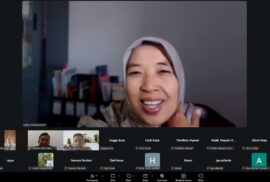
Thursday, February 29, 2026 – ICESCO has reaffirmed its commitment to strengthening linguistic and educational policies by hosting an international forum titled “التخطيط اللغوي والتخطيط التربوية” (Language and Educational Planning). The event was held virtually via Zoom, drawing participants from across the globe.

The forum brought together a diverse group of academics, educators, researchers, and students from Indonesia, Morocco, Uzbekistan, and several other nations. It served as a collaborative platform to explore the nuances of language and educational strategy. During the session, keynote speaker Dr. Ahmed Al-Rahban shared profound insights into the symbiotic relationship between linguistic policy and formal education systems.

Language planning was highlighted not merely as a tool for preserving national and native languages, but as a cornerstone of sustainable educational strategies. The discussion underscored how linguistic policies directly influence curriculum development, teaching quality, and the formation of cultural identity in an increasingly globalized world. Through interactive dialogues, participants exchanged experiences and best practices tailored to the unique educational landscapes of their respective countries.

The virtual nature of the event facilitated a broad and inclusive cross-border exchange. Despite the digital format, the enthusiasm of the attendees was evident through the dynamic Q&A sessions and active discussions that took place throughout the program.

Through this initiative, ICESCO aims to spark strategic ideas and insights that contribute to the refinement of language and education policies worldwide. This forum is part of ICESCO’s ongoing efforts to bolster international cooperation in the fields of education, linguistics, and culture.

Author: Indana Zulfa Maulida

FIB Strengthens UGM’s Position as Indonesia’s Top University in THE by Subject 2026

News Release Thursday, 5 February 2026

The Faculty of Cultural Sciences at Universitas Gadjah Mada (FIB UGM) recorded a significant academic achievement by placing four disciplines at the top national rank in the World University Rankings by Subject 2026 released by Times Higher Education (THE). These four disciplines contributed to two broad subject areas that also positioned UGM as the leading university nationally, namely Social Sciences and Arts and Humanities.

Based on the rankings, UGM secured first place nationally in the Social Sciences and Arts and Humanities categories. Within these two subject areas, FIB UGM contributed four leading disciplines: anthropology, languages, literature and linguistics, history, and archaeology.

Times Higher Education is a global higher education ranking organization that has provided university performance data since 2004. Its rankings are widely used by students, academics, university leaders, governments, and industry stakeholders to assess the performance of higher education institutions worldwide.

As stated on the official Times Higher Education website, subject rankings are designed to provide a more specific picture of institutional strengths in particular fields of study. “We create university rankings to assess the performance of higher education institutions on the global stage and to provide a reference source that helps readers understand the diverse missions and achievements of universities,” Times Higher Education explained in its official statement.

The World University Rankings by Subject cover 11 broad subject areas encompassing a total of 148 academic disciplines. Although they use the same methodology as the THE World University Rankings, the weighting of indicators in the subject rankings is adjusted to reflect the characteristics of each field, ensuring a fairer and more relevant assessment.

For the Social Sciences category in 2026, the assessment includes disciplines such as communication and media studies, politics and international studies including development studies, sociology, geography, and anthropology. Meanwhile, the Arts and Humanities category covers languages, literature and linguistics, history, philosophy, theology, architecture, archaeology, as well as performing arts and design.

The achievement of these four disciplines at FIB UGM reflects the faculty’s consistent development of strong and relevant academic and humanities research in response to global social dynamics. This accomplishment also underscores the role of higher education institutions in producing knowledge, preserving cultural heritage, and strengthening cross-cultural understanding as essential foundations for sustainable and equitable development in the future. 

[Public Relations of FIB UGM, Candra Solihin]

Seputar Jawa: Preservation of Javanese Script through the Use of Free Digital Fonts

News Release Friday, 30 January 2026

Javanese script is one of the traditional writing systems in Indonesia that is still known and used today. This script is classified as an abugida or syllabic script and is part of the Kawi script family (Maulana, 2020). Since ancient times, Javanese script has played an important role in documenting various knowledge, cultural values, and literary works recorded in Javanese manuscripts.

Technological developments and globalization have had a significant impact on patterns of communication within society. The increasingly dominant use of the Latin alphabet, particularly among the younger generation, has led to the Javanese script and other regional scripts being marginalized. The lack of use in everyday life has the potential to result in a decline in the ability to read and write Javanese script among future generations.

This situation calls for revitalization efforts that can adapt regional scripts to the changing times. This revitalization is an effort to introduce the script symbolically and encourage its active use today.

One form of Javanese script revitalization that is relevant to technological developments is through the provision of Javanese fonts. Fonts are digital representations of scripts that enable their use on various platforms, such as computers, devices, digital documents, and online media.

The existence of Javanese fonts facilitates the learning and teaching process, as the script can be written, read, and studied in a practical manner. In addition, Javanese fonts also open up opportunities for the use of script as an aesthetic element in graphic design and creative works. 

To date, various Javanese fonts are available and accessible through various media. However, in order for their use to be sustainable, both for writing and aesthetic purposes, the use of license-free Javanese fonts is a more appropriate choice.

License-free fonts allow for widespread use without legal barriers or licensing fees. This greatly supports the use of Javanese script by educational institutions, cultural communities, designers, and the general public. 

As a form of support for the preservation of Javanese script, in 2020 the Yogyakarta Special Region Cultural Office released a Javanese font developed by Apri Nugroho. There are two types of fonts introduced, namely nyk Ngayogyan and nyk Ngayogyan Jejeg. Both fonts can be downloaded via the following links:

  • Fon nyk Ngayogyan

https://aksaradinusantara.com/fonta/nyk-ngayogyan.font

  • Fon nyk Ngayogyan Jejeg

https://aksaradinusantara.com/fonta/nyk-ngayogyan-jejeg.font


In addition to providing fonts, the developers also provide installation guidelines, typing instructions, and keyboard layouts. These guidelines are intended to make it easier for users to install and use Javanese fonts correctly and consistently.

The use of Javanese script is also linked to Sustainable Development Goals (SDGs) 4 and 17. In the context of SDG 4 on quality education, the existence of Javanese script supports the provision of inclusive, contextual, and locally-based teaching materials, thereby facilitating the learning process and improving students’ cultural literacy. Meanwhile, the achievement of these goals cannot be separated from SDG 17 on partnerships for the goals, because the development and utilization of Javanese phonetic script requires collaboration between the government, academics, technology developers, cultural communities, and the wider community.

Author : Haryo Untoro

Editor : Haryo Untoro


Bibliography

Maulana, R. (2020). Aksara-Aksara di Nusatara: Seri Ensiklopedia. Writing Tradition Project

Students of the Javanese Language, Literature, and Culture Study Program Class of 2025 Perform the Drama Weton Waton

News Release Friday, 30 January 2026

Students of the Javanese Language, Literature, and Culture Study Program, Class of 2025, Faculty of Cultural Sciences, Gadjah Mada University, staged a drama titled Weton Waton on Tuesday (12/16/2025). The performance took place at the Poerbatjaraka Auditorium, FIB UGM, at 6:00 p.m.

This activity was organized as part of the final exam assignment for the Communicative Spoken Javanese Language course taught by Dr. R. Bima Slamet Raharja, S.S., M.A. The performance of Weton Waton was directed by Safa Rahmatul H. as the production manager.

The drama Weton Waton tells the story of a domestic conflict between a husband and wife triggered by financial problems. The root of the problem lies in the husband’s decision to quit his job and get involved in cockfighting gambling. The ongoing conflict then prompts the wife’s parents to take the matter to a shaman. In the story, the shaman says that the couple’s domestic quarrels are caused by an incompatibility in their weton, which is called tiba pegat.

Through this performance, students sought to convey the message that problems should not be automatically attributed to a person’s character or nature based on their weton. In addition, this performance also presented knowledge about the concepts of dina, pasaran, and wuku, which are still believed by some Javanese people to be part of their tradition.

Based on an online interview with Yogi Setiyawan on December 28, 2025, the Weton Waton performance was a final exam assignment that required all students enrolled in the course to be directly involved in the performance. The theme of weton was chosen as an effort to highlight the tradition of calculating weton, dina, pasaran, and wuku that has developed in Javanese society.

“In preparing for the Weton Waton performance, our preparations can be said to still have a number of limitations. The challenges faced include script writing, group division, and funding constraints. From this process, we learned that good and open communication between members is very important in a performance,” said Yogi.

Yogi also expressed his pride in being involved in the premiere performance of the 2025 batch of students from the Javanese Language, Literature, and Culture Study Program. He hopes that this activity can be a first step towards producing better works in the future.

The performance of the Weton Waton drama was not only a means of practicing Javanese language skills orally, but also a platform for students to create and apply their language skills in the form of a performance. In line with the teachings of KGPAA Mangkunegara IV in Serat Wedhatama, which states that ngelmu iku kalakone kanthi laku or knowledge must be implemented through practice, this performance is a tangible manifestation of reviving enthusiasm for the Javanese language while honing students’ creativity. Through activities such as this, students are expected to continue to preserve and revive Javanese culture through concrete efforts that benefit the community.

[Javanese Literature and Culture Studies, Haryo Untoro]

1…45678…67

Video UGM

[shtmlslider name='shslider_options']
Universitas Gadjah Mada

Faculty of Cultural Sciences
Universitas Gadjah Mada
Jl. Nusantara 1, Bulaksumur Yogyakarta 55281, Indonesia
   fib@ugm.ac.id
   +62 (274) 513096
   +62 (274) 550451

Work Units

  • Office of Journal & Publishing
  • INCULS
  • Information Technology and Database
  • Language Learning Center
  • Library Unit
  • Public Relations
  • Research

Facilities

  • Computer Laboratory
  • Gamelan
  • Guest House
  • Language Library
  • Library
  • Phonetics Library
  • Self Access Unit
  • Student Internet Centre

Importan Links

  • Journal of Humaniora
  • Subscriber Journal
  • Alumni Portal
  • Career
  • Departmens News
  • UGM Streaming

Contacts

  • Academic
  • Administration
  • Dean’s Office
  • Departments / Study Programs
  • Public Relations

© 2024 Faculty of Cultural Sciences Universitas Gadjah Mada

KEBIJAKAN PRIVASI/PRIVACY POLICY

[EN] We use cookies to help our viewer get the best experience on our website. -- [ID] Kami menggunakan cookie untuk membantu pengunjung kami mendapatkan pengalaman terbaik di situs web kami.I Agree / Saya Setuju