
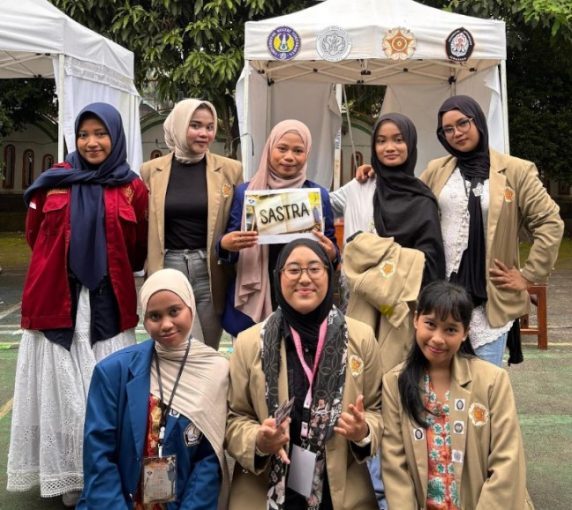
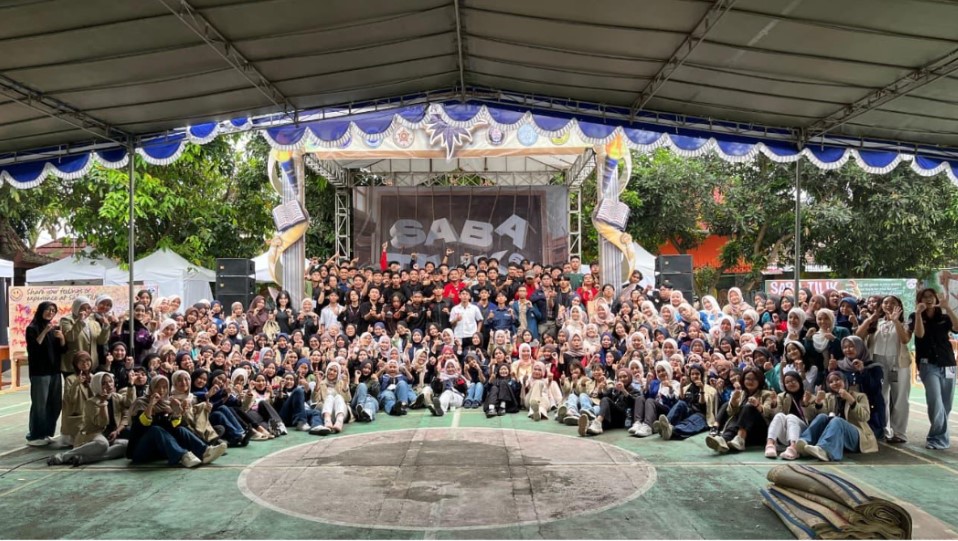
SMAN 1 Bantul held the Saba Tilik 6.0 X Saba Education Fair on Thursday (January 22, 2026). This event aimed to provide motivation and further educational information to students, especially final-year students, so they could gain a broader understanding of the world of higher education and study program options.
Two students from the Javanese Language, Literature, and Culture Study Program, class of 2025 at Universitas Gadjah Mada (UGM), who are also alumni of SMAN 1 Bantul, Nurul Fajri Rahmani and Tri Wulandari, participated as speakers. Their presence allowed them to share their academic experiences and introduce the various study programs at Universitas Gadjah Mada to the students.
In an online interview with Nurul Fajri Rahmani on Friday (January 23, 2026), the material focused on introducing the literary and cultural groups, specifically the Javanese Language, Literature, and Culture Study Program. Fajri also shared his experiences in pursuing higher education through the National Achievement-Based Selection (SNBP) and National Test-Based Selection (SNBT) pathways.
Fajri revealed that the main challenge in the event was students’ low interest in the Literature and Culture field. “Therefore, we strive to explain as well as possible the job prospects, academic potential, and the various benefits and interesting experiences that can be gained while studying in the Literature and Culture field,” he explained. This explanation is expected to broaden students’ horizons and change their perspectives on the study of literature and culture.
For Fajri, participating in the Saba Tilik 6.0 X Saba Education Fair was a truly memorable experience. Besides returning to his alma mater and meeting his classmates, he also had the opportunity to share stories and information about the world of college. He hopes that similar events can continue to be held on an ongoing basis to spark students’ interest and enthusiasm in pursuing higher education.
The Saba Tilik 6.0 X Saba Education Fair aligns with the Sustainable Development Goals (SDGs), particularly SDG 4, which focuses on quality education through providing inclusive and equitable access to information on higher education. Providing this information helps students make more conscious and informed educational decisions. More broadly, this activity also intersects with SDG 11 (Sustainable Cities and Human Settlements), namely by increasing literacy and insight in educational communities, which are the foundation for the formation of an informed and sustainable society. The collaboration between secondary schools and universities in this activity also reflects the implementation of SDG 17, namely partnerships to achieve sustainable development goals through synergy between educational institutions.
Author : Haryo Untoro
Editor : Haryo Untoro
