• About UGM
  • Academic Portal
  • IT Center
  • Library
  • Research
  • Webmail
  • Informasi Publik
  • English
    • Indonesia
Universitas Gadjah Mada Faculty of Cultural Sciences
Universitas Gadjah Mada
  • Home
  • Profile
    • History
    • Vision and Mission
    • Organizational structure
    • Administration
    • Staff
    • Faculty Members
  • Academic
    • Academic Calendar
    • Undergraduate Programs
      • Bachelor of Cultural Antrophology
      • Bachelor in Archaeolagy
      • Bachelor in History
      • Bachelor in Tourism
      • Bochetor in Korean Language and Culture
      • Bachelor in Indonesian Language and Culture
      • Bachelor in English
      • Bachelor in Arabic
      • Bachelor in Japanese Language and Culture
      • Bachelor in Javanese Language, Literature and Culture
      • Bachelor in French language and literature
    • Graduate Programs
      • Master in Antrophology
      • Master in ArchaeoIogy
      • Master in History
      • Master in Linguistics
      • Master in Literature
      • Master In American Studies
      • Master in Middle Eastern Cultural Studies
    • Post-Graduate Programs / S3
      • Doctor in Antropology
      • Doctor in American Studies
      • Doctor in Humanities
    • Student Service
  • KPPM
    • Research Information
    • Scientific / Academic Publications
    • Community Service
    • International Cooperation
    • Domestic Cooperation
  • Student Organizations
    • Student Executive Council
    • Semi-Autonomous Organizations
      • KAPALASASTRA
      • Christian Student Alliance
      • LINCAK
      • Saskine
      • Catholic Student Family
      • Dian Budaya
      • Sastra Kanuragan (sasgan)
      • Family of Muslim Cultural Sciences Students (KMIB)
      • Bejo Mulyo
    • Autonomous Organizations
      • Family of Anthropology Students (KEMANT)
      • English Department Student Association
      • Tourism Students Association (HIMAPA)
      • Family of Indonesian Literature Students (KMSI)
      • West Asian Literature Student Association (IMABA)
      • Association of Korean-Language Students (HIMAHARA)
      • Family of Regional Indonesian Literatures Students (KAMASUTRA)
      • The Family Body of History Students (BKMS)
      • The French Literature Students Association (HMSP)
      • Family of Anthropology Students
      • Japanese Student Association (HIMAJE)
  • Admission
    • Student Evaluation
  • Home
  • SDGs 15: Life on Land
  • SDGs 15: Life on Land
Arsip:

SDGs 15: Life on Land

Sharing with the Devil: Pujo Semedi Talks to Ghosts through Ethnography

HEADLINESNews Release Wednesday, 26 November 2025

On Friday (November 21, 2025), Prof. Dr. Pujo Semedi served as a panel discussant in the session “Monsters, Devils, and Survival: The Persistence of Plantations and People in the Scholarship of Pujo Semedi” at the 2025 Annual Meeting of the American Anthropological Association (AAA) in New Orleans, LA, supported by FULLBRIGHT funding through the Scholar in Residence Grant at the University of Colorado Boulder for Fall 2025. The panel was inspired by Pujo’s academic work on plantations, which investigates how colonial hegemony in its efforts to build capital accumulation by sacrificing human sociality has instead resulted in the loss of assets and weakened capacities for survival. In his presentation, Pujo invited participants to explore how non-human entities such as “ghosts” influence social and material relations within plantation environments.

Through ethnographic research in Kalimantan’s palm oil plantations, Java’s tea plantations, and Germany’s vineyards, Pujo argues that “ghosts” are understood as empirical and material realities by plantation communities. Although spiritual beings are not bound by physical laws or fixed forms, belief in them becomes a productive lens for ethical and emic understanding. Positioned within a strong postcolonial perspective, Pujo’s ideas are seen as important for advancing research on extraction and imperial accumulation in postcolonial nations. The panel, featuring Carla Jones and five PhD students from the University of Colorado Boulder, embodied efforts to decolonize knowledge, highlighting Pujo Semedi’s role in fostering cross-cultural academic collaboration.

Author: Penulis: Okky Chandra Baskoro

Safranbolu, UNESCO World Heritage City from Turkiye, Presented at FIB UGM

News ReleaseSDGs 11: Sustainable cities and communitiesSDGs 12: Responsible consumption and productionSDGs 15: Life on landSDGs 17: Partnerships for the GoalsSDGs 8: Decent work and economic growth Wednesday, 1 October 2025

Yogyakarta, September 2, 2025 – The Undergraduate Tourism Program, Faculty of Cultural Sciences, Universitas Gadjah Mada, held an international guest lecture under the ERASMUS+ Staff Mobility program with the theme “Sustainability and Sustainable Practices in Tourism Enterprises.” The lecture featured Assoc. Prof. Halime Göktas Kulualp from Karabük University, Turkiye, shared valuable insights through the case study of Safranbolu, a UNESCO World Heritage City recognized since 1994.

In her presentation, Prof. Kulualp described Safranbolu as a small but historically rich town in Karabük Province, located in the Black Sea region of Turkiye. For centuries, it served as an important stop on the ancient Silk Road, a trade route connecting Asia and Europe. The town has witnessed the presence of great civilizations, including the Hittites, Romans, and Byzantines, and reached its golden age under the Ottoman Empire. During this period, caravanserais such as the famous Cinci Han were established to host merchants and travelers passing through the region.

What makes Safranbolu truly unique is its remarkable Ottoman architecture. The town is renowned for its traditional houses, many of which are more than 300 years old, characterized by whitewashed walls, wooden frames, large windows, and private courtyards. These houses are living examples of how Turkish people once lived. Beyond its architecture, Safranbolu is also surrounded by natural beauty, with stunning sites like Tokatl Canyon and Bulak Caves attracting both domestic and international visitors.

The name Safranbolu comes from “saffron,” a rare and precious spice that grows in the area, combined with the name of the nearby region, Bolu. This name reflects the city’s cultural identity and historical wealth. UNESCO’s recognition highlights Safranbolu’s authenticity, integrity, and its importance as a living heritage for humanity. According to Prof. Kulualp, Safranbolu’s success in preserving its cultural legacy while embracing tourism offers an inspiring example of how heritage conservation and sustainable development can go hand in hand.

Through this guest lecture, UGM Tourism students were encouraged to see tourism not only as an economic activity but also as a responsibility to safeguard cultural heritage. The story of Safranbolu reminds us that sustainability in tourism is essential to protect history while ensuring benefits for local communities and future generations.

[Public Relations of FIB UGM, Candra Solihin]

Green Literature: Sowing Environmental Awareness Through Words

SDGs 13: Climate ActionSDGs 15: Life on landSDGs 4: Quality Education Wednesday, 13 August 2025

During the vigorous campaigns for environmental preservation, often conveyed through data and direct appeals, Kumala has chosen a different path. She presents Green Literature, a program that combines literacy with ecological issues, while also contributing to the achievement of the Sustainable Development Goals (SDGs). According to her, this approach can touch the emotional side of the audience, delivering messages without being preachy.

“Environmental education is often associated with technical data or direct appeals. However, through literature, we can awaken awareness more subtly,” she stated. This program, she continued, supports the goal of Quality Education by providing creative learning based on literature, while also promoting Climate Action through increased ecological awareness.

The selection of materials is done meticulously. Kumala chooses short stories, poems, and quotes from literary figures rich in ecological values. Not only does she consider the content of the message, but she also adjusts the language style to ensure it is easily understood by the participants, especially the students of the pesantren (Islamic boarding school) who are the target of this program. In this way, the values contained in literary works align with the Land Ecosystem, emphasizing the importance of nature conservation.

To make the sessions feel less rigid, Kumala incorporates interactive methods such as quizzes and open discussions. This approach encourages participants to engage actively and feel a sense of ownership. As a result, many who were initially unfamiliar with environmentally themed literary works have become interested in reading more. This interaction not only builds knowledge but also fosters empathy towards the environmental issues facing the world today.

However, the journey of Green Literature is not without challenges. “Literature is sometimes considered boring,” she admits with a smile. The solution is simple yet effective: using everyday language that resonates with the participants, ensuring that the message flows without barriers.

Kumala believes that the power of literature lies in its ability to shape new perspectives. Literature does not force; it invites readers to see the relationship between humans and nature as a harmony, not a dominance. From this perspective, she hopes that the seeds of awareness sown can grow into real change, aligned with the spirit of the SDGs that prioritize sustainability as a global agenda.

“The hope is that after this program, participants can become small agents of change in their environment. At the very least, they will have a new perspective on how to treat nature,” she said. Green Literature may start from a small space, but its impact can spread far, each word becoming a seed that one day can green the earth, while also propelling us towards a sustainable future.

In conclusion, Kumala’s Green Literature program exemplifies how education for sustainability can be creatively integrated into the fabric of society. By using literature as a medium, she not only educates but also inspires a generation to take action for the planet. As the world faces unprecedented environmental challenges, initiatives like this remind us of the power of words and stories in shaping a more sustainable future.


[Public Relations of FIB UGM, Candra Solihin]

UGM KKN-PPM Students Introduce Mangrove Tourism Through Multilingual Signboards

SDGs 15: Life on landSDGs 4: Quality Education Thursday, 31 July 2025

West Java, 29/7/2025 – Students from the Arabic Literature Program, Faculty of Cultural Sciences, Universitas Gadjah Mada (UGM), have installed multilingual tourism signboards at Batu Nunggul Beach as part of their 2025 KKN-PPM (Community Service Program). The initiative aims to serve both as directional guidance and educational outreach by incorporating three languages: Indonesian, Arabic, and English.

This effort seeks to raise public awareness about the untapped tourism potential of the local mangrove ecosystem, particularly in areas that remain under-visited due to a lack of accessible information.

Signboards bearing the words “Mangrove” and “Pantai Batu Nunggul Beach” were placed along the coastal paths leading to the mangrove area, guiding visitors to the site. Beyond functioning as navigational aids, the signs also act as educational tools, promoting environmental preservation and spotlighting lesser-known tourist destinations.

The project aligns with the United Nations Sustainable Development Goals (SDGs), specifically SDG 4: Quality Education and SDG 15: Life on Land, reinforcing commitments to inclusive education and terrestrial ecosystem protection.


Author: Muhammad Satria Revaldi

UGM History Department Hosts International Conference on Ontology and Environmental History

News ReleaseSDGs 11: Sustainable cities and communitiesSDGs 13: Climate ActionSDGs 15: Life on landSDGs 4: Quality EducationSDGs 6: Clean water and sanitation Monday, 30 June 2025

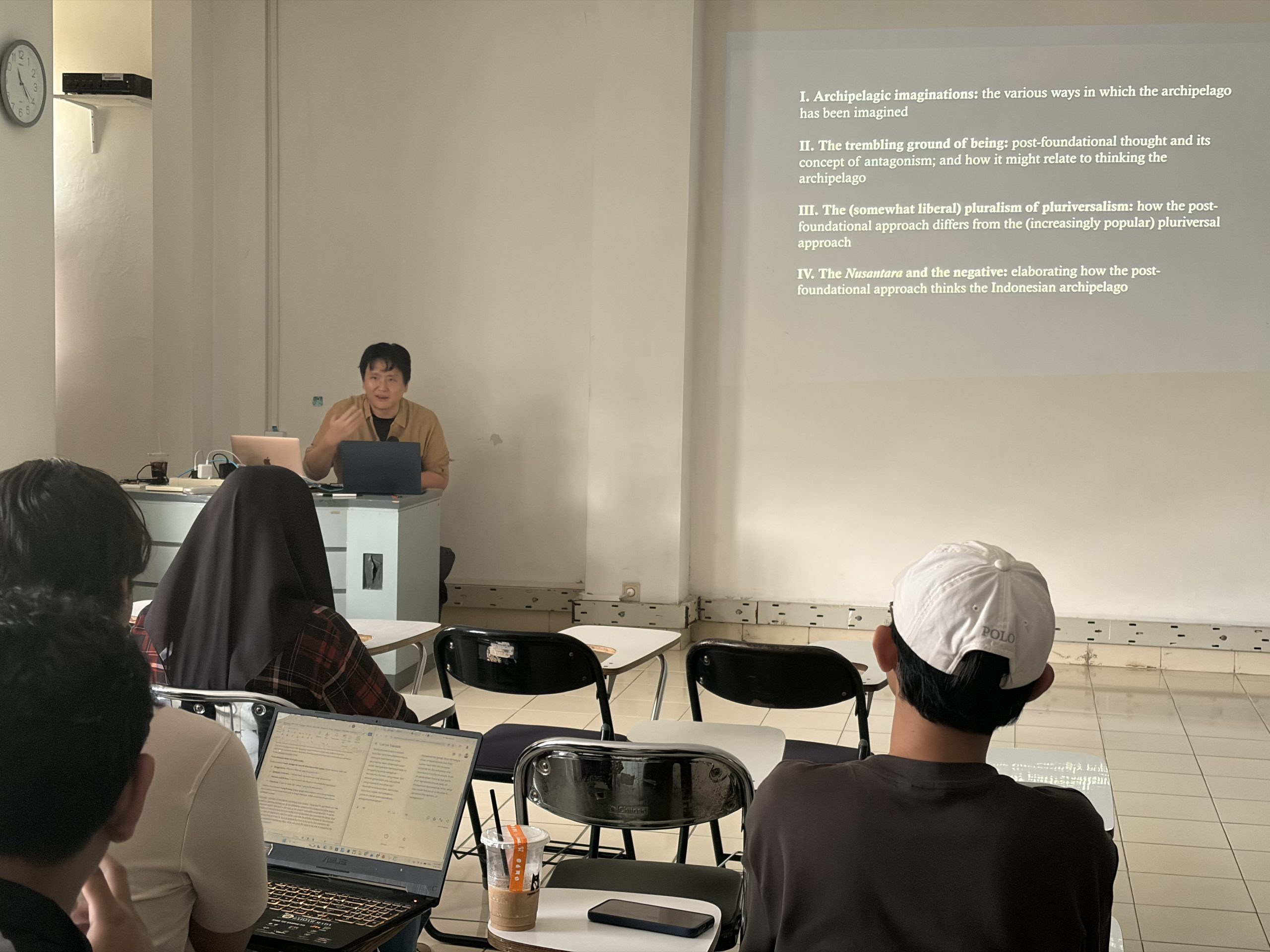
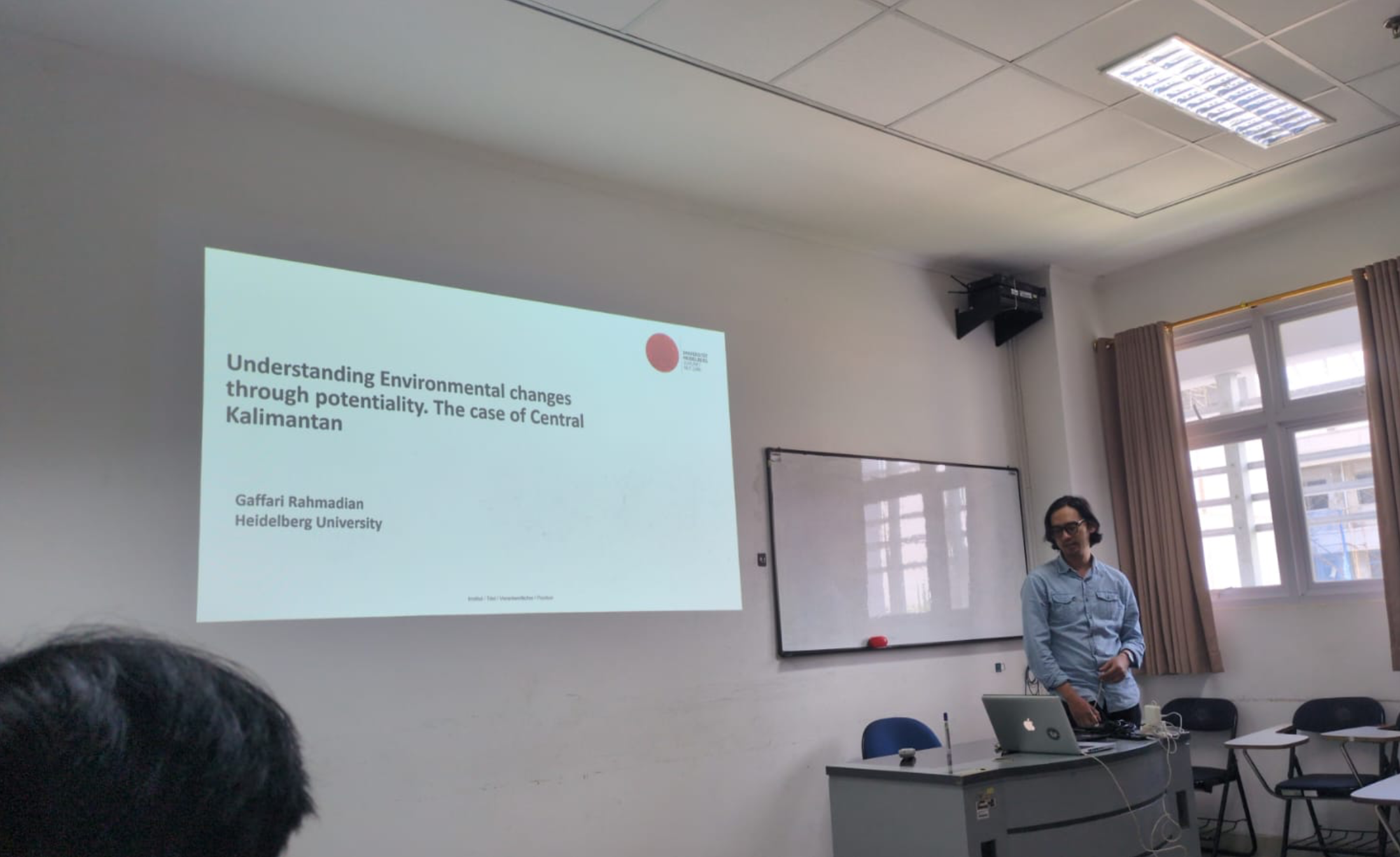
The Faculty of Cultural Sciences at Gadjah Mada University (UGM) successfully held the “Conference on Locality, Ontology, and Environmental History” on June 25-26, 2025, at the Multimedia Room, Margono Building, UGM. This event served as an interdisciplinary academic discussion platform aimed at re-evaluating how locality and traditional knowledge can contribute to global environmental issues, aligning with the Sustainable Development Goals (SDGs) such as education for sustainability, air quality, climate change, and ecosystem preservation.

The conference was inaugurated by Dr. Mimi Savitri, the Vice Dean for Research, Community Service, and Cooperation at the Faculty of Cultural Sciences. In her opening remarks, she emphasized the importance of collaboration between academics and communities in re-examining the relationship between humans and nature from local and ontological perspectives. This collaboration is crucial for addressing pressing environmental challenges and fostering sustainable practices.

The event also featured welcoming speeches from Farabi Fakih of the UGM History Department and Prof. Diana Suhardiman from KITLV, who highlighted the significance of integrating local wisdom into contemporary environmental discourse. Their insights underscored the need for a holistic approach to understanding the intricate connections between culture, history, and the environment.

The conference included six thematic discussion panels, covering a wide range of issues from climate change, water and land management, power and environment, local knowledge, urban social movements, to historical reflections on the Cretaceous period and the Anthropocene. These discussions aimed to bridge the gap between scientific research and local practices, fostering a deeper understanding of environmental sustainability.

For instance, the first panel showcased studies on climate adaptation based on the spiritual-ecological practices of farmers in Playen, Gunungkidul, as well as the management of the Wonosadi Customary Forest. These case studies illustrated how traditional practices can inform modern environmental strategies, contributing to the SDGs related to climate action and ecosystem preservation.

Meanwhile, the fifth panel addressed the issue of urban segregation in Yogyakarta, which has shifted from racial divides to competition for access to water resources. This discussion highlighted the critical need for equitable resource management in urban settings, emphasizing the role of local communities in advocating for their rights and environmental justice.

Overall, the conference served as a significant platform that brought together science, activism, and local wisdom, embodying the spirit of decolonizing knowledge in addressing the global environmental crisis. By fostering dialogue among diverse stakeholders, the event aimed to inspire innovative solutions that prioritize sustainability and the well-being of both people and the planet.

The success of this conference reflects UGM’s commitment to advancing education for sustainability and promoting interdisciplinary collaboration in tackling climate change and enhancing air quality. As the world faces increasing environmental challenges, initiatives like this are essential for cultivating a more sustainable future.


[Public Relations of FIB UGM, Candra Solihin]

123

Video UGM

[shtmlslider name='shslider_options']
Universitas Gadjah Mada

Faculty of Cultural Sciences
Universitas Gadjah Mada
Jl. Nusantara 1, Bulaksumur Yogyakarta 55281, Indonesia
   fib@ugm.ac.id
   +62 (274) 513096
   +62 (274) 550451

Work Units

  • Office of Journal & Publishing
  • INCULS
  • Information Technology and Database
  • Language Learning Center
  • Library Unit
  • Public Relations
  • Research

Facilities

  • Computer Laboratory
  • Gamelan
  • Guest House
  • Language Library
  • Library
  • Phonetics Library
  • Self Access Unit
  • Student Internet Centre

Importan Links

  • Journal of Humaniora
  • Subscriber Journal
  • Alumni Portal
  • Career
  • Departmens News
  • UGM Streaming

Contacts

  • Academic
  • Administration
  • Dean’s Office
  • Departments / Study Programs
  • Public Relations

© 2024 Faculty of Cultural Sciences Universitas Gadjah Mada

KEBIJAKAN PRIVASI/PRIVACY POLICY

[EN] We use cookies to help our viewer get the best experience on our website. -- [ID] Kami menggunakan cookie untuk membantu pengunjung kami mendapatkan pengalaman terbaik di situs web kami.I Agree / Saya Setuju