• About UGM
  • Academic Portal
  • IT Center
  • Library
  • Research
  • Webmail
  • Informasi Publik
  • English
    • Indonesia
Universitas Gadjah Mada Faculty of Cultural Sciences
Universitas Gadjah Mada
  • Home
  • Profile
    • History
    • Vision and Mission
    • Organizational structure
    • Administration
    • Staff
    • Faculty Members
  • Academic
    • Academic Calendar
    • Undergraduate Programs
      • Bachelor of Cultural Antrophology
      • Bachelor in Archaeolagy
      • Bachelor in History
      • Bachelor in Tourism
      • Bochetor in Korean Language and Culture
      • Bachelor in Indonesian Language and Culture
      • Bachelor in English
      • Bachelor in Arabic
      • Bachelor in Japanese Language and Culture
      • Bachelor in Javanese Language, Literature and Culture
      • Bachelor in French language and literature
    • Graduate Programs
      • Master in Antrophology
      • Master in ArchaeoIogy
      • Master in History
      • Master in Linguistics
      • Master in Literature
      • Master In American Studies
      • Master in Middle Eastern Cultural Studies
    • Post-Graduate Programs / S3
      • Doctor in Antropology
      • Doctor in American Studies
      • Doctor in Humanities
    • Student Service
  • KPPM
    • Research Information
    • Scientific / Academic Publications
    • Community Service
    • International Cooperation
    • Domestic Cooperation
  • Student Organizations
    • Student Executive Council
    • Semi-Autonomous Organizations
      • KAPALASASTRA
      • Christian Student Alliance
      • LINCAK
      • Saskine
      • Catholic Student Family
      • Dian Budaya
      • Sastra Kanuragan (sasgan)
      • Family of Muslim Cultural Sciences Students (KMIB)
      • Bejo Mulyo
    • Autonomous Organizations
      • Family of Anthropology Students (KEMANT)
      • English Department Student Association
      • Tourism Students Association (HIMAPA)
      • Family of Indonesian Literature Students (KMSI)
      • West Asian Literature Student Association (IMABA)
      • Association of Korean-Language Students (HIMAHARA)
      • Family of Regional Indonesian Literatures Students (KAMASUTRA)
      • The Family Body of History Students (BKMS)
      • The French Literature Students Association (HMSP)
      • Family of Anthropology Students
      • Japanese Student Association (HIMAJE)
  • Admission
    • Student Evaluation
  • Home
  • SDG 11: Sustainable Cities and Communities
  • SDG 11: Sustainable Cities and Communities
Arsip:

SDG 11: Sustainable Cities and Communities

FIB UGM – Université de Montréal Summer School: Examining the Challenges and Critical Aspects of Mass Tourism in Southeast Asia

News Release Thursday, 25 June 2026

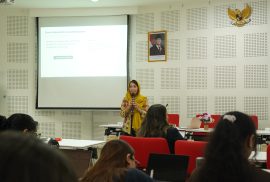
The Faculty of Cultural Sciences (FIB) at Gadjah Mada University (UGM), in collaboration with the Université de Montréal (Canada), is organizing the 2026 Off-Campus Summer School program. Under the theme “The New Orientalism: Understanding the Paradoxes of Mass Tourism in Southeast Asia,” this program invites students from various countries to critically examine the challenges and real-world impacts of the mass tourism industry. This event was the fourth installment of the “Political Issues in Southeast Asia” (POL6615) seminar series, attended by 32 selected students—16 from Canada and 16 from Southeast Asia.

Rooted in the framework of critical tourism studies, this Summer School invites students to understand the contradictory processes generated by the enthusiasm for mass tourism. The phenomenon of tourism in Southeast Asia is seen as presenting real ambiguities; on the one hand, it can foster cultural exchange and economic growth, but on the other hand, it contributes to the commodification of culture, the destruction of local ecosystems, and the construction of an imaginary “authenticity” for the sake of market interests. To explore these complexities, this program emphasizes a comprehensive pedagogical approach. Participants not only listen to theoretical presentations by experts at the R. Soegondo Building, Faculty of Humanities, UGM, but are also immersed in the field to conduct participant-observation research in small groups in Yogyakarta, a major destination rich in cultural and ecological heritage. As part of the academic requirements, every student is required to contribute to the course, prepare summaries of required readings, and produce research reports and reflective journals.

The theoretical complexity surrounding this tourism paradox was immediately brought to life on the first day through a keynote lecture delivered by Prof. Devi Roza K. Kausar, Professor and Dean of the Faculty of Tourism at Pancasila University. In her lecture titled “The Challenges and Paradoxes of Cultural Tourism in Yogyakarta,” Prof. Devi highlighted the ongoing tension between cultural preservation and the commercial expectations of tourism. He specifically analyzed the case study of the Borobudur Temple World Heritage Site to illustrate the real conflict of interest between the economic development of priority destinations and the conservation of cultural heritage.

The Borobudur case clearly demonstrates that tourism is not merely an ordinary economic activity, but rather a political decision shaped by power dynamics, institutional fragmentation, infrastructure priorities, and competing development visions. Through this analysis of a specific case, students are directly invited to critically reflect on how a cultural element is presented to the public, who actually benefits most from this industry, and how young researchers should position themselves ethically when conducting studies in socially and culturally complex environments.

Through this Off-Campus Summer School program, students are expected to move beyond a black-and-white view of tourism as something that is either “beneficial” or “harmful.” The goal is for them to graduate with a more nuanced understanding, while also developing research methodology, academic presentation, and cross-cultural collaboration skills that are crucial for future researchers.


[Author: Humas FIB, Zaidan Abdurrahman]
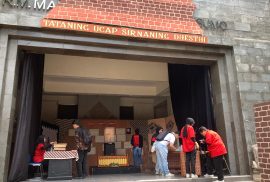
The 14th Gugur Gunung Exhibition: Commemorating the Anniversary of the Study Program in Javanese Language, Literature, and Culture

News ReleaseSDGs 11: Sustainable cities and communitiesSDGs 4: Quality Education Thursday, 25 September 2025

Yogyakarta, 18 September 2025 – The Study Program in Javanese Language, Literature, and Culture, Faculty of Cultural Sciences, Universitas Gadjah Mada (FIB UGM), organized the 14th Gugur Gunung Exhibition as part of its annual anniversary celebration. Held on 17–18 September 2025, the exhibition showcased various aspects of Javanese cultural heritage, ranging from manuscript displays and traditional games to traditional musical instruments presented in an interactive manner.

In addition, the exhibition also featured food stands that visitors could enjoy, adding comfort and convenience to the overall exhibition experience.

The Gugur Gunung Exhibition serves as an important platform for academics, students, and the wider community to further appreciate, engage with, and preserve the richness of the Javanese language, literature, and culture. Through this activity, the Study Program in Javanese Language, Literature, and Culture reaffirms its commitment to sustaining traditions while strengthening the relevance of cultural studies in contemporary society.

This initiative aligns with the commitment of FIB UGM to support the Sustainable Development Goals (SDGs), particularly SDG 4: Quality Education through the promotion of inclusive access to cultural learning, and SDG 11: Sustainable Cities and Communities through the preservation of cultural heritage and local traditions as part of the nation’s collective identity.

[Public Relations of FIB UGM, Alma Syahwalani]

Marching Band UGM Holds Farewell Concert Ahead of the Hamengku Buwono X Cup 2025

News ReleaseSDGs 11: Sustainable cities and communitiesSDGs 4: Pendidikan Berkualitas Tuesday, 23 September 2025

Yogyakarta, September 21, 2025 – Several students from the Faculty of Cultural Sciences (FIB), Universitas Gadjah Mada (UGM), held a Farewell Concert as both a form of preparation and a collective prayer before competing in the Hamengku Buwono X Cup 2025, which will take place on October 11–12, 2025.

The event opened with remarks from the President of UGM Marching Band, I Gede Bagus Manu Sinarascara Budharta, an Archaeology student from the 2022 cohort who has served two consecutive terms in the UGM Marching Band Student Activity Unit. This was followed by a speech from Hempri Suyatna, S.Sos., M.Si., representative of UGM’s Student Affairs Directorate (Ditmawa), who expressed appreciation and extended full support to the students competing in the championship.

The Hamengku Buwono X Cup is a prestigious national-level marching band competition held regularly in Yogyakarta. It serves as a platform for marching band teams from across Indonesia to showcase their talent, creativity, and sportsmanship.

In this year’s event, UGM Marching Band will feature players from various study programs, including:

  • Ataya Sasya Rayna Heradie, Pit Instrument Player (Korean Language and Culture, 2024)
  • Tabita Nada Kirana, Pit Instrument Player (Cultural Anthropology, 2024)
  • Andieni Ika Bela Safitri, Brass Player (Indonesian Language and Literature, 2024)
  • Thiery Vincent Masarrang, Brass Player (French Literature, 2024)
  • Dian Khairani, Color Guard (Korean Language and Culture, 2022)
  • Sylvy Muthqia, Color Guard (Tourism, 2023)
  • Keysha Alya Nashifa, Battery Player (Korean Language and Culture, 2022)

In addition, four students hold key managerial roles:

  • I Gede Bagus Manu Sinarascara Budharta, President (Archaeology, 2022)
  • Alma Syahwalani, Head of Public Relations (Javanese Language, Literature, and Culture, 2023)
  • Keysha Almira Putri, Drill and Display Coach, Program Director of the Farewell Concert (Tourism, 2023)
  • Melati Srigita Putri, Head of Human Resources (History, 2023)

The Farewell Concert served not only as a send-off event before the competition but also as an opportunity to strengthen solidarity and support from the UGM academic community. With a spirit of togetherness, UGM Marching Band aspires to bring pride to the university while also contributing to the preservation of marching band music in Indonesia.

This activity also aligns with the Sustainable Development Goals (SDGs). By supporting the development of students’ potential in the arts and culture, the event fosters quality education. The Farewell Concert and participation in the national competition reflect students’ active role in sustaining performing arts as part of both local and national cultural identity. Moreover, the event represents collaboration between students, the university, and the community—embodying the spirit of partnership to achieve sustainable development.

[Public Relations, FIB UGM – Alma Syahwalani]

UGM Doctoral Dissertation Explores the Implementation of Serat Sèstradi in Pakualaman Folktales

HEADLINESNews ReleaseSDGs 11: Sustainable cities and communitiesSDGs 4: Quality Education Friday, 19 September 2025

Yogyakarta, Thursday, September 18, 2025 – The Faculty of Cultural Sciences, Universitas Gadjah Mada (FIB UGM), has once again marked an important academic milestone with the completion of a doctoral research in philology. Rahmat, a doctoral candidate in the Humanities Study Program, successfully defended his dissertation entitled “The Implementation of Serat Sèstradi in Pakualaman Folktales: A Philological Study.” The research was supervised by Promoter Prof. Dr. Sangidu, M.Hum., and Co-Promoter Dr. Sri Ratna Sakti Mulya, M.Hum.

This dissertation is rooted in the reality that Javanese literature in the Duchy of Pakualaman continues to serve as an intellectual legacy to this day. Literary works, particularly folktales, were produced for internal educational purposes and transmitted across generations. However, the diversity and depth of Pakualaman folktales have not been fully explored in previous scholarly studies.

In his research, Rahmat undertook a comprehensive approach that included inventory, description, transliteration, editing, and translation of folktale texts. He also analyzed the formal structures of the texts and revealed their purposes of creation. Through a critical edition method, the study presents thirteen manuscripts comprising a total of thirty-seven edited and translated folktales.

The findings show that Pakualaman folktales are generally composed in tembang macapat poetic form, containing core ideas and accompanied by liding dongèng or moral messages. These texts were not created merely for entertainment but also served as sources of knowledge and tools for character education. The embedded sèstradi values highlight the binary opposition of good and bad characters, functioning as moral guidance for the younger generation of Pakualaman to grow into noble individuals.

Rahmat further revealed that the creation of these folktales was influenced by the lèlaku (life experiences) of Pakualam as well as the historical context of their time. The messages conveyed through the texts emphasize the cultivation of resilience, perseverance in facing hardships, and the preparation of future generations to embrace societal changes. Thus, Pakualaman folktales function not only as literary heritage but also as vehicles of moral education and wisdom for life. This dissertation defence was also attended by the representatives of Pura Pakualaman GKBRAy Adipati Paku Alam X, GPH Indrokusumo, BRAy Indrokusumo, and GPH Wijoyo Harimurti.

This research contributes significantly to the preservation of Javanese cultural heritage and enriches the field of philology in Indonesia. Moreover, the dissertation aligns with the Sustainable Development Goals (SDGs), particularly SDG 4: Quality Education, by strengthening character education based on local wisdom. It also relates to SDG 11: Sustainable Cities and Communities, through the preservation of cultural values and traditions that constitute the historical identity of the Pakualaman Duchy.

[Public Relations Office, FIB UGM – Alma Syahwalani]

Paksi Raras Alit Explains the Creative Process and Challenges of Adapting Ancient Manuscripts into Performing Arts

News ReleaseSDGs 11: Sustainable cities and communitiesSDGs 4: Quality Education Thursday, 18 September 2025

Yogyakarta, 15 September 2025 – The Study Program of Javanese Language, Literature, and Culture, Faculty of Cultural Sciences, Universitas Gadjah Mada (FIB UGM), presented artist Paksi Raras Alit in an Expert Lecture themed “Adapting Ancient Manuscripts into Performing Arts.” On this occasion, Paksi delivered a presentation entitled “From Page to the Stage: Manuscript to Stage Performance” which highlighted the creative process as well as the challenges of transforming ancient texts into stage performances.

Paksi explained that adapting ancient manuscripts into the performing arts is not merely transferring written texts into forms of drama, theater, wayang, or music. Rather, it involves a long process of rewriting, editing, adapting, and developing imagination to bring the text to life on stage. This creative process covers several crucial stages, including imaginative exploration, content adaptation, co-modification with the creative team, and technical production. Ultimately, all these steps are directed toward creating a performance that can be understood and appreciated by the audience.

However, significant challenges inevitably arise throughout the process. Paksi emphasized the fundamental questions that every artist or creator must answer: Where should one begin? What needs to be included or omitted? How can long descriptive passages about characters, places, and events be translated into a stage performance? Should all dialogues be presented in full? Often, manuscripts feature characters who speak in lengthy, elaborate texts that must be condensed to remain effective on stage.

This discussion demonstrated that performing arts are not merely a form of entertainment but also a meeting space between text, creativity, and audience. Furthermore, the creative endeavor of reviving ancient manuscripts on stage is also part of safeguarding intangible cultural heritage, in line with the Sustainable Development Goals (SDGs)—specifically Goal 4 on Quality Education, which encourages knowledge development based on tradition, and Goal 11 on Sustainable Cities and Communities, through the preservation and actualization of cultural heritage in a modern context.

Through this event, FIB UGM reaffirmed its commitment as an academic space not only to study ancient manuscripts but also to connect them with performing arts, ensuring that tradition remains relevant and can be passed down across generations.

[Public Relations of FIB UGM, Alma Syahwalani]

123…13

Video UGM

[shtmlslider name='shslider_options']
Universitas Gadjah Mada

Faculty of Cultural Sciences
Universitas Gadjah Mada
Jl. Nusantara 1, Bulaksumur Yogyakarta 55281, Indonesia
   fib@ugm.ac.id
   +62 (274) 513096
   +62 (274) 550451

Work Units

  • Office of Journal & Publishing
  • INCULS
  • Information Technology and Database
  • Language Learning Center
  • Library Unit
  • Public Relations
  • Research

Facilities

  • Computer Laboratory
  • Gamelan
  • Guest House
  • Language Library
  • Library
  • Phonetics Library
  • Self Access Unit
  • Student Internet Centre

Importan Links

  • Journal of Humaniora
  • Subscriber Journal
  • Alumni Portal
  • Career
  • Departmens News
  • UGM Streaming

Contacts

  • Academic
  • Administration
  • Dean’s Office
  • Departments / Study Programs
  • Public Relations

© 2024 Faculty of Cultural Sciences Universitas Gadjah Mada

KEBIJAKAN PRIVASI/PRIVACY POLICY

[EN] We use cookies to help our viewer get the best experience on our website. -- [ID] Kami menggunakan cookie untuk membantu pengunjung kami mendapatkan pengalaman terbaik di situs web kami.I Agree / Saya Setuju