• About UGM
  • Academic Portal
  • IT Center
  • Library
  • Research
  • Webmail
  • Informasi Publik
  • English
    • Indonesia
Universitas Gadjah Mada Faculty of Cultural Sciences
Universitas Gadjah Mada
  • Home
  • Profile
    • History
    • Vision and Mission
    • Organizational structure
    • Administration
    • Staff
    • Faculty Members
  • Academic
    • Academic Calendar
    • Undergraduate Programs
      • Bachelor of Cultural Antrophology
      • Bachelor in Archaeolagy
      • Bachelor in History
      • Bachelor in Tourism
      • Bochetor in Korean Language and Culture
      • Bachelor in Indonesian Language and Culture
      • Bachelor in English
      • Bachelor in Arabic
      • Bachelor in Japanese Language and Culture
      • Bachelor in Javanese Language, Literature and Culture
      • Bachelor in French language and literature
    • Graduate Programs
      • Master in Antrophology
      • Master in ArchaeoIogy
      • Master in History
      • Master in Linguistics
      • Master in Literature
      • Master In American Studies
      • Master in Middle Eastern Cultural Studies
    • Post-Graduate Programs / S3
      • Doctor in Antropology
      • Doctor in American Studies
      • Doctor in Humanities
    • Student Service
  • KPPM
    • Research Information
    • Scientific / Academic Publications
    • Community Service
    • International Cooperation
    • Domestic Cooperation
  • Student Organizations
    • Student Executive Council
    • Semi-Autonomous Organizations
      • KAPALASASTRA
      • Christian Student Alliance
      • LINCAK
      • Saskine
      • Catholic Student Family
      • Dian Budaya
      • Sastra Kanuragan (sasgan)
      • Family of Muslim Cultural Sciences Students (KMIB)
      • Bejo Mulyo
    • Autonomous Organizations
      • Family of Anthropology Students (KEMANT)
      • English Department Student Association
      • Tourism Students Association (HIMAPA)
      • Family of Indonesian Literature Students (KMSI)
      • West Asian Literature Student Association (IMABA)
      • Association of Korean-Language Students (HIMAHARA)
      • Family of Regional Indonesian Literatures Students (KAMASUTRA)
      • The Family Body of History Students (BKMS)
      • The French Literature Students Association (HMSP)
      • Family of Anthropology Students
      • Japanese Student Association (HIMAJE)
  • Admission
    • Student Evaluation
  • Home
  • Korean Language and Literature
  • Korean Language and Literature
Arsip:

Korean Language and Literature

FIB and INAKOS Hold National Seminar to Strengthen the Korean Studies Ecosystem in Indonesia

News Release Sunday, 30 November 2025

Yogyakarta, November 29, 2025 – Efforts to strengthen the Korean Studies ecosystem in Indonesia have entered a new phase with the hosting of the INAKOS Seminar titled The Role of INAKOS in Reinforcing Korean Studies in Indonesia on Saturday, November 29, 2025, at the Soegondo Building Auditorium, Faculty of Cultural Sciences (FIB) UGM. Organized by The International Association for Korean Studies in Indonesia (INAKOS) in collaboration with the Korean Language and Culture Study Program at FIB UGM and the Korea Foundation, the event marked an important milestone in revitalizing INAKOS as a center for academic collaboration and research development in Korean Studies in Indonesia.

In his opening remarks, the Dean of FIB UGM, Prof. Setiadi, reaffirmed the faculty’s commitment to strengthening the East Asian studies ecosystem.
“We are preparing proper infrastructure to support East Asian studies. The building next to this one is fully dedicated to academic study centers, one of which is Inakos. We aim for all research centers at FIB to be integrated within a multidisciplinary and transdisciplinary environment,” he stated.

Support was also expressed by the Director of the Korea Foundation, Lee Sanghoon, who highlighted the strategic role of INAKOS as an academic bridge between Indonesia and Korea.
“The Korea Foundation fully supports Inakos in revitalizing academic spaces and dialogue for scholars with deep interests in Korea. We believe Inakos will play an important role as a bridge in strengthening Korean Studies in Indonesia,” he said.

Meanwhile, Acting Ambassador of Korea to Indonesia, Park Soo-deok, emphasized the importance of strengthening cross-national collaboration through research and academic dialogue.
“Indonesia and Korea have a long history of cooperation in culture and education. Through research, academic exchange, and scholarly dialogue such as today, both countries continue to build stronger bridges of mutual understanding,” he noted.

On the same occasion, the 2025 President of INAKOS, Suray Agung Nugroho, presented the strategic direction of the newly reactivated organization. He emphasized that INAKOS serves as a home, space, and academic umbrella to unite scholars and observers of Korean Studies in Indonesia, as well as to enhance collaborative and sustainable research.

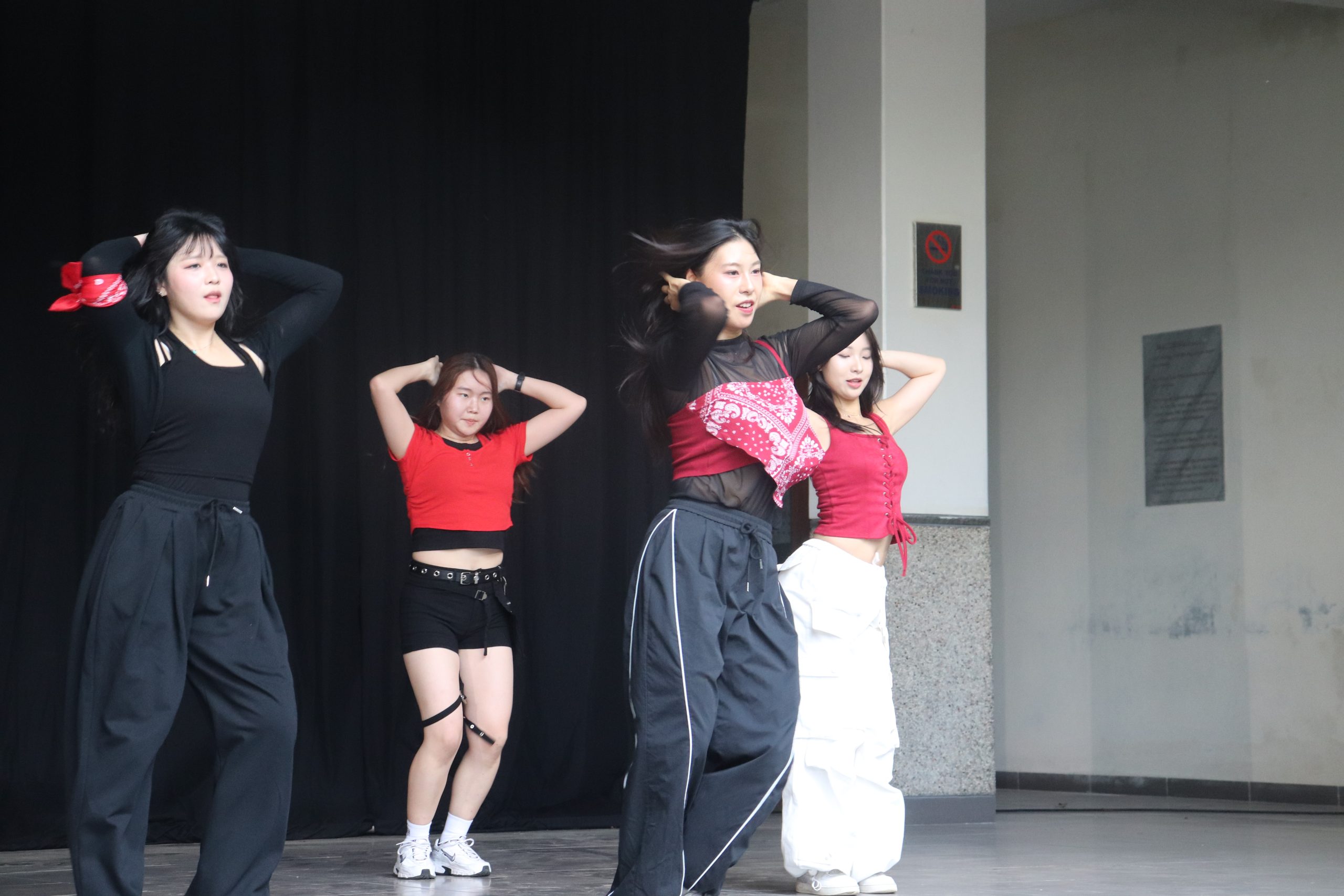
Following the opening remarks, the audience was treated to a performance of the Korean Fan Dance, presented through a collaboration by students from the Korean Language and Culture Study Program at FIB UGM. The program continued with academic presentations by speakers from UGM, UI, UPI, and Universitas Nasional.

The first presentation was delivered by Rostinue from the University of Indonesia, who explained the role of Korean Studies scholars as academic and cultural bridges that strengthen bilateral interactions between Indonesia and Korea. The next speaker, Ashanti Widyana from the Indonesia University of Education (UPI), presented research trends in UPI’s Korean Language Education Program from 2020 to 2025, focusing on strengthening applied linguistics research, cultural studies, and integrating research outcomes into educational practice.

The session continued with Desitha Dwi Asriani from FISIPOL UGM, who discussed body modification and gender performativity among young Asian men and women from a comparative Indonesia–Korea perspective. The next presentation, by Rurani Adinda from Universitas Nasional, explored differences in the meanings of idioms related to the head in Korean and Indonesian. The final speaker, Achmad Rio, Head of the Korean Language and Culture Study Program at FIB UGM, delivered a talk on analyzing translation patterns of the adnominal ending deon-eass-does using a Korean–Indonesian parallel corpus.

This seminar is expected to serve as an initial step in expanding academic networks in Korean Studies in Indonesia, while strengthening academic contributions to cultural, social, and educational cooperation between Indonesia and Korea. Continued collaboration will open broader spaces for dialogue and encourage innovative scholarly work that benefits society and advances knowledge.

In the long term, this initiative is expected to enhance access to knowledge and opportunities for academic exchange, contributing to human development and a more inclusive and sustainable future for both countries.

[Public Relations of FIB UGM, Candra Solihin]

Korean Days 2025: Two Decades of Indonesia–Korea Cultural Harmony at UGM

HEADLINESNews ReleaseStudent's Activity Tuesday, 18 November 2025

Yogyakarta, 15 November 2025 — Universitas Gadjah Mada once again became a vibrant center of Korean cultural celebration through the Festival Oullim Korea Yogyakarta: 20th Korean Day, held at the UGM Gelanggang Inovasi dan Kreativitas (GIK). This two-decade celebration was made possible through collaboration between the Korean Language and Culture Study Program of the Faculty of Cultural Sciences (FIB UGM) and the Korean Cultural Center Indonesia (KCCI). The festival was officially opened by UGM Rector, Prof. dr. Ova Emilia, M.Med.Ed., Sp.OG(K)., Ph.D., alongside KCCI Director Kim Yong Woon and distinguished guests from government institutions, academia, and cultural communities. Their presence underscored the significance of the festival as a thriving cultural interaction platform within the university environment.

The festival opened with the spirit of Oullim, meaning harmony, showcased through collaborative performances blending Indonesian and Korean traditional arts. A captivating fusion of Indonesian mask dance and Javanese gamelan with Korean fan dance and bukchum (traditional drum dance) delighted audiences. This performance was the result of an intensive week-long collaboration between students of SMKN 1 Kasihan and a visiting Korean art instructor. Students of the Korean Language and Culture Program at FIB UGM supported the process as cultural interpreters and assistants, ensuring smooth communication and rehearsals that culminated in a widely praised performance.

Beyond the stage performances, the festival featured a wide array of programs highlighting the richness of Korean culture. Shows by Salmunori UGM, music and dance showcases, dongari exhibitions, noraebang, and random play dance sessions all contributed to the lively atmosphere. One of the most striking highlights was the Hanbok Fashion Show featuring works by Leesle, a renowned South Korean designer known for dressing prominent Korean celebrities. On this occasion, Leesle presented a special hanbok collection crafted using Indonesian batik fabric, creating designs that symbolized harmonious cultural fusion. The interplay of colors, patterns, and silhouettes embodied the true meaning of Oullim as a representation of unity expressed through artistic beauty.

The festival’s dynamic atmosphere was further enriched by Korean culinary booths serving complimentary dishes to visitors, from tteokbokki to a variety of popular street foods. Additionally, the Korea Tourism Organization (KTO) participated by providing information on South Korean tourism, interactive activities, and destination promotions. Various Korean cultural institutions and communities also contributed, enhancing the festival with educational programs, entertainment, and inclusive cultural engagement. Their involvement reinforced Yogyakarta’s position as one of Indonesia’s key centers for Korean cultural exchange.

In her remarks, the UGM Rector emphasized that the twenty-year continuity of Korean Day reflects the strong cultural relations between Yogyakarta and South Korea, as well as the university’s role in promoting international collaboration. The festival serves as a cultural meeting ground that enriches students’ perspectives and expands UGM’s global network through mutually beneficial partnerships. With its overarching theme of Oullim, the festival fosters an environment that embraces diversity and encourages deep appreciation of cross-cultural heritage.

Through the 2025 Festival Oullim Korea Yogyakarta, UGM hopes to further strengthen collaboration in cultural exchange, education, and academic partnerships between Indonesia and South Korea. The event aligns with key principles of the Sustainable Development Goals (SDGs), particularly SDG 4 on Quality Education through intercultural learning opportunities; SDG 11 on Sustainable Cities and Communities through cultural preservation; and SDG 17 on Partnerships for the Goals through cooperative engagement among universities, government bodies, and international cultural organizations. In this way, the festival stands not only as a celebration of art but also as a meaningful contribution to building harmonious and sustainable global relations.

[Public Relations of FIB UGM, Candra Solihin]

Korean Language and Culture Study Programme Holds Public Lecture ‘Speaking Techniques in Korean’ with K-Speech Indonesia

HEADLINESNews ReleaseSDGs 17: Partnerships for the GoalsSDGs 4: Quality Education Friday, 9 May 2025

Yogyakarta, 5/5/2025 – UGM Korean Language and Culture Study Program held a public lecture entitled “ Oratory Techniques in Korean” in the Multimedia Room of the Margono Building. The event presented the Chairman of K-Speech Indonesia, Woo Young Taek, as a speaker who delivered the material entirely in Korean. This activity aims to improve students’ oratory skills and support the Sustainable Development Goals (SDGs) in the fields of education and global partnerships.

This public lecture lasted for approximately one and a half hours. During the presentation, Woo Young Taek shared various oration techniques commonly used in Korean, such as the use of intonation and tone, voice modification, facial expressions, and body language.

In the middle of the lecture, students were also encouraged to practice these techniques through short self-introductions to improve their public speaking skills.

The event was closed with the presentation of certificates to the speakers and a group photo session. Through collaborations like this, it is hoped that the Korean Language and Culture Study Program can send its students to participate and compete in oration competitions at the national and international levels.

[Public Relation of Korean Language and Culture, Sherina Azmi A.]

“Students of the Korean Language and Culture Program at UGM Won First Place Individual and Third Place Team in the 22nd K-Speech Oratory Contest Indonesia”

News ReleaseSDGs 11: Sustainable cities and communitiesSDGs 17: Partnerships for the GoalsSDGs 4: Quality Education Thursday, 13 June 2024

Jakarta, June 8, 2024 – The Korean Language and Culture Program at UGM sent five of its students to participate in the final round of the 22nd K-Speech Oratory Contest Indonesia, organized by the Indonesia Korea Speech Eloquence Association and held at the National University (UNAS). The five students were Ida Ayu Nastiti, Anggita Lintang Herdiwan, Nasywa Athallah Putri, Firmansyah Haryo Yudhoyono, and Naufal Java Fakhriansyah.

The event began with a performance by UNAS students and was followed by Big Group Oratory Speeches from each university, including UGM, which successfully submitted its Big Group Oratory Speech via video. The event continued with the introduction of the judges and remarks from relevant parties. After these segments, 27 individual category participants performed in the order determined by the organizers, followed by performances from 7 team category participants. While awaiting the judges’ evaluations, the event included a door prize distribution session and an overall evaluation of the participants’ performances. The event concluded with the awarding ceremony and a group photo session.

Students from the Korean Language and Culture Program achieved several awards in this competition. Anggita Lintang Herdiwan won First Place in the individual category, while Nasywa Athallah Putri, Firmansyah Haryo Yudhoyono, and Naufal Java Fakhriansyah won Third Place in the team category.

This competition provides a platform for students to showcase their potential, particularly their ability to speak Korean in public. This skill is one of the potentials that the Korean Language and Culture Program at UGM aims for each of its students to develop. Certainly, this achievement is due to the students’ courage and the support provided by all the program’s lecturers.

The excitement of 18th Korean Days “Hallyunesia Wonderland” at Faculty of Cultural Sciences UGM

News ReleaseSDGs 10: Reduced InequalitiesSDGs 11: Sustainable cities and communitiesSDGs 12: Responsible consumption and productionSDGs 16: Peace justice and strong institutionsSDGs 17: Partnerships for the GoalsSDGs 4: Quality EducationSDGs 8: Decent work and economic growth Monday, 10 June 2024

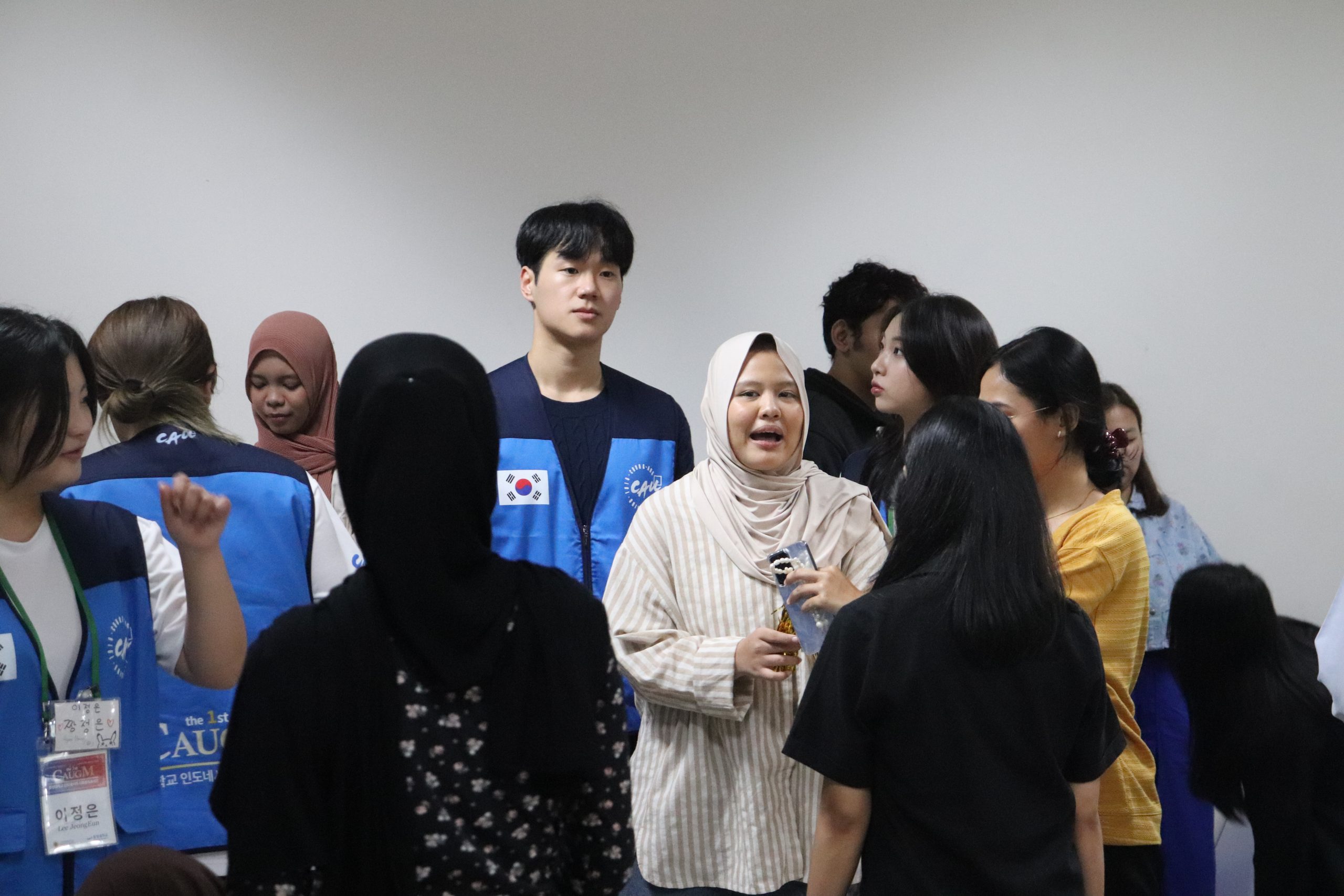
Yogyakarta, Saturday, March 9, 2024 – The culmination of the 18th annual Korean Day was held by the Korean Language and Culture Study Program of Universitas Gadjah Mada at the Faculty of Cultural Sciences. The performers blended the cultures of the two countries through their costumes to adding a touch of Indonesian culture into their performances, for example by performing not only Korean songs, but also Indonesian songs.

This year, Korean Day was themed “Hallyunesia Wonderland” to celebrate Indonesian and Korean culture. The event was also enlivened by performances from various dongari (clubs) of UGM Korean Language and Culture Study Program, namely Samulnori, Hansamchum, Katarsis Sing, Katarsis Dance, Talchum, and Buchaechum. There were food, beverage, and accessory tenants that filled the venue. The Random Play Dance session and the appearance of the guest star, Nadafid, were the highlights of the event. Then, there was also a Noraebang (karaoke) session which also closed the Korean Day 18 event.

The entire series of the 18th Korean Day event is expected to be a source of inspiration for Korean culture lovers, providing a forum for creativity and community while encouraging the preservation of Indonesian culture. In addition, Korean Day is one of the media forms of cooperation with parties who have contributed to the success of the event.

12

Video UGM

[shtmlslider name='shslider_options']
Universitas Gadjah Mada

Faculty of Cultural Sciences
Universitas Gadjah Mada
Jl. Nusantara 1, Bulaksumur Yogyakarta 55281, Indonesia
   fib@ugm.ac.id
   +62 (274) 513096
   +62 (274) 550451

Work Units

  • Office of Journal & Publishing
  • INCULS
  • Information Technology and Database
  • Language Learning Center
  • Library Unit
  • Public Relations
  • Research

Facilities

  • Computer Laboratory
  • Gamelan
  • Guest House
  • Language Library
  • Library
  • Phonetics Library
  • Self Access Unit
  • Student Internet Centre

Importan Links

  • Journal of Humaniora
  • Subscriber Journal
  • Alumni Portal
  • Career
  • Departmens News
  • UGM Streaming

Contacts

  • Academic
  • Administration
  • Dean’s Office
  • Departments / Study Programs
  • Public Relations

© 2024 Faculty of Cultural Sciences Universitas Gadjah Mada

KEBIJAKAN PRIVASI/PRIVACY POLICY

[EN] We use cookies to help our viewer get the best experience on our website. -- [ID] Kami menggunakan cookie untuk membantu pengunjung kami mendapatkan pengalaman terbaik di situs web kami.I Agree / Saya Setuju