• About UGM
  • Academic Portal
  • IT Center
  • Library
  • Research
  • Webmail
  • Informasi Publik
  • English
    • Indonesia
Universitas Gadjah Mada Faculty of Cultural Sciences
Universitas Gadjah Mada
  • Home
  • Profile
    • History
    • Vision and Mission
    • Organizational structure
    • Administration
    • Staff
    • Faculty Members
  • Academic
    • Academic Calendar
    • Undergraduate Programs
      • Bachelor of Cultural Antrophology
      • Bachelor in Archaeolagy
      • Bachelor in History
      • Bachelor in Tourism
      • Bochetor in Korean Language and Culture
      • Bachelor in Indonesian Language and Culture
      • Bachelor in English
      • Bachelor in Arabic
      • Bachelor in Japanese Language and Culture
      • Bachelor in Javanese Language, Literature and Culture
      • Bachelor in French language and literature
    • Graduate Programs
      • Master in Antrophology
      • Master in ArchaeoIogy
      • Master in History
      • Master in Linguistics
      • Master in Literature
      • Master In American Studies
      • Master in Middle Eastern Cultural Studies
    • Post-Graduate Programs / S3
      • Doctor in Antropology
      • Doctor in American Studies
      • Doctor in Humanities
    • Student Service
  • KPPM
    • Research Information
    • Scientific / Academic Publications
    • Community Service
    • International Cooperation
    • Domestic Cooperation
  • Student Organizations
    • Student Executive Council
    • Semi-Autonomous Organizations
      • KAPALASASTRA
      • Christian Student Alliance
      • LINCAK
      • Saskine
      • Catholic Student Family
      • Dian Budaya
      • Sastra Kanuragan (sasgan)
      • Family of Muslim Cultural Sciences Students (KMIB)
      • Bejo Mulyo
    • Autonomous Organizations
      • Family of Anthropology Students (KEMANT)
      • English Department Student Association
      • Tourism Students Association (HIMAPA)
      • Family of Indonesian Literature Students (KMSI)
      • West Asian Literature Student Association (IMABA)
      • Association of Korean-Language Students (HIMAHARA)
      • Family of Regional Indonesian Literatures Students (KAMASUTRA)
      • The Family Body of History Students (BKMS)
      • The French Literature Students Association (HMSP)
      • Family of Anthropology Students
      • Japanese Student Association (HIMAJE)
  • Admission
    • Student Evaluation
  • Home
  • Javanese Language Literature and Culture
  • Javanese Language Literature and Culture
Arsip:

Javanese Language Literature and Culture

Handover of HMJ Kamastawa Positions for the 2026/2027 Period

News Release Monday, 2 March 2026

The Student Association of the Department of Javanese Language, Literature, and Culture (HMJ Kamastawa) held a handover ceremony for the 2026/2027 management on Monday (06/23/2026) at Poerbatjaraka Building 203, Faculty of Cultural Sciences, Gadjah Mada University. The event was attended by the HMJ Kamastawa executive board for the 2025/2026 and 2026/2027 periods, as well as faculty representatives from the study program.

Also present at the event were the Head of the Javanese Language, Literature, and Culture Study Program, Dr. Sulistyowati, M.Hum., and the advisor to HMJ Kamastawa, Dr. Rudy Wiratama, S.I.P., M.A. The presence of the study program leaders emphasized the program’s support for the continuity of student organizations.

The event began at 4:15 PM and was hosted by Muhammad Bagus Ulinnuha. The series of activities began with the singing of the Indonesian national anthem and the Gadjah Mada hymn.
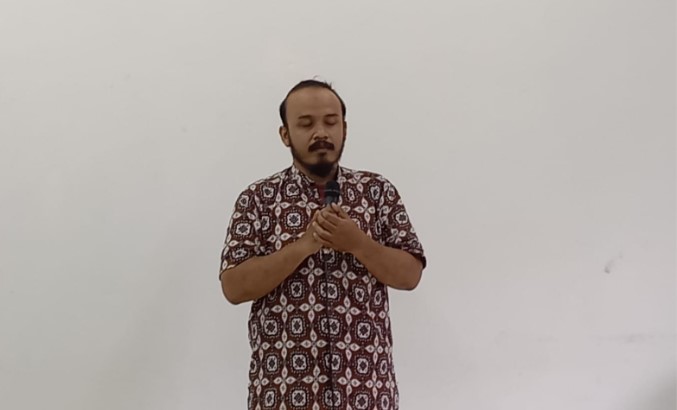
In his speech, Dr. Rudy Wiratama, S.I.P., M.A. emphasized the importance of maintaining achievements in a positive manner and building the widest possible network. He also advised the administrators to always apply the values of guidance, compassion, and nurturing, both with fellow administrators, seniors, and alumni.
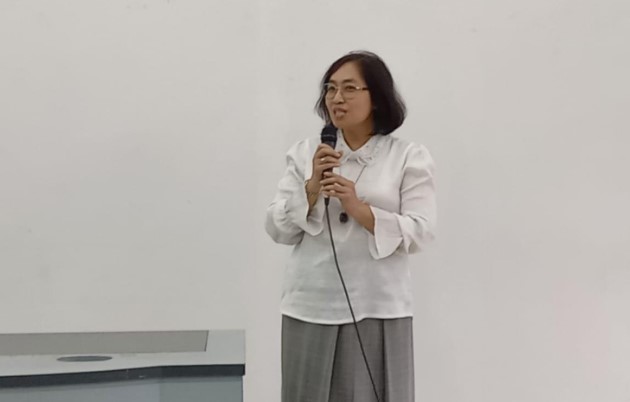
Meanwhile, Dr. Sulistyowati, M.Hum. reminded the administrators to remain resilient in facing the dynamics and challenges of the organization. She emphasized the importance of coordination with lecturers and maintaining a balance between achievement, physical and mental health, and harmonious communication within the management.

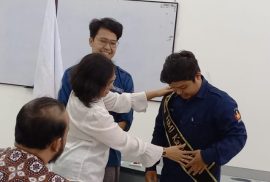
The main procession of the event consisted of the reading and signing of the minutes by the Chair of HMJ for the 2025/2026 period, Dwiyan Teguh Darmawan, followed by the symbolic handover of office by the Head of the Study Program. Next, the inauguration script was read by Dr. Rudy Wiratama, S.I.P., M.A., and the oath of office was led by the Chair of HMJ for the 2026/2027 period, Wreksi Awinanggya Pinandhita.

The event then continued with a symbolic handover of positions to the Kamastawa HMJ management, a message and impressions from the 2025/2026 HMJ period, and a speech from the Chair of the 2026/2027 HMJ period. The series of activities was closed with a group photo session to capture the moment of togetherness.
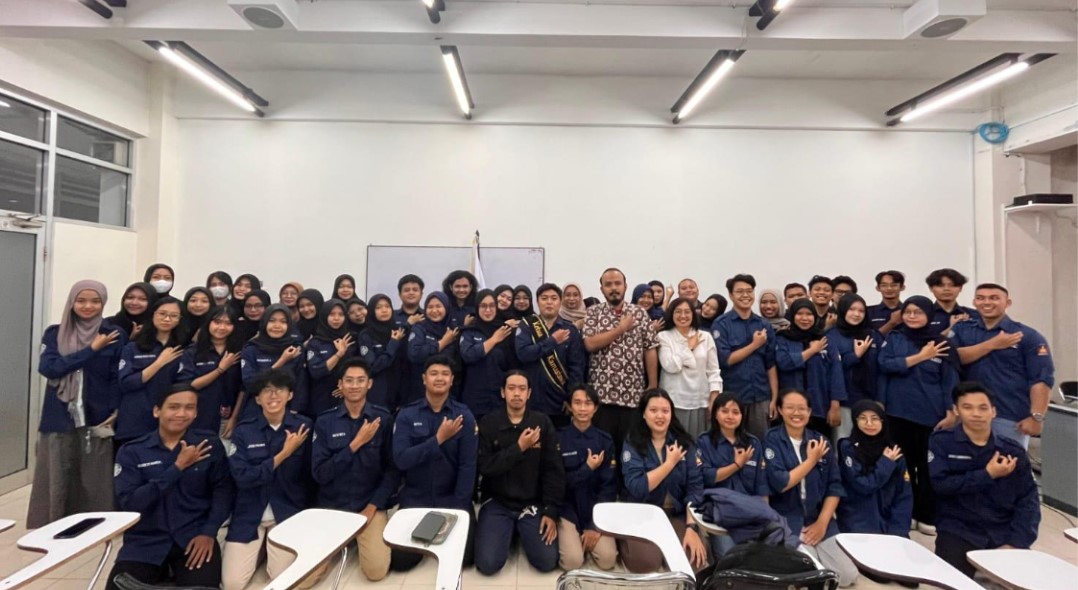
The handover ceremony for the Kamastawa Student Association for the 2026/2027 period is an important moment for the new board to continue and improve the quality of the organization. It is hoped that the new board will be able to implement flagship programs optimally. Thus, HMJ Kamastawa can continue to play an active role, making positive contributions to nguri-uri ‘preserving’ and ngurip-urip ‘revitalizing’ Javanese culture, as well as maintaining the good reputation of the Javanese Language, Literature, and Culture Study Program. Congratulations and success to the HMJ Kamastawa management for the 2026/2027 period.

Author: Haryo Untoro
Editor: Haryo Untoro
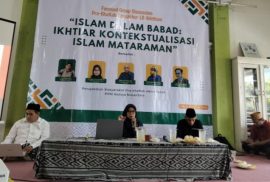
Dr. Arsanti Wulandari, M.Hum., Becomes Speaker in FGD “Islam in Javanese Babad: Efforts to Revitalize Mataraman Islam”

News Release Monday, 2 March 2026

Dr. Arsanti Wulandari, M.Hum., lecturer in the Javanese Language, Literature, and Culture Study Program in the field of Philology, was one of the speakers at the Focus Group Discussion (FGD) entitled “Islam in Javanese Babad: Efforts to Revitalize Mataraman Islam”. The event was organized by PPM Aswaja Nusantara in the PPM Aswaja Nusantara Mlangi Hall on Friday (February 6, 2026) from 1:30 p.m. to 4:30 p.m.

In her presentation, Dr. Arsanti Wulandari, M.Hum. explained the connection between literary works, particularly Babad Ngayogyakarta, and the development and existence of Islam in the Yogyakarta Palace. She explained that Babad Ngayogyakarta was written during the reign of Sri Sultan Hamengkubuwana (HB) V and was transcribed again during the reign of HB VII. The manuscript was written in Javanese script and contains expressions of Islamic teachings that developed within the Yogyakarta Palace.

The chronicle covers the period of HB IV-V, starting from the childhood of HB IV until the coronation of HB V. During this period, Prince Diponegoro is also described as the guardian of HB IV until the outbreak of the Diponegoro war. Prince Diponegoro is also described as a figure who upheld Islamic teachings and revived them in the life of the Yogyakarta Sultanate.

One example cited was Prince Diponegoro’s role in providing Islamic education to Hamengkubuwana IV. This education included the obligation to study the Qur’an, understand fiqh, and instill values of struggle. Dr. Arsanti Wulandari, M.Hum. also explained that Diponegoro’s concept of struggle was reflected in the war against colonialism, which was based on the spirit of upholding Islamic teachings, including the call of sabilullah as a motivator for the troops.

Through a study of the literary work Babad Ngayogyakarta, various important information can be found, ranging from historical facts, literary forms, to information about the existence of Islam in Java. He described the existence of Islam at that time in three (3) words, namely manjing ‘enter’, ajur ‘melt’, and ajer ‘walk together’.

Information related to literature and history of the past can be found in various manuscripts. In this case, philology plays an important role in uncovering the information contained in ancient manuscripts so that it can be understood and utilized by today’s society. In addition, philological studies are also part of efforts to preserve and protect regional languages, literature, and cultures in Indonesia.

This FGD activity is in line with the Sustainable Development Goals (SDGs), particularly point 4 on quality education, point 11 on sustainable cities and communities, and point 17 on partnerships to achieve development goals.

Author : Haryo Untoro
Editor : Haryo Untoro

Students of the Javanese Language, Literature, and Culture Study Program Class of 2025 Perform the Drama Weton Waton

News Release Monday, 26 January 2026

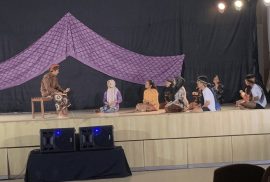
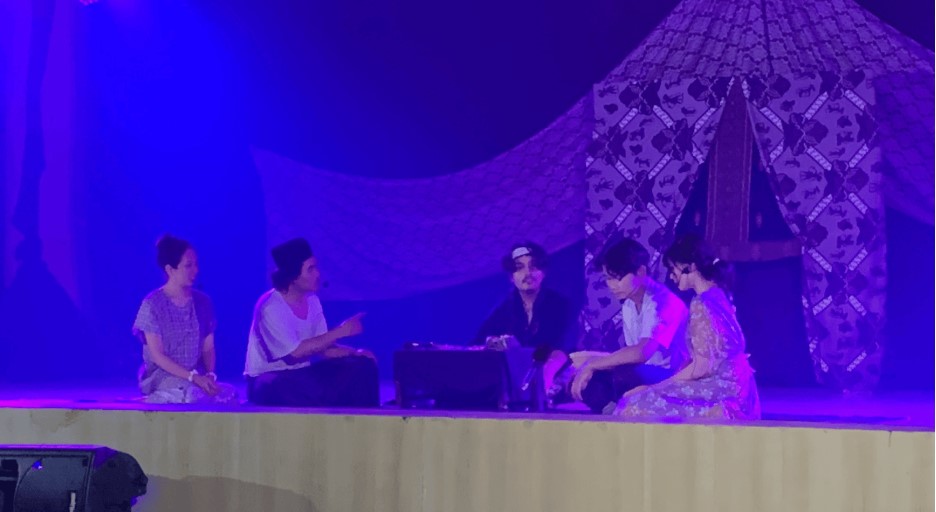
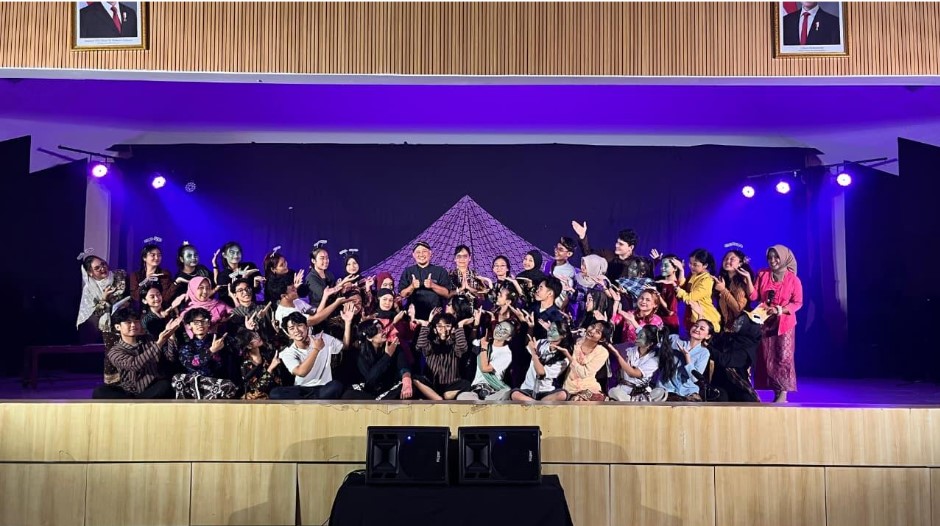
Yogyakarta, 16 December 2025 – Students of the Javanese Language, Literature, and Culture Study Program, Class of 2025, Faculty of Cultural Sciences, Gadjah Mada University, staged a drama titled Weton Waton. The performance took place at the Poerbatjaraka Auditorium, FIB UGM, at 6:00 p.m.

This activity was organized as part of the final exam assignment for the Communicative Spoken Javanese Language course taught by Dr. R. Bima Slamet Raharja, S.S., M.A. The performance of Weton Waton was directed by Safa Rahmatul H. as the production manager.

The drama Weton Waton tells the story of a domestic conflict between a husband and wife triggered by financial problems. The root of the problem lies in the husband’s decision to quit his job and get involved in cockfighting gambling. The ongoing conflict then prompts the wife’s parents to take the matter to a shaman. In the story, the shaman says that the couple’s domestic quarrels are caused by an incompatibility in their weton, which is called tiba pegat.

Through this performance, students sought to convey the message that problems should not be automatically attributed to a person’s character or nature based on their weton. In addition, this performance also presented knowledge about the concepts of dina, pasaran, and wuku, which are still believed by some Javanese people to be part of their tradition.

Based on an online interview with Yogi Setiyawan on December 28, 2025, the Weton Waton performance was a final exam assignment that required all students enrolled in the course to be directly involved in the performance. The theme of weton was chosen as an effort to highlight the tradition of calculating weton, dina, pasaran, and wuku that has developed in Javanese society.

“In preparing for the Weton Waton performance, our preparations can be said to still have a number of limitations. The challenges faced include script writing, group division, and funding constraints. From this process, we learned that good and open communication between members is very important in a performance,” said Yogi.

Yogi also expressed his pride in being involved in the premiere performance of the 2025 batch of students from the Javanese Language, Literature, and Culture Study Program. He hopes that this activity can be a first step towards producing better works in the future.

The performance of the Weton Waton drama was not only a means of practicing Javanese language skills orally, but also a platform for students to create and apply their language skills in the form of a performance. In line with the teachings of KGPAA Mangkunegara IV in Serat Wedhatama, which states that ngelmu iku kalakone kanthi laku or knowledge must be implemented through practice, this performance is a tangible manifestation of reviving enthusiasm for the Javanese language while honing students’ creativity. Through activities such as this, students are expected to continue to preserve and revive Javanese culture through concrete efforts that benefit the community.

Author : Haryo Untoro
Editor  : Haryo Untoro

Joint Proposal Seminar Becomes Final Exam for Students of the Javanese Language, Literature, and Culture Study Program at UGM

News Release Tuesday, 30 December 2025

The Javanese Language, Literature, and Culture Study Program, Faculty of Cultural Sciences (FIB), Universitas Gadjah Mada (UGM), will hold a combined Final Semester Exam (FSE) through a joint proposal seminar on December 15–17, 2025. The event will be held in the Multimedia Room on the 2nd floor of the Margono Building, FIB UGM, from 8:00 a.m. to 11:30 a.m.

This joint proposal seminar is the final exam for three courses, namely Philology Seminar, Linguistics Seminar, and Literature. Through this activity, students present their thesis proposals and explain the progress of their research.

During the event, lecturers from the Javanese Language, Literature, and Culture Study Program are present as examiners and respondents. The lecturers provide comments, input, and constructive suggestions regarding the substance of the research, methodology, and direction of the students’ undergraduate thesis development.

This joint proposal seminar activity not only serves as a final semester academic evaluation, but also becomes a forum for scientific discussion between students and lecturers. Through this forum, students are expected to obtain comprehensive feedback to improve their thesis research.

This event is expected to help students finalize their thesis planning and implementation, while also improving the quality of research in the fields of Javanese language, literature, and culture.

Author : Haryo Untoro
Editor : Haryo Untoro

Comparative Study of Javanese Literature at UNNES and Javanese Language, Literature, and Culture at UGM: Strengthening Friendship and Collaboration for Sustainable Javanese Culture

HEADLINESNews Release Thursday, 13 November 2025

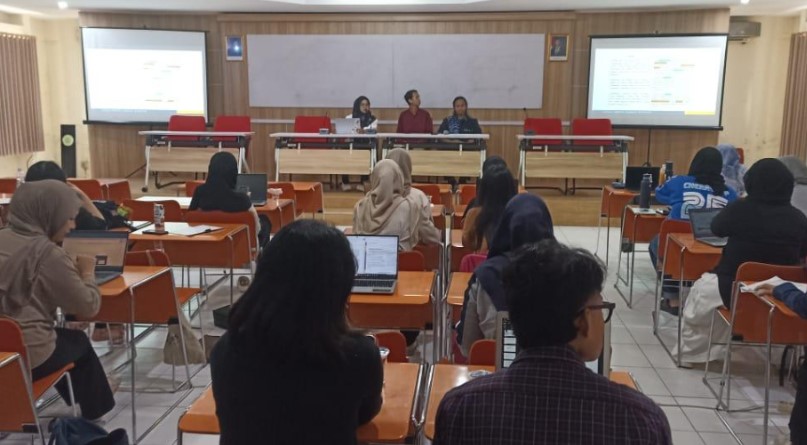
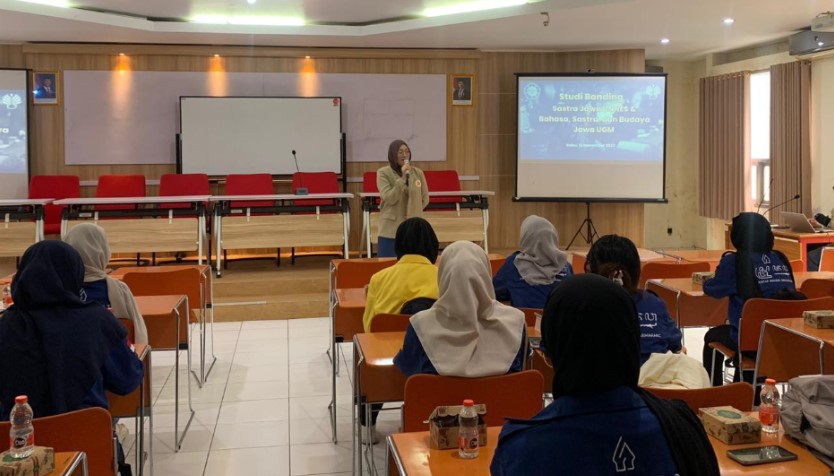
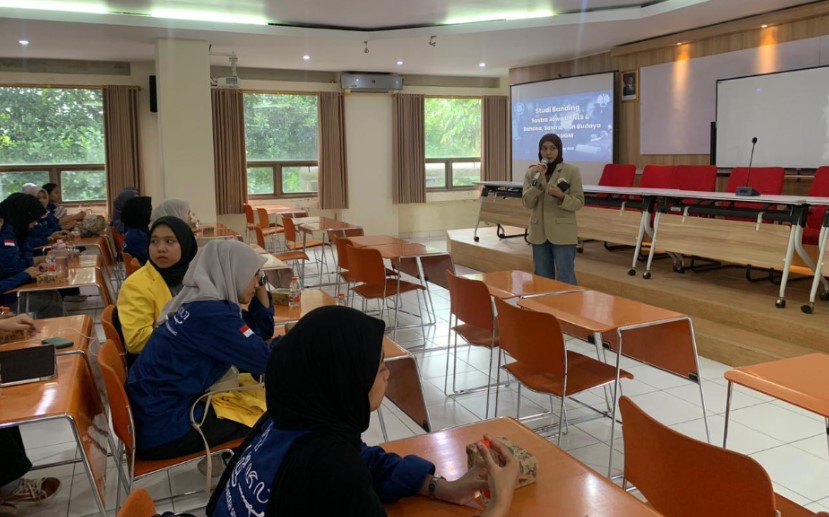
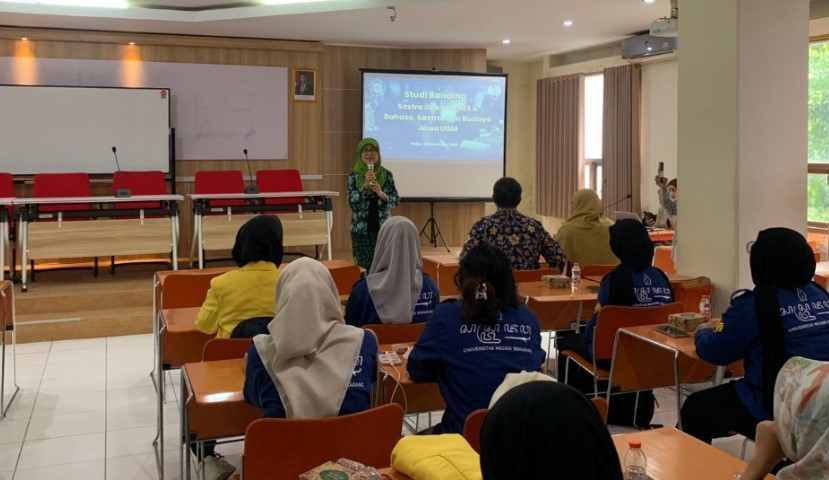
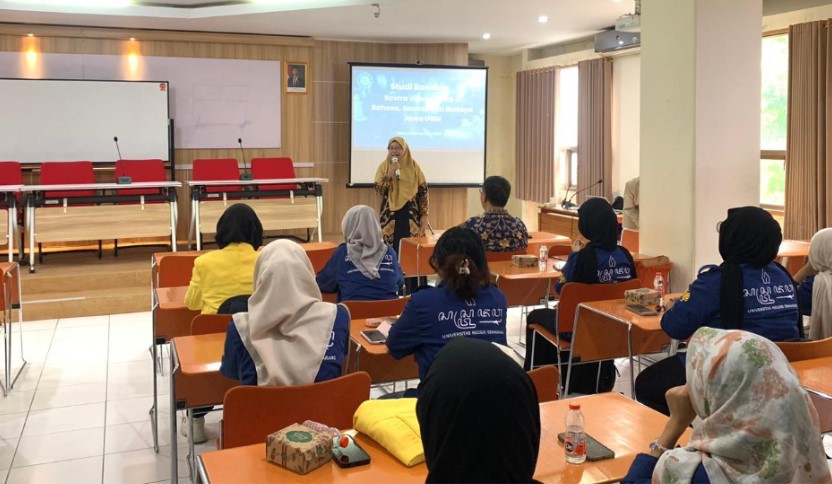
Yogyakarta, November 12, 2025 — The Javanese Literature Study Program, Semarang State University (UNNES), conducted a comparative study with the Javanese Language, Literature, and Culture Study Program, Gadjah Mada University (UGM). The event, held in the Multimedia Room on the 2nd floor of Margono Building, Faculty of Cultural Sciences (FIB) UGM, served as a platform for networking and knowledge exchange among students from both universities.

Forty UNNES Javanese Literature students from the class of 2023 attended the event and were welcomed by nine UGM Javanese Language, Literature, and Culture students from the class of 2022, including Alfonsus Dipa Wicaksana, Anggit Galuh Ajar Amanah, Fauzan Adi Fadlurahman, Haryo Untoro, Muhammad Siswoyo, Novia Hikmatul Mubarokah, Pesdhi Sekar Hayumay, Saktia Hidayah, and Yasmin Nabiha Sahda.

The event was opened by Yasmin Nabiha Sahda, who introduced the agenda. Next, Novia Hikmatul Mubarokah presented the profile of the UGM Javanese Language, Literature, and Culture Study Program, including the curriculum, student activities, and various academic and non-academic programs that have been organized. A similar presentation was then delivered by a representative of UNNES students who introduced the structure and activities of the Javanese Literature Study Program.

The next session was filled with a “Study Interest Discussion” activity, featuring three UGM student representatives: Fauzan Adi Fadlurahman (Philology), Muhammad Siswoyo (Linguistics), and Saktia Hidayah (Literature). They gave an introduction to their respective fields of study, followed by an interactive discussion. UNNES students enthusiastically asked various questions about learning methods, tips for completing assignments, and the direction of studies in these fields. A warm and friendly atmosphere was created through dialogue, jokes, and the sharing of experiences among participants.

Towards the end of the event, remarks were delivered by the Head of the Javanese Language, Literature, and Culture Study Program at UGM, Dr. Daru Winarti, M.Hum., and a representative from the Javanese Literature Study Program at UNNES, Dr. Prembayun Miji Lestari, M.Hum. Both emphasized the importance of collaboration between students and educational institutions in strengthening the development of knowledge and preservation of Javanese culture.

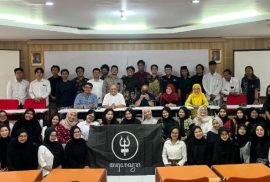
The event concluded with a joint documentation session as a symbol of unity and commitment to continue cooperation.

Through this comparative study, it is hoped that the relationship between the two study programs will become closer and more productive. In addition to broadening the academic horizons of students, this activity is also a concrete step in the joint effort to preserve and develop Javanese cultural heritage in higher education.

Author: Haryo Untoro

123…11

Video UGM

[shtmlslider name='shslider_options']
Universitas Gadjah Mada

Faculty of Cultural Sciences
Universitas Gadjah Mada
Jl. Nusantara 1, Bulaksumur Yogyakarta 55281, Indonesia
   fib@ugm.ac.id
   +62 (274) 513096
   +62 (274) 550451

Work Units

  • Office of Journal & Publishing
  • INCULS
  • Information Technology and Database
  • Language Learning Center
  • Library Unit
  • Public Relations
  • Research

Facilities

  • Computer Laboratory
  • Gamelan
  • Guest House
  • Language Library
  • Library
  • Phonetics Library
  • Self Access Unit
  • Student Internet Centre

Importan Links

  • Journal of Humaniora
  • Subscriber Journal
  • Alumni Portal
  • Career
  • Departmens News
  • UGM Streaming

Contacts

  • Academic
  • Administration
  • Dean’s Office
  • Departments / Study Programs
  • Public Relations

© 2024 Faculty of Cultural Sciences Universitas Gadjah Mada

KEBIJAKAN PRIVASI/PRIVACY POLICY

[EN] We use cookies to help our viewer get the best experience on our website. -- [ID] Kami menggunakan cookie untuk membantu pengunjung kami mendapatkan pengalaman terbaik di situs web kami.I Agree / Saya Setuju