• About UGM
  • Academic Portal
  • IT Center
  • Library
  • Research
  • Webmail
  • Informasi Publik
  • English
    • Indonesia
Universitas Gadjah Mada Faculty of Cultural Sciences
Universitas Gadjah Mada
  • Home
  • Profile
    • History
    • Vision and Mission
    • Organizational structure
    • Administration
    • Staff
    • Faculty Members
  • Academic
    • Academic Calendar
    • Undergraduate Programs
      • Bachelor of Cultural Antrophology
      • Bachelor in Archaeolagy
      • Bachelor in History
      • Bachelor in Tourism
      • Bochetor in Korean Language and Culture
      • Bachelor in Indonesian Language and Culture
      • Bachelor in English
      • Bachelor in Arabic
      • Bachelor in Japanese Language and Culture
      • Bachelor in Javanese Language, Literature and Culture
      • Bachelor in French language and literature
    • Graduate Programs
      • Master in Antrophology
      • Master in ArchaeoIogy
      • Master in History
      • Master in Linguistics
      • Master in Literature
      • Master In American Studies
      • Master in Middle Eastern Cultural Studies
    • Post-Graduate Programs / S3
      • Doctor in Antropology
      • Doctor in American Studies
      • Doctor in Humanities
    • Student Service
  • KPPM
    • Research Information
    • Scientific / Academic Publications
    • Community Service
    • International Cooperation
    • Domestic Cooperation
  • Student Organizations
    • Student Executive Council
    • Semi-Autonomous Organizations
      • KAPALASASTRA
      • Christian Student Alliance
      • LINCAK
      • Saskine
      • Catholic Student Family
      • Dian Budaya
      • Sastra Kanuragan (sasgan)
      • Family of Muslim Cultural Sciences Students (KMIB)
      • Bejo Mulyo
    • Autonomous Organizations
      • Family of Anthropology Students (KEMANT)
      • English Department Student Association
      • Tourism Students Association (HIMAPA)
      • Family of Indonesian Literature Students (KMSI)
      • West Asian Literature Student Association (IMABA)
      • Association of Korean-Language Students (HIMAHARA)
      • Family of Regional Indonesian Literatures Students (KAMASUTRA)
      • The Family Body of History Students (BKMS)
      • The French Literature Students Association (HMSP)
      • Family of Anthropology Students
      • Japanese Student Association (HIMAJE)
  • Admission
    • Student Evaluation
  • Home
  • FIB UGM
  • FIB UGM
  • page. 21
Arsip:

FIB UGM

Winning the Javanese Script Literacy Competition in the Hadeging Kadipaten Pakualaman Ngayogyakarta

News ReleaseSDGs 11: Sustainable cities and communitiesSDGs 17: Partnerships for the GoalsSDGs 4: Quality Education Thursday, 28 August 2025

Yogyakarta, 17/5/2025 – A student of the Javanese Language, Literature, and Culture study program, class of 2023, Maysa Putri Fatihah, won the 1st runner-up prize in the Javanese Script Literacy competition. This competition was held by Pura Pakualaman in the framework of the 219th (in Javanese year) Hadeging Kadipaten Pakualaman Ngayogyakarta. This year, the Hadeging Kadipaten Pakualaman event carries the theme ‘Manggala Gati Wiwaraning Rat’.

This Javanese Script Literacy Competition is divided into two categories, namely General and Students. For the general category, the competition is to translate Latin text into Javanese script and draw rerenggan/illustrations according to the participants’ interpretation of the contents of the text. The questions are in the form of macapat songs from the Sestra Ageng Adidarma manuscript text collected by the Widyapustaka Pakualaman Library. This text contains 6 verses of the Durma song, all of which must be depicted in the renggan, but only the first verse is translated. The text was given when the registration was announced, so participants could prepare illustration ideas well in advance.

On the day of the event, participants were given 5 hours to complete the work. During the process, participants were prohibited from opening their cellphones, copying letters, or plagiarizing images. The committee only provided drawing paper with Pakualaman stickers to minimize cheating.

Maysa’s work itself has a deep meaning. She mentioned in the description of her rerenggan that the color red symbolizes courage, while blue symbolizes peace and noble character. In the ornament under the renggan, a circle is depicted which has the meaning of rat or universe. In addition, there are ornaments of cannons, arrows, and spears as weapons of war. These weapons of war symbolize a source of strength or support to achieve victory.

Apart from Maysa, there were 2 other students from the 2023 batch who took part in this competition, namely Rafi Nur Fauzy and Rafif Wicaksono. Both are among the top 10 nominees with the best works. By participating in this competition, it is hoped that students can love and appreciate the literary works left by our ancestors more.

“It certainly feels happy to have the opportunity to participate in the Javanese script literacy competition and win. It’s great to meet great people there (especially philologists). Alhamdulillah, I was able to bring home the trophy from Pakualaman and make my parents proud. Hopefully, my other friends will be motivated so that in the next opportunity they can participate and compete together,” said Maysa.

Authors: Haryo Untoro

UGM Linguistics Graduate Program Holds Public Lecture on Multilingual Spoken Corpora

News ReleaseSDGs 17: Partnerships for the GoalsSDGs 4: Quality EducationSDGs 9: Industry innovation and infrastructure Wednesday, 27 August 2025

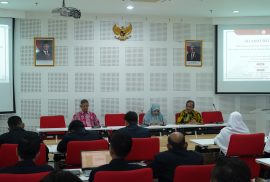
Yogyakarta, 27/8/2025 – The Master’s Program in Linguistics, Faculty of Cultural Sciences (FIB) Universitas Gadjah Mada, held a public lecture entitled “An Outside Perspective: Classifying Languages in Multilingual Spoken Corpora” at the R. Soegondo Auditorium. The event was open to both the academic community and the general public, featuring Dr. Zara Maxwell-Smith, Lecturer in Indonesian Studies at the School of Humanities and Social Sciences (HASS), UNSW Canberra, as the keynote speaker.

The lecture was officially opened by the Head of the Linguistics Master’s Program, Prof. Dr. Suhandano, M.A. In his remarks, he encouraged participants to collaborate in advancing linguistic research and to make the most of the opportunity to learn from the invited speaker.

In her presentation, Dr. Zara first highlighted the major challenges in building multilingual spoken corpora. She explained that such corpora are notoriously difficult to annotate and describe. The difficulties include managing non-verbal cues in transcripts, converting oral communication rules into written systems across different languages, transcriber subjectivity, and the significant amount of time required for manual transcription.

She then presented findings from her research on Indonesian Language for Foreign Speakers (BIPA) classroom data. According to her, teachers’ speech is part of their professional identity, and training data can shape perceptions of teaching practice as well as teachers’ understanding of their own work. This, she noted, calls for sensitive approaches to avoid negative impacts on employment and professional reputation.

Despite these challenges, Dr. Zara emphasized the empirical benefits of such research. The findings provide valuable insights for teachers, curriculum developers, educational researchers, and policymakers. Moreover, the study helps advance the teaching of Indonesian, contributes to resources for bilingual natural language processing (NLP), and places education at the center of technological applications in the field of language.

UGM Linguistic Study Reveals Verbal Violence Against Politicians on Twitter

News ReleaseSDGs 16: Peace justice and strong institutionsSDGs 4: Quality Education Friday, 22 August 2025

Yogyakarta, 21/8/2025 – The Faculty of Cultural Sciences (FIB) at Gadjah Mada University (UGM) has once again produced a new doctor in the field of linguistics. Novi Eka Susilowati officially earned her doctoral degree with her dissertation titled “The Use of Verbal Violence Metaphors Against Indonesian Politicians on Twitter.” The doctoral promotion session took place in the Multimedia Room, Margono Building, FIB UGM, with promoter Prof. Dr. I Dewa Putu Wijana, S.U., M.A., and co-promoter Dr. Hayatul Cholsy, M.Hum.

In her research, Novi discovered that political discourse on social media is rife with metaphors of verbal violence used by netizens to dehumanize and belittle politicians. The forms of these metaphors vary, ranging from words and phrases to sentences, drawing from source domains such as animals, trash, metaphysical beings, and physical objects. Interestingly, new metaphors unique to Indonesia’s digital culture have emerged, such as Mak Lampir and Kakek Sugiono.

During her speech, she identified six factors contributing to the use of verbal violence metaphors against politicians: (1) disappointment with politicians, (2) the political party ideology that supports the politicians, (3) access to social media, (4) the anonymity feature on Twitter, (5) the social distance between Twitter users and politicians, and (6) cultural context.

These findings indicate that social media is not merely a space for expression but also an arena for the reproduction of symbolic violence that can damage the positive image of politicians and diminish respect for their human rights. From a global perspective, this study is relevant to the Sustainable Development Goals (SDGs), particularly SDG 16: Peace, Justice, and Strong Institutions, which emphasizes the importance of peaceful communication, transparency, and respect for human dignity in public life.

FIB UGM Holds Gender and Sexuality Class to Explore Identity and Diversity in Society

HEADLINESNews Release Wednesday, 20 August 2025

Yogyakarta, August 20, 2025 — The Cultural Anthropology Study Program, Faculty of Cultural Sciences (FIB), Universitas Gadjah Mada, has once again opened its Gender and Sexuality class, a regular part of the department’s semester curriculum. This semester, the class is scheduled every Wednesday from 7:15 to 9:45 a.m., running from August 20 to December 5, 2025, at the R. Soegondo Building, Faculty of Cultural Sciences, UGM.

The course aims to provide a critical understanding of the distinctions between sex, gender, and sexuality. Through this class, students are encouraged to grasp why these distinctions have become increasingly significant amid the changing dynamics of modern society.

A wide range of topics are discussed, including sexual taboos, sexual identity, and expressions of gender in everyday life. The course also examines how gender identity intersects with other aspects such as social class, ethnicity, race, age, and religion. Using an intersectional approach, students are guided to understand how multiple identities shape individual experiences within society.

Beyond theoretical discussion, the course also highlights the social and cultural implications of gender and sexuality issues, especially in the context of Indonesia and Southeast Asia. Students are encouraged to think critically, question social norms, and appreciate the diversity of human experiences while remaining grounded in local contexts.

The Gender and Sexuality class is open to students from the Cultural Anthropology Study Program and other departments within the Faculty of Cultural Sciences, UGM. It serves as an important academic space for anyone interested in exploring gender, sexuality, and identity studies from an anthropological perspective, while broadening their understanding of the complexities of contemporary social life.

Photo: Freepik.com

[Public Relations of FIB UGM, Candra Solihin]

Valuable Lesson at AIYA: From Personal Growth to Global Connections

SDGs 17: Partnerships for the GoalsSDGs 4: Quality EducationSDGs 8: Decent work and economic growth Wednesday, 20 August 2025

A youth-led, non-profit organisation, AIYA seeks to improve the connections between young Australians and Indonesians as well as the opportunities that exist between Australia and Indonesia through cultural and language exchanges, professional programs, and more. AIYA has chapters active in Australian states and territories, and also in Indonesia, including one in Yogyakarta. At the national level, AIYA is governed by an executive committee of early-career professionals.

Bathari Sekar Dewangga, also known as Atha, an English Literature student, secured an internship as an educational events organizer at AIYA. Atha went through two stages of selection for this internship at AIYA. The first was application screening/review, and the second was an interview. Since AIYA is an international organization, in the interview, she had to position herself as a delegate/representative of her country and have a mindset to grow, learn, be tolerant, and understand others.

As an education event officer, Atha’s main task is to organize language exchange events, starting from brainstorming topic ideas and questions related to the chosen topic, compiling event rundowns, surveying places to hold events, becoming MCs and facilitators during the event, and being an intermediary between AIYA and outside parties who want to collaborate with Education AIYA. Not only that, but sometimes Atha also assists the socio-cultural division in running events.

She also served as a link between AIYA and the external parties. Moreover, being part of AIYA allowed her to see the world through different perspectives, appreciating cultural differences and learning to manage her schedule more effectively, especially while balancing academic commitments and preparing for her community service (KKN). At first, she only wanted to strengthen her English skills and make global connections during her internship with the organisation. But she ended up with more than she had needed. She became more proficient in communication, time management, and decision-making. 

Meeting new people and learning about their cultures and languages at each event was both exciting and thrilling for her. Through collaboration, she gained experience in a professional environment and built her career path. “My participation in this organisation has increased my interest in pursuing an overseas job, getting a master’s degree, or establishing a career in Australia,” she shared.

1…1920212223…88

Video UGM

[shtmlslider name='shslider_options']
Universitas Gadjah Mada

Faculty of Cultural Sciences
Universitas Gadjah Mada
Jl. Nusantara 1, Bulaksumur Yogyakarta 55281, Indonesia
   fib@ugm.ac.id
   +62 (274) 513096
   +62 (274) 550451

Work Units

  • Office of Journal & Publishing
  • INCULS
  • Information Technology and Database
  • Language Learning Center
  • Library Unit
  • Public Relations
  • Research

Facilities

  • Computer Laboratory
  • Gamelan
  • Guest House
  • Language Library
  • Library
  • Phonetics Library
  • Self Access Unit
  • Student Internet Centre

Importan Links

  • Journal of Humaniora
  • Subscriber Journal
  • Alumni Portal
  • Career
  • Departmens News
  • UGM Streaming

Contacts

  • Academic
  • Administration
  • Dean’s Office
  • Departments / Study Programs
  • Public Relations

© 2024 Faculty of Cultural Sciences Universitas Gadjah Mada

KEBIJAKAN PRIVASI/PRIVACY POLICY

[EN] We use cookies to help our viewer get the best experience on our website. -- [ID] Kami menggunakan cookie untuk membantu pengunjung kami mendapatkan pengalaman terbaik di situs web kami.I Agree / Saya Setuju