• About UGM
  • Academic Portal
  • IT Center
  • Library
  • Research
  • Webmail
  • Informasi Publik
  • English
    • Indonesia
Universitas Gadjah Mada Faculty of Cultural Sciences
Universitas Gadjah Mada
  • Home
  • Profile
    • History
    • Vision and Mission
    • Organizational structure
    • Administration
    • Staff
    • Faculty Members
  • Academic
    • Academic Calendar
    • Undergraduate Programs
      • Bachelor of Cultural Antrophology
      • Bachelor in Archaeolagy
      • Bachelor in History
      • Bachelor in Tourism
      • Bochetor in Korean Language and Culture
      • Bachelor in Indonesian Language and Culture
      • Bachelor in English
      • Bachelor in Arabic
      • Bachelor in Japanese Language and Culture
      • Bachelor in Javanese Language, Literature and Culture
      • Bachelor in French language and literature
    • Graduate Programs
      • Master in Antrophology
      • Master in ArchaeoIogy
      • Master in History
      • Master in Linguistics
      • Master in Literature
      • Master In American Studies
      • Master in Middle Eastern Cultural Studies
    • Post-Graduate Programs / S3
      • Doctor in Antropology
      • Doctor in American Studies
      • Doctor in Humanities
    • Student Service
  • KPPM
    • Research Information
    • Scientific / Academic Publications
    • Community Service
    • International Cooperation
    • Domestic Cooperation
  • Student Organizations
    • Student Executive Council
    • Semi-Autonomous Organizations
      • KAPALASASTRA
      • Christian Student Alliance
      • LINCAK
      • Saskine
      • Catholic Student Family
      • Dian Budaya
      • Sastra Kanuragan (sasgan)
      • Family of Muslim Cultural Sciences Students (KMIB)
      • Bejo Mulyo
    • Autonomous Organizations
      • Family of Anthropology Students (KEMANT)
      • English Department Student Association
      • Tourism Students Association (HIMAPA)
      • Family of Indonesian Literature Students (KMSI)
      • West Asian Literature Student Association (IMABA)
      • Association of Korean-Language Students (HIMAHARA)
      • Family of Regional Indonesian Literatures Students (KAMASUTRA)
      • The Family Body of History Students (BKMS)
      • The French Literature Students Association (HMSP)
      • Family of Anthropology Students
      • Japanese Student Association (HIMAJE)
  • Admission
    • Student Evaluation
  • Home
  • Department of History
  • Department of History
Arsip:

Department of History

FIB UGM Hosts Southeast Asia Oral History Workshop to Amplify Grassroots Perspectives

News Release Friday, 20 February 2026

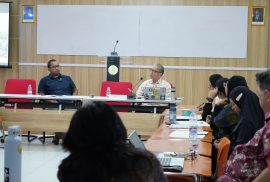
The Faculty of Cultural Sciences at Universitas Gadjah Mada hosted the Workshop on Oral History in Southeast Asia, organized by SEASREP Foundation in collaboration with Sejarah Lisan on 9–11 February 2026 at the FIB UGM Multimedia Room. The program was designed for postgraduate students and early-career researchers in Southeast Asia to strengthen their methodological, ethical, and conceptual capacities in oral history research, amid ongoing challenges in historical production often shaped by political interests and archival limitations.

The workshop was organized in response to the growing need to document life histories, testimonies, and field narratives that are frequently absent from official records. Across Southeast Asia, state violence, the silencing of archives and media, and the revision of historical narratives have significantly influenced how history is produced and disseminated.

In recent years, the region has witnessed efforts to reassess past violence in Indonesia, the rise of ethno-nationalist interpretations in Malaysia, the dominance of single-hero narratives in Singapore, and disputes over heritage sites along the Thailand–Cambodia border. These developments place marginalized voices at risk of being erased from collective memory.

Oral history and social history offer approaches to address these gaps. However, their practice entails methodological and ethical challenges, particularly when research touches upon politically and legally sensitive issues, trauma, and unequal access to information.

The workshop was designed to address the limited formal training in oral history available in the region. Many young researchers learn the method through practice without systematic preparation in interview design, interpretation, ethics, preservation, and public engagement. Through context-based training focused on Southeast Asia, participants were encouraged to understand oral history not merely as a technical tool, but as a critical concept and practice for reexamining how history is produced.

The three-day program adopted a phased approach. The first day explored the values and methodologies of oral history, including the development of interview guidelines and preparation for fieldwork challenges. The second day focused on interpretation, transcription, preservation, and publication, complemented by panel discussions and an oral history performance session to explore alternative narrative forms. The third day highlighted participants’ research presentations and discussions on ethical issues, power relations, and researchers’ responsibilities within complex socio-political environments.

Participants were expected to have an existing or planned research project based on oral history interviews. While there were no disciplinary restrictions, participants were required to actively share their experiences and engage in collective discussions.

Through a combination of lectures, panels, workshops, performances, and student presentations, the organizers emphasized active participation and community building. The workshop aimed to establish a network of oral history researchers in Southeast Asia and Japan committed to collaboration and non-exploitative research practices.

By the end of the program, participants were expected to understand the full stages of oral history research and its potential challenges, be able to design context-sensitive and ethically grounded interviews, and gain a deeper awareness of power relations and researcher positionality in fieldwork. They were also encouraged to view oral history as a means of critically engaging with dominant state narratives and expanding historical representation.

The workshop underscores the importance of strengthening academic capacity that upholds diversity of voices and social responsibility. Building a collaborative and reflective research community represents a strategic step toward ensuring that history is written not only by those in power, but also by those who have long remained at the margins of dominant narratives.

[Public Relations of FIB UGM, Candra Solihin]
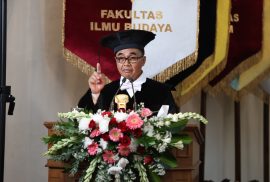
Prof. Dr. Agus Suwignyo Inaugurated as Professor of History at FIB UGM: Highlights the Dynamics of Knowledge in the Post-Independence Era

HEADLINESNews ReleaseSDGs 4: Quality Education Friday, 25 April 2025

Yogyakarta, 24/4/2025 — The Faculty of Cultural Sciences at Universitas Gadjah Mada (FIB UGM) officially inaugurated Prof. Dr. Agus Suwignyo, M.A. as a Professor in the field of History. The inauguration ceremony was held at the UGM Senate Hall and attended by members of the academic community, family, and guests from various institutions.

In his inaugural speech entitled “Has Political Independence Transformed the Concepts of Colonisation and Decolonisation of Knowledge in Higher Education?”, Prof. Agus Suwignyo asserted that Indonesia’s political independence has indeed transformed these concepts, although the changes have not unfolded in a linear or progressive manner.

“Eight decades after the Proclamation of Independence, we have yet to witness a thorough and systematic decolonisation of knowledge within our universities,” said Prof. Agus. He stressed that while Indonesia is politically independent, the domain of knowledge and its production continues to be overshadowed by unresolved colonial legacies.

In his speech, Prof. Agus also drew attention to how criticisms of academic institutions have emerged as early as the era of President Soekarno. He quoted Soekarno’s statement: “I detest all this juridical formalism; I detest all this intellectualism,” which reflects the tension between politics and intellectualism. A similar tension, according to Prof. Agus, resurfaced six decades later in President Prabowo Subianto’s remark: “There are these professors who are so smart, yet they disagree. I’m puzzled. Are they clever or foolish? I don’t know. Maybe their minds are sharp, but their hearts can’t feel.”

These two statements, though separated by 64 years, reveal an enduring scepticism toward the role of intellectuals in the political power structure. Prof. Agus argued that such scepticism hampers genuine efforts at decolonising knowledge, as academic independence is often constrained by ideological interests.

The ceremony concluded with congratulations and best wishes for Prof. Agus, in the hope that he will continue to contribute to the development of critical and timely historical scholarship, especially in advancing a more substantial decolonisation of knowledge in Indonesian academia.

[Public Relation Faculty of Cultural Sciences, Bulan Churniati]

Department of History National Seminar: Chinese-Javanese Cultural Hybridity in Indonesian History

HEADLINESNews ReleaseSDGs 4: Quality Education Wednesday, 12 February 2025

Yogyakarta, 11/2/2025 – The Department of History at Universitas Gadjah Mada will hold a national seminar titled ‘Chinese-Javanese Cultural Hybridity in Indonesian History.’ The event will take place in the Auditorium Room on the 7th floor of Soegondo Building, from 13.00 to 15.00 WIB. The seminar aims to explore the rich cultural diversity that has shaped Indonesian history, with a particular focus on the interaction between Chinese and Javanese cultures.

The seminar will feature three prominent speakers: Prof. Dr. Sugeng Priyadi, M.A., Prof. Dr. Bambang Purwanto, M.A., and Prof. Dr. Rustopo, M.A. Each speaker will present their unique perspective on the cultural hybridity that emerged from the historical interactions between Chinese and Javanese communities in Indonesia. This topic is particularly relevant in the context of the UN Sustainable Development Goals (SDGs), which emphasise the importance of cultural diversity and inclusion.

Following the presentations, there was a Q&A session where participants could interact with the speakers and delve further into the topics discussed. This interactive segment aimed to encourage dialogue and exchange of ideas among participants, thereby increasing understanding of cultural diversity in Indonesia.

The seminar is open to the public, and all interested individuals are invited to attend. This is a valuable opportunity for students, researchers, and anyone interested in Indonesian history and culture to gain insights from leading experts in the field. By participating in this seminar, participants will contribute to the broader discourse on cultural diversity and its significance in achieving the SDGs.

In conclusion, the seminar ‘Chinese-Javanese Cultural Hybridity in Indonesian History’ promises to be an enlightening event that highlights the importance of cultural diversity in shaping Indonesian identity. It serves as a reminder of the rich historical interactions that continue to influence contemporary society and the need to embrace and celebrate this diversity for a more inclusive future.

[Public Relation Faculty of Cultural Sciences UGM, Bulan Churniati]

Department of History UGM Organises Book Discussion on Yogyakarta’s Opium King: Memoirs of Kho Ho Sing 1823-1878

HEADLINESNews ReleaseSDGs 4: Quality Education Tuesday, 11 February 2025

Yogyakarta, 11/2/2025 – The Department of History, Faculty of Cultural Sciences, Universitas Gadjah Mada held a significant book discussion titled ‘The Opium King of Yogyakarta: Memoirs of Kho Ho Sing 1823-1878.’ The event took place in the Auditorium Room on the 7th floor of Soegondo Building, attracting a diverse audience interested in cultural history and the complexity of cultural diversity in Indonesia.

The discussion featured three prominent speakers: Dr Abdul Wahid, M.A., Dr Leonard C. Epafras, and Dr Sri Margana. Each speaker provided a unique perspective on the life and legacy of Kho Ho Sing, a pivotal figure in the history of Yogyakarta, whose memoirs reflect the hybrid cultural identity of the Chinese and Javanese communities in Indonesia.

Afterwards, the discussion was rounded off with a Q&A session, where participants had the opportunity to interact with the speakers. One of the interesting questions was about the relationship between Kho Ho Sing and the Sultanate of Yogyakarta. The speakers explained how Kho Ho Sing’s relationship with the sultanate reflects the intricate ties between different cultural groups in Yogyakarta.

The event not only highlighted the historical significance of Kho Ho Sing but also emphasised the broader theme of cultural diversity in Indonesia. It served as a reminder of the importance of recognising and celebrating the various cultural influences that have shaped this nation.

As part of the Sustainable Development Goals (SDGs), particularly in promoting cultural diversity, this discussion aimed to encourage a deeper understanding of Indonesia’s multicultural heritage. The speakers encouraged the audience to appreciate the rich cultural exchanges that have taken place throughout history.

In conclusion, the book discussion on ‘The Opium King of Yogyakarta: Kho Ho Sing’s Memoir 1823-1878’ was a successful event that brought together academics, students and cultural enthusiasts. The event provided valuable insights into the hybrid cultural identities that define Indonesia and emphasised the importance of preserving and promoting cultural diversity in contemporary society.

[Public Relation Faculty of Cultural Sciences UGM, Bulan Churniati]

FAREWELL LECTURE AT UGM: Area History in the Age of (De)globalization – a Retrospective and Prospective View

News ReleaseSDGs 3: Good health and well-beingSDGs 4: Quality EducationSDGs 8: Decent work and economic growth Thursday, 3 October 2024

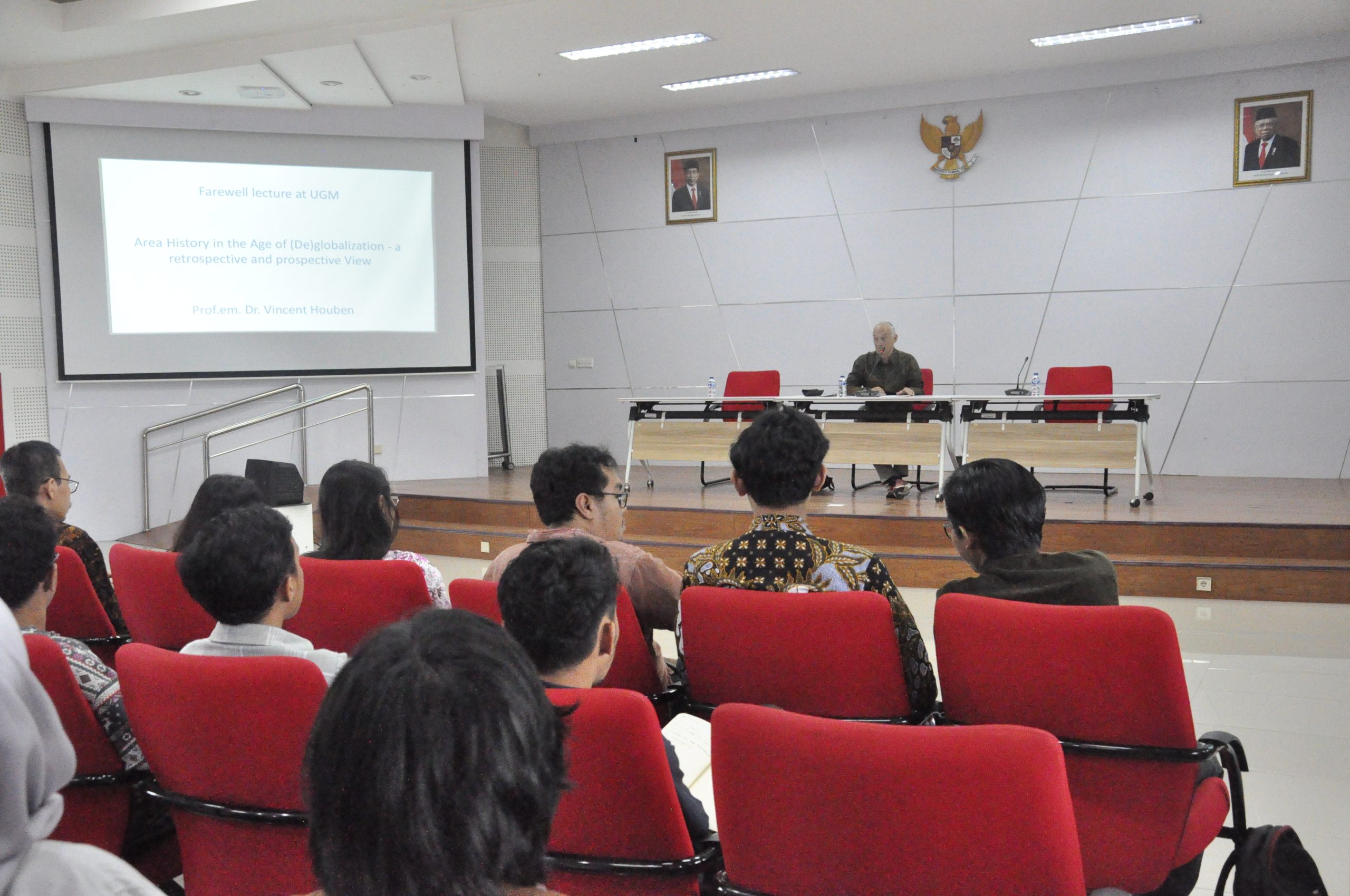
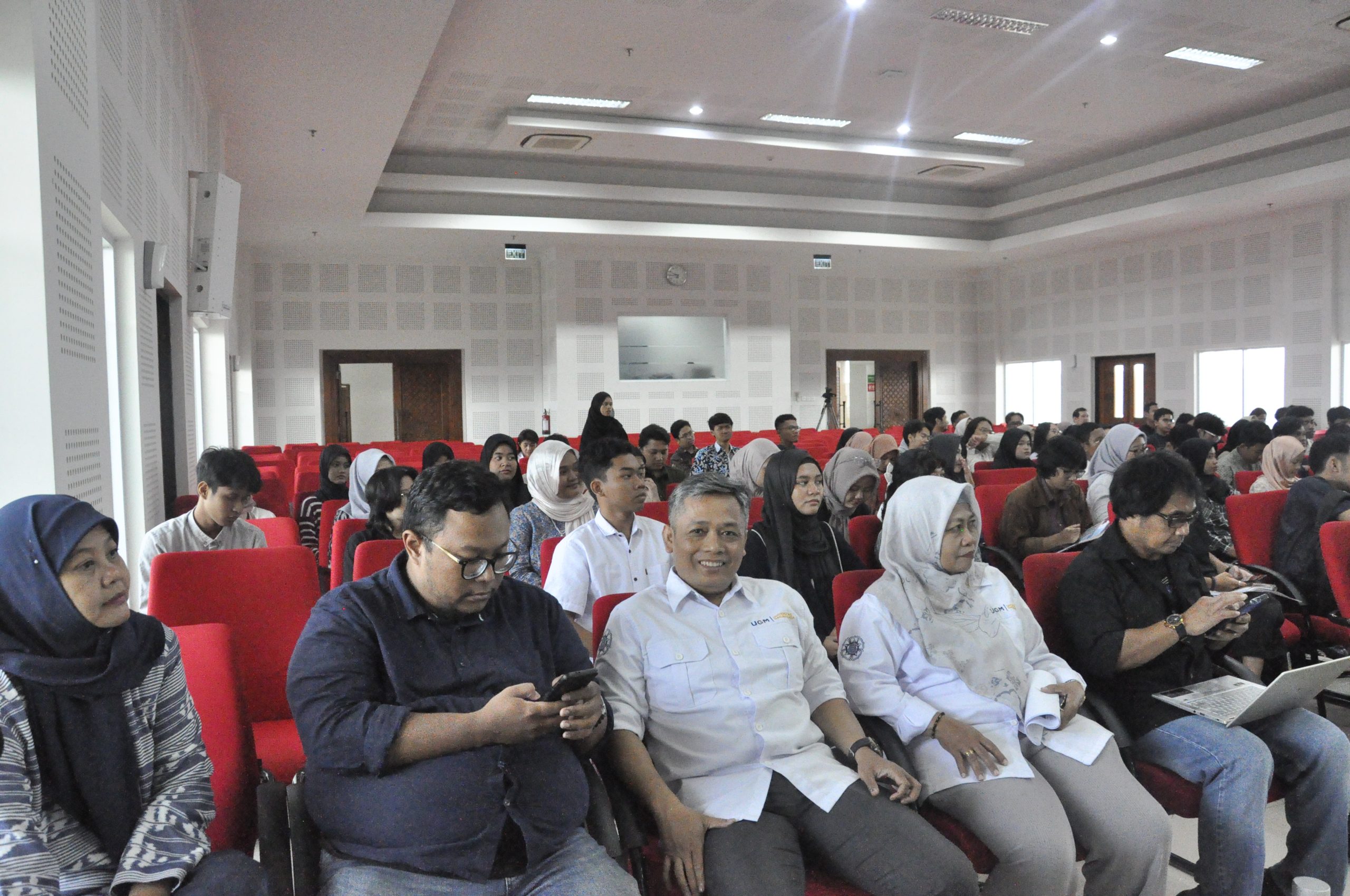
Yogyakarta, September 30, 2024 – Faculty of Cultural Sciences Universitas Gadjah Mada (UGM) held a farewell lecture for Prof. Dr. Phil. Vincent Houben, a distinguished professor of Southeast Asian history and society, on Monday morning at the 7th Floor Auditorium of Soegondo Building. The event was attended by students in general, especially UGM history students, as well as Prof. Houben’s fellow lecturers.

In a lecture entitled “Area History in the Age of (De)globalization – a Retrospective and Prospective View,” Prof. Houben discussed the dynamics of regional history in the context of globalization and deglobalization, highlighting how these changes affect historical understanding. In his presentation, he invited students to reflect on the historical journey that has been taken and the challenges that will be faced in the future.

Prof. Houben recounted his academic journey, which began with the study of Indonesian history and Indonesian language at Leiden University from 1980 to 1987. He then continued his career as a lecturer in Indonesian history at Leiden from 1986 to 1997, before entering the maturity phase of his career by becoming a professor at Passau University and Humboldt University until 2022.

This event was a valuable opportunity for students to learn directly from the experiences and insights of an academic who has contributed greatly to the study of Southeast Asian history. With the spirit of sharing knowledge, this farewell lecture is expected to motivate students to continue to explore and develop the field of history in Indonesia. FIB UGM will always remember Prof. Houben’s contribution and wish him all the best for his next journey in retirement and future projects.

12

Video UGM

[shtmlslider name='shslider_options']
Universitas Gadjah Mada

Faculty of Cultural Sciences
Universitas Gadjah Mada
Jl. Nusantara 1, Bulaksumur Yogyakarta 55281, Indonesia
   fib@ugm.ac.id
   +62 (274) 513096
   +62 (274) 550451

Work Units

  • Office of Journal & Publishing
  • INCULS
  • Information Technology and Database
  • Language Learning Center
  • Library Unit
  • Public Relations
  • Research

Facilities

  • Computer Laboratory
  • Gamelan
  • Guest House
  • Language Library
  • Library
  • Phonetics Library
  • Self Access Unit
  • Student Internet Centre

Importan Links

  • Journal of Humaniora
  • Subscriber Journal
  • Alumni Portal
  • Career
  • Departmens News
  • UGM Streaming

Contacts

  • Academic
  • Administration
  • Dean’s Office
  • Departments / Study Programs
  • Public Relations

© 2024 Faculty of Cultural Sciences Universitas Gadjah Mada

KEBIJAKAN PRIVASI/PRIVACY POLICY

[EN] We use cookies to help our viewer get the best experience on our website. -- [ID] Kami menggunakan cookie untuk membantu pengunjung kami mendapatkan pengalaman terbaik di situs web kami.I Agree / Saya Setuju