• About UGM
  • Academic Portal
  • IT Center
  • Library
  • Research
  • Webmail
  • Informasi Publik
  • English
    • Indonesia
Universitas Gadjah Mada Faculty of Cultural Sciences
Universitas Gadjah Mada
  • Home
  • Profile
    • History
    • Vision and Mission
    • Organizational structure
    • Administration
    • Staff
    • Faculty Members
  • Academic
    • Academic Calendar
    • Undergraduate Programs
      • Bachelor of Cultural Antrophology
      • Bachelor in Archaeolagy
      • Bachelor in History
      • Bachelor in Tourism
      • Bochetor in Korean Language and Culture
      • Bachelor in Indonesian Language and Culture
      • Bachelor in English
      • Bachelor in Arabic
      • Bachelor in Japanese Language and Culture
      • Bachelor in Javanese Language, Literature and Culture
      • Bachelor in French language and literature
    • Graduate Programs
      • Master in Antrophology
      • Master in ArchaeoIogy
      • Master in History
      • Master in Linguistics
      • Master in Literature
      • Master In American Studies
      • Master in Middle Eastern Cultural Studies
    • Post-Graduate Programs / S3
      • Doctor in Antropology
      • Doctor in American Studies
      • Doctor in Humanities
    • Student Service
  • KPPM
    • Research Information
    • Scientific / Academic Publications
    • Community Service
    • International Cooperation
    • Domestic Cooperation
  • Student Organizations
    • Student Executive Council
    • Semi-Autonomous Organizations
      • KAPALASASTRA
      • Christian Student Alliance
      • LINCAK
      • Saskine
      • Catholic Student Family
      • Dian Budaya
      • Sastra Kanuragan (sasgan)
      • Family of Muslim Cultural Sciences Students (KMIB)
      • Bejo Mulyo
    • Autonomous Organizations
      • Family of Anthropology Students (KEMANT)
      • English Department Student Association
      • Tourism Students Association (HIMAPA)
      • Family of Indonesian Literature Students (KMSI)
      • West Asian Literature Student Association (IMABA)
      • Association of Korean-Language Students (HIMAHARA)
      • Family of Regional Indonesian Literatures Students (KAMASUTRA)
      • The Family Body of History Students (BKMS)
      • The French Literature Students Association (HMSP)
      • Family of Anthropology Students
      • Japanese Student Association (HIMAJE)
  • Admission
    • Student Evaluation
  • Home
  • Anthropology Departement UGM
  • Anthropology Departement UGM
Arsip:

Anthropology Departement UGM

Call for Papers: Decolonizing Anthropology in a Multipolar World

News Release Thursday, 30 April 2026

Academics, researchers, and practitioners in the field of anthropology are invited to participate in a panel titled “Decolonizing Anthropology in a Multipolar World: Methodological Critiques from a Global South Gaze” as part of the 9th International Symposium of the Journal of Indonesian Anthropology, which will be held from August 4 to 7, 2026.

This panel seeks to open a space for critical reflection on how anthropology can be decolonized in an increasingly multipolar world. Its main focus is to challenge the methodological assumptions that have long dominated ethnographic research, particularly approaches that remain centered on Western perspectives. Through this forum, participants are encouraged to question established methodological frameworks while exploring more inclusive alternatives. A major highlight of this panel is the experience of researchers from the Global South conducting research in the Global North. This perspective is considered essential to enrich discussions on a more “pluriversal” anthropological methodology, an approach that acknowledges the diversity of viewpoints and knowledge production. By bringing these experiences to the forefront, the panel aims to shift the epistemic center toward a Global South perspective.

Through this call for papers, the organizers invite written contributions that offer a fresh reading of these issues. Topics may include cross-contextual field experiences, critiques of knowledge hierarchies, and methodological innovations rooted in local and collaborative perspectives.

This is an opportunity for researchers not only to share their findings but also to help shape the future direction of a more reflective anthropology. Submit your abstract and be part of this engaging panel. Abstracts must not exceed 300 words and should be submitted by May 18, 2026, at https://simposiumjai.ui.ac.id/.

Author: Public Relations of Doctoral Program in Anthropology
Call for Papers: Decolonizing Anthropology Beyond the Neoliberal University

News Release Thursday, 30 April 2026

We invite academics, researchers, and practitioners to participate in a discussion regarding the future of the anthropology discipline at the 9th International Symposium of the Journal of Indonesian Anthropology (ISJAI), which will take place from August 4 to 7, 2026. “Decolonizing Anthropology Beyond the Neoliberal University” is a reflective panel initiated by Aryo Danusiri from Universitas Indonesia and Elan Lazuardi from Universitas Gadjah Mada. This panel aims to address the most pressing challenges currently facing the field of anthropology.

Amid the rapid transformation of universities worldwide, which is increasingly driven by ranking systems, audits, accreditations, and publication pressures, Indonesian anthropologists and their global peers find themselves caught in a vortex of clashing knowledge frameworks and authorities. This panel seeks to dissect how these forces shape research and scholarship, alongside their impact on daily teaching practices, classroom dynamics, and the production of knowledge itself. Rather than simplifying the concept of “decolonization” to superficial curriculum adjustments, this discussion encourages deeper scrutiny. Participants are challenged to critically examine how established academic traditions, canonical texts, and methodological norms might still reproduce colonial and managerial structures. Concurrently, the panel creates room for new approaches rooted in community engagement, collaborative learning, and field-based pedagogy.

A compelling dimension of this panel is its emphasis on expanding learning spaces beyond conventional university settings. Contributors are encouraged to explore how formal, informal, and experimental classrooms can cultivate pluralistic ways of knowing that are grounded in Indonesia’s diverse social realities. Themes such as gender, intersectionality, and the frequently overlooked labor of translation across languages, cultures, and academic hierarchies are central to this discourse.

Contributors interested in this panel’s theme are invited to submit a 300-word abstract by May 18, 2026, via https://simposiumjai.ui.ac.id/. For further information, please contact: aryo.danusiri@ui.ac.id or e.lazuardi@ugm.ac.id.

Author: Public Relations of the Undergraduate Program in Cultural Anthropology

UGM Anthropology Strengthens Transnational Research and Supervision Network with University of Münster

News Release Thursday, 30 April 2026

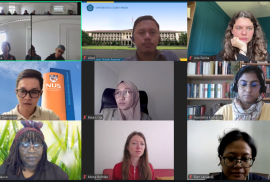
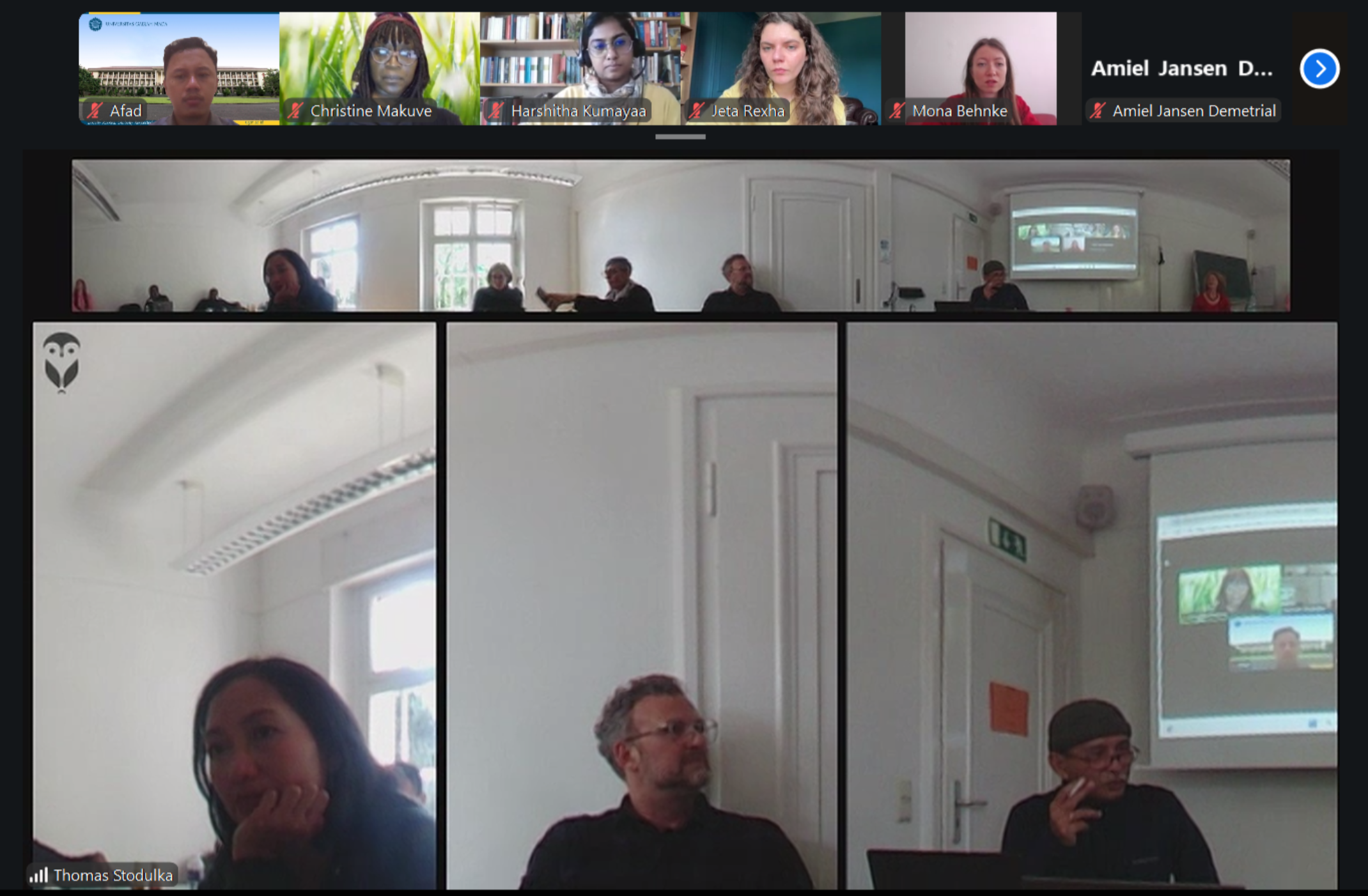
Yogyakarta, April 24, 2026 – The Department of Anthropology at the Universitas Gadjah Mada (UGM) Faculty of Cultural Sciences participated in an international workshop titled “Contesting Knowledge Formations: Towards a Transnational Research and Supervision Network.” Held in a hybrid format by the University of Münster, Germany, on Friday (24/4), the forum brought together researchers from Europe, Asia, and Africa. The primary agenda was to transform conventional doctoral supervision models into a more equitable, collaborative, and inclusive transnational network.

The event was officially opened by Professor Dr. Dorothea Schulz, Head of the Department of Social and Cultural Anthropology at the University of Münster, alongside Professor Dr. Thomas Stodulka, the program’s organizer and initiator. In their opening remarks, they emphasized the workshop’s vision of building a fair supervision network for doctoral students worldwide, transcending geographical and institutional boundaries. This two-day workshop serves as the inaugural activity for the network, funded by the DFG through the Cluster of Excellence scheme. The initiative involves the University of Münster alongside academics from Hekima University College (Dr. Norbert Litoing), Universitas Gadjah Mada (Professor Pujo Semedi and Dr. Elan Lazuardi), the National University of Singapore (Professor Kelvin Low and Dr. Noorman Abdullah), and the University of Birmingham (Professor Insa Nolte).

Immediately following the opening, the agenda proceeded to a PhD Roundtable session which ran until 1:00 PM Central European Summer Time (CEST). During this session, doctoral candidates from four universities presented their research projects to international moderators Dr. Victoria Kumala Sakti and Dr. Souleymane Diallo, both from the University of Münster. The discussion focused not only on scientific findings but also explored methodological challenges and aspirations for more effective cross-border supervision models.

Two doctoral students from the UGM Faculty of Cultural Sciences, Batari Oja and Mochammad Najmul Afad, presented their research at the forum. Oja presented her study, “Reproducing Chinese-Indonesian Cultural Identity in Klenteng,” while Afad shared his research titled “The Sinking of the North Coast of Java: A Historical Ethnography of the Relationship between Society and the Sea, 1800s–2020s.” Both students received constructive feedback from academics across the five participating universities to strengthen their dissertations.

As the evening session commenced in Indonesia, the discussions deepened. Professor Semedi led a group discussion inviting participants to formulate practical frameworks for international supervision. This session explored solutions for challenges related to distance, institutional disparities, and the equitable distribution of access to global research resources.

The session also identified several strategic ideas for developing a sustainable joint supervision network. Participants agreed that South–South–North collaborations require support structures that are not only technically robust but also sensitive to the local contexts of individual researchers.

The first day of the workshop concluded at 6:00 PM CEST with a reflection session led by Professor Nolte. She also outlined the strategic agenda for all network members moving forward. This meeting is expected to serve as a solid foundation for creating a transnational research ecosystem that is responsive to the dynamic knowledge challenges of the 21st century.

This workshop marks a significant step in strengthening the capacity of young Indonesian researchers on a global stage. The active involvement of UGM researchers is expected to bolster the position of Indonesian academics in the discourse on decolonizing knowledge and building equitable scientific partnerships between the Global South and the Global North.

Author: Mochamad Najmul Afad
Photos: Mochamad Najmul Afad & Pujo Semedi
Editor: Candra Solihin

Faculty of Cultural Sciences students undergo internships at BPK Region X: Contribution to Cultural Heritage Preservation and Cultural Promotion Objects in Yogyakarta and Central Java

HEADLINESNews ReleaseSDGSSDGs 17: Partnerships for the GoalsSDGs 4: Quality EducationSDGs 8: Decent work and economic growthSTICKY NEWSStudent's ActivitySustainable Development Goals Thursday, 2 January 2025

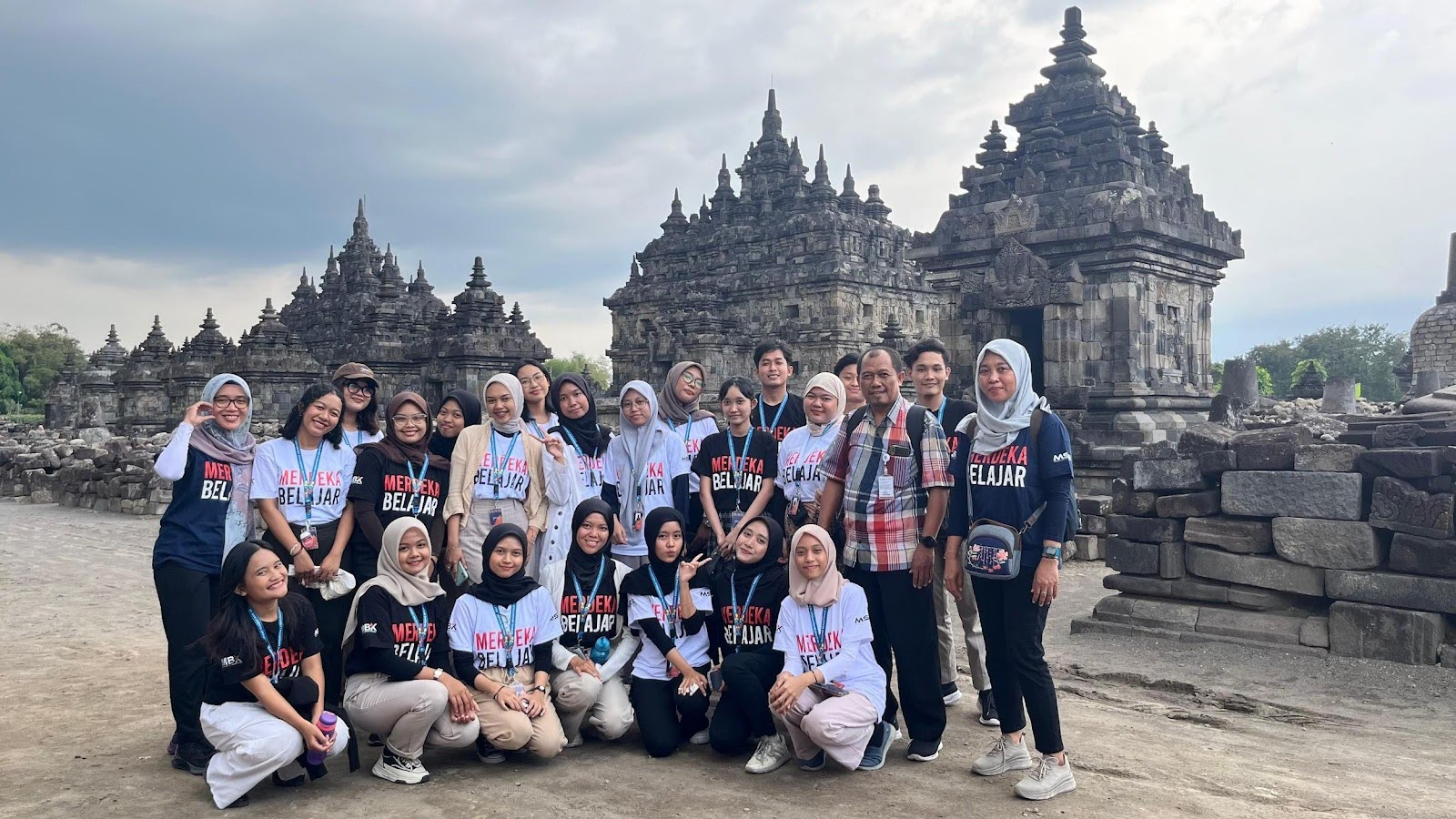
A total of six students of the Faculty of Cultural Sciences underwent a Certified Cultural Internship program placed at the Balai Pelestarian Kebudayaan region X (Yogyakarta – Central Java), this internship is part of the Certified Internship and Independent Study activities. They came from several study programs namely Cultural Anthropology (Amandha Eva, Gemma Padira, Via Vitarina, and Widya Pandega), History (Duhita Prananing Tyasayu), and Arabic Literature (Salma Shidqiyah). The six students were divided into two fields, namely Assistant Cultural Heritage Recorder and Assistant Recorder of Cultural Promotion Objects. For four months from September to December 2024, they had the opportunity to expand their knowledge related to cultural heritage preservation, starting from multi tagging analysis, documentation, the process of determining cultural heritage and intangible cultural heritage, data collection, to interviews.

Documentation of internship students while exploring Ijo Temple

Not limited to data collection, interns also have the opportunity to participate in the process of the Cultural Heritage Expert Team hearing and play a direct role in the formation of Regional Cultural Thoughts (PPKD). Before collecting data directly in the field, they were introduced to the Directorate General of Culture and its duties and functions, they also received briefings related to the types and legal protection of Cultural Heritage and Cultural Promotion Objects,

As a final project, they translated the cultural heritage into a magazine entitled Tracing the Charm of Ijo Temple: Civilization Above the Clouds, a “Cultify” podcast inviting KI Gondo Suharno, and flashcards containing several Objects of Cultural Advancement as learning media for students in kindergarten. In addition, they also worked on individual assignments in the form of scientific papers on critical reviews of various aspects of cultural heritage.

[Public Relation of Faculty of Cultural Sciences, Sandya Kirani]

Pursuing a Career in the Development Sector: A Reflection from Cultural Anthropology Alumni Sharing Session

HEADLINESNews ReleaseSDGSSDGs 4: Quality EducationStudent's ActivitySustainable Development Goals Thursday, 2 January 2025

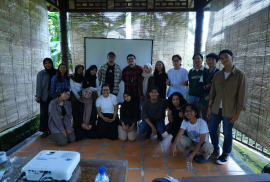
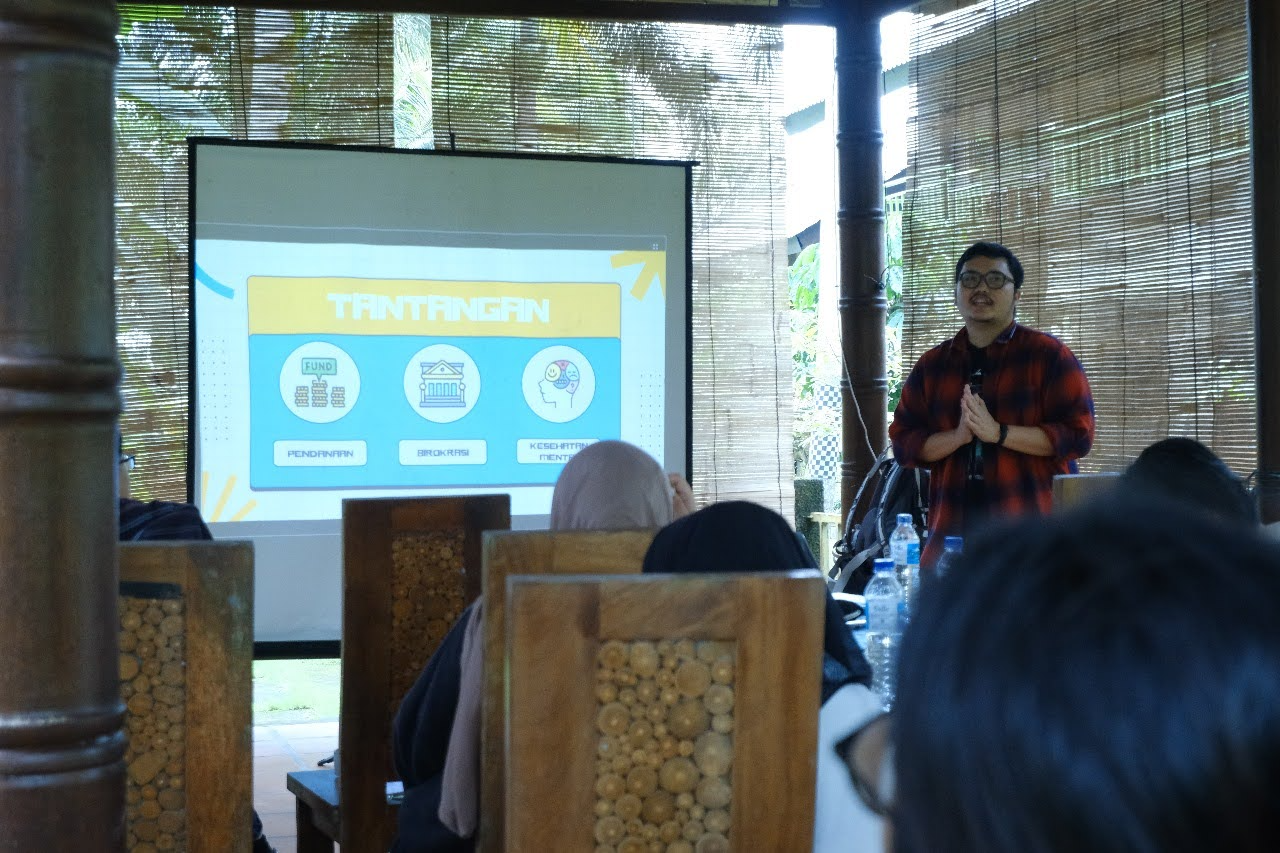
In order to support the sustainability of inclusive and sustainable development, it is important to understand how anthropology graduates can utilize their competencies to contribute to the achievement of Sustainable Development Goals (SDGs) A sharing session held at Sambi Resort on Friday, December 4, 2024 provided interesting insights related to the career journey of anthropology alumni in the development sector and the challenges faced. The event was presented by Reza Altamaha, an alumnus of the cultural anthropology undergraduate program class of 2016 who currently works as a Technical Assistant at Folur Project Indonesia.

With the title “From Theory to Action: Practitioners’ Experience in Driving Change,” Reza talked about the importance of knowledge and learning in building competence, both from a technical perspective and in understanding the various positions available in the development sector. According to him, career paths in this sector have clear stages, starting from entry level roles such as technical assistant and field coordinator, to senior positions such as project director or project advisor. In addition, there are also opportunities for those interested in working as freelancers or consultants.

Challenges in a Development Career

The main challenges faced by those working in the development sector, including in projects such as FOLUR, are funding and bureaucracy. Reza emphasized that communication with project heads is sometimes an obstacle, especially in coordination that involves many parties. In addition, mental health is also an important issue, given the high work pressure in this sector.

Photo of Reza during Sharing Session

Career development and extensive networking are also key in this sector. Reza emphasized the importance of deepening specialization through training and joining mentoring programs to get work-related guidance. In addition, volunteering and hands-on experience with social issues in Indonesia can help build sensitivity to the real conditions faced by society.

Reza also explained the importance of building a contextual CV or CV that is relevant to previous experience and the job being applied for. This is very important to show how academic background and practical experience can be integrated with the desired position in the world of work.

Another topic highlighted next was morality at work. Reza emphasized the importance of personal integrity and considered resigning from a job if moral values are threatened. The decision should be made carefully, considering factors such as financial condition and long-term career choices.

The event was closed with the distribution of one free book entitled “Shadow Play” by Sheri Lynn Gibbings by asking the best question. This was followed by a group photo with all participants.

[Public Relation of Faculty of Cultural Sciences, Sandya Kirani]

12

Video UGM

[shtmlslider name='shslider_options']
Universitas Gadjah Mada

Faculty of Cultural Sciences
Universitas Gadjah Mada
Jl. Nusantara 1, Bulaksumur Yogyakarta 55281, Indonesia
   fib@ugm.ac.id
   +62 (274) 513096
   +62 (274) 550451

Work Units

  • Office of Journal & Publishing
  • INCULS
  • Information Technology and Database
  • Language Learning Center
  • Library Unit
  • Public Relations
  • Research

Facilities

  • Computer Laboratory
  • Gamelan
  • Guest House
  • Language Library
  • Library
  • Phonetics Library
  • Self Access Unit
  • Student Internet Centre

Importan Links

  • Journal of Humaniora
  • Subscriber Journal
  • Alumni Portal
  • Career
  • Departmens News
  • UGM Streaming

Contacts

  • Academic
  • Administration
  • Dean’s Office
  • Departments / Study Programs
  • Public Relations

© 2024 Faculty of Cultural Sciences Universitas Gadjah Mada

KEBIJAKAN PRIVASI/PRIVACY POLICY

[EN] We use cookies to help our viewer get the best experience on our website. -- [ID] Kami menggunakan cookie untuk membantu pengunjung kami mendapatkan pengalaman terbaik di situs web kami.I Agree / Saya Setuju