
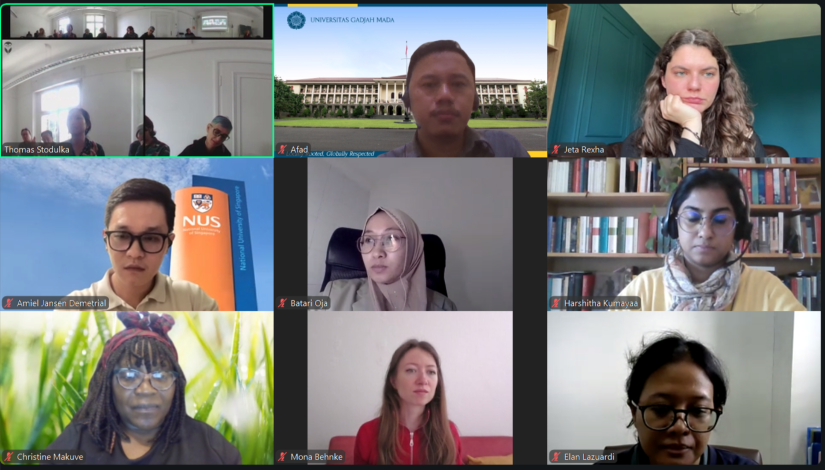
Yogyakarta, April 24, 2026 – The Department of Anthropology at the Universitas Gadjah Mada (UGM) Faculty of Cultural Sciences participated in an international workshop titled “Contesting Knowledge Formations: Towards a Transnational Research and Supervision Network.” Held in a hybrid format by the University of Münster, Germany, on Friday (24/4), the forum brought together researchers from Europe, Asia, and Africa. The primary agenda was to transform conventional doctoral supervision models into a more equitable, collaborative, and inclusive transnational network.
The event was officially opened by Professor Dr. Dorothea Schulz, Head of the Department of Social and Cultural Anthropology at the University of Münster, alongside Professor Dr. Thomas Stodulka, the program’s organizer and initiator. In their opening remarks, they emphasized the workshop’s vision of building a fair supervision network for doctoral students worldwide, transcending geographical and institutional boundaries. This two-day workshop serves as the inaugural activity for the network, funded by the DFG through the Cluster of Excellence scheme. The initiative involves the University of Münster alongside academics from Hekima University College (Dr. Norbert Litoing), Universitas Gadjah Mada (Professor Pujo Semedi and Dr. Elan Lazuardi), the National University of Singapore (Professor Kelvin Low and Dr. Noorman Abdullah), and the University of Birmingham (Professor Insa Nolte).
Immediately following the opening, the agenda proceeded to a PhD Roundtable session which ran until 1:00 PM Central European Summer Time (CEST). During this session, doctoral candidates from four universities presented their research projects to international moderators Dr. Victoria Kumala Sakti and Dr. Souleymane Diallo, both from the University of Münster. The discussion focused not only on scientific findings but also explored methodological challenges and aspirations for more effective cross-border supervision models.
Two doctoral students from the UGM Faculty of Cultural Sciences, Batari Oja and Mochammad Najmul Afad, presented their research at the forum. Oja presented her study, “Reproducing Chinese-Indonesian Cultural Identity in Klenteng,” while Afad shared his research titled “The Sinking of the North Coast of Java: A Historical Ethnography of the Relationship between Society and the Sea, 1800s–2020s.” Both students received constructive feedback from academics across the five participating universities to strengthen their dissertations.
As the evening session commenced in Indonesia, the discussions deepened. Professor Semedi led a group discussion inviting participants to formulate practical frameworks for international supervision. This session explored solutions for challenges related to distance, institutional disparities, and the equitable distribution of access to global research resources.
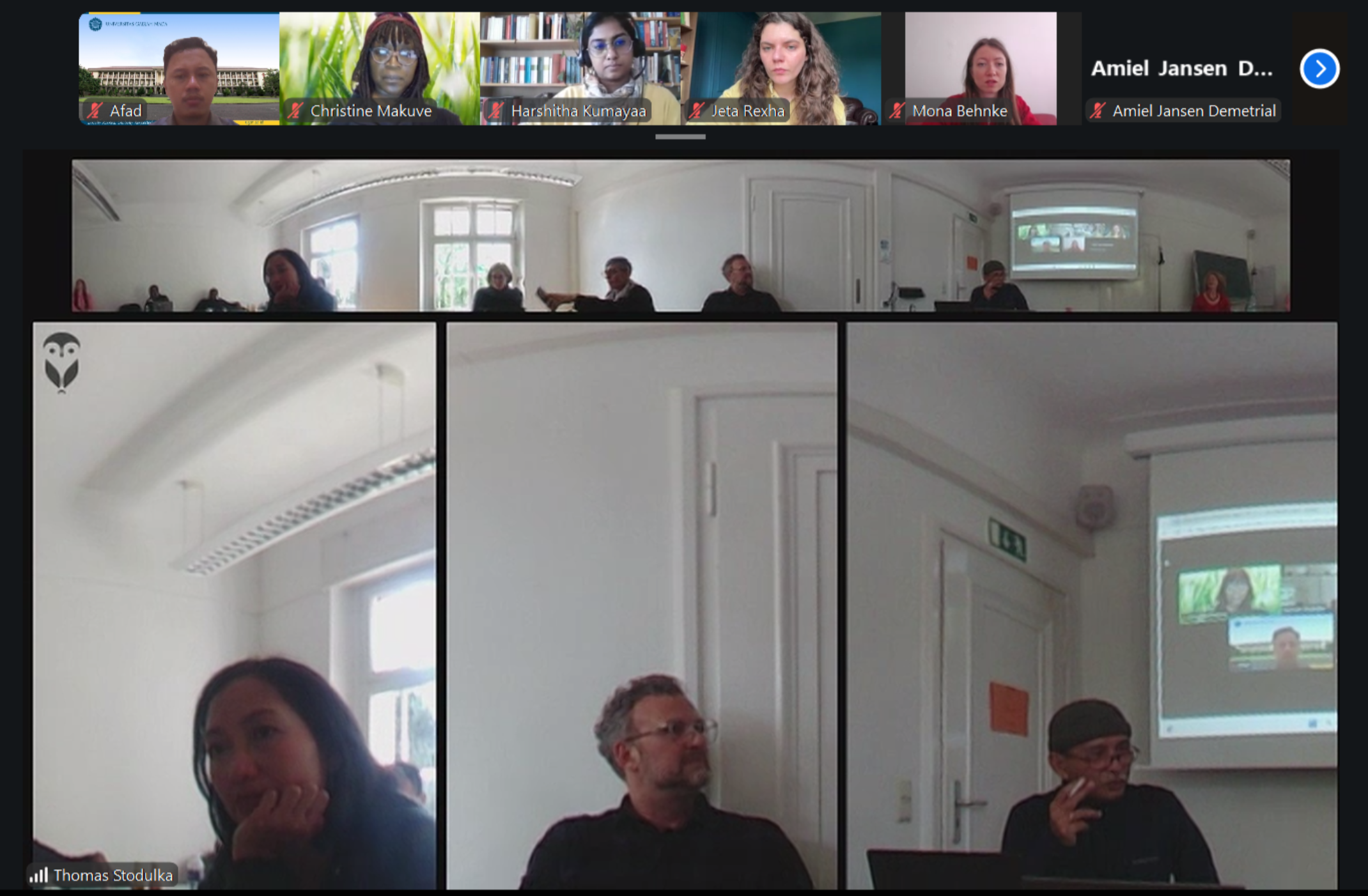
The session also identified several strategic ideas for developing a sustainable joint supervision network. Participants agreed that South–South–North collaborations require support structures that are not only technically robust but also sensitive to the local contexts of individual researchers.
The first day of the workshop concluded at 6:00 PM CEST with a reflection session led by Professor Nolte. She also outlined the strategic agenda for all network members moving forward. This meeting is expected to serve as a solid foundation for creating a transnational research ecosystem that is responsive to the dynamic knowledge challenges of the 21st century.
This workshop marks a significant step in strengthening the capacity of young Indonesian researchers on a global stage. The active involvement of UGM researchers is expected to bolster the position of Indonesian academics in the discourse on decolonizing knowledge and building equitable scientific partnerships between the Global South and the Global North.
Author: Mochamad Najmul Afad
Photos: Mochamad Najmul Afad & Pujo Semedi
Editor: Candra Solihin
