• About UGM
  • Academic Portal
  • IT Center
  • Library
  • Research
  • Webmail
  • Informasi Publik
  • English
    • Indonesia
Universitas Gadjah Mada Faculty of Cultural Sciences
Universitas Gadjah Mada
  • Home
  • Profile
    • History
    • Vision and Mission
    • Organizational structure
    • Administration
    • Staff
    • Faculty Members
  • Academic
    • Academic Calendar
    • Undergraduate Programs
      • Bachelor of Cultural Antrophology
      • Bachelor in Archaeolagy
      • Bachelor in History
      • Bachelor in Tourism
      • Bochetor in Korean Language and Culture
      • Bachelor in Indonesian Language and Culture
      • Bachelor in English
      • Bachelor in Arabic
      • Bachelor in Japanese Language and Culture
      • Bachelor in Javanese Language, Literature and Culture
      • Bachelor in French language and literature
    • Graduate Programs
      • Master in Antrophology
      • Master in ArchaeoIogy
      • Master in History
      • Master in Linguistics
      • Master in Literature
      • Master In American Studies
      • Master in Middle Eastern Cultural Studies
    • Post-Graduate Programs / S3
      • Doctor in Antropology
      • Doctor in American Studies
      • Doctor in Humanities
    • Student Service
  • KPPM
    • Research Information
    • Scientific / Academic Publications
    • Community Service
    • International Cooperation
    • Domestic Cooperation
  • Student Organizations
    • Student Executive Council
    • Semi-Autonomous Organizations
      • KAPALASASTRA
      • Christian Student Alliance
      • LINCAK
      • Saskine
      • Catholic Student Family
      • Dian Budaya
      • Sastra Kanuragan (sasgan)
      • Family of Muslim Cultural Sciences Students (KMIB)
      • Bejo Mulyo
    • Autonomous Organizations
      • Family of Anthropology Students (KEMANT)
      • English Department Student Association
      • Tourism Students Association (HIMAPA)
      • Family of Indonesian Literature Students (KMSI)
      • West Asian Literature Student Association (IMABA)
      • Association of Korean-Language Students (HIMAHARA)
      • Family of Regional Indonesian Literatures Students (KAMASUTRA)
      • The Family Body of History Students (BKMS)
      • The French Literature Students Association (HMSP)
      • Family of Anthropology Students
      • Japanese Student Association (HIMAJE)
  • Admission
    • Student Evaluation
  • Home
  • HEADLINES
  • page. 65
Arsip:

HEADLINES

UGM Students Create App to Increase Interest and Knowledge of History through Traveling Activities

HEADLINESNews ReleaseSDGs 17: Partnerships for the GoalsSDGs 4: Quality EducationSDGs 9: Industry innovation and infrastructure Thursday, 4 July 2024

Five UGM students have pioneered the development of a platform based on Historical Tourism App that offers historical tour packages with 4 destinations namely Yogyakarta, Magelang, Ambarawa, and Semarang consisting of 9 tour packages and 66 sites, called HISTARA which stands for Histori Nusantara. They are Aditya Firdaus (Tourism, Faculty of Arts) with members Franzseka Aurellia Oenang (Tourism, Faculty of Arts), Elyzabeth C. F. Roring (Tourism, Faculty of Arts), Irkam Asroni (Archaeology, Faculty of Arts), and Fanny Elizabeth Panjaitan (Information Engineering, Engineering). Aditya explained that the development of Hisatara started from the lack of interest of generation z in historical tourism, as seen from the news that often discusses the lack of interest in visiting historical tourist attractions. Therefore, they are trying to provide services like this in order to attract generation z.

Fanny added that HISTARA is designed to be attractive and modern, designed to fit the pockets of students, “Services and services can be fully accessed through the website www.histaratour.com and will also be available on google play store”, she said. Franzeska also added, “The HISTARA application also supports the realization of the values of sustainable development goals, namely SDGs No. 4 Quality Education, SDGs No. 9 Infrastructure, Industry and Innovation, and SDGs No. 17 Partnerships to Achieve Goals. HISTARA offers tour packages at student-friendly prices with a wide selection of exciting historical tour packages.

Author: Elyzabeth

Workshop by Prof. Dr. Pujo Semedi Hargo Yuwono, M.A. at the University of Cologne: Forest Conservation in Historical and Economic Contexts

HEADLINESNews ReleaseSDGs 11: Sustainable cities and communitiesSDGs 13: Climate Action Thursday, 27 June 2024

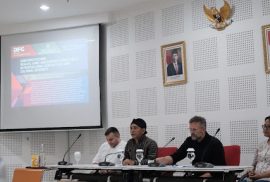
Cologne, Germany – Prof. Dr. Pujo Semedi Hargo Yuwono, M.A., a Professor of Anthropology at the Faculty of Cultural Sciences, Gadjah Mada University (UGM), recently gave a presentation at a workshop titled “Realising nature(s) with protected areas in Namibia and Germany – pasts, presents, and futures” held at the University of Cologne on June 20-21, 2024. The workshop was attended by the academic community of the University of Cologne.

In his presentation, Prof. Dr. Pujo Semedi discussed the success of German forests in maintaining environmental sustainability amidst capitalistic pressures and industrial development. German forests, covering 11.4 million hectares or 32.6% of the country’s area, serve as an example of fortunate forests due to their strict protection and resistance to arbitrary land conversion. This is in stark contrast to the condition of forests in many parts of the world that have suffered severe damage due to deforestation.

Prof. Dr. Pujo Semedi explained that in the 18th century, German forests experienced significant degradation. However, this period of difficulty actually spurred increased public awareness, formed new social relationships, and prompted the establishment of institutions focused on forest conservation. The current status of German forests is the result of a long history of environmental and social relationships deeply rooted in respect for nature, which has become part of German culture.

Additionally, Prof. Dr. Pujo Semedi emphasized that the sustainability of German forests is supported by beneficial capitalistic relationships related to industrialization in the manufacturing and agricultural sectors. He further discussed how capitalized German forests can benefit from the current socio-political tensions within German society and how this understanding can help explain why forests in other countries exposed to and placed in capitalistic relationships are not as fortunate as German forests.

Prof. Dr. Pujo Semedi’s presentation provided deep insights into how history, culture, and economy can play a role in forest conservation. The discussion sparked by this presentation is expected to inspire forest conservation efforts in other countries facing similar challenges. In conclusion, a holistic approach involving environmental awareness, social relationships, and economic benefits can be key to preserving forests worldwide.

Author: Afif Naufal Widiadi

Announcement of SIBUYA (BUdaYA Science breakfast)

ANNOUNCEMENTHEADLINES Wednesday, 19 June 2024

Good afternoon ladies and gentlemen,

informing one of the new programs at FIB UGM: SIBUYA, what’s SIBUYA?

SIBUYA (Sarapan pagi Ilmu BUdaYA), is a free and healthy breakfast program for students of the Faculty of Cultural Sciences UGM during the Final Semester Examination. Save the dates!

(June 19, 21, 24 and 27, 2024*)

Just show your KTM / (Exam card on that day) and enjoy the free breakfast!!!

Don’t run out … Let’s get it….

*Breakfast is available 200 servings every day

Starting at 06.30 until the place in front of Soegondo Building runs out

Hopefully the SIBUYA program is useful and adds to the enthusiasm of FIB students in taking UAS, and hopefully UAS runs smoothly, and we are always given health.

Thank you Mr. Dean and all of you for fasilitasinya

Linguistics Students from Faculty of Cultural Sciences UGM Must Speak Regional Language during Presentation

HEADLINESNews ReleaseSDGs 10: Reduced InequalitiesSDGs 16: Peace justice and strong institutionsSDGs 17: Partnerships for the GoalsSDGs 4: Quality Education Saturday, 15 June 2024

Linguistics study program is one of the master level study programs at the Faculty of Cultural Sciences, Universitas Gadjah Mada. The vision of the study program is to become a linguistics study program with superior quality, national insight, active and responsive to language problems and linguistic development, and able to become a reference study program in the Asia Pacific region in 2025. To achieve this vision, one of the missions carried out by the study program is to educate linguistics graduates with a master’s degree who are able to apply the linguistic knowledge they have obtained to solve various social problems and are able to dialogue and partner with foreign scholars in an effort to establish mutually beneficial intercultural cooperation. This is evidenced by the requirement for students to use their respective regional languages when presenting in Psycholinguistics courses.

Psycholinguistics is a field that studies how humans create and use language. Psycholinguistic theory views language as a means of conveying information, focusing on the view that language is the result of human habits. In essence, psycholinguistics seeks to explain how language structures are formed, used and understood in the process of communication. From this focus, a psycholinguistics lecturer at the Faculty of Cultural Sciences, Universitas Gadjah Mada, Drs. Tatang Hariri, M.A., Ph.D., took the initiative to utilize the condition where his students come from various regions to introduce their respective native languages. This aims to be a direct example of how different languages occur and so that local languages are preserved and not lost.

Home Away from Home: The Journey of Rina Kurana Awom, a Student from Papua Finding Comfort at UGM Yogyakarta

HEADLINESNews ReleaseSDG 4 (Quality Education)SDGs 10: Reduced InequalitiesSDGs 11: Sustainable cities and communitiesSDGs 17: Partnerships for the GoalsSDGs 5: Gender equality Wednesday, 5 June 2024

Rina Kurana Awom is a lecturer in the Department of Anthropology, Faculty of Literature and Culture at the University of Papua, Manokwari. Coming from the Biak tribe in West Papua, Rina is currently pursuing her PhD in Humanities (Study of Oral Traditions) at the Faculty of Cultural Sciences, Universitas Gadjah Mada. Her story reflects an academic journey filled with challenges and courage.

Rina’s decision to continue her studies at UGM is not her first time. After completing her undergraduate degree at Cenderawasih University in 2005, she immediately pursued her master’s degree at UGM, encouraged by her mother. Although initially intending to gain work experience, Rina received a scholarship from the Center for Education and Training for Women of the Evangelical Christian Church in Papua Land (P3W GKI), which further strengthened her academic journey to pursue her master’s degree. After successfully completing her master’s degree in 2008, Rina felt confident to return to UGM for her PhD due to its academic reputation and the comfort she felt in Yogyakarta. Additionally, the support of professional lecturers in her field of interest and the availability of the Humanities PhD program at FIB UGM were her main reasons.

After living in Yogyakarta, Rina feels very comfortable and safe. She has felt this comfort since her master’s studies in 2005. Although Yogyakarta is becoming more crowded, the friendliness of the locals and affordable living costs make her feel at home. Rina is glad to be able to worship peacefully in churches that are accessible. However, she experienced culture shock, especially in understanding directions and finding accommodation, as local people generally use terms like west, east, north, and south to show directions.

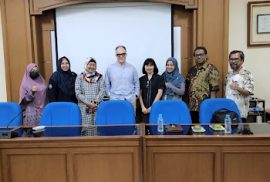
During her time at UGM, Rina focused more on academic activities. However, FIB UGM provided her with opportunities to participate in activities such as Focus Group Discussions (FGD) and local research with the Center for Policy Studies and Population (PSKK) UGM, enriching her academic experience.

Rina recommends FIB UGM as a study option for her friends in Papua. She sees many positive changes and developments at UGM, especially with the “Kampus Rakyat” slogan. The supportive campus environment, continuously evolving facilities, and competent lecturers make UGM an ideal place to pursue education. The affordable cost of living and the friendliness of the entire campus community add to the positive experience of studying at UGM.

With all the experiences and support she has received, Rina feels that Yogyakarta has become a “home away from home” for her, providing comfort and opportunities for growth amidst the challenges of living far from her hometown.

1…6364656667…91

Video UGM

[shtmlslider name='shslider_options']
Universitas Gadjah Mada

Faculty of Cultural Sciences
Universitas Gadjah Mada
Jl. Nusantara 1, Bulaksumur Yogyakarta 55281, Indonesia
   fib@ugm.ac.id
   +62 (274) 513096
   +62 (274) 550451

Work Units

  • Office of Journal & Publishing
  • INCULS
  • Information Technology and Database
  • Language Learning Center
  • Library Unit
  • Public Relations
  • Research

Facilities

  • Computer Laboratory
  • Gamelan
  • Guest House
  • Language Library
  • Library
  • Phonetics Library
  • Self Access Unit
  • Student Internet Centre

Importan Links

  • Journal of Humaniora
  • Subscriber Journal
  • Alumni Portal
  • Career
  • Departmens News
  • UGM Streaming

Contacts

  • Academic
  • Administration
  • Dean’s Office
  • Departments / Study Programs
  • Public Relations

© 2024 Faculty of Cultural Sciences Universitas Gadjah Mada

KEBIJAKAN PRIVASI/PRIVACY POLICY

[EN] We use cookies to help our viewer get the best experience on our website. -- [ID] Kami menggunakan cookie untuk membantu pengunjung kami mendapatkan pengalaman terbaik di situs web kami.I Agree / Saya Setuju