• About UGM
  • Academic Portal
  • IT Center
  • Library
  • Research
  • Webmail
  • Informasi Publik
  • English
    • Indonesia
Universitas Gadjah Mada Faculty of Cultural Sciences
Universitas Gadjah Mada
  • Home
  • Profile
    • History
    • Vision and Mission
    • Organizational structure
    • Administration
    • Staff
    • Faculty Members
  • Academic
    • Academic Calendar
    • Undergraduate Programs
      • Bachelor of Cultural Antrophology
      • Bachelor in Archaeolagy
      • Bachelor in History
      • Bachelor in Tourism
      • Bochetor in Korean Language and Culture
      • Bachelor in Indonesian Language and Culture
      • Bachelor in English
      • Bachelor in Arabic
      • Bachelor in Japanese Language and Culture
      • Bachelor in Javanese Language, Literature and Culture
      • Bachelor in French language and literature
    • Graduate Programs
      • Master in Antrophology
      • Master in ArchaeoIogy
      • Master in History
      • Master in Linguistics
      • Master in Literature
      • Master In American Studies
      • Master in Middle Eastern Cultural Studies
    • Post-Graduate Programs / S3
      • Doctor in Antropology
      • Doctor in American Studies
      • Doctor in Humanities
    • Student Service
  • KPPM
    • Research Information
    • Scientific / Academic Publications
    • Community Service
    • International Cooperation
    • Domestic Cooperation
  • Student Organizations
    • Student Executive Council
    • Semi-Autonomous Organizations
      • KAPALASASTRA
      • Christian Student Alliance
      • LINCAK
      • Saskine
      • Catholic Student Family
      • Dian Budaya
      • Sastra Kanuragan (sasgan)
      • Family of Muslim Cultural Sciences Students (KMIB)
      • Bejo Mulyo
    • Autonomous Organizations
      • Family of Anthropology Students (KEMANT)
      • English Department Student Association
      • Tourism Students Association (HIMAPA)
      • Family of Indonesian Literature Students (KMSI)
      • West Asian Literature Student Association (IMABA)
      • Association of Korean-Language Students (HIMAHARA)
      • Family of Regional Indonesian Literatures Students (KAMASUTRA)
      • The Family Body of History Students (BKMS)
      • The French Literature Students Association (HMSP)
      • Family of Anthropology Students
      • Japanese Student Association (HIMAJE)
  • Admission
    • Student Evaluation
  • Home
  • SDGs 9: Industry Innovation and Infrastructure
  • SDGs 9: Industry Innovation and Infrastructure
Arsip:

SDGs 9: Industry Innovation and Infrastructure

Inauguration of Professor Prof. Dr. Pujiharto, S.S., M.Hum. , Unpacking Postmodern Indonesian Literature

News Release Thursday, 16 April 2026

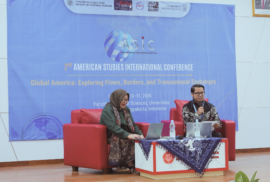
Yogyakarta, April 15, 2026 – The Faculty of Cultural Sciences, Universitas Gadjah Mada, has once again marked an academic milestone with the inauguration of Prof. Dr. Pujiharto, S.S., M.Hum. as a Professor in the field of literature. In his inaugural speech, he raised the theme of Postmodern Indonesian Literature.

In his presentation, Prof. Pujiharto explained that postmodernism can be understood as an intersection with modernism. Referring to the thoughts of Brian McHale, both are viewed as a form of poetics, namely a system in literature equivalent to the concept of an “-ism.” Poetics itself originates from the ideas of Aristotle, who viewed literature as a system with its own rules and characteristics.

Furthermore, he elaborated that the understanding of modern Indonesian literature cannot be separated from the concept of Indonesian identity, which is closely related to the nation-building project toward a modern Indonesia. In this context, the term “modern” has historical roots in Europe, marked by a shift from a theocentric to an anthropocentric worldview, as proposed by Jürgen Habermas. This indicates that the construction of modern Indonesian literature has inevitably been influenced by Western perspectives of modernity.

Entering the discussion of postmodern Indonesian literature, Prof. Pujiharto highlighted a fundamental shift from epistemological poetics, characteristic of modernism, to ontological poetics, which defines postmodernism. This shift is explained through the concept of “the dominant” by Roman Jakobson, emphasizing a change in the primary focus within the structure of literary works.

In the final part of his speech, Prof. Pujiharto connected the ontological plurality in postmodern literature with contemporary societal conditions. According to him, the postmodern era is marked by the dominance of information technology, giving rise to an information society characterized by multiple realities and perspectives. This phenomenon shows that literary works are not only reflections of their time but also serve as a medium to understand the complexities of modern and postmodern life.

Closing his speech, Prof. Pujiharto expressed his gratitude to all parties who contributed to the process of his professorship nomination until he was officially inaugurated through a ministerial decree.

This inauguration is not only a personal achievement but also contributes to strengthening Indonesian literary studies on a global scale. In line with this, the ideas presented support the achievement of the Sustainable Development Goals, particularly United Nations Goal 4 (Quality Education) through the advancement of knowledge, as well as Goal 9 (Industry, Innovation, and Infrastructure) in the context of the development of an information- and technology-based society.

[Public Relations of FIB UGM, Alma Syahwalani]

Writing as an Intellectual Homecoming: From the Classroom to the Public Sphere

News Release Tuesday, 14 April 2026

Amid the overwhelming flow of information, writing is often reduced to a mere technical skill—the ability to arrange words so they read smoothly. Yet in an academic context, writing is fundamentally an intellectual act: a way of thinking, responding, and ultimately taking a position in relation to reality.

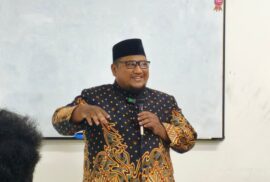
In a workshop organized by the Master’s Program in Literature at the Faculty of Cultural Sciences, Universitas Gadjah Mada, Prof. Dr. Aprinus Salam, M.Hum. emphasized that students should not remain confined to the classroom. Ideas, he argued, must be brought into the public domain—into mass media and shared spaces where discourse is exchanged and debated. “Students need to be present in the public sphere through their writing. It is also important to include institutional affiliation as a form of academic responsibility,” Aprinus noted.

There is often a noticeable gap between academia and the wider public. Overly technical language, ideas circulating within limited circles, and a tendency to write merely for assignments can strip knowledge of its broader relevance. This is where the essay finds its significance.

Unlike formal academic writing, essays do not demand rigid structures. They allow space for subjectivity, reflection, and even doubt. Paradoxically, this is precisely where their strength lies—in the courage to take a stance, not merely present data.

However, this freedom is not without direction. Essay writing still requires strategy. There is a long, often invisible process behind it: reading, experimenting, failing, and trying again. Prof. Aprinus illustrated that the journey of writing can be winding—from critiques that fail to “break through” to discovering more nuanced, even ironic ways of expressing ideas.

Writing, then, is not only about the end result, but about the process of finding one’s voice.

One approach offered is to use literary works as a lens for interpreting reality. Fiction is no longer seen as a separate world, but as another way of understanding the real one. From there, writers can build bridges between imagination and concrete social conditions.

Depth, too, becomes essential. In an age that favors speed and superficiality, there is a call to slow down and immerse oneself in a single idea, figure, or perspective until it is fully internalized—not to imitate, but ultimately to move beyond it.

In this session, there was no conventional Q&A. Instead, participants were invited to reflect directly through reviews of the essays they had previously submitted. The feedback may have seemed simple, yet it touched on fundamental aspects: appropriate length, fresh and relevant titles, and the courage to take a clear stance.

What may appear technical, in fact, conceals deeper questions: for whom do we write, and why?

When students begin to write for mass media, they are not merely practicing a skill—they are assuming a role. They step into the public sphere as thinking individuals who do not simply consume information, but actively produce it.

At this point, writing becomes more than just an academic exercise. It becomes a path home—a way for intellectuals to reconnect with the very reality that gave rise to them.

[Master of Arts in Literature, Khotibul Umam]

Scientific Article Writing Workshop Encourages High-Quality Academic Publications

News Release Sunday, 15 March 2026

Efforts to strengthen the academic capacity of students and researchers in producing high-quality scientific publications continue to be promoted on campus. The Master’s Program in Literature at the Faculty of Cultural Sciences, Universitas Gadjah Mada organized a “Scientific Article Writing Workshop: Strategies for Publishing in Reputable Journals” on Monday, February 23, 2026, in Room 709 Soegondo, Faculty of Cultural Sciences UGM.

The event, which took place from 12:30 to 15:00 WIB, featured a scholar in cultural and gender studies, Wening Udasmoro, as the main speaker. The workshop aimed to enhance the ability of young academics to write scientific articles capable of competing in reputable international journals.

In her presentation, Wening emphasized that academic publishing is not merely about techniques or quick strategies to get articles accepted by journals. According to her, writing in reputable journals is an important process for testing the intellectual quality of an academic before a broader scholarly community.

She stressed that academic publication should be viewed as a process of learning and intellectual development rather than simply fulfilling administrative academic requirements. Through publication, scholars’ ideas can be read and critically examined by researchers from various universities and countries, thereby enriching academic discourse.

During the session, participants were introduced to the importance of problematization in research. Wening explained that strong research generally begins with social or cultural phenomena that attract attention and generate scholarly questions.

She illustrated how contemporary phenomena—such as the display of luxurious lifestyles on social media—can become entry points for research relevant to current social dynamics. Researchers are encouraged not merely to find objects that have not yet been analyzed but to develop new perspectives that make their research academically significant.

In addition to formulating research problems, participants were also equipped with an understanding of the importance of a strong literature review. The workshop highlighted that scientific research must be built upon a dialogue with theories and previous studies.

Several theoretical frameworks can be used to analyze social phenomena, including the concept of conspicuous consumption, the symbolic value of goods (sign value), and modern consumer culture. These theoretical frameworks help researchers interpret social phenomena in a more critical and systematic way.

Through this training, it is hoped that postgraduate students will be able to produce scientific articles that not only meet academic standards but also contribute to the advancement of knowledge and provide solutions to various social issues.

The workshop was enthusiastically welcomed by the Master’s students in Literature who attended. The discussion was highly interactive, particularly when participants explored strategies for identifying research topics with novelty and academic relevance.

Through initiatives such as this, the Faculty of Cultural Sciences UGM seeks to strengthen a critical, reflective, and productive academic culture in producing high-quality scientific publications at both national and international levels.

Author: Khotibul Umam

FIB UGM Enters Its 8th Decade, Strengthening the Role of the Humanities in Building Civilization

HEADLINESNews Release Wednesday, 4 March 2026

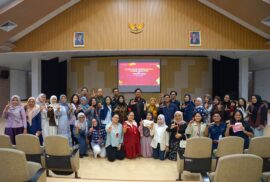
Yogyakarta, March 3, 2026 – The Faculty of Cultural Sciences at Universitas Gadjah Mada (FIB UGM) marks its 80th anniversary in 2026. This eight-decade journey serves as a moment of reflection as well as a source of hope to continue contributing to the advancement of the humanities. Carrying the theme “Eight Decades of Building Civilization,” this year’s Dies Natalis celebration reaffirms FIB UGM’s commitment to strengthening the role of the humanities in building a knowledgeable, inclusive, and culturally enriched society.

Reaching the age of 80 symbolizes a long journey marked not only by various academic achievements but also by challenges that have been successfully overcome together by the academic community. Over the past eight decades, FIB UGM has continued to develop as one of the main pillars for the advancement of humanities studies in Indonesia. Numerous important achievements have been attained, ranging from improved rankings in the QS World University Rankings and the EduRank ranking in literature, to outstanding study program accreditations and contributions through publications and news coverage that support the implementation of the United Nations Sustainable Development Goals (SDGs), particularly SDG 4: Quality Education and SDG 17: Partnerships for the Goals.

In terms of educational quality, FIB UGM has demonstrated remarkable achievements. In 2025, out of a total of 21 study programs within FIB UGM, 20 study programs received the “Excellent” (Unggul) accreditation from Badan Akreditasi Nasional Perguruan Tinggi (BAN-PT), while the Master’s Program in American Studies obtained an “Excellent” accreditation from Lembaga Akreditasi Mandiri Sosial Politik Administrasi dan Komunikasi (LAMSPAK). In addition, several study programs have gained international recognition through accreditation by global institutions. A total of 10 undergraduate programs and 2 master’s programs have been accredited by ACQUIN with an Unconditional rating, five undergraduate programs and one master’s program have received international certification from ASEAN University Network – Quality Assurance (AUN-QA), while the French Literature Program and the Master’s Program in Linguistics have obtained accreditation from Foundation for International Business Administration Accreditation (FIBAA) with an Unconditional rating.

FIB UGM’s achievements are also reflected in international rankings. Based on the QS World University Rankings by Subject, the Anthropology, Archaeology, and English Literature programs ranked first nationally, with global positions within the 101–170 and 151–200 ranges worldwide. In addition, the fields of Modern Languages, Arts and Humanities, and Linguistics have also been listed in the QS WUR. Meanwhile, in 2025, EduRank ranked the literature field of FIB UGM first among 68 literature education providers in Indonesia. This achievement is a particular source of pride for the Department of Language and Literature, which serves as a driving force for the development of literary studies within FIB UGM.

The commitment to the internationalization of education continues to be strengthened through various student mobility programs. FIB UGM actively promotes Student Exchange and Fast Track programs to broaden students’ academic experiences. In 2025, a total of 31 students participated in the Fast Track Program for the 2024–2025 period, 28 students joined exchange programs with other universities within Indonesia, 16 students took part in the Merdeka Student Exchange Program 2025–2026, and 64 students participated in International Student Exchange programs during the 2024–2026 period.

Through these achievements, FIB UGM reaffirms its commitment to continuously strengthening the quality of education, research, and community service. The eight-decade journey is expected to serve as a strong foundation for FIB UGM to continue contributing to the development of civilization through the humanities, while also supporting the global development agenda through the implementation of SDG 4 (Quality Education), SDG 9 (Industry, Innovation and Infrastructure) in strengthening research, and SDG 17 (Partnerships for the Goals) through international academic collaboration.

[Public Relations of FIB UGM, Alma Syahwalani]


UGM Campus Mosque Study Highlights the Strengthening of Human Resources and Quality Education as Pillars of National Independence

News Release Monday, 23 February 2026

Yogyakarta, February 20, 2026 – The Campus Mosque of Universitas Gadjah Mada (UGM) held a public lecture featuring Panut Mulyono, Rector of UGM for the 2017–2022 period, Professor of Chemical Engineering at the Faculty of Engineering UGM, and Chair of the Forum of Indonesian Rectors (2021–2022). In his lecture, Prof. Panut addressed the role of Natural Resources (SDA) and Human Resources (SDM) as fundamental capital for national development.

In his presentation, he emphasized that Indonesia is a nation blessed with a large population and abundant natural resources. However, these advantages must be managed properly through the development of high-quality human resources.

“With strong nationalism and a solid work ethic, we can achieve rapid progress,” he stated. He stressed that excellent human resources can only be produced through quality education.

Prof. Panut also highlighted the importance of learning from prominent national education figures such as Ki Hajar Dewantara, who laid the foundation of Indonesia’s educational philosophy. He further quoted Nelson Mandela, who once said that education is the most powerful weapon to change the world.

According to him, education plays a strategic role in determining a nation’s progress and independence. A country with a weak education system will struggle to advance and may even decline. Conversely, quality education serves as a tool to accelerate national progress, particularly in mastering science and technology and enhancing global competitiveness.

From an Islamic perspective, Prof. Panut connected the importance of education with Qur’anic teachings, particularly Surah Al-‘Alaq (1–5), which emphasizes the command to read and seek knowledge as part of worship to Allah SWT. He also referred to Surah Al-Mujadilah verse 11, which highlights the virtue of those who pursue knowledge.

Furthermore, he underlined the crucial role of higher education institutions in continuously improving and innovating within the higher education sector to achieve national independence more swiftly. Universities are expected not only to serve as centers of learning but also to generate tangible impacts in addressing socio-economic challenges, fostering inclusive innovation, and contributing more significantly to sustainable development.

This study aligns with the Sustainable Development Goals (SDGs), particularly SDG 4 (Quality Education), which promotes inclusive and equitable quality education; SDG 8 (Decent Work and Economic Growth), through the enhancement of human resource quality and work ethic; and SDG 9 (Industry, Innovation, and Infrastructure), by strengthening the mastery of science and technology to drive national advancement.

Through this forum, the UGM Campus Mosque serves not only as a spiritual space but also as an intellectual platform that fosters strategic ideas for Indonesia’s progress toward becoming an independent and globally competitive nation.

[Public Relation of FIB UGM, Alma Syahwalani]

123…20

Video UGM

[shtmlslider name='shslider_options']
Universitas Gadjah Mada

Faculty of Cultural Sciences
Universitas Gadjah Mada
Jl. Nusantara 1, Bulaksumur Yogyakarta 55281, Indonesia
   fib@ugm.ac.id
   +62 (274) 513096
   +62 (274) 550451

Work Units

  • Office of Journal & Publishing
  • INCULS
  • Information Technology and Database
  • Language Learning Center
  • Library Unit
  • Public Relations
  • Research

Facilities

  • Computer Laboratory
  • Gamelan
  • Guest House
  • Language Library
  • Library
  • Phonetics Library
  • Self Access Unit
  • Student Internet Centre

Importan Links

  • Journal of Humaniora
  • Subscriber Journal
  • Alumni Portal
  • Career
  • Departmens News
  • UGM Streaming

Contacts

  • Academic
  • Administration
  • Dean’s Office
  • Departments / Study Programs
  • Public Relations

© 2024 Faculty of Cultural Sciences Universitas Gadjah Mada

KEBIJAKAN PRIVASI/PRIVACY POLICY

[EN] We use cookies to help our viewer get the best experience on our website. -- [ID] Kami menggunakan cookie untuk membantu pengunjung kami mendapatkan pengalaman terbaik di situs web kami.I Agree / Saya Setuju