• About UGM
  • Academic Portal
  • IT Center
  • Library
  • Research
  • Webmail
  • Informasi Publik
  • English
    • Indonesia
Universitas Gadjah Mada Faculty of Cultural Sciences
Universitas Gadjah Mada
  • Home
  • Profile
    • History
    • Vision and Mission
    • Organizational structure
    • Administration
    • Staff
    • Faculty Members
  • Academic
    • Academic Calendar
    • Undergraduate Programs
      • Bachelor of Cultural Antrophology
      • Bachelor in Archaeolagy
      • Bachelor in History
      • Bachelor in Tourism
      • Bochetor in Korean Language and Culture
      • Bachelor in Indonesian Language and Culture
      • Bachelor in English
      • Bachelor in Arabic
      • Bachelor in Japanese Language and Culture
      • Bachelor in Javanese Language, Literature and Culture
      • Bachelor in French language and literature
    • Graduate Programs
      • Master in Antrophology
      • Master in ArchaeoIogy
      • Master in History
      • Master in Linguistics
      • Master in Literature
      • Master In American Studies
      • Master in Middle Eastern Cultural Studies
    • Post-Graduate Programs / S3
      • Doctor in Antropology
      • Doctor in American Studies
      • Doctor in Humanities
    • Student Service
  • KPPM
    • Research Information
    • Scientific / Academic Publications
    • Community Service
    • International Cooperation
    • Domestic Cooperation
  • Student Organizations
    • Student Executive Council
    • Semi-Autonomous Organizations
      • KAPALASASTRA
      • Christian Student Alliance
      • LINCAK
      • Saskine
      • Catholic Student Family
      • Dian Budaya
      • Sastra Kanuragan (sasgan)
      • Family of Muslim Cultural Sciences Students (KMIB)
      • Bejo Mulyo
    • Autonomous Organizations
      • Family of Anthropology Students (KEMANT)
      • English Department Student Association
      • Tourism Students Association (HIMAPA)
      • Family of Indonesian Literature Students (KMSI)
      • West Asian Literature Student Association (IMABA)
      • Association of Korean-Language Students (HIMAHARA)
      • Family of Regional Indonesian Literatures Students (KAMASUTRA)
      • The Family Body of History Students (BKMS)
      • The French Literature Students Association (HMSP)
      • Family of Anthropology Students
      • Japanese Student Association (HIMAJE)
  • Admission
    • Student Evaluation
  • Home
  • 2025
  • page. 82
Arsip:

2025

IASFM20 Activities: Day Two

News Release Thursday, 30 January 2025

Yogyakarta, 22/1/2025 – The second day of the 20th International Conference of the International Association for the Study of Forced Migration (IASFM20) was held on Wednesday, January 22, 2025 at the Faculty of Cultural Sciences, Gadjah Mada University, Yogyakarta. A series of agendas on the second day included public lectures, plenaries, various parallel and virtual sessions, and a welcome by the Resilience Development Initiative Urban Refugee Research Group (RDI UREF).
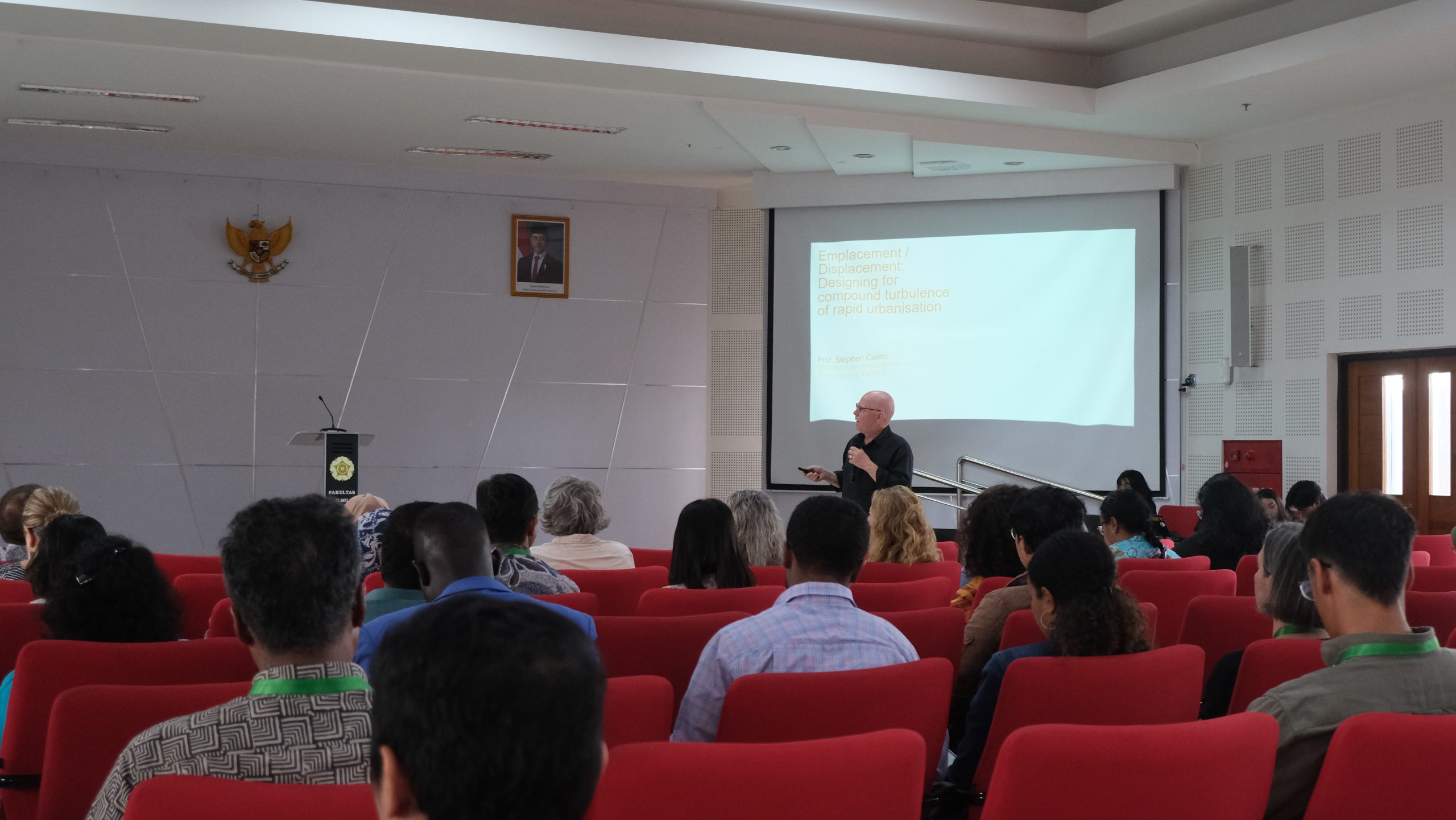
Department of Anthropology UGM Documentation

The first agenda on the second day was a public lecture entitled “The Urban Perspective on Forced Displacement” delivered by Prof. Dr. Stephen Cairns, an academic from Monash University Indonesia who has expertise in urban and architectural studies at the Soegondo’s Auditorium, Faculty of Cultural Sciences, Universitas Gadjah Mada. Prof. Dr. Stephen Cairns has conducted several studies focusing on the overlap between architecture, urbanism, and environmental sustainability with a strong emphasis on Southeast Asia. Prof. Cairns has contributed extensively to urban studies, particularly in understanding city dynamics in the context of climate change and sustainability.

Before continuing with the coffee break session, there was a plenary session with the topic “Reflection on the (Re)conception of Urban Displacement and the Right to the City”. The plenary session began with the presentation of the material “Cosmological Markings and Erasures: The Politics of Heritage, Gentrification and Displacement in Yogyakarta’s Kraton” which examines a study on the reconstruction of the fort wall around the Yogyakarta Kraton area. There are three main elements discussed in the delivery of presentations at this plenary. First, the reconstruction is related to economic development based on tourism. Second, planning and development have been characterized by observations to create and recreate the authenticity of the built environment. Third, the project appeals to the authorities because the Sultan, the sovereign leader of the Province and owner of the land that used to be palace grounds, is respected and known for his kindness in terms of public housing.

The second presentation was delivered by Marco Kusumawijaya, a professional and activist in the fields of architecture, environment, art, cultural heritage, planning, and urban development. He delivered a presentation titled “Gentrification + Suburbanization = Ab-urbanization” which discussed the population shift from depleting city centers to increasingly dense suburban areas in several small, medium, and large cities in Indonesia. The current trend, driven by neoliberal gentrification and suburbanization, is resulting in “ab-urbanization”, urbanization “away from the city” that is getting further and further away without boundaries.

In the last presentation, Prof. Dr.-Ing. Wiwandari Handayani, a professor at the Department of Urban and Regional Planning, Faculty of Engineering, Diponegoro University, explained that land subsidence in several major cities along the north coast of Java reaches 15 cm per year because it is very vulnerable to the impacts of climate change. According to him, this pressure is exacerbated by the rapid urbanization taking place in Java, where it is recorded by the Central Bureau of Statistics that 56.10% of Indonesia’s population inhabits Java in 2021. This double pressure exposes northern coastal residents to higher threats. However, despite these challenges, migration or mobility has not emerged as a solution to address environmental risks for communities living in coastal areas.

With the end of the series of public lectures and plenary sessions on the second day of the 20th IASFM International Conference at Gadjah Mada University, it is hoped that participants will increasingly realize the complexity of the challenges faced by communities affected by forced migration in urban areas. The various perspectives raised, ranging from gentrification, environmental change, to the right to the city, emphasize the need for a multidisciplinary approach in finding sustainable solutions. This conference is not only a space for exchanging ideas, but also a momentum to strengthen collaboration between academics, practitioners, and policymakers in designing more inclusive and equitable strategies for affected communities.

[Public Relation of Faculty of Cultural Sciences, Muhammad Ebid El Hakim]
IASFM20 Activities: Day One

News Release Thursday, 30 January 2025

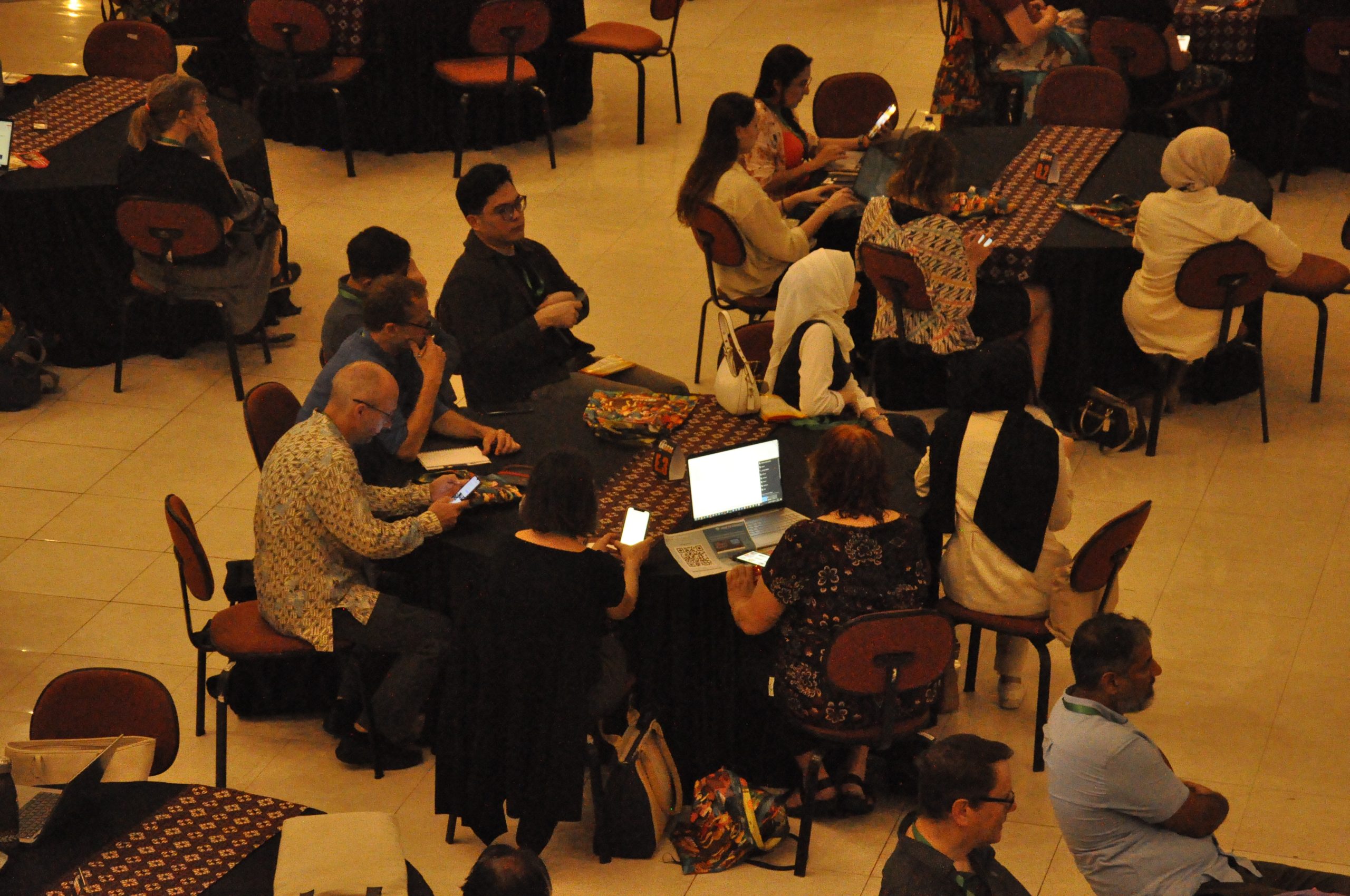
Yogyakarta, 21/1/2025 – The first day of the 20th International Conference of the International Association for the Study of Forced Migration (IASFM20) was held on Tuesday, January 21, 2025 at Gadjah Mada University in Yogyakarta. A series of agendas on the first day included welcome speeches, public lectures, plenary sessions, creative presentations, various parallel sessions, the IASFM General Meeting, and dinner together.

Department of Anthropology UGM Documentation

After the opening ceremony held at Grha Sabha Pramana, the agenda continued with a public lecture entitled “International Migration and Forced Displacement in the Southeast Asia Region” delivered by Prof. Dr. Tri Nuke Pudjiastuti, M.A., a professor specializing in national security and strategic issues in Indonesia. She holds a key position at the Center for Political Research, National Research and Innovation Agency (BRIN), where she has dedicated her career to migration, human security, and international relations, particularly in the Southeast Asia region. Prof. Pudjiastuti is a recognized expert in the field of forced migration and human smuggling. Her research significantly influences policy-making and academic discourse on these issues.

After a coffee break, there was a plenary session with the topic “Reflection on the Global Agenda for International Migration”. The plenary session began with the presentation of “Global Migration Agenda and Realities in Southeast Asia” which examined the relationship between the global migration agenda and the reality on the ground in Southeast Asia. The presentation investigated the impact of ASEAN migration and asylum policies (or lack thereof) on the protection of migrants’ rights, debates on order and disorder in the Southeast Asian context with a particular focus on how ASEAN dealt with migrants from Myanmar after the February coup and the issue of transnational repression. The presentation concludes with some thoughts on rethinking the implications of ASEAN’s lack of migration governance and commitment to migrant rights protection in the region. The presentation was delivered by Dr. Sriprapha Petcharamesree, an expert in human rights, ASEAN/SEA studies, migration, citizenship, business and human rights, and international relations.

The second presentation was delivered by Prof. Ranabir Samaddar, an Indian political scientist who serves as Distinguished Chair in Migration and Forced Migration Studies at the Mahanirban Calcutta Research Group. He presented the material with the title “Protection as Punishment” which in his explanation, Prof. Ranabir Samaddar revealed that the figure of refugees in certain situations represents illegal existence – which is “legally” deprived of rights, modes of mobility, and resources. Humanity in such conditions binds this illegal figure to the state for the continuation of illegal or semi-legal life. Sovereignty is restored by neoliberalism in this way. Digital and other modes of control are used. And, remember, here too, the reason at the beginning is always protection. Indeed, the global compact’s push to use new technologies to protect refugees and migrants is loud and clear.

In the last keynote, Dr. Susan Banki, an expert in political, institutional, and social affairs, explained the roots of and solutions to human rights violations and social justice abuses, delivering a keynote entitled “What Refugee Activists Contribute to Global Protection Regimes”. According to her, the global migration agenda, processes, and actors associated with it can be distinguished from the Global Protection Regime which unequivocally prioritizes the protection of migrant populations over the control of them. In this material, Dr. Susan Banki shows that migrants and refugees play an important role in forms of activism that advance the Global Protection Regime.

As the first day of the 20th IASFM International Conference at Universitas Gadjah Mada comes to a close, the in-depth discussions have opened a portal for further collaboration on regional and global forced migration issues. Participants, whether they are researchers or individuals interested in the topic, not only gained new insights from renowned experts, but were also invited to reflect on the role of policy, technology and activism in creating more inclusive and equitable protection systems for migrants and refugees.

[Public Relation of Faculty of Cultural Sciences, Muhammad Ebid El Hakim]
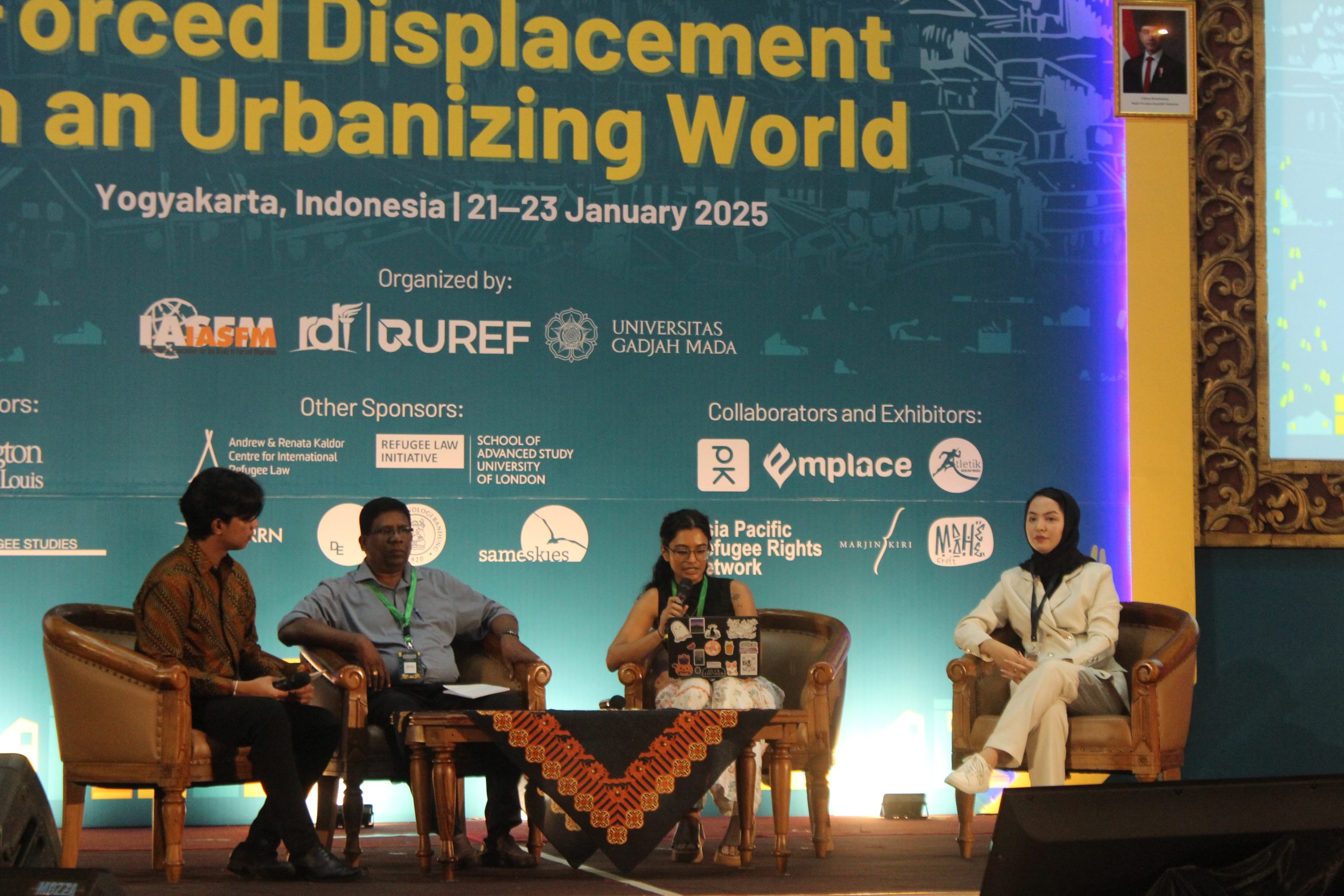
Department of Anthropology UGM Successfully Organized IASFM20 Activities

News Release Thursday, 30 January 2025

Yogyakarta, 23/1/2025 – The Department of Cultural Anthropology Universitas Gadjah Mada together with the Resilience Development Initiative Urban Refugee Research Group (RDI UREF) has successfully organized a series of activities for the 20th International Conference of the International Association for the Study of Forced Migration (IASFM). This prestigious conference was held for three days, from Tuesday, January 21, 2025 to Thursday, January 23, 2025.

The conference invites researchers and individuals with lived experience of (forced) migration, policy makers, and practitioners working with (forced) migrants to build a space for reflection, knowledge exchange, and discussion around forced displacement and urban management in the spirit of GCM, GCR, and NUA to improve urban planning and response to forced displacement and to strengthen the network of academics, practitioners, and decision-makers under IASFM to share knowledge and experiences on international forced displacement in urban contexts and to screen issues of concern for future collaborative research, especially in the context of the Asia Pacific Region.

The opening ceremony took place on the first day on the second floor of Grha Sabha Pramana Building which began with remarks from the Rector of Universitas Gadjah Mada, Prof. dr. Ova Emilia, M.Med.Ed., Sp.OG(K)., Ph.D., who also warmly welcomed the arrival of participants who came from all over the world. The next remarks were also delivered by the Director of Resilience Development Initiative Urban Refugee Research Group (RDI UREF), Dr. Elisabeth Rianawati, IASFM President, Dr. Veronica Fynn Bruey, and IASFM 20 Executive Chair, Dr. Akino Tahir and Dr. Realisa Darathea Masardi.

On the first day, there was also a presentation on international migration and forced displacement in the Southeast Asian region by the keynote speaker, Prof. Dr. Tri Nuke Pudjiastuti, M.A., professor of national security research and strategic issues in Indonesia. Then, a plenary session related to the “Global Agenda for International Migration” delivered by Prof. Ranabir Samaddar, Dr. Sripapha Petcharamesree, and Prof. Susan Banki also added to the insight of the participants who attended. In addition, various main programs were also held in the classroom of Soegondo Building, Faculty of Cultural Sciences, Universitas Gadjah Mada.

The next keynote speaker, Prof. Dr. Stephen Cairns, a professor from Monash University Indonesia who specializes in urban and architectural studies, also presented on urban perspectives on forced displacement on the second day. In addition, there was also a plenary session on “(Re)conception of Urban Displacement and the Right to the City” delivered by Prof. Wiwandari Handayani, Marco Kusumawijaya, and Dr. Tular Sudarmadi, M.A. Both agendas were held in the Auditorium Room on the 7th floor of Soegondo Building, Faculty of Cultural Sciences, Universitas Gadjah Mada.

On the third day, the last plenary session related to “Knowledge Production on Urban Displacement” was delivered by Prof. Itty Abraham, Dr. Silke Lange, and Baqir Bayani in the 7th floor Auditorium Room of Soegondo Building, Faculty of Cultural Sciences, Universitas Gadjah Mada. Then, in the same room, the second Ignite State agenda was also held which discussed “Refugee-Led Community Impact: Youth Stage”. In addition, various main programs were also held in the classroom of Soegondo Building, Faculty of Cultural Sciences, Universitas Gadjah Mada as on the first and second days.

By inviting researchers and individuals with experience in the field of forced migration, policy-making, and practitioners, the conference is expected to strengthen networks between academics, practitioners, and decision-makers, especially in the context of the Asia Pacific region.

[Public Relation of Faculty of Cultural Sciences UGM, Muhammad Ebid El Hakim]

Reviving the Spirit of Cultural Arts and Education in Jatingarang: Humanities student becomes Coordinator of “Jatingarang Fest”

HEADLINESNews ReleaseSDGs 2: Zero HungerSDGs 3: Good health and well-beingSDGs 4: Quality EducationStudent's Activity Thursday, 30 January 2025

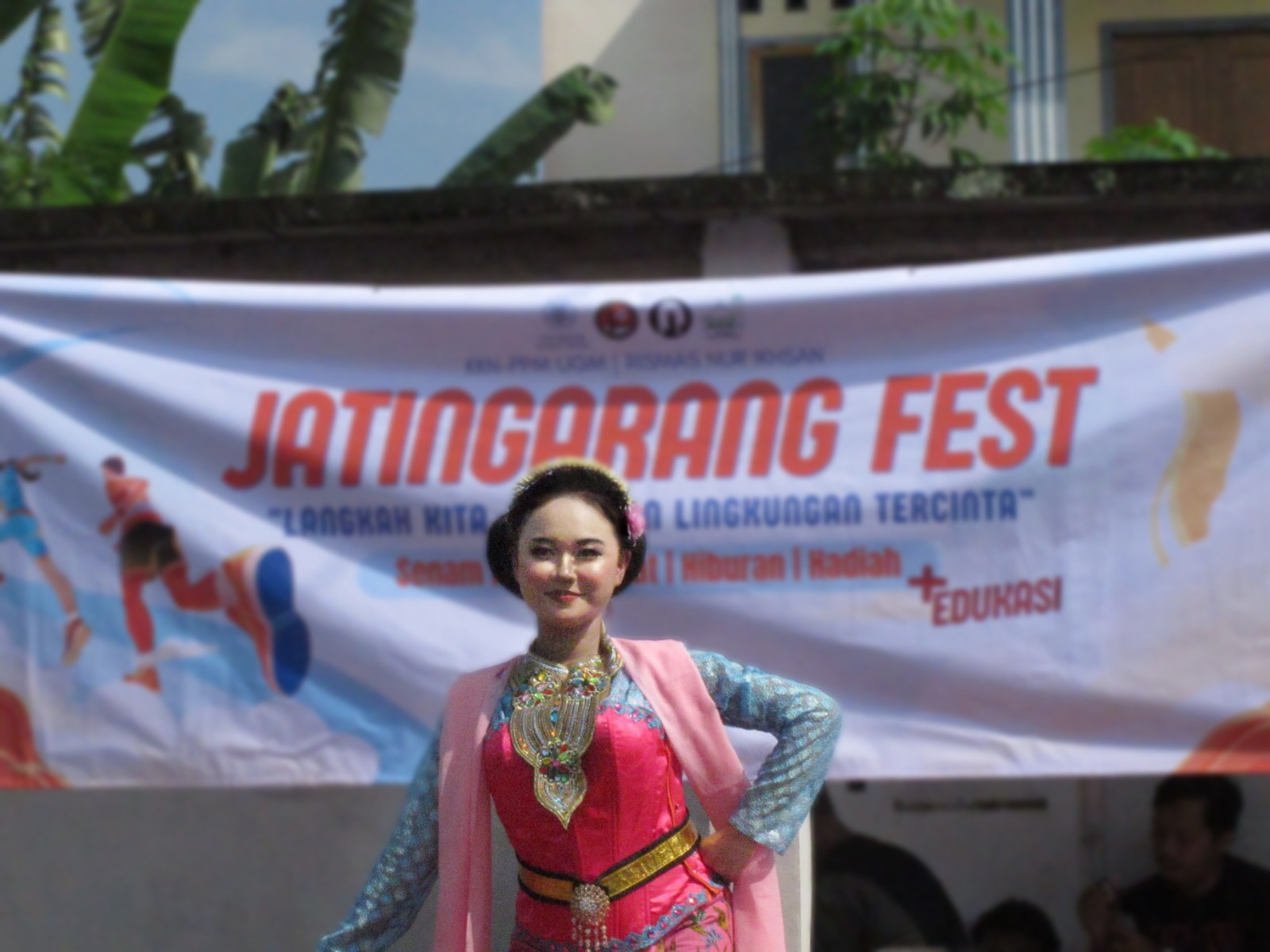
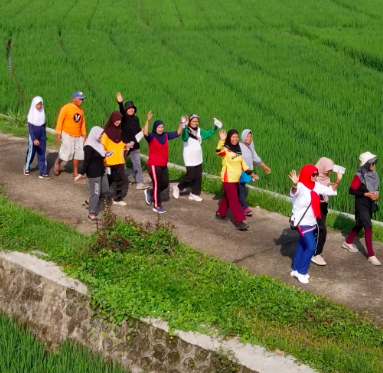
Yogyakarta, 30/1/2025 – Jatingarang Fest is a joint program with the theme Steps of Citizens, Preserve Beloved Culture which was held on Sunday, November 17, 2024 in Padukuhan Jatingarang Lor, Nanggulan, Kulon Progo Regency, Yogyakarta. Carrying the spirit of Sustainable Development Goals (SDGs), especially on points (3) health and welfare, (4) quality education, and (2) food security. This event is an effort to increase residents’ awareness of healthy living, education, and social resilience. This program was initiated by the UGM SCS-CEL team Period 3 Jatingarang Lor Sub Unit with field supervisor, Dr. drh. Yuli Purwandari Kristianingrum, MP, and in collaboration with the local rismas.

Coordinated by Bulan Churniati from the Faculty of Cultural Sciences (21/477380/SA/20963), the event consisted of Dhiaksa Adhi, Zahra Nabila, Andreas Niko from FKKMK, Austien Elsa from Pharmacy, Tenriola Ramizah from FISIPOL, and Adelia Rizqa from Psychology. The event included gymnastic activities, healthy walking or eco-trekking, children’s Gambang Suling dance performances and Banyumas Massatria dance, tourism education, anti-hoax, and food security which are a combination of several different work programs, especially interdisciplinary.

Source: KKN-PPM UGM Sub Unit Team Jatingarang Lor, Nanggulan, Kulon Progo, DIY

In the anti-hoax education, participants were invited to understand how to sort out the right information in a digital era full of fake news. The food security material emphasized the importance of applying simple tips for small, independent farms. Meanwhile, tourism education provides insights related to regional potential that can be developed. The event was also enlivened with dance entertainment and energizing door prizes. A total of 26 prizes were prepared thanks to well-planned management and sponsor support, with the grand prizes being standing fans, irons and premium pots. The excitement and joy was evident when the grand prize winners were announced, which was greeted with cheers from the community. Enthusiastic community participation added to the festivities, with more than a hundred people attending.

Overall, Jatingarang Fest went smoothly and was full of warmth. “It was unexpected that the enthusiasm of the residents exceeded our expectations, which initially planned for only one padukuhan, but it turned out that many from other padukuhans wanted to participate,” said Bulan as the person in charge of Jatingarang Fest. The success of this event shows the spirit of gotong royong and strong collaboration between KKN students, rismas, and residents of Jatingarang Lor, leading to the development of a more prosperous and sustainable community.

[Public Relations Faculty of Cultural Sciences UGM, Bulan Churniati]

MoA signing between Faculty of Cultural Sciences UGM and Chung Ang University

HEADLINESNews ReleaseSDGs 11: Sustainable cities and communitiesSDGs 17: Partnerships for the GoalsSDGs 4: Quality Education Thursday, 23 January 2025

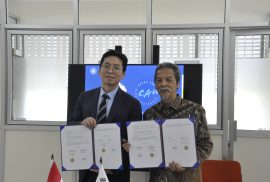
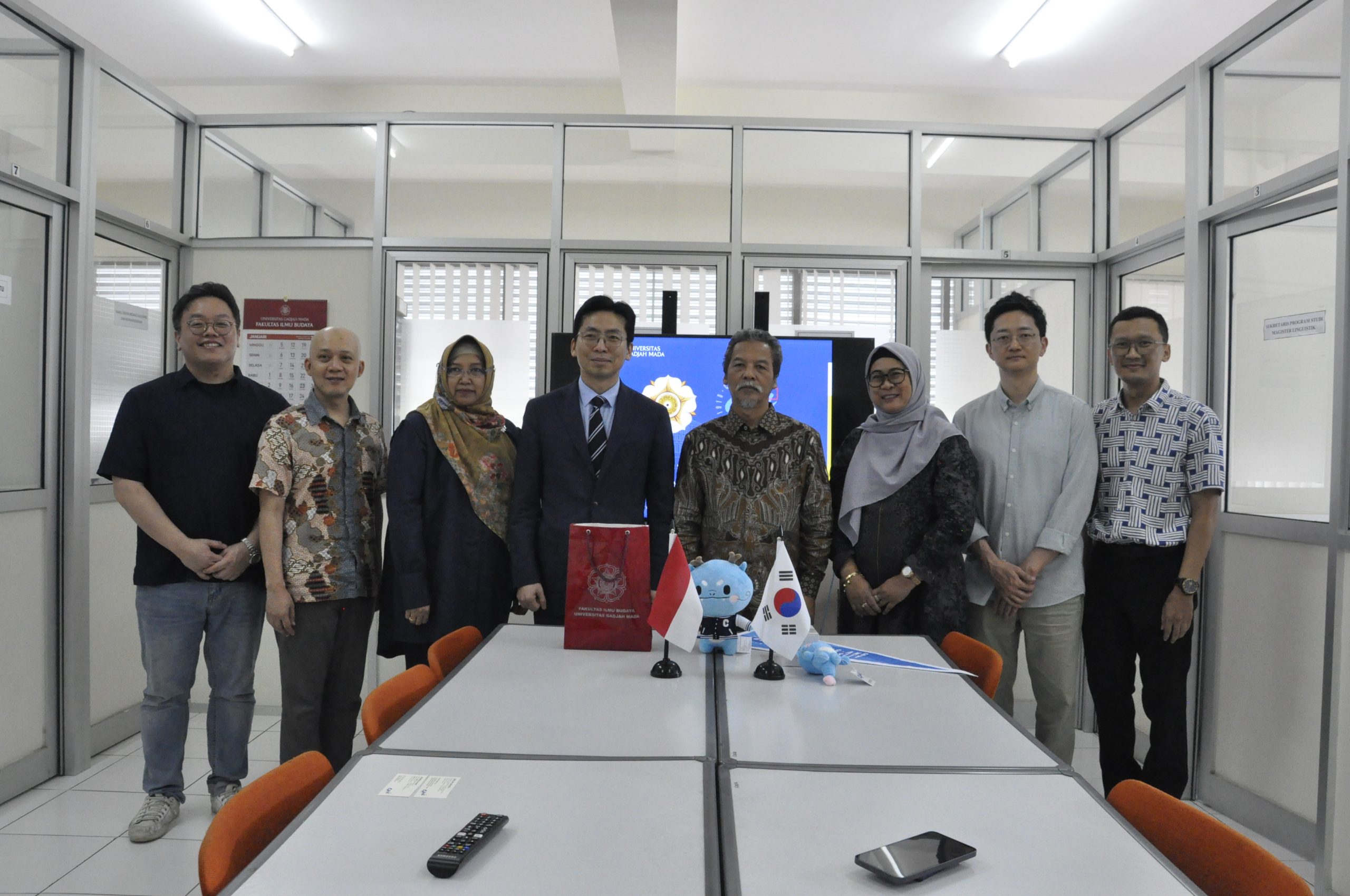
Yogyakarta, 21/1/2025 – The Faculty of Cultural Sciences (FIB) Universitas Gadjah Mada (UGM) held an important event marking the signing of a Memorandum of Agreement (MoA) with Chung Ang University. The ceremony took place at Margono Building, gathering representatives from both institutions to strengthen collaboration in education and cultural exchange.

The event began with the screening of a profile video featuring Chung Ang University, followed by videos of Gadjah Mada University and the Faculty of Humanities. The videos highlighted the strengths and unique offerings of each institution, emphasising their commitment to providing equal access to education and promoting community engagement. Following the video presentations, short presentations were delivered by representatives from both universities. Chung Ang University, known for its focus on artificial intelligence development, expressed its enthusiasm to collaborate with FIB UGM, which specialises in cultural studies and community service. The partnership aims to bridge the gap between technology and culture, encouraging a holistic educational experience for students.

The MoA signing was officiated by Prof. Dr. Setiadi, M.Si, Dean of the Faculty. He was accompanied by Dr Nur Saktiningrum, S.S., M.Hum., Vice Dean for Academic and Student Affairs, and Dr Mimi Savitri, M.A., Vice Dean for Research, Community Service, Cooperation, and Alumni. Their presence emphasised the importance of this collaboration in enhancing academic mobility and cultural exchange between the two institutions. Representatives from Chung Ang University consisted of three key figures, along with Suray Agung Nugroho, SS, MA, Ph.D., lecturer in Korean language and culture and Vice Dean for Finance, Assets, and Human Resources.

This cooperation is expected to encourage student mobility between FIB UGM and Chung Ang University, allowing students to experience diverse educational environments and cultural perspectives. By facilitating exchanges, both institutions aim to promote equal access to education and enhance the overall learning experience for their students.

This partnership is in line with the Sustainable Development Goals (SDGs), especially in terms of access to education and community engagement. By working together, FIB UGM and Chung Ang University are taking a significant step towards creating a more inclusive and equitable educational landscape. This MoA signifies a commitment not only to academic excellence but also to the development of cultural understanding and community service. Both universities are excited to explore new opportunities for joint research, student exchanges, and community projects.

Ultimately, the signing of the MoA between FIB UGM and Chung Ang University marks an important moment in strengthening international co-operation in education. The partnership is poised to create lasting impact for students, faculty, and the wider community, reinforcing the importance of equal access to education and cultural exchange in today’s increasingly connected world.

[Public Relations Faculty of Cultural Sciences UGM, Bulan Churniati]

1…8081828384

Video UGM

[shtmlslider name='shslider_options']
Universitas Gadjah Mada

Faculty of Cultural Sciences
Universitas Gadjah Mada
Jl. Nusantara 1, Bulaksumur Yogyakarta 55281, Indonesia
   fib@ugm.ac.id
   +62 (274) 513096
   +62 (274) 550451

Work Units

  • Office of Journal & Publishing
  • INCULS
  • Information Technology and Database
  • Language Learning Center
  • Library Unit
  • Public Relations
  • Research

Facilities

  • Computer Laboratory
  • Gamelan
  • Guest House
  • Language Library
  • Library
  • Phonetics Library
  • Self Access Unit
  • Student Internet Centre

Importan Links

  • Journal of Humaniora
  • Subscriber Journal
  • Alumni Portal
  • Career
  • Departmens News
  • UGM Streaming

Contacts

  • Academic
  • Administration
  • Dean’s Office
  • Departments / Study Programs
  • Public Relations

© 2024 Faculty of Cultural Sciences Universitas Gadjah Mada

KEBIJAKAN PRIVASI/PRIVACY POLICY

[EN] We use cookies to help our viewer get the best experience on our website. -- [ID] Kami menggunakan cookie untuk membantu pengunjung kami mendapatkan pengalaman terbaik di situs web kami.I Agree / Saya Setuju