• About UGM
  • Academic Portal
  • IT Center
  • Library
  • Research
  • Webmail
  • Informasi Publik
  • English
    • Indonesia
Universitas Gadjah Mada Faculty of Cultural Sciences
Universitas Gadjah Mada
  • Home
  • Profile
    • History
    • Vision and Mission
    • Organizational structure
    • Administration
    • Staff
    • Faculty Members
  • Academic
    • Academic Calendar
    • Undergraduate Programs
      • Bachelor of Cultural Antrophology
      • Bachelor in Archaeolagy
      • Bachelor in History
      • Bachelor in Tourism
      • Bochetor in Korean Language and Culture
      • Bachelor in Indonesian Language and Culture
      • Bachelor in English
      • Bachelor in Arabic
      • Bachelor in Japanese Language and Culture
      • Bachelor in Javanese Language, Literature and Culture
      • Bachelor in French language and literature
    • Graduate Programs
      • Master in Antrophology
      • Master in ArchaeoIogy
      • Master in History
      • Master in Linguistics
      • Master in Literature
      • Master In American Studies
      • Master in Middle Eastern Cultural Studies
    • Post-Graduate Programs / S3
      • Doctor in Antropology
      • Doctor in American Studies
      • Doctor in Humanities
    • Student Service
  • KPPM
    • Research Information
    • Scientific / Academic Publications
    • Community Service
    • International Cooperation
    • Domestic Cooperation
  • Student Organizations
    • Student Executive Council
    • Semi-Autonomous Organizations
      • KAPALASASTRA
      • Christian Student Alliance
      • LINCAK
      • Saskine
      • Catholic Student Family
      • Dian Budaya
      • Sastra Kanuragan (sasgan)
      • Family of Muslim Cultural Sciences Students (KMIB)
      • Bejo Mulyo
    • Autonomous Organizations
      • Family of Anthropology Students (KEMANT)
      • English Department Student Association
      • Tourism Students Association (HIMAPA)
      • Family of Indonesian Literature Students (KMSI)
      • West Asian Literature Student Association (IMABA)
      • Association of Korean-Language Students (HIMAHARA)
      • Family of Regional Indonesian Literatures Students (KAMASUTRA)
      • The Family Body of History Students (BKMS)
      • The French Literature Students Association (HMSP)
      • Family of Anthropology Students
      • Japanese Student Association (HIMAJE)
  • Admission
    • Student Evaluation
  • Home
  • UGM Yogyakarta
  • UGM Yogyakarta
Arsip:

UGM Yogyakarta

Guest Students Enrich Japanese Popular Culture Course

News Release Friday, 24 April 2026

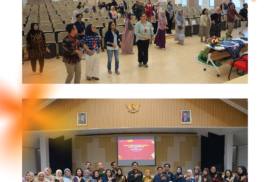
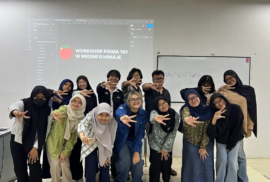
The Japanese Popular Culture course, organized by the Japanese Language and Culture Program, welcomed guest students to its class on Tuesday, April 7, 2026. The course instructor, Lili Febriyani, S.S., M.Si., invited students from various cohorts to provide reviews and feedback on the poster assignments prepared by each group.

The presence of guest students aims to enrich the learning process through a more diverse range of perspectives. In addition to receiving evaluations from the instructor and fellow students, participants also received input from students across different cohorts, including those who have and those who have not yet taken the course. Furthermore, this activity helped train students’ abilities to present ideas and respond to questions directly.

The guest students in attendance were from the 2021 and 2022 cohorts who had taken the Popular Culture course, as well as the 2024 and 2025 cohorts who had not yet taken the course. During this activity, the guest students observed and evaluated the posters presented by each group, focusing on design, clarity of content, and the ability to convey the material.

The posters created by each group explored the theme of the representation of heterosexual women in Japanese media, employing diverse visual approaches and analyses. Each group presented the content of their poster in detail and responded to questions posed by the visiting students.

At the end of the session, the visiting students shared their general impressions and evaluations through representatives from each class. This activity is expected to encourage students to be more open to diverse perspectives and to strengthen academic interaction among classes in the learning process.

Author: Nur Shafiyah Salma Putri

Call fot Paper: Decolonizing Anthropology in Multipolar World: Methodological Critiques from Global South Gaze.

News Release Friday, 24 April 2026

Para akademisi, peneliti, dan praktisi di bidang antropologi diundang untuk berpartisipasi dalam panel bertajuk “Decolonizing Anthropology in Multipolar World: Methodological Critiques from Global South Gaze” dalam rangkaian Simposium Internasional Jurnal Antropologi Indonesia ke-9 yang akan digelar pada 4–7 Agustus 2026. 

Panel ini mencoba membuka ruang refleksi kritis terhadap bagaimana antropologi dapat didekolonisasi dalam konteks dunia yang semakin multipolar. Fokus utamanya adalah menantang asumsi metodologis yang selama ini mendominasi penelitian etnografi, khususnya pendekatan yang masih berpusat pada perspektif Barat. Melalui forum ini, para peserta diajak untuk mempertanyakan ulang kerangka kerja metodologi yang dianggap mapan, sekaligus mengeksplorasi alternatif yang lebih inklusif. Salah satu sorotan utama panel ini adalah pengalaman peneliti dari Global Selatan yang melakukan riset di konteks Global Utara. Perspektif ini dinilai penting untuk memperkaya diskusi tentang metodologi antropologi yang lebih “pluriversal” yakni pendekatan yang mengakui keberagaman cara pandang dan produksi pengetahuan. Dengan menempatkan pengalaman tersebut di garis depan, panel ini berupaya menggeser pusat epistemik menuju perspektif Global Selatan. 

Melalui call for papers ini, penyelenggara mengundang kontribusi tulisan yang mampu menawarkan pembacaan baru atas persoalan tersebut. Topik dapat mencakup pengalaman lapangan lintas konteks, kritik terhadap hierarki pengetahuan, hingga inovasi metodologis yang berakar pada perspektif lokal dan kolaboratif.

Ini adalah kesempatan bagi para peneliti untuk tidak hanya berbagi temuan, tetapi juga ikut membentuk arah masa depan antropologi yang lebih reflektif. Kirimkan abstrak Anda dan jadilah bagian dari panel menarik ini, abstrak tidak lebih dari 300 kata dan dikirimkan paling lambat 18 Mei 2026 ke https://simposiumjai.ui.ac.id/. 

[Humas S3 Antropologi]

UGM Inaugurates Professor Mutiah Amini, Highlights Urban Social Space Realities

News Release Wednesday, 22 April 2026

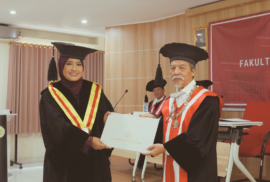
Yogyakarta, April 21, 2026 — Universitas Gadjah Mada (UGM) inaugurated Prof. Dr. Mutiah Amini, M.Hum. as a Professor of Urban Social History at the Faculty of Cultural Sciences. The inauguration ceremony took place at the UGM Central Building. In her inaugural speech, Professor Amini sharply highlighted the gap between city comfort slogans and the reality of the residents’ social spaces.

The inaugural speech was titled “History and Citizens’ Imagination of Urban Social Space.” Professor Amini chose the word imagination as a reflection of various social phenomena in contemporary public spaces. She observed the contradiction between citizens sleeping on the streets seeking pity and the various prideful acronyms used by city governments. Slogans such as Bandung Bermartabat, Semarang Kota ATLAS, Surabaya HEBAT, and Yogyakarta Berhati Nyaman seem to imply the promise of a perfect urban space to live in.

“From this reflection, it is certainly important to question whether the abbreviations or acronyms created remain the aspiration of all city governments and their citizens today. Or conversely, are these acronyms merely a fleeting hope?” explained Professor Amini, introducing her ideas.

Professor Amini then referred to Kartini’s thoughts on comfortable urban spaces as a starting point for discussion. She explained that the idea of creating urban social spaces since the colonial era has actually brought significant impacts that are often overlooked. Society became increasingly aware of the boundaries between private and public spaces. The function of the house during modernization slowly shifted. Houses often lost their role as a place that provides comfort and a sense of belonging for families, turning simply into a physical space for temporary shelter.

Citizens’ imagination of a healthy and harmonious urban space continued to live on until the independence period. The complexity of public spaces raised various concerns regarding floods, evictions, and domestic and industrial waste issues. The middle class then used mass media to voice their resignation through opinion columns. Pleas such as “where should we turn” commonly appeared in newspapers to demand the restoration of lakes and other public spaces.

Unlike the middle class, the urban poor had their own way of realizing their collective imagination. This group tended to occupy available urban public spaces. Professor Amini cited Lefebvre’s view, which refers to this phenomenon as a space of representation. The space is brought to life through various symbols and imaginations of its users as a way to manifest the collective memory of city residents.

Historical facts show that Kartini had thought about urban humanitarian and social issues comprehensively since over a century ago. Professor Amini emphasized this as an important self-criticism for modern-era historians. Kartini paved the way for the idea that all government policy formulations must be drafted carefully and comprehensively.

Urban regional planning ultimately demands a balance between physical development and the fulfillment of basic human rights. The provision of an aesthetic, harmonious, and healthy living space is an absolute prerequisite for the sustainability of a just social system. Inclusive spatial planning policies are the main key to ensuring a city is truly capable of supporting and adequately protecting all its residents for future generations.

[Public Relations of FIB UGM, Candra Solihin]

UPDATE ON THE NEW BOOK COLLECTION AT THE FIB UGM LIBRARY

News Release Monday, 20 April 2026

The Faculty of Cultural Studies Library is pleased to announce a new book collection designed to broaden horizons, foster a love of reading, and support the knowledge and personal development of our patrons. This collection includes 12 books in the field of literature and 8 books in the social sciences, all tailored to meet readers’ needs.

Literature Collection

The latest collection in the field of literature features 12 compelling novels by various national and international authors, spanning diverse genres and narrative perspectives, including contemporary fiction, historical and cultural novels, young adult novels, and literary works addressing social and humanitarian themes.

The 12 novel titles soon to be available at the Faculty of Cultural Sciences library are as follows:

  • As Long As The Lemon Tree Grow by Zoulfa Katouh
  • Semua Ikan di Langit by Ziggy Zezsyazeoviennazabrizkie
  • Seporsi Mie Ayam Sebelum Mati by Brian Khrisna
  • Aroma Karsa by Dee Lestari
  • Gadis Kretek by Ratih Kumala
  • Mosquerade Hotel by Keigo Higashino
  • Pasta Kacang Merah by Durian Sukegawa
  • 24 Jam Bersama Gaspar by Sabda Armandio
  • Kapan Nanti by Ziggy Zezsyazeoviennazabrizkie
  • Dawuk by Mahfud Ikhwan
  • Satine by Ika Natassa
  • Gelombang by Dee Lestari

Social Sciences Collection

The new book collection in the social sciences features 8 books covering history, social realities, leadership, and personal development. 

The 8 titles are as follows.

  • Ratu Adil Ramalan Jayabaya & Sejarah Perlawanan Wong Cilik
  • Hidup Bersama Raksasa Manusia Dan Pendudukan Perkebunan Sawit
  • Sejarah Korea Semenanjung Korea Dari Masa Ke Masa
  • Leaders Eat Last
  • Keseharian Orang Buangan Di Kamp Colonial
  • Dari Industri Gula Hingga Batik Pekalongan
  • Sila Ke-6: Kreatif Sampai Mati
  • Sukses Sidang Skripsi

The new book collection is now available and can be accessed through the library’s circulation services starting in April 2026. Detailed information regarding titles, authors, and classification numbers can be viewed through the Open Access Catalog Online (opac.lib.ugm.ac.id). 

The library invites all patrons to utilize this latest book collection as a source of reading, learning, and inspiration. Come on, let’s go to the library!

 Author: Arifah Nur F.

Practical Field Learning at Ijo Temple as a Method in Environmental Archaeology Learning

News Release Monday, 20 April 2026

Archaeology students took part in a field study for the Environmental Archaeology course at Candi Ijo on April 11, 2026. This activity aimed to introduce students to the relationship between archaeological remains and the surrounding environment, including aspects such as landscape, topography, and spatial use. Through direct observation and hands-on practice on site, students were able to understand how natural conditions are connected to human activities in the past.

Drs. Jarwo Susetyo Edy Yuwono, M.Sc., the course lecturer, also accompanied the field study. With this guidance, students were able to apply the knowledge they had learned in class in a real-world setting. In addition to providing practical experience, the field study helped strengthen students’ observation and analytical skills within the context of field-based archaeological research.

Author: Jovinka Aldinova Kiranamurti
Photo: Muhammad Irsyad

123…37

Video UGM

[shtmlslider name='shslider_options']
Universitas Gadjah Mada

Faculty of Cultural Sciences
Universitas Gadjah Mada
Jl. Nusantara 1, Bulaksumur Yogyakarta 55281, Indonesia
   fib@ugm.ac.id
   +62 (274) 513096
   +62 (274) 550451

Work Units

  • Office of Journal & Publishing
  • INCULS
  • Information Technology and Database
  • Language Learning Center
  • Library Unit
  • Public Relations
  • Research

Facilities

  • Computer Laboratory
  • Gamelan
  • Guest House
  • Language Library
  • Library
  • Phonetics Library
  • Self Access Unit
  • Student Internet Centre

Importan Links

  • Journal of Humaniora
  • Subscriber Journal
  • Alumni Portal
  • Career
  • Departmens News
  • UGM Streaming

Contacts

  • Academic
  • Administration
  • Dean’s Office
  • Departments / Study Programs
  • Public Relations

© 2024 Faculty of Cultural Sciences Universitas Gadjah Mada

KEBIJAKAN PRIVASI/PRIVACY POLICY

[EN] We use cookies to help our viewer get the best experience on our website. -- [ID] Kami menggunakan cookie untuk membantu pengunjung kami mendapatkan pengalaman terbaik di situs web kami.I Agree / Saya Setuju