• About UGM
  • Academic Portal
  • IT Center
  • Library
  • Research
  • Webmail
  • Informasi Publik
  • English
    • Indonesia
Universitas Gadjah Mada Faculty of Cultural Sciences
Universitas Gadjah Mada
  • Home
  • Profile
    • History
    • Vision and Mission
    • Organizational structure
    • Administration
    • Staff
    • Faculty Members
  • Academic
    • Academic Calendar
    • Undergraduate Programs
      • Bachelor of Cultural Antrophology
      • Bachelor in Archaeolagy
      • Bachelor in History
      • Bachelor in Tourism
      • Bochetor in Korean Language and Culture
      • Bachelor in Indonesian Language and Culture
      • Bachelor in English
      • Bachelor in Arabic
      • Bachelor in Japanese Language and Culture
      • Bachelor in Javanese Language, Literature and Culture
      • Bachelor in French language and literature
    • Graduate Programs
      • Master in Antrophology
      • Master in ArchaeoIogy
      • Master in History
      • Master in Linguistics
      • Master in Literature
      • Master In American Studies
      • Master in Middle Eastern Cultural Studies
    • Post-Graduate Programs / S3
      • Doctor in Antropology
      • Doctor in American Studies
      • Doctor in Humanities
    • Student Service
  • KPPM
    • Research Information
    • Scientific / Academic Publications
    • Community Service
    • International Cooperation
    • Domestic Cooperation
  • Student Organizations
    • Student Executive Council
    • Semi-Autonomous Organizations
      • KAPALASASTRA
      • Christian Student Alliance
      • LINCAK
      • Saskine
      • Catholic Student Family
      • Dian Budaya
      • Sastra Kanuragan (sasgan)
      • Family of Muslim Cultural Sciences Students (KMIB)
      • Bejo Mulyo
    • Autonomous Organizations
      • Family of Anthropology Students (KEMANT)
      • English Department Student Association
      • Tourism Students Association (HIMAPA)
      • Family of Indonesian Literature Students (KMSI)
      • West Asian Literature Student Association (IMABA)
      • Association of Korean-Language Students (HIMAHARA)
      • Family of Regional Indonesian Literatures Students (KAMASUTRA)
      • The Family Body of History Students (BKMS)
      • The French Literature Students Association (HMSP)
      • Family of Anthropology Students
      • Japanese Student Association (HIMAJE)
  • Admission
    • Student Evaluation
  • Home
  • UGM Yogyakarta
  • UGM Yogyakarta
  • page. 2
Arsip:

UGM Yogyakarta

Javanese Script Font Socialization Encourages Digital Javanese Script Use

News Release Thursday, 30 April 2026

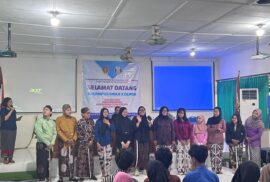
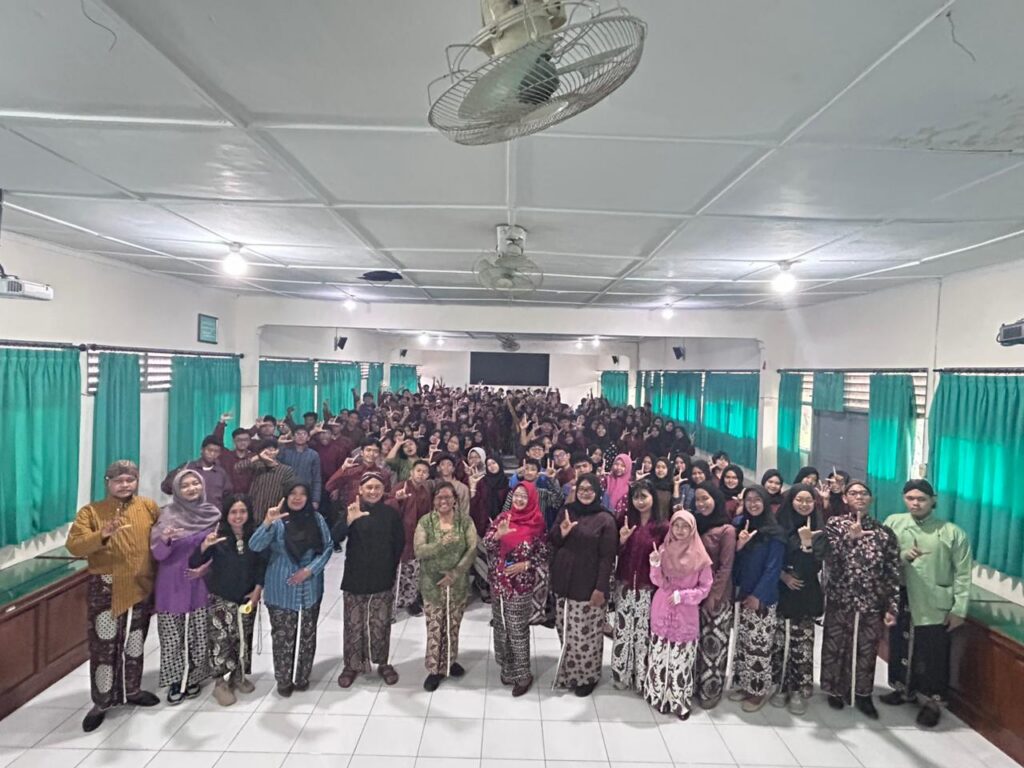
Yogyakarta, April 22, 2026 — The Javanese Language, Literature, and Culture Study Program, Faculty of Cultural Sciences, Universitas Gadjah Mada, held a Javanese script font socialization event in Room Margono 402. This event was aimed at faculty and student representatives as an effort to increase understanding of the use of Javanese script in the digital realm.

This socialization was motivated by various obstacles faced by the academic community in using Javanese script fonts. Some of the problems that frequently arise include differences in keyboard layouts compared to the Latin alphabet, font illegibility on certain devices, indicated by the appearance of a tofu symbol or a box (an illegible sign), and differences in compatibility between keyboard layouts, such as Windows and Macintosh. These conditions are considered to hinder the use of Javanese script, even though this script plays a vital role in cultural studies and preservation within the study program.

To address this issue, this event featured Setya Amrih Prasaja, S.S., M.Pd., an alumnus of the Javanese Language, Literature, and Culture Study Program, known as the developer of digital Javanese script fonts. Representatives from the Yogyakarta Special Region Cultural Office (Kundha Kabudayan) also attended the event, demonstrating their support for cultural preservation efforts through technology.

In his presentation, the speaker explained the process of developing Javanese script fonts and keyboard layouts, including the technical challenges faced in implementing them across various platforms. He also outlined the steps for introducing digital Javanese script at the national and international levels, as well as developing a system that can be operated on various devices. Furthermore, participants were introduced to several Javanese script fonts that are freely accessible without licensing constraints.

Through this activity, participants are expected to gain a more comprehensive understanding of the use of Javanese script keyboards and fonts in a digital context. Furthermore, this outreach is expected to encourage the dissemination of knowledge to the academic community and a wider audience, as part of efforts to preserve and strengthen the existence of Javanese script in the digital era.

Author : Haryo Untoro
Editor : Haryo Untoro

Meet Kinarya, an Intern at PT Taman Wisata Candi (TWC) Borobudur, Prambanan & Ratu Boko

News ReleaseStudent's Activity Wednesday, 29 April 2026

Kinarya Setyaning Tyas, an English Department student, shows that her major isn’t a limitation for learning and exploring her myriad of passions. As she entered her sixth semester, she was driven to seek an internship opportunity aligned with her interests. Her choice then fell on PT Taman Wisata Candi (TWC) Borobudur, Prambanan & Ratu Boko, which she believes can accommodate both her abilities as an English Department student and her particular interest in culture and arts. From there, she took initiative and applied for an intern position, where she began her delightful journey at Satuan Kerja Teater & Pentas Ramayana Ballet Prambanan.

In Ramayana Ballet Prambanan, Kinarya is part of the Sales and Attraction division, where she takes charge of uploading documentation and handling guests for the Ramayana Ballet. She explains her role thoroughly, from creating advertisements, handling social media—especially TikTok—and reporting social media performance. Kinarya noted that one of her accomplishments was when her TikTok content reached more than 340k views, attracting more people to attend the show. Outside of marketing, she is also responsible for reservations and being an usher, or among tamu, for the guests. 

So much to be done, so much to learn too. Kinarya confessed that when first applying, her motivation was to improve speaking and listening skills, which can only be polished by practice. Answering many questions and listening to the foreign tourist, she senses an improvement in her communication skills. “Especially when I handle British tourists, my listening skills are being tested because of the accent. So I’ve improved a lot,” she admits. 

Although she deals with a lot of tasks, she had so much fun during her internship experience. In fact, she even plans to extend her internship that was supposed to end in late April. Kinarya recounts the social environment in TWC, especially in the Ramayana Ballet Prambanan unit, which she describes as very friendly and supportive—from the staff, supervisor, and other interns. Having met her fellow interns from different majors and universities, she gets to share a lot of meaningful experiences together. 

Nonetheless, it doesn’t mean that Kinarya didn’t face any difficulties. During the first month, she doubted whether she could do this job alone. There is a lot of information that she needs to memorize: the flow of the show, the show’s schedule, the seating system, and even how to input the reservation data. “I also need to adapt quickly because I was only given three months here,” she utters. The struggle continued until the second month, during the peak season. “Because there is Eid Al-Fitr, we can even hold a show for eight days in a row, ” she explains.

After almost three months, Kinarya has gained many benefits from the internship as she gets to learn various skills outside of her major. She learns to analyze and report the social media performance of Ramayana Prambanan. “There are reports for Instagram and TikTok performance every month, their analysis, and also about marketing. It was quite apart from English Literature, but I learned a lot here,” she reflects. Kinarya also delves into content creation deeper, from planning to editing. She confesses that she never really did editing in a professional context, so she has improved a lot, “I learned so much in editing—the tools—and also about tech content like where to shoot, etc.” 

Kinarya also adds that, relating to her study, she gains a practical experience of interpreting and translating Indonesian—especially Javanese—culture and tradition. “So how do we translate the [cultural] terms to English? Then there’s the tolak bala procession, arak-arakan, we have to explain it to foreigners with an accurate interpretation,” she explains further. While she admits that it’s a bit challenging, it also fosters her cross-cultural understanding. “It makes me appreciate our culture more, especially Javanese culture,” she adds.

Her internship experience in PT. Taman Wisata Candi (TWC) is part of her effort to preserve our culture and heritage. “It’s like being a bridge, a mediator, an agent in cultural preservation,” she says. Furthermore, Kinarya notes how she also considered her future career when starting this internship. “I feel like I want to seek a career where it’s beyond handling a job desk; I want something more purposeful, meaningful, valuable,” she declares. 

Thus, Kinarya also shared her principle, “As an English literature student, don’t be afraid to explore more about other subjects. Don’t rely too much on one skill.” She chose her place of internship not by a matter of convenience, but she deliberately sought a gap where her interests met her skills and competence, which she found at PT. Taman Wisata Candi (TWC). Kinarya is aware that to explore and master other fields, learning by doing is the way to do it. “If I had never tried, I would have never known. If I didn’t make mistakes, I would never learn,” she concluded. 

Penulis: Gulma Zahra Auradatu

Fun-Minton: IKMASA’s Initiative to Foster a Healthy and Collaborative Space for Students

News ReleaseStudent's Activity Wednesday, 29 April 2026

Yogyakarta, April 18, 2026 – Amid the demands of academic life, IKMASA, through its Department of Interests and Talents under the Dur Mufassal Cabinet, organized Fun-Minton as a refreshing activity for students. Held at the Sendowo Sports Hall from 3:30 to 6:00 PM, the event created a warm atmosphere filled with enthusiasm and a strong sense of togetherness.

Fun-Minton was open to all Arabic Literature students, regardless of their badminton skills, including those who simply wished to participate in a casual and enjoyable manner. Participants were welcome to attend directly at the venue in sports attire. Beyond promoting physical activity, this event also served as a platform to strengthen relationships among members and to foster a supportive environment within the Arabic Literature community. The interactions that took place throughout the event contributed to a positive and enjoyable atmosphere.

Through Fun-Minton, students are encouraged to maintain a healthy balance between academic and non-academic activities while also reinforcing a sense of solidarity. This initiative reflects IKMASA’s commitment to providing a productive, healthy, and collaborative space for all its members.

Author: Indana Zulfa Maulida

Guest Students Enrich Japanese Popular Culture Course

News Release Friday, 24 April 2026

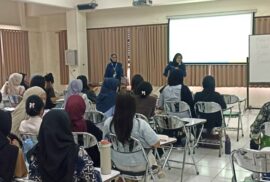
The Japanese Popular Culture course, organized by the Japanese Language and Culture Program, welcomed guest students to its class on Tuesday, April 7, 2026. The course instructor, Lili Febriyani, S.S., M.Si., invited students from various cohorts to provide reviews and feedback on the poster assignments prepared by each group.

The presence of guest students aims to enrich the learning process through a more diverse range of perspectives. In addition to receiving evaluations from the instructor and fellow students, participants also received input from students across different cohorts, including those who have and those who have not yet taken the course. Furthermore, this activity helped train students’ abilities to present ideas and respond to questions directly.

The guest students in attendance were from the 2021 and 2022 cohorts who had taken the Popular Culture course, as well as the 2024 and 2025 cohorts who had not yet taken the course. During this activity, the guest students observed and evaluated the posters presented by each group, focusing on design, clarity of content, and the ability to convey the material.

The posters created by each group explored the theme of the representation of heterosexual women in Japanese media, employing diverse visual approaches and analyses. Each group presented the content of their poster in detail and responded to questions posed by the visiting students.

At the end of the session, the visiting students shared their general impressions and evaluations through representatives from each class. This activity is expected to encourage students to be more open to diverse perspectives and to strengthen academic interaction among classes in the learning process.

Author: Nur Shafiyah Salma Putri

UGM Inaugurates Professor Mutiah Amini, Highlights Urban Social Space Realities

News Release Wednesday, 22 April 2026

Yogyakarta, April 21, 2026 — Universitas Gadjah Mada (UGM) inaugurated Prof. Dr. Mutiah Amini, M.Hum. as a Professor of Urban Social History at the Faculty of Cultural Sciences. The inauguration ceremony took place at the UGM Central Building. In her inaugural speech, Professor Amini sharply highlighted the gap between city comfort slogans and the reality of the residents’ social spaces.

The inaugural speech was titled “History and Citizens’ Imagination of Urban Social Space.” Professor Amini chose the word imagination as a reflection of various social phenomena in contemporary public spaces. She observed the contradiction between citizens sleeping on the streets seeking pity and the various prideful acronyms used by city governments. Slogans such as Bandung Bermartabat, Semarang Kota ATLAS, Surabaya HEBAT, and Yogyakarta Berhati Nyaman seem to imply the promise of a perfect urban space to live in.

“From this reflection, it is certainly important to question whether the abbreviations or acronyms created remain the aspiration of all city governments and their citizens today. Or conversely, are these acronyms merely a fleeting hope?” explained Professor Amini, introducing her ideas.

Professor Amini then referred to Kartini’s thoughts on comfortable urban spaces as a starting point for discussion. She explained that the idea of creating urban social spaces since the colonial era has actually brought significant impacts that are often overlooked. Society became increasingly aware of the boundaries between private and public spaces. The function of the house during modernization slowly shifted. Houses often lost their role as a place that provides comfort and a sense of belonging for families, turning simply into a physical space for temporary shelter.

Citizens’ imagination of a healthy and harmonious urban space continued to live on until the independence period. The complexity of public spaces raised various concerns regarding floods, evictions, and domestic and industrial waste issues. The middle class then used mass media to voice their resignation through opinion columns. Pleas such as “where should we turn” commonly appeared in newspapers to demand the restoration of lakes and other public spaces.

Unlike the middle class, the urban poor had their own way of realizing their collective imagination. This group tended to occupy available urban public spaces. Professor Amini cited Lefebvre’s view, which refers to this phenomenon as a space of representation. The space is brought to life through various symbols and imaginations of its users as a way to manifest the collective memory of city residents.

Historical facts show that Kartini had thought about urban humanitarian and social issues comprehensively since over a century ago. Professor Amini emphasized this as an important self-criticism for modern-era historians. Kartini paved the way for the idea that all government policy formulations must be drafted carefully and comprehensively.

Urban regional planning ultimately demands a balance between physical development and the fulfillment of basic human rights. The provision of an aesthetic, harmonious, and healthy living space is an absolute prerequisite for the sustainability of a just social system. Inclusive spatial planning policies are the main key to ensuring a city is truly capable of supporting and adequately protecting all its residents for future generations.

[Public Relations of FIB UGM, Candra Solihin]

1234…38

Video UGM

[shtmlslider name='shslider_options']
Universitas Gadjah Mada

Faculty of Cultural Sciences
Universitas Gadjah Mada
Jl. Nusantara 1, Bulaksumur Yogyakarta 55281, Indonesia
   fib@ugm.ac.id
   +62 (274) 513096
   +62 (274) 550451

Work Units

  • Office of Journal & Publishing
  • INCULS
  • Information Technology and Database
  • Language Learning Center
  • Library Unit
  • Public Relations
  • Research

Facilities

  • Computer Laboratory
  • Gamelan
  • Guest House
  • Language Library
  • Library
  • Phonetics Library
  • Self Access Unit
  • Student Internet Centre

Importan Links

  • Journal of Humaniora
  • Subscriber Journal
  • Alumni Portal
  • Career
  • Departmens News
  • UGM Streaming

Contacts

  • Academic
  • Administration
  • Dean’s Office
  • Departments / Study Programs
  • Public Relations

© 2024 Faculty of Cultural Sciences Universitas Gadjah Mada

KEBIJAKAN PRIVASI/PRIVACY POLICY

[EN] We use cookies to help our viewer get the best experience on our website. -- [ID] Kami menggunakan cookie untuk membantu pengunjung kami mendapatkan pengalaman terbaik di situs web kami.I Agree / Saya Setuju