• About UGM
  • Academic Portal
  • IT Center
  • Library
  • Research
  • Webmail
  • Informasi Publik
  • English
    • Indonesia
Universitas Gadjah Mada Faculty of Cultural Sciences
Universitas Gadjah Mada
  • Home
  • Profile
    • History
    • Vision and Mission
    • Organizational structure
    • Administration
    • Staff
    • Faculty Members
  • Academic
    • Academic Calendar
    • Undergraduate Programs
      • Bachelor of Cultural Antrophology
      • Bachelor in Archaeolagy
      • Bachelor in History
      • Bachelor in Tourism
      • Bochetor in Korean Language and Culture
      • Bachelor in Indonesian Language and Culture
      • Bachelor in English
      • Bachelor in Arabic
      • Bachelor in Japanese Language and Culture
      • Bachelor in Javanese Language, Literature and Culture
      • Bachelor in French language and literature
    • Graduate Programs
      • Master in Antrophology
      • Master in ArchaeoIogy
      • Master in History
      • Master in Linguistics
      • Master in Literature
      • Master In American Studies
      • Master in Middle Eastern Cultural Studies
    • Post-Graduate Programs / S3
      • Doctor in Antropology
      • Doctor in American Studies
      • Doctor in Humanities
    • Student Service
  • KPPM
    • Research Information
    • Scientific / Academic Publications
    • Community Service
    • International Cooperation
    • Domestic Cooperation
  • Student Organizations
    • Student Executive Council
    • Semi-Autonomous Organizations
      • KAPALASASTRA
      • Christian Student Alliance
      • LINCAK
      • Saskine
      • Catholic Student Family
      • Dian Budaya
      • Sastra Kanuragan (sasgan)
      • Family of Muslim Cultural Sciences Students (KMIB)
      • Bejo Mulyo
    • Autonomous Organizations
      • Family of Anthropology Students (KEMANT)
      • English Department Student Association
      • Tourism Students Association (HIMAPA)
      • Family of Indonesian Literature Students (KMSI)
      • West Asian Literature Student Association (IMABA)
      • Association of Korean-Language Students (HIMAHARA)
      • Family of Regional Indonesian Literatures Students (KAMASUTRA)
      • The Family Body of History Students (BKMS)
      • The French Literature Students Association (HMSP)
      • Family of Anthropology Students
      • Japanese Student Association (HIMAJE)
  • Admission
    • Student Evaluation
  • Home
  • SDGs 9: Industri inovasi dan infrastruktur
Arsip:

SDGs 9: Industri inovasi dan infrastruktur

Literary Orations Explore Biopoetics, Nature, Algorithms, and the Future of the Humanities

News Release Thursday, 20 August 2026

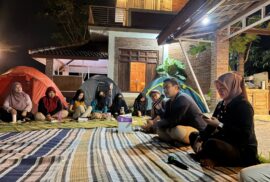
Yogyakarta— The Literary Camp with Nature and the Universe, organized by the Master’s Program in Literary Studies at the Faculty of Cultural Sciences, Universitas Gadjah Mada (UGM), at Pondok A. Salam, Kalimasada, featured a Literary Oration session on Friday evening, August 14. Beginning at 7:30 p.m., the session brought together two speakers from the academic community of FIB UGM: Muhammad Lutfi Dwi Kurniawan, a doctoral student in Humanities at FIB UGM, and Rini Febriani Hauri, a master’s student in Literary Studies at FIB UGM.

The Literary Oration was an important part of the camp, providing a space for reflection on literature, the relationship between humans and nature, technological developments, and the future of the humanities.

In his presentation, “Unveiling the Pulse of the Text: Biopoetics and the Crisis of the Human–Nature Boundary in Literature,” Muhammad Lutfi Dwi Kurniawan introduced biopoetics as a way of exploring the relationship between life, human beings, nature, and literary works.

Broadly speaking, biopoetics is an interdisciplinary approach that brings together biology—the study of life—with poetics, literature, the arts, and other forms of creative expression. It opens up a way of understanding literature not simply as a product of language and culture, but as part of a wider conversation about life and humanity’s relationship with the biological world around us.

In his presentation, Lutfi offered the Achilles tendon as an intriguing example. This important part of the human body connects the calf muscles to the heel bone. The name Achilles comes from Achilles, the legendary Greek hero immortalized in Homer’s epic Iliad. The example illustrates how traces of literature and mythology can become embedded in the language through which human beings describe and understand the world—even in scientific terminology.

From this perspective, biopoetics becomes particularly relevant as the boundary between humans and nature is increasingly being questioned. Literature can provide a space to explore how people understand life, how nature is represented, and how relationships between humans and other living beings are shaped through language, imagination, and experience.

The theme “Unveiling the Pulse of the Text” thus takes literature into a broader intellectual territory, bringing textual studies into conversation with questions of life and the environment. Biopoetics allows literature to engage with scientific knowledge while also inviting us to reconsider the human position—not as something entirely separate from nature, but as part of a larger web of life.

Meanwhile, Rini Febriani Hauri presented “Reading Literature in the Age of Algorithms: Experience, Interpretation, and the Future of the Humanities.” Her presentation invited participants to reconsider the experience of reading literature amid rapid digital transformation and the relentless flow of information.

During her presentation, Rini quoted Franz Kafka:

“A book must be the axe for the frozen sea within us.”

The quotation offered a starting point for thinking about reading as more than an act of gathering information. Reading can be an experience that moves us, unsettles us, and even transforms the way we understand ourselves and the world.

In a digital culture increasingly defined by speed, where information arrives continuously and algorithms help determine what we see and read, Rini encouraged participants to read slowly. The invitation to slow down becomes a form of pause, and perhaps even a quiet resistance to the pressure to move constantly from one piece of information to another and to form immediate judgments.

Reading slowly gives the reader space to allow a text to work its way inward. It creates an opportunity to attend to language, discover layers of meaning, question one’s own experience, and encounter interpretations that might otherwise be missed in hurried reading.

In the age of algorithms, the experience of reading therefore becomes increasingly significant. As technology becomes capable of producing, circulating, and processing an almost limitless amount of text, the human capacity to read, feel, interpret, and make meaning remains something worth preserving.

Together, the two presentations brought into focus two important questions facing contemporary literature: the relationship between humans and nature, and the relationship between humans and technology. On the one hand, biopoetics invites us to reconsider the boundary between humanity and the living world. On the other, the discussion of literature in the age of algorithms asks us to consider how technology is reshaping the experience of reading and interpreting literary works.

Bringing these two themes together broadened the intellectual scope of the Literary Camp. Literature was not treated merely as an activity of reading and writing, but also as a space for understanding a changing world, questioning the boundaries of human experience, and reconsidering the future relationship between humans, nature, and technology.

Held at night, the Literary Oration also formed an integral part of the distinctive atmosphere of the Literary Camp. After spending the afternoon outdoors and experiencing the natural surroundings of Kalimasada, participants gathered to listen, discuss, and exchange perspectives on literature and the wider questions of human life.

The Literary Camp thus offered more than an opportunity to camp and socialize. It created an intellectual space where literary works, ideas, nature, science, technology, and human experience could meet within a single shared experience.

Author: Khotibul Umam
Two UGM FIB Master’s Graduates, Two Different Paths, One Shared Achievement

News Release Monday, 3 August 2026

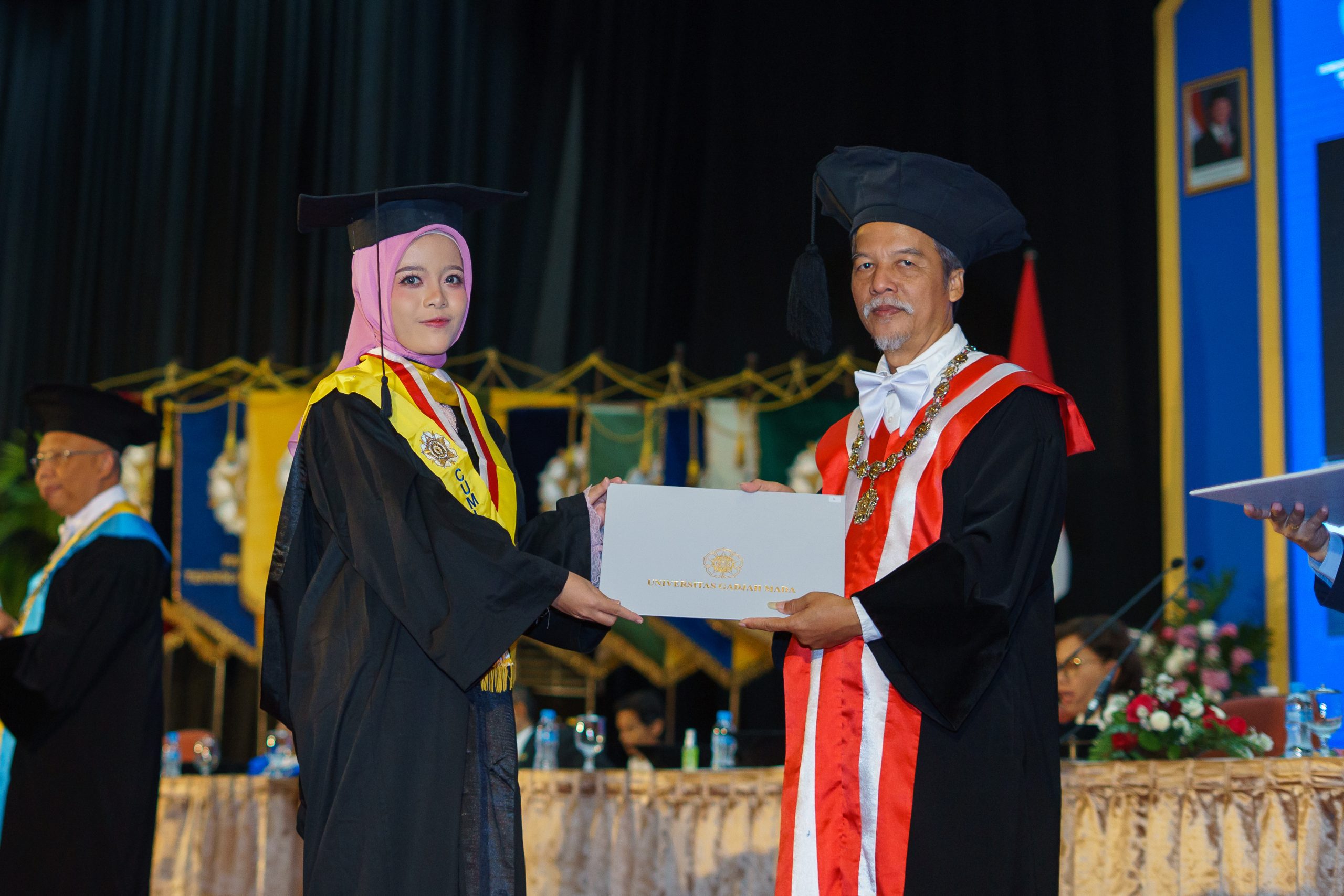
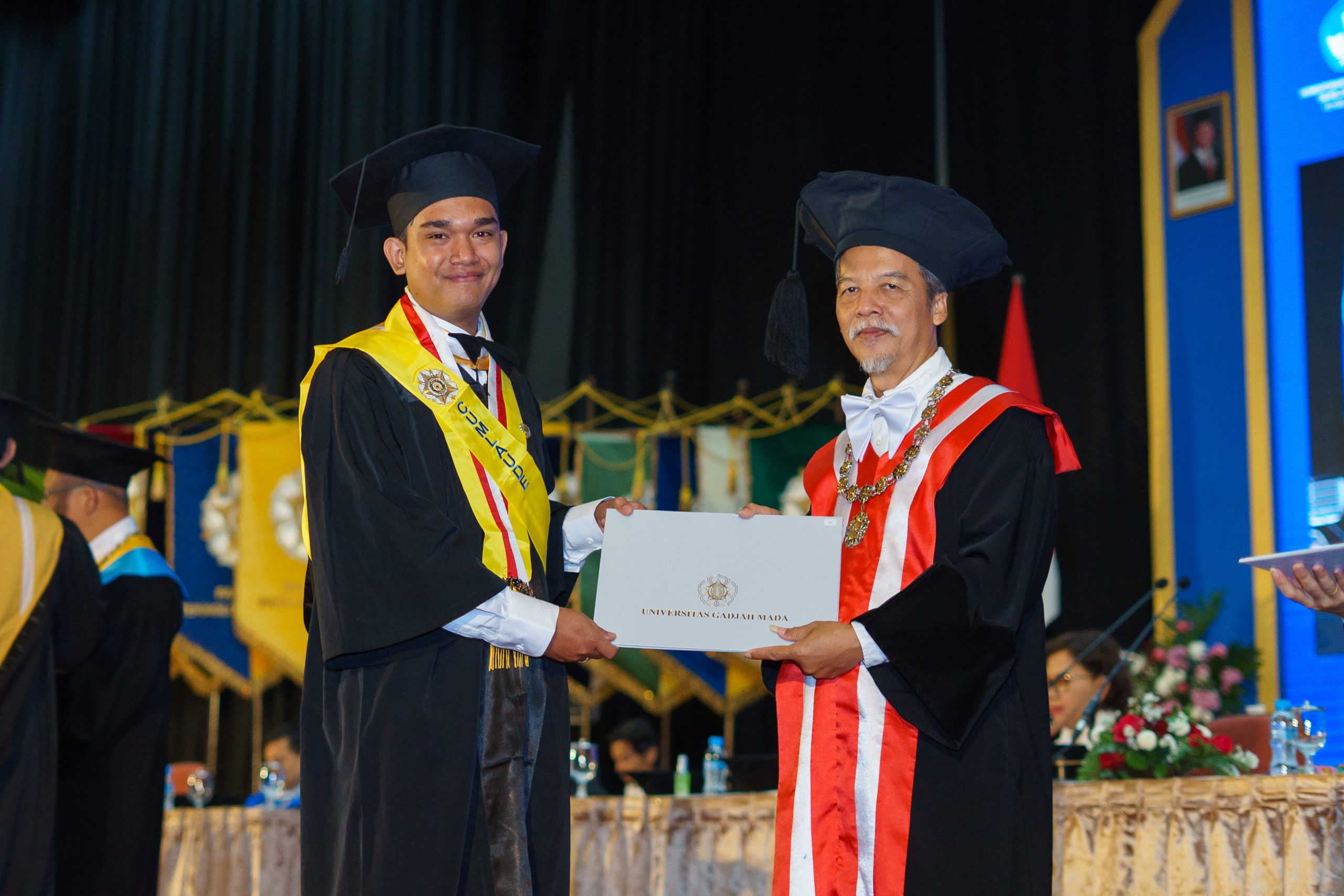
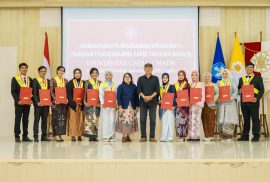
Yogyakarta – The Faculty of Cultural Sciences (FIB), Universitas Gadjah Mada (UGM), held the Mangayubagya Ceremony for Postgraduate Graduates, Period IV of the 2025/2026 Academic Year on Wednesday (July 22) at the Auditorium of the Poerbatjaraka Building, FIB UGM. The event served as an occasion to honor graduates for completing their studies while highlighting inspiring stories from among the graduating class. Among them were Nabillah Faisal Azzahra, the first graduate of the Master of Arts Program to complete her studies through the Fast Track scheme, and Wanda Andres Saputra, one of the program’s fastest graduates.

For Nabillah, pursuing a master’s degree through the Fast Track Program stemmed from her passion for Japanese literature. A 2021 graduate of the Japanese Language and Culture undergraduate program at FIB UGM, she continued her studies in the Master of Arts Program in 2024 after learning about the Fast Track scheme from her academic advisor.

“I enjoy reading and analyzing Japanese literary works, especially to understand the social and cultural phenomena and issues they present through various theoretical approaches. When my academic advisor introduced the Fast Track Program, I felt it was the perfect opportunity to deepen my interest while continuing my studies more efficiently,” she said.

Entering graduate school, Nabillah experienced a significant shift in the pace of learning, requiring greater independence. She had to engage more extensively with academic literature, think more critically, and develop stronger scholarly arguments. Rather than seeing these demands as obstacles, she viewed them as exciting opportunities to broaden her perspective on literary studies.

“At first, I was surprised by how much more in-depth the theories and research methodologies were. But that was also what made the experience so fascinating. Every course introduced a new way of thinking and made me enjoy the learning process even more,” she explained.

As part of the first cohort of the Fast Track Master’s Program in Literature, Nabillah also had to develop her own academic strategy without the guidance of senior students who had previously gone through the same program. Nevertheless, she believes the Fast Track Program offers numerous advantages, from saving time and costs to allowing students to maintain the academic momentum they built during their undergraduate studies.

“The Fast Track Program certainly has its challenges because the pace is fast and intensive. However, it also offers many benefits for students who already know they want to pursue graduate studies. It has also strengthened my aspiration to become an academic, given the opportunity,” she added.

Another inspiring story came from Wanda Andres Saputra, a graduate of the Master of Arts Program with a concentration in English Literature, who completed his studies as one of the program’s fastest graduates. Wanda began his master’s studies in February 2025 with the goal of deepening his expertise in English literary studies while preparing for a career in academia.

Despite earning recognition as one of the fastest graduates, Wanda admitted that completing his studies quickly had never been his primary goal.

“At the beginning of my studies, I never aimed to become the fastest graduate or even the best student. My focus was simply on conducting research that was relevant and needed to be completed. That’s why I was both happy and surprised to be recognized as one of the fastest graduates,” he said.

During his studies, Wanda completed all of his coursework within his first two semesters. By the third semester, he devoted his full attention to writing his thesis. While balancing his responsibilities as an English academic staff member and a TOEFL ITP tutor, he consistently set aside time each day to work on his thesis.

According to Wanda, graduating on time is not the result of extraordinary strategies but of consistency and a clear commitment to one’s academic interests.

“There was no special strategy. I simply stayed focused on the field of knowledge I wanted to master. I worked on my thesis every day before work, during lunch breaks, and again at night. The most important thing is to maintain your momentum and stay consistent,” he explained.

His academic journey was not without challenges. Wanda revealed that he revised his research title several times and refined his theoretical framework before ultimately producing a thesis that met rigorous academic standards.

He also encouraged current master’s students not to focus solely on graduating quickly but to develop a clear academic direction.

“Focus on the field you truly want to explore. Once you know what kind of expert you want to become, your learning process becomes much more focused, and you can complete your studies effectively without compromising academic quality,” he advised.

Both Nabillah and Wanda agreed that their academic achievements would not have been possible without the unwavering support of their supervisors and families. They expressed their gratitude to the lecturers and the entire academic community of FIB UGM for guiding them throughout their studies, as well as to their families for their constant encouragement and prayers.

Through the stories of these two graduates, FIB UGM reaffirms its commitment to fostering an academic environment that enables students to reach their full potential. The Fast Track Program provides students with the opportunity to accelerate their academic journey without compromising educational quality, while the achievement of graduating on time demonstrates that focus, consistency, and a passion for learning are essential to success in higher education. The experiences of Nabillah Faisal Azzahra and Wanda Andres Saputra are expected to inspire other students to pursue academic excellence, produce meaningful research, and contribute to both academia and society.

Author: Khotibul Umam

AI, Geopolitics, and Feminist Literature Highlight Arabic Literature UGM Students’ Thesis Proposal Seminar

News Release Thursday, 11 June 2026

Yogyakarta, June, 8 2025 – Students of the Arabic Literature Study Program at Universitas Gadjah Mada (UGM), Class of 2023, successfully conducted their Thesis Proposal Seminar from 8 to 10 June 2026. The three-day academic event marked an important milestone as students presented their research proposals before proceeding to the next stage of their undergraduate thesis projects.

This year’s seminar showcased a wide range of research topics, reflecting the growing diversity of contemporary Arabic language and literature studies. Beyond traditional scholarly approaches, students explored issues related to artificial intelligence, digital media, social dynamics, and global geopolitical developments, demonstrating the relevance of Arabic studies in addressing contemporary challenges.

A significant number of research projects focused on translation studies, examining translation strategies and translation quality in novels, poetry, films, classical Islamic texts, and social media content. Notably, several students investigated the use of Artificial Intelligence (AI) in translation, including studies on the translation quality produced by ChatGPT. These topics illustrate how technological advancements are increasingly becoming an integral part of academic inquiry within the Arabic Literature Program at UGM.

In the field of literary studies, students analyzed various humanitarian and social issues represented in modern Arabic literary works. Topics such as war trauma, power relations, feminism, diaspora identity, family conflicts, and the struggles of the Palestinian people emerged as prominent themes. These studies highlight literature not only as an artistic expression but also as a reflection of complex social realities and human experiences.

Meanwhile, linguistic research offered equally compelling perspectives. Students examined topics including code-switching, code-mixing, pragmatics, discourse analysis, media framing, and the use of Arabic in digital spaces. These studies demonstrate how language continues to evolve and interact with various aspects of contemporary society.

Throughout the seminar, students presented their research backgrounds, research questions, and proposed methodologies. Supervisors and examiners provided constructive academic feedback to help refine and strengthen the proposed studies. The active discussions created a valuable learning environment that encouraged critical thinking, analytical skills, and academic argumentation.

The Thesis Proposal Seminar serves as an important academic milestone for the Class of 2023 as they prepare for the next phase of their research journey. Through the diverse range of topics presented, Arabic Literature UGM students continue to contribute to the development of Arabic language, literature, translation, and media studies while engaging with issues of global significance.

Author: Indana Zulfa Maulida

Anthropology Students Win Gold Medals at the National Excellence Competition

News Release Wednesday, 20 May 2026

Good news comes from three undergraduate students in Cultural Anthropology at the Faculty of Humanities, UGM, who achieved a proud accomplishment at the 2026 National Excellence Competition (NEC). The NEC was organized by Eduhub Incubator in collaboration with Mataram University. The competition took place on May 9–10, 2026, at the Faculty of Agriculture, Mataram University, Lombok, West Nusa Tenggara. The team, consisting of Dinaesy Fadillah Hidayat, Aly Aydeed, and Nadila Aryani Az-Zalfa, won a Gold Medal in the Tourism and Creative Economy Research Essay category under the guidance of Agus Indiyanto, S.Sos., M.Si.

The competition’s theme was “Integrating Critical Thinking, Social Innovation, and Sustainable Entrepreneurial Capabilities within the Framework of Inclusive Development and Achieving the SDGs in Indonesia.” In their paper, the team addressed the issue of event management and tourism waste in Yogyakarta, which is still considered a challenge in supporting sustainable tourism.

As a solution, the team proposed an innovation in the form of a circular economy-based event management agency. This concept is designed to integrate event management with waste reduction and reuse systems, thereby creating a more environmentally friendly event ecosystem while supporting the creative economy sector in a sustainable manner.

It is hoped that this achievement will motivate other students to remain critical of phenomena occurring in society, to present innovative ideas, and to contribute to addressing various social issues through research and academic work that has a positive impact on the community.


Author: Dewi W – adapted from a report by Dinaesy Fadillah Hidayat

Photo: Dinaesy Fadillah Hidayat et al.


SMA Negeri 4 Malang Visits the Faculty of Cultural Sciences UGM

News Release Wednesday, 6 May 2026

Yogyakarta, May 6, 2026 – The Faculty of Cultural Sciences (FIB), Universitas Gadjah Mada (UGM), welcomed 139 students from SMA Negeri 4 Malang as part of the Steviclass program. The visit was organized to introduce students to higher education and provide insights into the advancement of knowledge, research, and innovation within the academic environment.

During the visit, participants were introduced to various academic programs offered at UGM, student activities, and the research and innovations developed by members of the university’s academic community. Through this program, students gained a broader understanding of university life and the opportunities available for academic and personal development.

The visit is expected to motivate students to continue pursuing their educational goals and to further develop their potential. By exposing participants to higher education and research culture, the program encourages lifelong learning and intellectual curiosity among young people.

The Steviclass program supports the implementation of Sustainable Development Goal (SDG) 4: Quality Education by strengthening higher education literacy among secondary school students. In addition, introducing students to research and innovation aligns with SDG 9: Industry, Innovation, and Infrastructure, which highlights the importance of scientific and technological advancement in promoting sustainable societal development.

[Public Relation of FIB UGM, Alma Syahwalani]

123…7

Video UGM

[shtmlslider name='shslider_options']
Universitas Gadjah Mada

Faculty of Cultural Sciences
Universitas Gadjah Mada
Jl. Nusantara 1, Bulaksumur Yogyakarta 55281, Indonesia
   fib@ugm.ac.id
   +62 (274) 513096
   +62 (274) 550451

Work Units

  • Office of Journal & Publishing
  • INCULS
  • Information Technology and Database
  • Language Learning Center
  • Library Unit
  • Public Relations
  • Research

Facilities

  • Computer Laboratory
  • Gamelan
  • Guest House
  • Language Library
  • Library
  • Phonetics Library
  • Self Access Unit
  • Student Internet Centre

Importan Links

  • Journal of Humaniora
  • Subscriber Journal
  • Alumni Portal
  • Career
  • Departmens News
  • UGM Streaming

Contacts

  • Academic
  • Administration
  • Dean’s Office
  • Departments / Study Programs
  • Public Relations

© 2024 Faculty of Cultural Sciences Universitas Gadjah Mada

KEBIJAKAN PRIVASI/PRIVACY POLICY

[EN] We use cookies to help our viewer get the best experience on our website. -- [ID] Kami menggunakan cookie untuk membantu pengunjung kami mendapatkan pengalaman terbaik di situs web kami.I Agree / Saya Setuju