• About UGM
  • Academic Portal
  • IT Center
  • Library
  • Research
  • Webmail
  • Informasi Publik
  • English
    • Indonesia
Universitas Gadjah Mada Faculty of Cultural Sciences
Universitas Gadjah Mada
  • Home
  • Profile
    • History
    • Vision and Mission
    • Organizational structure
    • Administration
    • Staff
    • Faculty Members
  • Academic
    • Academic Calendar
    • Undergraduate Programs
      • Bachelor of Cultural Antrophology
      • Bachelor in Archaeolagy
      • Bachelor in History
      • Bachelor in Tourism
      • Bochetor in Korean Language and Culture
      • Bachelor in Indonesian Language and Culture
      • Bachelor in English
      • Bachelor in Arabic
      • Bachelor in Japanese Language and Culture
      • Bachelor in Javanese Language, Literature and Culture
      • Bachelor in French language and literature
    • Graduate Programs
      • Master in Antrophology
      • Master in ArchaeoIogy
      • Master in History
      • Master in Linguistics
      • Master in Literature
      • Master In American Studies
      • Master in Middle Eastern Cultural Studies
    • Post-Graduate Programs / S3
      • Doctor in Antropology
      • Doctor in American Studies
      • Doctor in Humanities
    • Student Service
  • KPPM
    • Research Information
    • Scientific / Academic Publications
    • Community Service
    • International Cooperation
    • Domestic Cooperation
  • Student Organizations
    • Student Executive Council
    • Semi-Autonomous Organizations
      • KAPALASASTRA
      • Christian Student Alliance
      • LINCAK
      • Saskine
      • Catholic Student Family
      • Dian Budaya
      • Sastra Kanuragan (sasgan)
      • Family of Muslim Cultural Sciences Students (KMIB)
      • Bejo Mulyo
    • Autonomous Organizations
      • Family of Anthropology Students (KEMANT)
      • English Department Student Association
      • Tourism Students Association (HIMAPA)
      • Family of Indonesian Literature Students (KMSI)
      • West Asian Literature Student Association (IMABA)
      • Association of Korean-Language Students (HIMAHARA)
      • Family of Regional Indonesian Literatures Students (KAMASUTRA)
      • The Family Body of History Students (BKMS)
      • The French Literature Students Association (HMSP)
      • Family of Anthropology Students
      • Japanese Student Association (HIMAJE)
  • Admission
    • Student Evaluation
  • Home
  • UGM Yogyakarta
  • UGM Yogyakarta
  • page. 13
Arsip:

UGM Yogyakarta

Cultural Diplomacy as a Pathway to Indonesia–Islamic World Integration Becomes the Focus of a National Lecture with Indonesia’s Vice Minister of Foreign Affairs

HEADLINESNews ReleaseStudent's Activity Friday, 21 November 2025

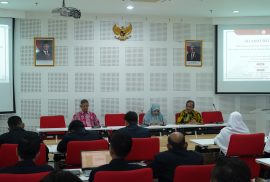
Yogyakarta, November 21, 2025 — Indonesia’s Vice Minister of Foreign Affairs, Muhammad Anis Matta, Lc., emphasized that the roadmap for Indonesia’s integration with the Islamic world must be built upon the strength of cultural values that define the nation’s civilization. He delivered this material during a National Lecture titled “Indonesia’s Integration Roadmap with the Islamic World: Exploring Cultural Values in Indonesian Foreign Policy” held at the Poerbatjaraka Auditorium, Faculty of Cultural Sciences (FIB), Universitas Gadjah Mada (UGM). The event was organized through the collaboration of LEM FIB UGM, MADARA UGM, IWDN, and KMIB UGM.

The program opened with a series of remarks highlighting the importance of students and academic spaces in shaping Indonesia’s diplomatic orientation toward the Islamic world. Azky Zidane Qoimul Haq, Chair of LEM FIB UGM, underlined the contributions students can make through intellectual engagement, research, and critical discussion. Meanwhile, Prof. Dr. JM. Muslimin, M.A., advisor to IWDN, expressed his appreciation for the forum and hoped that such cross-cultural dialogues would continue as part of efforts to prepare Indonesia’s future diplomatic direction.

The final remarks were delivered by the Dean of FIB UGM, Prof. Dr. Setiadi, S.Sos., M.Si., who reiterated the faculty’s commitment to fostering strategic academic forums that connect humanities scholarship with global geopolitical dynamics, ensuring that students are not only observers of reality but also active contributors in shaping it.

The main session began with Nafesya Amrina Rosada, S.S., serving as moderator and guiding the discussion effectively and inclusively. In his keynote presentation, Vice Minister Muhammad Anis Matta stressed that Indonesia’s integration with the Islamic world must be grounded in the strength of the nation’s cultural values. He argued that Indonesia’s diplomacy cannot rely solely on political and economic cooperation; it must also draw from the country’s contributions in values, identity, and civilization—elements that form Indonesia’s unique global presence.

Following the presentation, the discussion grew increasingly interactive and substantive. The topic of the Israel–Palestine conflict became the central catalyst that intensified the forum’s dynamics. Participants critically examined how Israeli colonialism has transformed over time—from ethnically driven settlement colonization to an ideologically based colonial project anchored in religious legitimacy, security narratives, and nationalism. Systematic acts of genocide and human rights violations have, they argued, pushed Israel into deeper isolation in the eyes of the international community while gradually eroding what was once strong Western support.

The Vice Minister reaffirmed that Indonesia’s stance on Palestine remains firmly rooted in the principle of a two-state solution, with the moral imperative of protecting human life as the top priority before discussing any political options. He also noted that Indonesia’s support has expanded beyond humanitarian diplomacy and now includes readiness for defense-related support if necessary, while still maintaining Indonesia’s independence from global ideological blocs and geopolitical polarization.

The discussion then shifted to the planned development of an Indonesian “Hajj Village” in Makkah. The forum explored how the rising number of Indonesian pilgrims—exceeding two hundred thousand people each year—necessitates integrated facilities capable of providing structured accommodation and community activity centers. The proposed area is designed not only for convenience but also to strengthen the presence and networks of Indonesian communities in the Holy Land. Danantara is projected to serve as the developer and manager to ensure that the area is operated professionally, modernly, and sustainably.

The session grew even richer as the forum turned to cultural diplomacy as a pillar of foreign policy. The Vice Minister underscored that Indonesia possesses a distinctive civilizational identity—one that harmoniously synthesizes religion, democracy, and culture. This identity, he argued, represents a strategic asset with significant potential to contribute to the Islamic world. However, he also highlighted an internal challenge: Indonesians are often not accustomed to promoting their nation’s strengths on the global stage. Thus, there is a pressing need to translate Indonesia’s religious, social, and national concepts into Arabic to communicate them more effectively to Middle Eastern audiences. By doing so, intellectual diplomacy and cultural diplomacy can operate in harmony with political diplomacy.

A warm and appreciative atmosphere concluded the National Lecture, which broadened perspectives on Indonesia’s diplomatic dynamics within the Islamic world while reaffirming the academic community’s role in advancing global development agendas. By emphasizing cultural diplomacy, reinforcing Indonesia’s commitment to Palestinian peace, and connecting Indonesia’s religious and national ideas to the international sphere, the event aligns closely with several SDGs—particularly SDG 4 (Quality Education), SDG 16 (Peace, Justice, and Strong Institutions), and SDG 17 (Partnerships for the Goals).

Author: Achmad Chozinatul Assror
Editor: Candra Solihin

Inspirational Discussion with Prof. Ayman Shihadeh from SOAS London: Analyzing Academic Experiences and International Collaboration

HEADLINESNews Release Friday, 21 November 2025

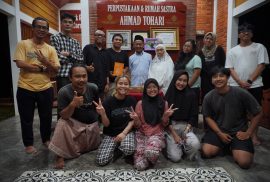
Yogyakarta, November 13, 2025 – The Middle Eastern Studies Program (KBTT) and the Arabic Literature Program at Gadjah Mada University held an inspirational discussion session with Visiting Lecturer Prof. Ayman Shihadeh from SOAS University of London. This activity was held after the International Public Lecture, which was part of the event series, and took place from 11:00 a.m. to 12:00 p.m. in the KBTT Study Program meeting room. The discussion was attended by several enthusiastic students from the KBTT and Arabic Literature Study Programs at UGM who were eager to learn about Prof. Ayman Shihadeh’s academic experiences and international insights.

During the session, Prof. Ayman shared his experiences and views on teaching, research, and academic development at SOAS, as well as the importance of fostering collaborative relationships between universities worldwide, particularly in the fields of cultural studies and tolerance. He also presented the new MA Islamic Humanities program launched by SOAS in 2025. He gave a detailed presentation on the new study program, which offers several concentrations, including social studies, history, literature, religion, and others. This further increased the enthusiasm of the participants because the study program is very relevant to the fields of Middle Eastern Cultural Studies and Arabic Literature.

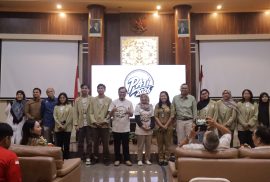
In addition, this discussion also provided an opportunity for students to ask questions and share their views on the development of study programs and the potential for international cooperation that can be optimized in the future. Prof. Ayman emphasized the importance of openness in thinking and developing insights in facing global challenges. The event concluded with a group photo session and informal discussions that strengthened the academic relationship between UGM and SOAS and opened up opportunities for further collaboration. This event was an important step in introducing UGM’s Middle Eastern Cultural Studies students to a global perspective and strengthening academic ties with renowned institutions around the world, such as SOAS University of London. The discussion is expected to have a positive impact on academic development and international cooperation in the future.

Author: Jesisca Amanda

Guest Lecture on Anthropology: The Role of Visual Media in Facing Mining Contests

News Release Thursday, 20 November 2025

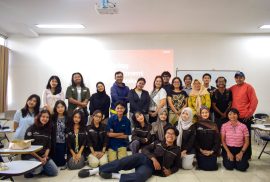
Yogyakarta, November 14th, 2025 –  The Ethnography of Maluku and Nusa Tenggara class held by the Department of Anthropology featured a guest lecturer. Danishwara Nathaniel (Mas Dan) is a PhD candidate from the Geneva Graduate Institute, currently doing research on Ternate, Northern Maluku. During the first session of the class, Mas Dan presented part of his research, titled Visual Activism and Maritime Identity in Indonesia’s Extraction Frontier. In this research, Mas Dan highlights the importance of visual media for the activist movement that is going on in Maluku, which historically has always been an important frontier for natural resources. During the colonial era, the resources being fought over were mainly spices; nowadays, minerals and mines are the resources being extracted from Northern Maluku. Mas Dan explained that Ternate is a sacrifice zone: a specific area that is being ‘sacrificed’ to better the lives of people in other parts of the world. In this context, Maluku’s nature is being destroyed by nickel mines, used for lithium batteries to power electrical vehicles.

Mas Dan further explains the importance of visual and digital media to help put the situation in Northern Maluku on a spotlight. In the past, maps were the visual media being used by colonial forces to plan the conquest of Ternate. This topdown, unspecified view makes the location seem static and controllable, void of any living elements that have their own agencies. Now, visual media helps the people of Ternate to voice their resentment towards the extraction project that they are facing. News and articles are being published all throughout the internet by international journalists and NGOs, spreading awareness about the impacts of green energy development. Mas Dan also mentions that visual and digital media can also be used to dampen the work that the activists have put in. This is mainly done by the government or stakeholders in the mining industry, through the launching of counter-narratives and censorship of the news.

In the second session of the class, Mas Dan brought in his friend as well as his interlocutor (through Zoom Meetings) to share more about the Ternate situation to the class. Adlun Fiqri is an activist from Halmahera who has been vocal in the struggle against the mining industry going on in his hometown. Mas Adlun is also a bachelor of anthropology from Universitas Airlangga, and even did an exchange semester here in UGM. Mas Adlun shared his experience of documenting and actively fighting the mining industry, even being captured a couple of times. He also explains the difference that the mines have brought to local communities: people are becoming more wary and less friendly, after facing countless encounters with the generally aggressive agents from the mines. The main point that is being projected through this class by Mas Dan and Mas Adlun is that Northern Maluku is currently a victim of the growing green energy movement. Visual and digital media can serve as loudspeakers to the world that Northern Maluku is not okay, and spread the word about the impacts of industries on local communities.

Author: Amadeus Abhirama Paramanindita

Congratulations! Lembaran Antropologi Journal Receives Best Journal Governance Award

HEADLINESSDGS Tuesday, 18 November 2025

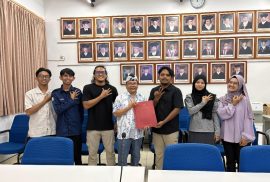
Yogyakarta, 15 October 2025 — After receiving its accreditation rating from SINTA earlier this year, Lembaran Antropologi, a journal managed by the Department of Anthropology at UGM, has once again achieved a new milestone. It was awarded the title of Winner of the Award for Governance of Nationally Accredited and Scopus-Indexed Scientific Journals, Period I of 2025 by the Directorate of Research. The announcement was delivered through Decree No. 12517/UN1.P2/Dit-Lit/PJ.00.02/2025, in which Lembaran Antropologi ranked 9th out of 12 journals that successfully passed the selection.

Lembaran Antropologi aims to promote academic discourse and anthropological analysis in the study of human relations, culture, and society across the Global North and South. The journal publishes two issues each year: Issue 1 (January–June) and Issue 2 (July–December). In its second issue, the journal releases a special edition, a thematic issue often developed in collaboration with experienced researchers in relevant fields. Submissions are open and free of charge. We warmly welcome contributors to share their best work!

Penulis: Penulis: Novilatul Ananda Ramadhani

Korean Days 2025: Two Decades of Indonesia–Korea Cultural Harmony at UGM

HEADLINESNews ReleaseStudent's Activity Tuesday, 18 November 2025

Yogyakarta, 15 November 2025 — Universitas Gadjah Mada once again became a vibrant center of Korean cultural celebration through the Festival Oullim Korea Yogyakarta: 20th Korean Day, held at the UGM Gelanggang Inovasi dan Kreativitas (GIK). This two-decade celebration was made possible through collaboration between the Korean Language and Culture Study Program of the Faculty of Cultural Sciences (FIB UGM) and the Korean Cultural Center Indonesia (KCCI). The festival was officially opened by UGM Rector, Prof. dr. Ova Emilia, M.Med.Ed., Sp.OG(K)., Ph.D., alongside KCCI Director Kim Yong Woon and distinguished guests from government institutions, academia, and cultural communities. Their presence underscored the significance of the festival as a thriving cultural interaction platform within the university environment.

The festival opened with the spirit of Oullim, meaning harmony, showcased through collaborative performances blending Indonesian and Korean traditional arts. A captivating fusion of Indonesian mask dance and Javanese gamelan with Korean fan dance and bukchum (traditional drum dance) delighted audiences. This performance was the result of an intensive week-long collaboration between students of SMKN 1 Kasihan and a visiting Korean art instructor. Students of the Korean Language and Culture Program at FIB UGM supported the process as cultural interpreters and assistants, ensuring smooth communication and rehearsals that culminated in a widely praised performance.

Beyond the stage performances, the festival featured a wide array of programs highlighting the richness of Korean culture. Shows by Salmunori UGM, music and dance showcases, dongari exhibitions, noraebang, and random play dance sessions all contributed to the lively atmosphere. One of the most striking highlights was the Hanbok Fashion Show featuring works by Leesle, a renowned South Korean designer known for dressing prominent Korean celebrities. On this occasion, Leesle presented a special hanbok collection crafted using Indonesian batik fabric, creating designs that symbolized harmonious cultural fusion. The interplay of colors, patterns, and silhouettes embodied the true meaning of Oullim as a representation of unity expressed through artistic beauty.

The festival’s dynamic atmosphere was further enriched by Korean culinary booths serving complimentary dishes to visitors, from tteokbokki to a variety of popular street foods. Additionally, the Korea Tourism Organization (KTO) participated by providing information on South Korean tourism, interactive activities, and destination promotions. Various Korean cultural institutions and communities also contributed, enhancing the festival with educational programs, entertainment, and inclusive cultural engagement. Their involvement reinforced Yogyakarta’s position as one of Indonesia’s key centers for Korean cultural exchange.

In her remarks, the UGM Rector emphasized that the twenty-year continuity of Korean Day reflects the strong cultural relations between Yogyakarta and South Korea, as well as the university’s role in promoting international collaboration. The festival serves as a cultural meeting ground that enriches students’ perspectives and expands UGM’s global network through mutually beneficial partnerships. With its overarching theme of Oullim, the festival fosters an environment that embraces diversity and encourages deep appreciation of cross-cultural heritage.

Through the 2025 Festival Oullim Korea Yogyakarta, UGM hopes to further strengthen collaboration in cultural exchange, education, and academic partnerships between Indonesia and South Korea. The event aligns with key principles of the Sustainable Development Goals (SDGs), particularly SDG 4 on Quality Education through intercultural learning opportunities; SDG 11 on Sustainable Cities and Communities through cultural preservation; and SDG 17 on Partnerships for the Goals through cooperative engagement among universities, government bodies, and international cultural organizations. In this way, the festival stands not only as a celebration of art but also as a meaningful contribution to building harmonious and sustainable global relations.

[Public Relations of FIB UGM, Candra Solihin]

1…1112131415…32

Video UGM

[shtmlslider name='shslider_options']
Universitas Gadjah Mada

Faculty of Cultural Sciences
Universitas Gadjah Mada
Jl. Nusantara 1, Bulaksumur Yogyakarta 55281, Indonesia
   fib@ugm.ac.id
   +62 (274) 513096
   +62 (274) 550451

Work Units

  • Office of Journal & Publishing
  • INCULS
  • Information Technology and Database
  • Language Learning Center
  • Library Unit
  • Public Relations
  • Research

Facilities

  • Computer Laboratory
  • Gamelan
  • Guest House
  • Language Library
  • Library
  • Phonetics Library
  • Self Access Unit
  • Student Internet Centre

Importan Links

  • Journal of Humaniora
  • Subscriber Journal
  • Alumni Portal
  • Career
  • Departmens News
  • UGM Streaming

Contacts

  • Academic
  • Administration
  • Dean’s Office
  • Departments / Study Programs
  • Public Relations

© 2024 Faculty of Cultural Sciences Universitas Gadjah Mada

KEBIJAKAN PRIVASI/PRIVACY POLICY

[EN] We use cookies to help our viewer get the best experience on our website. -- [ID] Kami menggunakan cookie untuk membantu pengunjung kami mendapatkan pengalaman terbaik di situs web kami.I Agree / Saya Setuju