• About UGM
  • Academic Portal
  • IT Center
  • Library
  • Research
  • Webmail
  • Informasi Publik
  • English
    • Indonesia
Universitas Gadjah Mada Faculty of Cultural Sciences
Universitas Gadjah Mada
  • Home
  • Profile
    • History
    • Vision and Mission
    • Organizational structure
    • Administration
    • Staff
    • Faculty Members
  • Academic
    • Academic Calendar
    • Undergraduate Programs
      • Bachelor of Cultural Antrophology
      • Bachelor in Archaeolagy
      • Bachelor in History
      • Bachelor in Tourism
      • Bochetor in Korean Language and Culture
      • Bachelor in Indonesian Language and Culture
      • Bachelor in English
      • Bachelor in Arabic
      • Bachelor in Japanese Language and Culture
      • Bachelor in Javanese Language, Literature and Culture
      • Bachelor in French language and literature
    • Graduate Programs
      • Master in Antrophology
      • Master in ArchaeoIogy
      • Master in History
      • Master in Linguistics
      • Master in Literature
      • Master In American Studies
      • Master in Middle Eastern Cultural Studies
    • Post-Graduate Programs / S3
      • Doctor in Antropology
      • Doctor in American Studies
      • Doctor in Humanities
    • Student Service
  • KPPM
    • Research Information
    • Scientific / Academic Publications
    • Community Service
    • International Cooperation
    • Domestic Cooperation
  • Student Organizations
    • Student Executive Council
    • Semi-Autonomous Organizations
      • KAPALASASTRA
      • Christian Student Alliance
      • LINCAK
      • Saskine
      • Catholic Student Family
      • Dian Budaya
      • Sastra Kanuragan (sasgan)
      • Family of Muslim Cultural Sciences Students (KMIB)
      • Bejo Mulyo
    • Autonomous Organizations
      • Family of Anthropology Students (KEMANT)
      • English Department Student Association
      • Tourism Students Association (HIMAPA)
      • Family of Indonesian Literature Students (KMSI)
      • West Asian Literature Student Association (IMABA)
      • Association of Korean-Language Students (HIMAHARA)
      • Family of Regional Indonesian Literatures Students (KAMASUTRA)
      • The Family Body of History Students (BKMS)
      • The French Literature Students Association (HMSP)
      • Family of Anthropology Students
      • Japanese Student Association (HIMAJE)
  • Admission
    • Student Evaluation
  • Home
  • UGM Yogyakarta
  • UGM Yogyakarta
Arsip:

UGM Yogyakarta

Call for Papers: Decolonizing Anthropology in a Multipolar World

News Release Thursday, 30 April 2026

Academics, researchers, and practitioners in the field of anthropology are invited to participate in a panel titled “Decolonizing Anthropology in a Multipolar World: Methodological Critiques from a Global South Gaze” as part of the 9th International Symposium of the Journal of Indonesian Anthropology, which will be held from August 4 to 7, 2026.

This panel seeks to open a space for critical reflection on how anthropology can be decolonized in an increasingly multipolar world. Its main focus is to challenge the methodological assumptions that have long dominated ethnographic research, particularly approaches that remain centered on Western perspectives. Through this forum, participants are encouraged to question established methodological frameworks while exploring more inclusive alternatives. A major highlight of this panel is the experience of researchers from the Global South conducting research in the Global North. This perspective is considered essential to enrich discussions on a more “pluriversal” anthropological methodology, an approach that acknowledges the diversity of viewpoints and knowledge production. By bringing these experiences to the forefront, the panel aims to shift the epistemic center toward a Global South perspective.

Through this call for papers, the organizers invite written contributions that offer a fresh reading of these issues. Topics may include cross-contextual field experiences, critiques of knowledge hierarchies, and methodological innovations rooted in local and collaborative perspectives.

This is an opportunity for researchers not only to share their findings but also to help shape the future direction of a more reflective anthropology. Submit your abstract and be part of this engaging panel. Abstracts must not exceed 300 words and should be submitted by May 18, 2026, at https://simposiumjai.ui.ac.id/.

Author: Public Relations of Doctoral Program in Anthropology

Call for Papers: Decolonizing Anthropology Beyond the Neoliberal University

News Release Thursday, 30 April 2026

We invite academics, researchers, and practitioners to participate in a discussion regarding the future of the anthropology discipline at the 9th International Symposium of the Journal of Indonesian Anthropology (ISJAI), which will take place from August 4 to 7, 2026. “Decolonizing Anthropology Beyond the Neoliberal University” is a reflective panel initiated by Aryo Danusiri from Universitas Indonesia and Elan Lazuardi from Universitas Gadjah Mada. This panel aims to address the most pressing challenges currently facing the field of anthropology.

Amid the rapid transformation of universities worldwide, which is increasingly driven by ranking systems, audits, accreditations, and publication pressures, Indonesian anthropologists and their global peers find themselves caught in a vortex of clashing knowledge frameworks and authorities. This panel seeks to dissect how these forces shape research and scholarship, alongside their impact on daily teaching practices, classroom dynamics, and the production of knowledge itself. Rather than simplifying the concept of “decolonization” to superficial curriculum adjustments, this discussion encourages deeper scrutiny. Participants are challenged to critically examine how established academic traditions, canonical texts, and methodological norms might still reproduce colonial and managerial structures. Concurrently, the panel creates room for new approaches rooted in community engagement, collaborative learning, and field-based pedagogy.

A compelling dimension of this panel is its emphasis on expanding learning spaces beyond conventional university settings. Contributors are encouraged to explore how formal, informal, and experimental classrooms can cultivate pluralistic ways of knowing that are grounded in Indonesia’s diverse social realities. Themes such as gender, intersectionality, and the frequently overlooked labor of translation across languages, cultures, and academic hierarchies are central to this discourse.

Contributors interested in this panel’s theme are invited to submit a 300-word abstract by May 18, 2026, via https://simposiumjai.ui.ac.id/. For further information, please contact: aryo.danusiri@ui.ac.id or e.lazuardi@ugm.ac.id.

Author: Public Relations of the Undergraduate Program in Cultural Anthropology

FIB UGM Shares ACQUIN International Accreditation Strategies with Universitas Halu Oleo

News Release Thursday, 30 April 2026

Yogyakarta, April 16, 2026 – The Faculty of Cultural Sciences (FIB) at Universitas Gadjah Mada (UGM) hosted a benchmarking visit from the Agricultural Extension Study Program, Faculty of Agriculture, Universitas Halu Oleo (UHO). The meeting, held in Room S111 of the Soegondo Building, aimed to discuss preparations for international accreditation through ACQUIN (The Accreditation, Certification and Quality Assurance Institute).

The event was attended by the Dean of FIB UGM, Professor Dr. Setiadi, M.A., alongside the Vice Dean for Academic and Student Affairs, Dr. Nur Saktiningrum, S.S., M.Hum., and members of the FIB UGM Quality Assurance Unit (UJM) team. Meanwhile, Universitas Halu Oleo was represented by a delegation led by the Dean of the Faculty of Agriculture and the accreditation preparation team.

During the meeting, the FIB UGM team presented their experiences from undergoing the accreditation process in late 2025. This experience served as a crucial point of discussion because FIB UGM received high praise from international assessors for the quality of its facilities, curriculum, and study program readiness.

The Dean of FIB UGM, Professor Setiadi, stated that the key to success in achieving international accreditation lies in an institution’s ability to map its internal strengths. This significantly determines the assessors’ evaluation during the visitation process.

“During the ACQUIN accreditation process, FIB UGM maximized its various potentials as presentation material for the assessors,” Professor Setiadi remarked to the meeting attendees.

The two-hour discussion also covered technical steps regarding globally recognized educational quality standardization. The UHO delegation had the opportunity to explore the managerial and academic processes implemented at FIB UGM as a reference to improve the quality of their own study programs.

In addition to focusing on accreditation, both parties agreed that this meeting serves as a gateway for broader collaboration. Strengthening relationships between higher education institutions is considered necessary to spur new innovations in the educational sector.

“We must strengthen our future collaboration to mutually support the programs and innovations of each institution,” Professor Setiadi added.

This visit is expected to accelerate Universitas Halu Oleo’s preparations for achieving international recognition. This collaboration between higher education institutions reflects a shared commitment to maintaining sustainable educational quality, ultimately producing a generation with global competitiveness in the future.

[Public Relations of FIB UGM, Candra Solihin]

UGM Anthropology Strengthens Transnational Research and Supervision Network with University of Münster

News Release Thursday, 30 April 2026

Yogyakarta, April 24, 2026 – The Department of Anthropology at the Universitas Gadjah Mada (UGM) Faculty of Cultural Sciences participated in an international workshop titled “Contesting Knowledge Formations: Towards a Transnational Research and Supervision Network.” Held in a hybrid format by the University of Münster, Germany, on Friday (24/4), the forum brought together researchers from Europe, Asia, and Africa. The primary agenda was to transform conventional doctoral supervision models into a more equitable, collaborative, and inclusive transnational network.

The event was officially opened by Professor Dr. Dorothea Schulz, Head of the Department of Social and Cultural Anthropology at the University of Münster, alongside Professor Dr. Thomas Stodulka, the program’s organizer and initiator. In their opening remarks, they emphasized the workshop’s vision of building a fair supervision network for doctoral students worldwide, transcending geographical and institutional boundaries. This two-day workshop serves as the inaugural activity for the network, funded by the DFG through the Cluster of Excellence scheme. The initiative involves the University of Münster alongside academics from Hekima University College (Dr. Norbert Litoing), Universitas Gadjah Mada (Professor Pujo Semedi and Dr. Elan Lazuardi), the National University of Singapore (Professor Kelvin Low and Dr. Noorman Abdullah), and the University of Birmingham (Professor Insa Nolte).

Immediately following the opening, the agenda proceeded to a PhD Roundtable session which ran until 1:00 PM Central European Summer Time (CEST). During this session, doctoral candidates from four universities presented their research projects to international moderators Dr. Victoria Kumala Sakti and Dr. Souleymane Diallo, both from the University of Münster. The discussion focused not only on scientific findings but also explored methodological challenges and aspirations for more effective cross-border supervision models.

Two doctoral students from the UGM Faculty of Cultural Sciences, Batari Oja and Mochammad Najmul Afad, presented their research at the forum. Oja presented her study, “Reproducing Chinese-Indonesian Cultural Identity in Klenteng,” while Afad shared his research titled “The Sinking of the North Coast of Java: A Historical Ethnography of the Relationship between Society and the Sea, 1800s–2020s.” Both students received constructive feedback from academics across the five participating universities to strengthen their dissertations.

As the evening session commenced in Indonesia, the discussions deepened. Professor Semedi led a group discussion inviting participants to formulate practical frameworks for international supervision. This session explored solutions for challenges related to distance, institutional disparities, and the equitable distribution of access to global research resources.

The session also identified several strategic ideas for developing a sustainable joint supervision network. Participants agreed that South–South–North collaborations require support structures that are not only technically robust but also sensitive to the local contexts of individual researchers.

The first day of the workshop concluded at 6:00 PM CEST with a reflection session led by Professor Nolte. She also outlined the strategic agenda for all network members moving forward. This meeting is expected to serve as a solid foundation for creating a transnational research ecosystem that is responsive to the dynamic knowledge challenges of the 21st century.

This workshop marks a significant step in strengthening the capacity of young Indonesian researchers on a global stage. The active involvement of UGM researchers is expected to bolster the position of Indonesian academics in the discourse on decolonizing knowledge and building equitable scientific partnerships between the Global South and the Global North.

Author: Mochamad Najmul Afad
Photos: Mochamad Najmul Afad & Pujo Semedi
Editor: Candra Solihin

Speech by Prof. Dr. Atik Triratnawati, “Masuk Angin: A Blessing or a Curse?”

News Release Thursday, 30 April 2026

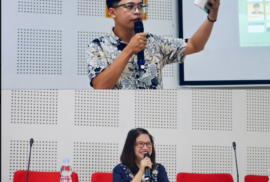
Yogyakarta, April 26, 2026 — Prof. Dr. Atik Triratnawati conducted a community service activity by delivering a lecture related to her field at Teladan State High School in Yogyakarta. The title of her lecture posed the question “Masuk Angin (Catching a Cold): A Blessing or a Curse?” and opened up a relevant discussion in the health and well-being sector. The term “masuk angin” has long been part of Indonesian society. The public’s understanding of “masuk angin” highlights the importance of an inclusive and culturally-based approach to health.

Many people still rely on traditional methods such as scraping therapy, herbal remedies, and rest as initial treatments. These practices reflect local wisdom that has the potential to support the healthcare system, provided they are balanced with appropriate medical education. “Masuk angin” is described as a Javanese concept of illness caused by an excess of wind elements within the body. Javanese cosmology forms the basis for health and illness; in medical anthropology, this is referred to as the hot-cold theory.

Prof. Atik explains that “masuk angin” is not a disease or sickness. However, she notes that “masuk angin” falls under magico-religious models—meaning this condition arises from spiritual or supernatural causes, so its treatment follows accordingly, such as scraping therapy (kerokan/pijat), consuming herbal remedies (jamu), and other practices. Additionally, it is referred to as holistic models, where health is viewed as the result of a balance among various aspects of life—not merely the physical. Physical conditions may be influenced by psychological, social, environmental, or spiritual factors, such as stress or an unhealthy lifestyle. She also explained that “wind entering the body” is categorized into several types: ordinary (mild) wind, severe wind, and “kasep” wind (sedentary wind). Her interpretations regarding “masuk angin” include health disorders (illness), failure to adapt, a reflection of low bodily resilience, a signal to rest, and “angin duduk” as a result of magical influences.

Prof. Atik focuses on the field of health from an anthropological perspective. This is because health literacy is key to building a community that is aware of its physical condition. Appropriate education can help the public distinguish between mild symptoms and serious illnesses requiring medical intervention. Additionally, a culture-based approach helps reach communities with limited access to formal healthcare services. By integrating local knowledge into the healthcare system, it is hoped that no group will be left behind.

This discussion underscores that traditional practices such as “catching a chill” are not always an obstacle to health development; rather, they can serve as a bridge toward a more inclusive and sustainable healthcare system. Collaboration among healthcare professionals, academics, and the community is key to achieving this goal.

Author: Dewi Widyastuti
Photo: Prof. Dr. Atik Triratnawati, M.A.

123…38

Video UGM

[shtmlslider name='shslider_options']
Universitas Gadjah Mada

Faculty of Cultural Sciences
Universitas Gadjah Mada
Jl. Nusantara 1, Bulaksumur Yogyakarta 55281, Indonesia
   fib@ugm.ac.id
   +62 (274) 513096
   +62 (274) 550451

Work Units

  • Office of Journal & Publishing
  • INCULS
  • Information Technology and Database
  • Language Learning Center
  • Library Unit
  • Public Relations
  • Research

Facilities

  • Computer Laboratory
  • Gamelan
  • Guest House
  • Language Library
  • Library
  • Phonetics Library
  • Self Access Unit
  • Student Internet Centre

Importan Links

  • Journal of Humaniora
  • Subscriber Journal
  • Alumni Portal
  • Career
  • Departmens News
  • UGM Streaming

Contacts

  • Academic
  • Administration
  • Dean’s Office
  • Departments / Study Programs
  • Public Relations

© 2024 Faculty of Cultural Sciences Universitas Gadjah Mada

KEBIJAKAN PRIVASI/PRIVACY POLICY

[EN] We use cookies to help our viewer get the best experience on our website. -- [ID] Kami menggunakan cookie untuk membantu pengunjung kami mendapatkan pengalaman terbaik di situs web kami.I Agree / Saya Setuju