
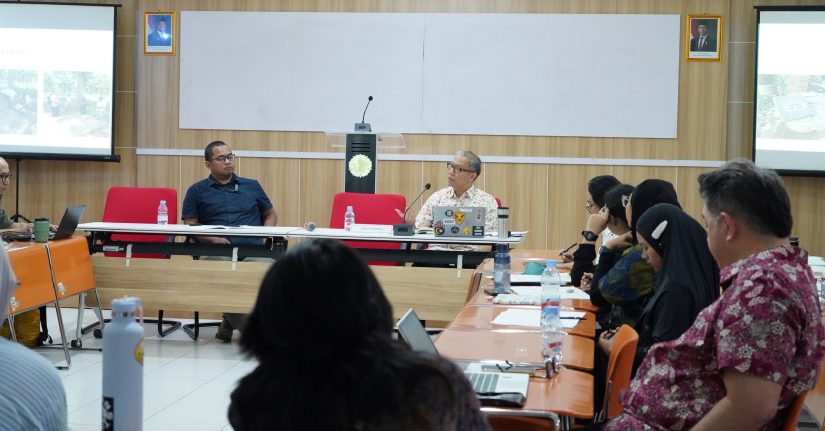
The Faculty of Cultural Sciences at Universitas Gadjah Mada hosted the Workshop on Oral History in Southeast Asia, organized by SEASREP Foundation in collaboration with Sejarah Lisan on 9–11 February 2026 at the FIB UGM Multimedia Room. The program was designed for postgraduate students and early-career researchers in Southeast Asia to strengthen their methodological, ethical, and conceptual capacities in oral history research, amid ongoing challenges in historical production often shaped by political interests and archival limitations.
The workshop was organized in response to the growing need to document life histories, testimonies, and field narratives that are frequently absent from official records. Across Southeast Asia, state violence, the silencing of archives and media, and the revision of historical narratives have significantly influenced how history is produced and disseminated.
In recent years, the region has witnessed efforts to reassess past violence in Indonesia, the rise of ethno-nationalist interpretations in Malaysia, the dominance of single-hero narratives in Singapore, and disputes over heritage sites along the Thailand–Cambodia border. These developments place marginalized voices at risk of being erased from collective memory.
Oral history and social history offer approaches to address these gaps. However, their practice entails methodological and ethical challenges, particularly when research touches upon politically and legally sensitive issues, trauma, and unequal access to information.
The workshop was designed to address the limited formal training in oral history available in the region. Many young researchers learn the method through practice without systematic preparation in interview design, interpretation, ethics, preservation, and public engagement. Through context-based training focused on Southeast Asia, participants were encouraged to understand oral history not merely as a technical tool, but as a critical concept and practice for reexamining how history is produced.
The three-day program adopted a phased approach. The first day explored the values and methodologies of oral history, including the development of interview guidelines and preparation for fieldwork challenges. The second day focused on interpretation, transcription, preservation, and publication, complemented by panel discussions and an oral history performance session to explore alternative narrative forms. The third day highlighted participants’ research presentations and discussions on ethical issues, power relations, and researchers’ responsibilities within complex socio-political environments.
Participants were expected to have an existing or planned research project based on oral history interviews. While there were no disciplinary restrictions, participants were required to actively share their experiences and engage in collective discussions.
Through a combination of lectures, panels, workshops, performances, and student presentations, the organizers emphasized active participation and community building. The workshop aimed to establish a network of oral history researchers in Southeast Asia and Japan committed to collaboration and non-exploitative research practices.
By the end of the program, participants were expected to understand the full stages of oral history research and its potential challenges, be able to design context-sensitive and ethically grounded interviews, and gain a deeper awareness of power relations and researcher positionality in fieldwork. They were also encouraged to view oral history as a means of critically engaging with dominant state narratives and expanding historical representation.
The workshop underscores the importance of strengthening academic capacity that upholds diversity of voices and social responsibility. Building a collaborative and reflective research community represents a strategic step toward ensuring that history is written not only by those in power, but also by those who have long remained at the margins of dominant narratives.
[Public Relations of FIB UGM, Candra Solihin]
