• About UGM
  • Academic Portal
  • IT Center
  • Library
  • Research
  • Webmail
  • Informasi Publik
  • English
    • Indonesia
Universitas Gadjah Mada Faculty of Cultural Sciences
Universitas Gadjah Mada
  • Home
  • Profile
    • History
    • Vision and Mission
    • Organizational structure
    • Administration
    • Staff
    • Faculty Members
  • Academic
    • Academic Calendar
    • Undergraduate Programs
      • Bachelor of Cultural Antrophology
      • Bachelor in Archaeolagy
      • Bachelor in History
      • Bachelor in Tourism
      • Bochetor in Korean Language and Culture
      • Bachelor in Indonesian Language and Culture
      • Bachelor in English
      • Bachelor in Arabic
      • Bachelor in Japanese Language and Culture
      • Bachelor in Javanese Language, Literature and Culture
      • Bachelor in French language and literature
    • Graduate Programs
      • Master in Antrophology
      • Master in ArchaeoIogy
      • Master in History
      • Master in Linguistics
      • Master in Literature
      • Master In American Studies
      • Master in Middle Eastern Cultural Studies
    • Post-Graduate Programs / S3
      • Doctor in Antropology
      • Doctor in American Studies
      • Doctor in Humanities
    • Student Service
  • KPPM
    • Research Information
    • Scientific / Academic Publications
    • Community Service
    • International Cooperation
    • Domestic Cooperation
  • Student Organizations
    • Student Executive Council
    • Semi-Autonomous Organizations
      • KAPALASASTRA
      • Christian Student Alliance
      • LINCAK
      • Saskine
      • Catholic Student Family
      • Dian Budaya
      • Sastra Kanuragan (sasgan)
      • Family of Muslim Cultural Sciences Students (KMIB)
      • Bejo Mulyo
    • Autonomous Organizations
      • Family of Anthropology Students (KEMANT)
      • English Department Student Association
      • Tourism Students Association (HIMAPA)
      • Family of Indonesian Literature Students (KMSI)
      • West Asian Literature Student Association (IMABA)
      • Association of Korean-Language Students (HIMAHARA)
      • Family of Regional Indonesian Literatures Students (KAMASUTRA)
      • The Family Body of History Students (BKMS)
      • The French Literature Students Association (HMSP)
      • Family of Anthropology Students
      • Japanese Student Association (HIMAJE)
  • Admission
    • Student Evaluation
  • Home
  • SDGs 8: Pekerjaan Layak dan Pertumbuhan Ekonomi
  • SDGs 8: Pekerjaan Layak dan Pertumbuhan Ekonomi
  • page. 2
Arsip:

SDGs 8: Pekerjaan Layak dan Pertumbuhan Ekonomi

From Literature to the Global Stage: A UGM Master’s Student at the Korea Youth Summit 2026

News Release Thursday, 19 February 2026

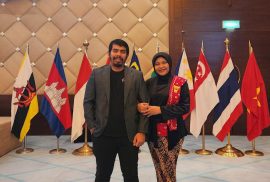
It may seem uncommon for a humanities student to be involved in an international forum centered on business and innovation. Yet that is precisely what makes the story of Kharisma Qurrota Ayun compelling. A Master’s student in Literature at Universitas Gadjah Mada (UGM), Kharisma took part in the Korea Youth Summit 2026, organized by Youth Break the Boundaries from February 2–5, 2026, in South Korea.

Rather than attending as a project delegate, Kharisma contributed from behind the scenes as a member of the organizing committee. Far from being a secondary role, her position highlights an important point: global forums are not sustained by ideas alone, but also by the cultural fluency, communication skills, and coordination that make international collaboration possible. Her involvement invites a broader reflection on how the humanities, often perceived as distant from business and technology, play a vital role in knowledge diplomacy and cross-cultural engagement.

The summit’s central agenda, the International Symposium, brought together 34 young innovators from New Zealand, Vietnam, Indonesia, Morocco, Bangladesh, Mexico, and Uzbekistan. Participants presented business-driven solutions to pressing global challenges, including green economic transitions and community-based empowerment initiatives. The symposium functioned not merely as a competition of ideas, but as a shared learning space where diverse perspectives met and evolved.

In this context, Kharisma’s academic training in literary studies proved unexpectedly relevant. Literature sharpens the ability to interpret narratives, understand cultural nuances, and engage with different worldviews, skills that are indispensable in multinational settings. In global conversations, persuasive storytelling and cultural sensitivity are often as important as technical feasibility. Her background equipped her to navigate complex intercultural dynamics while supporting the event’s overall coordination.

As part of the organizing team, she helped ensure the smooth execution of the symposium, facilitated communication among international participants, and maintained the flow of the program. The role demanded meticulous planning, adaptability, and intercultural competence: qualities that reflect the emerging practice of youth-led global diplomacy.

Kharisma’s experience underscores a broader message: humanities graduates are not confined to classrooms or textual analysis. They are equally positioned to contribute to global innovation ecosystems. Her journey illustrates that literature is not only about studying texts, but about cultivating the capacity to “read” societies, bridge differences, and shape meaningful dialogue.

From Yogyakarta to South Korea, her participation signals the growing presence of Indonesian youth in international arenas. It also reminds us that transformative global initiatives rely not only on groundbreaking ideas and capital investment, but on empathy, narrative intelligence, and collaboration across cultures.

[Master of Arts in Literature, Khotibul Umam]

UGM and Universidade Nacional Timor Lorosa’e Explore Strategic Collaboration Opportunities in Culture, Language, Literature, History, and Tourism

News Release Friday, 13 February 2026

Dili, Timor-Leste, February 12, 2026 – Universitas Gadjah Mada (UGM) held a cooperation meeting with Universidade Nacional Timor Lorosa’e (UNTL) on Thursday (12/2) at 11:00 a.m. local time. The meeting marked an initial step in exploring strategic collaboration in the fields of culture, language, literature, history, and tourism.

The UGM delegation was warmly welcomed by Ms. Celine, a 1992 Biology alumna of UGM, and Prof. Armindo Maia, the first Rector of the former Universitas Timor Timur, now UNTL. The meeting took place in a cordial atmosphere, highlighted by an exchange of experiences from their time studying in Yogyakarta, reflecting the long-standing historical ties between the two institutions.

In the opening session, UNTL presented the history of its institutional relationship with UGM, including the establishment of the Indonesian Cultural Studies Center, which holds significant potential to be further developed as a platform for collaboration in the tridharma of higher education—education, research, and community service. The meeting was attended by UNTL’s leadership, including the Rector, Vice Rector for Cooperation, university founders, Head of the Cultural Studies Program, Dean of the Faculty of Philosophy, Dean of the Faculty of Tourism, and representatives from other faculties.

UNTL Rector, Prof. Dr. Eng. Joviano António da Costa, M.Eng., expressed the institution’s commitment to strengthening university-to-university (U2U) partnerships, particularly in the areas of culture, language, tourism, and related disciplines that offer mutual benefits.

As Head of the UGM Delegation, Prof. Dr. Muti’ah Amini presented the profiles of academic programs within UGM’s Faculty of Cultural Sciences, along with several ongoing academic initiatives. She also highlighted UNTL’s strategic plan to develop its History Study Program through collaboration with UNESCO and UGM’s History Study Program. This collaboration is considered strategically important for strengthening academic capacity, curriculum development, and research quality enhancement.

Beyond the field of history, UNTL emphasized the need to strengthen human resources in the tourism sector, including human resource management, attraction management, and destination development. The Dean of the Faculty of Tourism at UNTL noted that opportunities for joint research and collaborative publications are widely open and have the potential to provide substantial contributions to both institutions. The Dean of the Faculty of Education also expressed hope that the faculty would be integrated into the cooperation framework currently being formulated. Meanwhile, the Dean of the Faculty of Arts and Culture, Ms. Celine, underscored the urgency of cross-regional research collaboration in arts and culture to enrich academic perspectives and strengthen international networks.

Both parties agreed that the signing of a Memorandum of Understanding (MoU) would serve as an essential initial step to ensure that the implementation of collaborative programs proceeds legally, systematically, and sustainably across the agreed fields. This collaboration aligns with the commitment to achieving the Sustainable Development Goals (SDGs), particularly SDG 4 (Quality Education) through academic capacity building and knowledge exchange, SDG 8 (Decent Work and Economic Growth) through competency-based tourism sector development, and SDG 17 (Partnerships for the Goals) through strengthened international cooperation networks.

The meeting concluded with a shared commitment to continue dialogue in order to further strengthen the historical, academic, and programmatic ties between UGM and UNTL, while expanding both institutions’ contributions to the advancement of knowledge and culture in Southeast Asia.

The visit conducted by Universitas Gadjah Mada received support and sponsorship from the Swedish International Development Cooperation Agency (SIDA) as the main sponsor of the organization Cultivating the Humanities and Social Sciences and Supporting Under-Represented Scholars of Asia (CHSS). CHSS itself is a transnational inclusivity initiative established by the Association for Asian Studies (AAS).

[Public Relations FIB UGM, Alma Syahwalani]

The Ghibli Anime Film “Kiki’s Delivery Serviceand” Reflections on the Life of Young Migrants

News Release Monday, 2 February 2026

The Studio Ghibli anime film Kiki’s Delivery Service, directed by Hayao Miyazaki, presents a story that remains relevant to the realities of young migrants, particularly university students. Through a simple yet meaningful narrative, the film invites audiences to reflect on the process of growing up, independence, and the importance of maintaining mental well-being during the transition into adulthood.

Kiki’s Delivery Service follows the journey of Kiki, a 13-year-old young witch who decides to leave home and live away from her family in order to learn independence. In an unfamiliar city, Kiki struggles to survive by running a delivery service using her ability to fly. At the beginning of her journey, she is portrayed as enthusiastic, confident, and optimistic about her new life.

However, as time passes, Kiki begins to face various challenges. Feelings of exhaustion, self-doubt, and the tendency to compare herself with others lead her into an identity crisis. This condition even affects her magical abilities, causing her to lose her power. Through this conflict, Kiki’s Delivery Service illustrates that the process of growing up does not always run smoothly and is not solely about achievements, but also about failure, uncertainty, and learning to accept oneself.

Kiki’s experiences closely resonate with the lives of young migrants, especially students who live far from their families. The initial excitement of gaining freedom often turns into the realization that independent living comes with great responsibility. Academic pressure, demands for productivity, and constant exposure to others’ achievements frequently generate feelings of insecurity and stagnation. In such circumstances, a supportive environment and a strong support system play a crucial role in maintaining emotional balance.

More than mere entertainment, the anime film Kiki’s Delivery Service conveys an important message about giving oneself space to rest. The film emphasizes that feeling tired is not a sign of failure, but a natural part of the growth process. This message aligns with the Sustainable Development Goals (SDGs), particularly Goal 3, Good Health and Well-being, which highlights the importance of mental health as a component of individual well-being. In addition, the film also reflects SDG Goal 4 on Quality Education, especially learning through life experiences, as well as SDG Goal 8 on Decent Work and Economic Growth, as seen in Kiki’s efforts to work independently and adapt to a new environment.

Through Kiki’s story, the film encourages students and young migrants to recognize that everyone grows at their own pace. Taking time to breathe, understand oneself, and accept the process are essential steps in the journey toward adulthood.

[Public Relations FIB UGM, Alma Syahwalani]

Source: Studio Ghibli anime film Kiki’s Delivery Service directed by Hayao Miyazaki (released in 1989)

Photo source: Kiki’s Delivery Service Original 1989 Japanese B5 Chirashi Handbill – Posteritati Movie Poster Gallery

Educational and Community Engagement Collaboration between the Japanese Language and Culture Study Program, FIB UGM, and SMA Budi Utomo Perak, Jombang

News Release Tuesday, 27 January 2026

The Japanese Language and Culture Study Program, Faculty of Cultural Sciences, Universitas Gadjah Mada, conducted an Educational and Community Engagement (PkM) activity on Tuesday, 7 January 2026, at SMA Budi Utomo Perak, Jombang Regency, East Java. This activity was carried out as a collaborative initiative with SMA Budi Utomo Perak as part of the school’s Japanese-themed event, Festival NIKKI: Nihon Chishiki (Japanese Knowledge). The festival was held under the theme “Exploring Insights: Japanese Philosophy and Global Career Opportunities” and aimed to introduce various aspects of Japanese culture while broadening students’ perspectives on academic pathways and career opportunities related to Japan. Through this program, lecturers and students from the Japanese Language and Culture Study Program participated as resource persons in a series of academic and educational activities.

The program was held over a full day and consisted of several interactive sessions. The team of lecturers delivered materials on key aspects of Japanese culture, including the concept of omotenashi as a form of wholehearted service, the notions of honne and tatemae in Japanese communication, an introduction to Japanese popular culture in everyday life, as well as an overview of employment opportunities and workplace culture in Japan. All materials were presented in an engaging manner and closely connected to contexts familiar to the students.

In addition to the lecturers’ presentations, students from the Japanese Language and Culture Study Program actively participated by visiting Japanese language classes. During these sessions, they shared firsthand experiences related to learning Japanese, university life, and student activities, providing participants with a direct glimpse into higher education. The series of activities concluded with Japanese performing arts presented by the student team, featuring both traditional and modern Japanese dances. The performances added to the festive atmosphere and were warmly received by the audience.

This collaborative program was successfully implemented and received positive responses from students, teachers, and the SMA Budi Utomo foundation. Participants’ enthusiasm was evident through their active involvement in discussions and question-and-answer sessions. Through this initiative, it is expected that students’ interest in Japanese language, culture, and Japan more broadly will continue to grow and serve as motivation for further study in the future. Similar collaborative activities are also envisioned to be conducted regularly on a broader scale.


Author: Barra Taura N.
Editor: Stedi Wardoyo

Shela Azzahra, an English Literature Student at FIB UGM, Introduces Vibrant Hijabs through the LaSheild Brand

News Release Monday, 26 January 2026

Yogyakarta, January 26, 2025 — Shela Azzahra, a 2023 student of the English Literature Study Program, demonstrates that the creativity of students at the Faculty of Cultural Sciences (FIB), Universitas Gadjah Mada, does not grow solely within classroom walls but can also transform into entrepreneurial innovation. Through her hijab brand, laSheild, Shela presents a local hijab alternative characterized by bold and vibrant colors that dare to stand out in Indonesia’s hijab market.

Shela’s interest in building a hijab business stemmed from both personal needs and her restlessness as a creative individual with a strong passion for fashion exploration. She often found it difficult to discover brightly colored hijabs in the local market, which is generally dominated by neutral and earth-tone shades. To achieve her desired look, Shela previously had to purchase overseas products at higher prices due to shipping costs and import taxes. This experience sparked the idea of creating a local hijab product that is reasonably priced, high in quality, and easily accessible.

“Why not make it myself?” This thought became the starting point for laSheild, which now carries the tagline “Vibrant hues. Born in colors.” The brand seeks to fill a gap in the local hijab market while encouraging hijabi women to be more playful and confident in expressing themselves through color. Although Shela initially hesitated and produced only a limited stock, market responses exceeded expectations. The high demand indicates that Indonesian hijabi women have a strong desire to express their identity and personality through color choices. This enthusiasm has even opened opportunities for international expansion, leading laSheild to consider overseas shipping.

Behind her achievements, Shela faces significant challenges as an active student and a solopreneur. “The main challenge is balancing my dual roles as a full-time student and a solopreneur. From the very beginning, I handled everything on my own without a team. Since my priority is still my studies, laSheild cannot operate every day. The challenge is trying not to burn out and accepting that this business runs alongside my academic rhythm, not in competition with it. Sometimes 24 hours just aren’t enough, especially during exam periods and peak sales seasons. That’s why I avoid selling during exams,” she explained.

In managing her time, Shela applies a “no pressure” principle. Rather than setting burdensome sales targets, she adjusts her business pace to align with her academic commitments. Support from her surrounding environment—particularly friends who assist with promotion and content creation—has also played a crucial role in sustaining laSheild.

Shela’s journey aligns with the implementation of the Sustainable Development Goals (SDGs), particularly SDG 4 (Quality Education) through the development of students’ creative and entrepreneurial skills, SDG 8 (Decent Work and Economic Growth) by encouraging young entrepreneurs and the creative economy, and SDG 12 (Responsible Consumption and Production) through the promotion of sustainable and affordable local products.

Closing her story, Shela shared a brief message for FIB students who aspire to start a business. “Just try. Don’t be afraid to be different. Don’t be afraid to start something that seems niche. Start small, but dream big,” she said. The story of laSheild proves that creativity, courage, and consistency can pave the way for students to create meaningful work while contributing to society.

[FIB UGM Public Relations, Alma Syahwalani]

1234…7

Video UGM

[shtmlslider name='shslider_options']
Universitas Gadjah Mada

Faculty of Cultural Sciences
Universitas Gadjah Mada
Jl. Nusantara 1, Bulaksumur Yogyakarta 55281, Indonesia
   fib@ugm.ac.id
   +62 (274) 513096
   +62 (274) 550451

Work Units

  • Office of Journal & Publishing
  • INCULS
  • Information Technology and Database
  • Language Learning Center
  • Library Unit
  • Public Relations
  • Research

Facilities

  • Computer Laboratory
  • Gamelan
  • Guest House
  • Language Library
  • Library
  • Phonetics Library
  • Self Access Unit
  • Student Internet Centre

Importan Links

  • Journal of Humaniora
  • Subscriber Journal
  • Alumni Portal
  • Career
  • Departmens News
  • UGM Streaming

Contacts

  • Academic
  • Administration
  • Dean’s Office
  • Departments / Study Programs
  • Public Relations

© 2024 Faculty of Cultural Sciences Universitas Gadjah Mada

KEBIJAKAN PRIVASI/PRIVACY POLICY

[EN] We use cookies to help our viewer get the best experience on our website. -- [ID] Kami menggunakan cookie untuk membantu pengunjung kami mendapatkan pengalaman terbaik di situs web kami.I Agree / Saya Setuju