• About UGM
  • Academic Portal
  • IT Center
  • Library
  • Research
  • Webmail
  • Informasi Publik
  • English
    • Indonesia
Universitas Gadjah Mada Faculty of Cultural Sciences
Universitas Gadjah Mada
  • Home
  • Profile
    • History
    • Vision and Mission
    • Organizational structure
    • Administration
    • Staff
    • Faculty Members
  • Academic
    • Academic Calendar
    • Undergraduate Programs
      • Bachelor of Cultural Antrophology
      • Bachelor in Archaeolagy
      • Bachelor in History
      • Bachelor in Tourism
      • Bochetor in Korean Language and Culture
      • Bachelor in Indonesian Language and Culture
      • Bachelor in English
      • Bachelor in Arabic
      • Bachelor in Japanese Language and Culture
      • Bachelor in Javanese Language, Literature and Culture
      • Bachelor in French language and literature
    • Graduate Programs
      • Master in Antrophology
      • Master in ArchaeoIogy
      • Master in History
      • Master in Linguistics
      • Master in Literature
      • Master In American Studies
      • Master in Middle Eastern Cultural Studies
    • Post-Graduate Programs / S3
      • Doctor in Antropology
      • Doctor in American Studies
      • Doctor in Humanities
    • Student Service
  • KPPM
    • Research Information
    • Scientific / Academic Publications
    • Community Service
    • International Cooperation
    • Domestic Cooperation
  • Student Organizations
    • Student Executive Council
    • Semi-Autonomous Organizations
      • KAPALASASTRA
      • Christian Student Alliance
      • LINCAK
      • Saskine
      • Catholic Student Family
      • Dian Budaya
      • Sastra Kanuragan (sasgan)
      • Family of Muslim Cultural Sciences Students (KMIB)
      • Bejo Mulyo
    • Autonomous Organizations
      • Family of Anthropology Students (KEMANT)
      • English Department Student Association
      • Tourism Students Association (HIMAPA)
      • Family of Indonesian Literature Students (KMSI)
      • West Asian Literature Student Association (IMABA)
      • Association of Korean-Language Students (HIMAHARA)
      • Family of Regional Indonesian Literatures Students (KAMASUTRA)
      • The Family Body of History Students (BKMS)
      • The French Literature Students Association (HMSP)
      • Family of Anthropology Students
      • Japanese Student Association (HIMAJE)
  • Admission
    • Student Evaluation
  • Home
  • SDGs 4: Education
  • SDGs 4: Education
  • page. 2
Arsip:

SDGs 4: Education

Success Tips: Erlangga Satrio Bintoro’s Journey in Receiving the Indonesian International Student Mobility Awards (IISMA) 2024

News ReleaseSDGs 11: Sustainable cities and communitiesSDGs 16: Peace justice and strong institutionsSDGs 17: Partnerships for the GoalsSDGs 4: Quality Education Monday, 10 June 2024

Erlangga Satrio Bintoro was overwhelmed with joy when he heard the announcement that he had graduated from IISMA 2024. It was a moment he had been looking forward to with great expectation and hard work. His first step was to tell his family, mentors, and closest friends. For him, sharing his happiness was the best way to start his new journey after passing such a crucial exam.

Since the beginning of the IISMA enrollment process, Erlangga Satrio Bintoro, a Cultural Anthropology, has prepared himself diligently. From conducting in-depth research about the university and country, to preparing essays and practicing interviews. For him, thorough preparation was the key to success in the exam.

In choosing a destination country and university, Erlangga strongly considers his interests and how it can help him achieve his future goals. For him, choosing according to his passion is the right step because it will be reflected in the essay and interview, which are important parts of the IISMA selection.

Erlangga would like to share his tips with his seniors in order to pass the IISMA selection successfully. According to him, prepare yourself as well as possible but don’t overdo it. Choose a country and university that matches your passion, because it will be reflected in the essay and interview.

Erlangga’s journey to success in the IISMA was also helped by the IISMA Preparation Course organized by the UGM Faculty of Arts Language Center. Through the course, Erlangga got a rough idea of how essays should be written, how interviews should go, and what is expected of participants by IISMA. The course contributed greatly to Erlangga’s success in his journey to become an IISMA 2024 awardee.

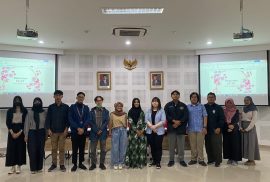
Public Lecture: Globalization, Nationalism, and Cosmopolitanism by Prof. Carla Jones, Ph.D.

News ReleaseSDGs 11: Sustainable cities and communitiesSDGs 16: Peace justice and strong institutionsSDGs 17: Partnerships for the GoalsSDGs 4: Quality EducationSDGs 9: Industry innovation and infrastructure Monday, 10 June 2024

On Wednesday, April 25, 2024, the UGM Master of American Studies Program held a Public Lecture on the theme of Globalization, which was presented by Prof. Carla Jones, Ph.D, Professor of Anthropology at the University of Colorado Boulder, United States. This public lecture was held online through the Zoom application which was attended by 20 students who were a combination of students of the Master of American Studies Program and the Middle Eastern Cultural Studies Program, Faculty of Cultural Sciences UGM. In this session, the topic raised in the discussion was “Globalization, Nationalism, and Cosmopolitanism”, which discussed how the impact of globalization on nationalism. The occurrence of mutual influence and the fading of borders between countries causes questions about nationalism.

Prof. Carla explained that in the era of Globalization, it creates a zone of continuous cultural interaction and exchange throughout the world, which can also be referred to as “ecumenism of globalization”. Globalization also creates a situation where previously isolated cultures are constantly colliding. The impact of this global cultural flow is: Homogeneity and cultural chaos. Homogeneity in this context refers to the commonalities that arise when cultures share ideas, goods and media. This then creates confusion and challenges due to the mixing and similarity of cultures.

In addition to this, Prof. Carla also explained about the concept of globalization from Arjun Appadurai, an Indian-American anthropologist. He explained, according to Appadurai, there are five dimensions of cultural flow in globalization: Ethnoscapes (movement or movement of people such as tourists, refugees etc.), Technoscapes: (the movement of technology such as factories, machines, etc.), Financescapes (the movement of money), Mediascapes (the movement of information and images such as TV, newspapers, etc.), Ideoscapes (the spread of ideas and ideology). The 120-minute public lecture then ended with a question and answer session and an open discussion where participants could respond to what had been presented by the speaker.

Monbukagakusho Scholarship Socialization with the Embassy of Japan Jakarta

News ReleaseSDGs 10: Reduced InequalitiesSDGs 16: Peace justice and strong institutionsSDGs 17: Partnerships for the GoalsSDGs 4: Quality EducationSDGs 9: Industry innovation and infrastructure Monday, 10 June 2024

Pada hari Rabu 20 Maret 2024, Program Studi Bahasa dan Kebudayaan Jepang (BKJ) mengadakan sosialisasi beasiswa Monbukagakusho/MEXT bersama Kedutaan Besar Jepang Jakarta dengan Fenny Gunadi yang merupakan Study Abroad Advisor dan First Secretary Kawakubo Yuriko Bagian Pendidikan Kedutaan Besar Jepang sebagai pembicara. Kegiatan ini diikuti oleh mahasiswa Prodi BKJ UGM dari berbagai angkatan.

Beasiswa Monbukagakusho atau MEXT adalah beasiswa Kementerian Pendidikan, Budaya, Olahraga, Sains, dan Teknologi Pemerintah Jepang yang ditujukan kepada akademisi dari luar Jepang dengan maksud ingin menempuh pendidikan di Jepang. Beasiswa tersebut terbagi kedalam berbagai tingkat pendidikan mulai dari tingkat Diploma sampai S3. Di jenjang Diploma terdapat dua pilihan beasiswa yaitu beasiswa Specialized Training College (Senshu) dan College of Technology (Kosen). Untuk S1 terdapat beasiswa Undergraduate (Gakubu). Sedangkan untuk S2 dan S3 terdapat beasiswa Research Student. Selain itu, terdapat program beasiswa non degree seperti beasiswa Japanese Studies untuk pertukaran mahasiswa dari jurusan Studi Jepang dan Teacher Training untuk guru Bahasa Jepang aktif di sekolah formal.

Bagi mahasiswa program studi Bahasa dan Kebudayaan Jepang, terdapat dua beasiswa yang bisa dimanfaatkan dan patut untuk dipahami alurnya. Beasiswa tersebut adalah Japanese Studies dan Research Student. Beasiswa Japanese Studies memiliki dua jalur penerimaan yaitu G to G (Government to Government) dan U to U (University To University). Pada alur G to G, mahasiswa akan melalui seleksi dengan dua tahap Screening. Tahap pertama (primary screening) adalah proses seleksi pendaftar dalam negara yang sama, lalu tahap kedua (secondary screening) adalah seleksi para pendaftar antar negara. Di lain sisi, alur beasiswa U to U dilaksanakan dengan universitas dari Jepang langsung menyeleksi pendaftar antar negara. Lalu untuk mahasiswa tingkat S2 atau S3, terdapat beasiswa Research Student dengan beberapa seleksi tambahan. Tidak hanya para akademisi, beasiswa juga terbuka kepada para pengajar bahasa Jepang yakni program Teacher Training selama delapan belas bulan. Program tersebut terbagi dengan enam bulan belajar Bahasa Jepang dan dua belas bulan pelatihan.

Dengan kesempatan yang dibuka oleh pemerintah Jepang, baik mahasiswa, akademisi, maupun pengajar dapat melanjutkan studinya ke Jepang secara cuma-cuma. Tidak hanya ilmu, pengalaman studi di Jepang tersebut akan menjadi daya jual tak ternilai bagi mereka yang berhasil mendapatkan kesempatan tersebut. Jadi, pengadaan sosialisasi ini diharapkan dapat mempersiapkan  mahasiswa yang berminat mendaftar beasiswa dengan lebih matang. Mari berjuang bersama.

Student of UGM Master’s Program in Middle Eastern Cultural Studies Selected as Translator for Egyptian Professor

News ReleaseSDGs 10: Reduced InequalitiesSDGs 16: Peace justice and strong institutionsSDGs 17: Partnerships for the GoalsSDGs 4: Quality EducationSDGs 8: Decent work and economic growth Sunday, 9 June 2024

Muhammad Khafifudin, who is familiarly called Khafif, is a student from the UGM Master of Middle Eastern Cultural Studies Program who was chosen to be a translator and personal assistant to one of the Professors of Canal Suez University Egypt, Prof. Dr. Hassan Youssef during his visit to Indonesia. The alumni of Al-Azhar University Egypt accompanied the professor to several events at various institutions, namely UIN Abdurrahman Wachid Pekalongan, Gadjah Mada University, Sebelas Maret University and UIN Raden Mas Said Surakarta. In his duties, he translates from Arabic to Indonesian, both oral and written.

Previously, Khafif had been selected as a translator for several other prominent figures from Egypt, namely Prof. Dr. Mohammed Imam Dawood from the Giza Qur’an Institute, Prof. Dr. Nahla Shabry As-Shoidy as Advisor to the Grand Sheikh of Al-Azhar University, and Dr. Nadzir Ayyad, as Secretary General of Majma’ Buhust Lugah al-Arabiyyah. From this experience, this outstanding student successfully translated speeches, material presentations and important documents. During his assignment, he also received positive responses and good appreciation from the figures he accompanied. Therefore, knowledge of spoken and written Arabic plays an important role in establishing communication and cooperation between countries.

Universitas Gadjah Mada’s Japanese Webinar Collaboration with University of Tsukuba

News ReleaseSDGs 10: Reduced InequalitiesSDGs 17: Partnerships for the GoalsSDGs 4: Quality Education Sunday, 9 June 2024

On Wednesday, March 6, 2024, the UGM Japanese Language and Culture Study Program (BKJ) held a webinar entitled ‘Japanese Language and Literature Webinar’. The webinar was attended by more than seventy participants combined between BKJ Study Program students and students outside the study program who have an interest in Japanese Language and Literature.

The webinar took place in two sessions, with the first session by Dr. Mulyadi, M.A. as a lecturer in Linguistics of the UGM Japanese Language and Culture Study Program and the second session by Prof. Mika Baba who is a lecturer in the Literature sub-program of the Bachelor of Cultural Sciences and Literary Sciences Program from the University of Tsukuba.

The first session was an explanation of ‘The Use of Japanese in Naming Business Entities in Lamongan Regency’. This session began with the presentation of data on the naming of business entities using Japanese taken from Google Maps. There were twenty business names from various fields that used Japanese. The data shows that the Japanese language and culture are considered to have a high appeal in attracting customers, especially among young people.

The session continued with a discussion on ‘Personal Pronouns as a Method in Modern Japanese Literature’ by Professor Mika Baba. His research focused on literary works in the second half of the 19th century (1850-1900). In Japanese literature, first person pronouns are used such as 「私」watashi,「余」yo,「己」onore,「我」ware,「僕」boku,「俺」ore, and「自分」jibun. All seven first person pronouns have the same meaning of I or me. The difference lies in the time of use such as 「余」yo which is no longer used, and「己」onore and「我」ware which can still be seen today in literary works set in the past. Another difference lies in the gender of the user. The pronouns 「僕」boku and「俺」ore are mostly used by men, while 「私」watashi is mostly used by women. Lastly, the pronoun 「自分」jibun is generally used when expressing personal opinions in a public forum.

By holding Japanese literature and language webinar activities from the two speakers, it is hoped that students can gain new knowledge related to the use of Japanese both in practice and theory. The knowledge gained later can also be utilized by academics to explore this field.

12345

Video UGM

[shtmlslider name='shslider_options']
Universitas Gadjah Mada

Faculty of Cultural Sciences
Universitas Gadjah Mada
Jl. Nusantara 1, Bulaksumur Yogyakarta 55281, Indonesia
   fib@ugm.ac.id
   +62 (274) 513096
   +62 (274) 550451

Work Units

  • Office of Journal & Publishing
  • INCULS
  • Information Technology and Database
  • Language Learning Center
  • Library Unit
  • Public Relations
  • Research

Facilities

  • Computer Laboratory
  • Gamelan
  • Guest House
  • Language Library
  • Library
  • Phonetics Library
  • Self Access Unit
  • Student Internet Centre

Importan Links

  • Journal of Humaniora
  • Subscriber Journal
  • Alumni Portal
  • Career
  • Departmens News
  • UGM Streaming

Contacts

  • Academic
  • Administration
  • Dean’s Office
  • Departments / Study Programs
  • Public Relations

© 2024 Faculty of Cultural Sciences Universitas Gadjah Mada

KEBIJAKAN PRIVASI/PRIVACY POLICY

[EN] We use cookies to help our viewer get the best experience on our website. -- [ID] Kami menggunakan cookie untuk membantu pengunjung kami mendapatkan pengalaman terbaik di situs web kami.I Agree / Saya Setuju