• About UGM
  • Academic Portal
  • IT Center
  • Library
  • Research
  • Webmail
  • Informasi Publik
  • English
    • Indonesia
Universitas Gadjah Mada Faculty of Cultural Sciences
Universitas Gadjah Mada
  • Home
  • Profile
    • History
    • Vision and Mission
    • Organizational structure
    • Administration
    • Staff
    • Faculty Members
  • Academic
    • Academic Calendar
    • Undergraduate Programs
      • Bachelor of Cultural Antrophology
      • Bachelor in Archaeolagy
      • Bachelor in History
      • Bachelor in Tourism
      • Bochetor in Korean Language and Culture
      • Bachelor in Indonesian Language and Culture
      • Bachelor in English
      • Bachelor in Arabic
      • Bachelor in Japanese Language and Culture
      • Bachelor in Javanese Language, Literature and Culture
      • Bachelor in French language and literature
    • Graduate Programs
      • Master in Antrophology
      • Master in ArchaeoIogy
      • Master in History
      • Master in Linguistics
      • Master in Literature
      • Master In American Studies
      • Master in Middle Eastern Cultural Studies
    • Post-Graduate Programs / S3
      • Doctor in Antropology
      • Doctor in American Studies
      • Doctor in Humanities
    • Student Service
  • KPPM
    • Research Information
    • Scientific / Academic Publications
    • Community Service
    • International Cooperation
    • Domestic Cooperation
  • Student Organizations
    • Student Executive Council
    • Semi-Autonomous Organizations
      • KAPALASASTRA
      • Christian Student Alliance
      • LINCAK
      • Saskine
      • Catholic Student Family
      • Dian Budaya
      • Sastra Kanuragan (sasgan)
      • Family of Muslim Cultural Sciences Students (KMIB)
      • Bejo Mulyo
    • Autonomous Organizations
      • Family of Anthropology Students (KEMANT)
      • English Department Student Association
      • Tourism Students Association (HIMAPA)
      • Family of Indonesian Literature Students (KMSI)
      • West Asian Literature Student Association (IMABA)
      • Association of Korean-Language Students (HIMAHARA)
      • Family of Regional Indonesian Literatures Students (KAMASUTRA)
      • The Family Body of History Students (BKMS)
      • The French Literature Students Association (HMSP)
      • Family of Anthropology Students
      • Japanese Student Association (HIMAJE)
  • Admission
    • Student Evaluation
  • Home
  • SDGs 17: Paertnerships for the Goals
Arsip:

SDGs 17: Paertnerships for the Goals

Austrian Academic and UGM Discuss Literature  Amid Globalization at Dissemination 2026

News Release Thursday, 19 November 2026

Yogyakarta – Literature has never truly existed in isolation. It moves alongside people, crossing geographical boundaries, engaging with cultures, and responding to the changes of the times. Amid the currents of globalization, literature serves as a space for exploring the encounters of diverse experiences, ideas, and identities. These issues were at the heart of Dissemination 2026, themed “Literature in the Crosscurrents of Globalization.”

Organized by the Master’s Program in Literature, Faculty of Cultural Sciences, Universitas Gadjah Mada (FIB UGM), on Wednesday (November 4, 2026), this international conference is an annual academic event attended by hundreds of participants online. The event opened with remarks from the Dean of FIB UGM, Dr. Nur Saktiningrum, S.S., M.Hum., followed by the Head of the Master’s Program in Literature, Prof. Dr. Aprinus Salam, S.S., M.Hum.

The first keynote presentation was delivered by Prof. Dr. Faruk, S.U., from Universitas Gadjah Mada, under the title “Literature in the Vortex of Globalization: Some Impressions.” Faruk used the metaphor of a vortex to illustrate the convergence of various currents within globalization. He referred to Arjun Appadurai’s five dimensions of global cultural flows: ethnoscapes (the movement of people), mediascapes (media), technoscapes (technology), financescapes (money or capital), and ideoscapes (ideologies). The discussion also connected globalization with Samuel Huntington’s concept of the clash of civilizations, Manuel Castells’ information society, and Appadurai’s concept of disjuncture, which describes the misalignment of various global flows.

In relation to literature, Faruk explained that literature is an imaginative representation of possible worlds, with language serving as its medium. He also highlighted the development of global literary flows, from the era of print media to digital media. According to him, literature has the potential to imaginatively envision other flows and the relationships between them. The forum then continued with presentations of seven papers by eight presenters: Brilindra Pandanwangi, Dyah Ayu Prasetyaningrum, Sayyidah Khoizuroonah, Pradita Devis Dukarno, Nio Awandha Nehru, Gerardo Felix Salim, and Tri Kurniawan Sujoko. The presenters shared their research findings on various topics and approaches in contemporary literary studies.

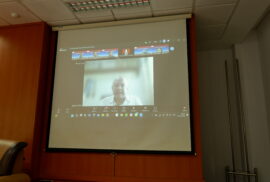
The next international perspective came from Mag. Dr. Stefan Kutzenberger of Universität Wien, Austria. In his presentation entitled “Vienna around 1900: Disputes and Demystification of Narrative,” Stefan Kutzenberger invited participants to explore Vienna during the transition from the nineteenth to the twentieth century. Through visual documentation, he illustrated the city’s transformation, the development of the Ringstraße area, and the growth of cultural institutions such as art galleries, theaters, and the University of Vienna.

The discussion also touched on figures such as Sigmund Freud and Gustav Klimt, as well as the development of the Secession movement. These examples demonstrated the dynamics of Vienna’s intellectual and artistic life in the early twentieth century, when changes in urban spaces went hand in hand with developments in art and thought. Toward the end of the event, the organizing committee announced and presented certificates of recognition to selected presenters in the Best Paper and Best Presenter categories, as an appreciation of their research contributions and presentation skills.

Behind the organization of this conference was the collaborative effort of an 11-member organizing committee. Preparations involved coordinating with speakers and presenters, arranging the event program, and managing the technical aspects of the online event. Throughout the conference, the committee coordinated its activities from the second floor of the Universitas Gadjah Mada Library. The committee chair, Rini Febriani, viewed the organizing process as an opportunity to learn together. In her view, a team is like a single body: each member has a role, and everyone depends on one another. Communication, mutual support, and a willingness to strengthen one another were essential to preparing for and carrying out the event. Rini also expressed her gratitude and appreciation to all committee members for their time, energy, commitment, and hard work, from the preparation stage through the conclusion of the event. Every contribution played an important role in the successful implementation of the 2026 International Dissemination event.

As an annual event organized by the Master’s Program in Literature at FIB UGM, the dissemination conference serves as a meeting space for research findings and ideas from diverse academic backgrounds. The participation of academics from Indonesia and Austria broadened discussions on literature in relation to history, culture, and globalization. Through this forum, academic dialogue is expected to continue growing and create opportunities for broader perspectives on literature amid a changing world.


By: Farika Yasin

Exploring, Rediscovering, and Understanding the Rich Heritage of Indonesian Batik at the 2026 National Batik Day Seminar

News Release Thursday, 5 November 2026

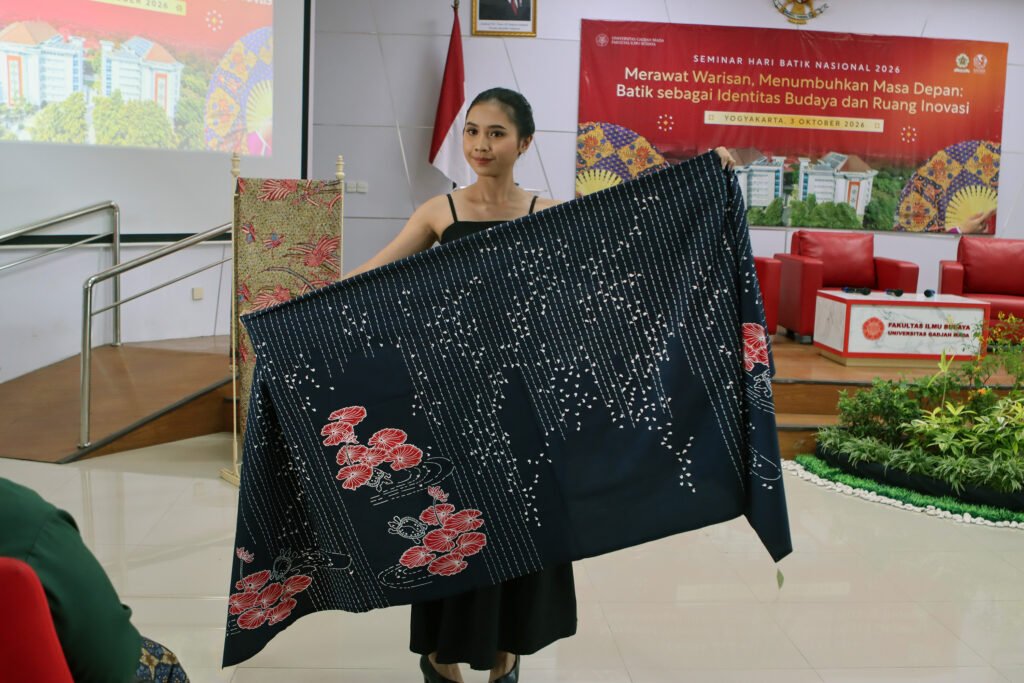
KAGAMA UGM, in collaboration with KAGAMA Batik and the Javanese Language, Literature, and Culture Study Program at the Faculty of Cultural Sciences (FIB), Universitas Gadjah Mada (UGM), held the 2026 National Batik Day Seminar on Saturday, October 3, 2026. Taking place at the Soegondo Auditorium, FIB UGM, the seminar carried the theme “Preserving Heritage, Nurturing the Future: Batik as a Cultural Identity and a Space for Innovation.” The event was organized to commemorate National Batik Day, which falls on October 2, 2026.

The event opened with a performance of the Golek Ayun-Ayun dance as a welcoming gesture to the guests in attendance. The event was made even more vibrant by a showcase of various types of batik from different regions, ranging from Jakarta batik to Madura batik. This series of activities served as an introduction to the richness of Indonesian batik motifs, the diversity of its traditions, and the cultural values embedded in this heritage.

The seminar featured Dr. Eng. Ir. Laretna Trisnantari Adishakti, M.Arch., a retired UGM lecturer and Chair of the UNESCO Chair in Heritage Cities Conservation and Management, as the keynote speaker. In her presentation, she explored various aspects of batik, including its history, local wisdom, and role in sociocultural movements and international relations diplomacy.

Dr. Eng. Ir. Laretna Trisnantari Adishakti, M.Arch., also highlighted the challenges of sustaining batik traditions amid changing times and emphasized the importance of developing sustainable preservation strategies. One of the key points she raised was batik’s role as a tool of diplomacy, both across the Indonesian archipelago and Southeast Asia, as well as on the global stage. Beyond serving as a cultural identity, batik also has the potential to support a regenerative economy—a system that not only generates economic value but also restores the environment, strengthens social and cultural life, and improves community well-being.

Following the keynote session, the seminar continued with a discussion moderated by Dr. Sulistyowati, S.S., M.Hum., Head of the Javanese Language, Literature, and Culture Study Program at FIB UGM. The seminar featured two speakers with distinct backgrounds and experiences: dr. CHR Sulistyono, M.Sc., FISQua, owner of Batik Nyah Kiok, which produces Lasem batik in Rembang, and Aji Setyowijaya, S.S., a Yogyakarta batik artisan who also specializes in batik tiga negeri, a traditional batik style combining influences from different regions.

In his presentation, dr. CHR Sulistyono, M.Sc., FISQua, explained the history of Batik Nyah Kiok and the development of Lasem batik, including the challenges involved in ensuring its continued survival. He noted that the existence of Lasem batik is closely intertwined with the customs and cultural practices of the communities that use it. Despite its strong historical and cultural significance, batik faces several challenges today. The declining number of artisans and limited generational renewal are issues that require serious attention. These conditions could hinder the continuity of the knowledge, skills, and batik-making traditions passed down from one generation to the next.

Meanwhile, Aji Setyowijaya, S.S., shared his experience of independently pursuing a career in batik. He emphasized the importance of paying greater attention to batik-making techniques and procedures, which he believes have not received sufficient consideration. According to him, batik preservation efforts should encompass the entire production process, including knowledge of the materials and tools used by artisans. Knowledge of production methods, material availability, equipment use, and technical skills must also be safeguarded to ensure that batik-making traditions continue to thrive. Attention to these production-related aspects is increasingly important in sustaining the livelihoods of batik artisans while creating opportunities for innovation without compromising traditional values.

Participants’ enthusiasm was evident in the wide range of questions and responses raised throughout the seminar. The discussions demonstrated that batik is not only an engaging subject from an aesthetic perspective but also a gateway to broader conversations about history, cultural identity, social practices, economic sustainability, and production challenges.

The 2026 National Batik Day Seminar broadened public understanding of batik’s role in Indonesian life, not merely as a cultural heritage, but also as a means of diplomacy, a source of historical knowledge, an economic opportunity, and a space for innovation. Its development must go hand in hand with community empowerment, including the empowerment of women, and environmental awareness, with artisans and communities recognized as essential parts of the batik ecosystem.

Through this seminar, the organizers invited the public to explore and preserve batik in its entirety, encompassing its motifs, philosophical values, knowledge, and skills passed down through generations. In this way, batik can be safeguarded not only as an expression of Indonesian cultural identity but also as a means of supporting community well-being and developing sustainably as a source of inspiration for future generations.


Writer : Haryo Untoro

Signing of Collaboration Agreement between HOMSEA, FKKMK, and FIB UGM to Host the 10th International Conference on the History of Medicine in Southeast Asia

SDGs 10: Reduced InequalitiesSDGs 17: Partnerships for the GoalsSDGs 3: Good health and well-beingSDGs 4: Quality Education Tuesday, 24 June 2025

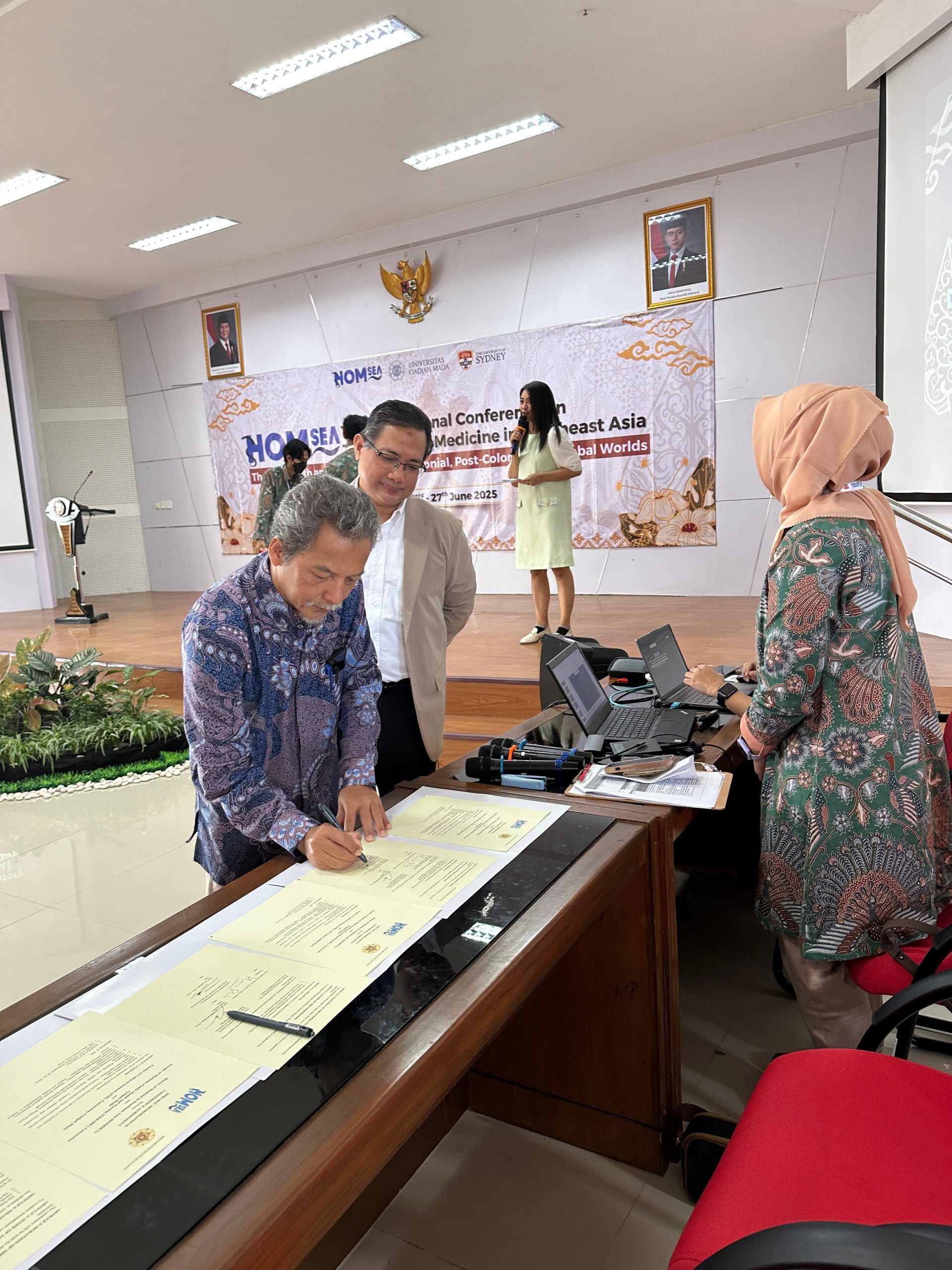
Yogyakarta, June 24, 2025 – The Faculty of Medicine, Public Health, and Nursing (FKKMK) and the Faculty of Cultural Sciences (FIB) at Universitas Gadjah Mada (UGM) officially signed a collaboration agreement with HOMSEA (History of Medicine in Southeast Asia) to co-host The 10th International Conference on the History of Medicine in Southeast Asia. The symbolic signing ceremony was held at Soegondo Hall, FIB UGM, with the Deans of FKKMK and FIB in attendance.

In his welcoming remarks, Prof. Dr. Setiadi, S.Sos., M.Si., Dean of FIB UGM, expressed her appreciation for the opportunity to host such a significant international gathering and emphasized the importance of interdisciplinary dialogue in understanding the historical roots of health systems. Representing FIB UGM, Dr. Mimi Savitri, M.A. served as the Person-in-Charge (PIC) of the event, actively coordinating the collaboration with HOMSEA and FKKMK UGM.

Held under the theme “The History of Medicine in Colonial, Post–Colonial, and Global Worlds,” the four-day conference takes place from June 23 to 27, 2025. The event began with a Pre-Conference Workshop on June 23, followed by the main conference sessions from June 24 to 26, and concludes with an optional Historical Hospital Tour on June 27.

This year’s conference addresses several vital subthemes

  • Health, Medicine, and Decolonization,
  • Community Health vs Medical Specialization,
  • Connections and Differences within Southeast Asia,
  • The Anthropocene from a Southeast Asian Perspective,
  • Medicine, Ethics, Politics, and the Sustainable Development Goals,
  • and Climate Change and Environmental Degradation.

Founded in 2005 by Prof. Laurence Monnais (University of Montreal) and Dr. Rethy Chhem (former Executive Director of the Cambodia Development Resource Institute), HOMSEA has served as a platform for scholars and practitioners to share insights and research on the history of health and medicine in the region.

To foster inclusivity, HOMSEA continues to provide travel bursaries and waived conference fees for participants from countries such as Indonesia, Cambodia, Laos, and Vietnam. These bursaries are made possible through support from institutions including the Canada Research Chair in Healthcare Pluralism, the Royal Netherlands Institute of Southeast Asian and Caribbean Studies (KITLV), and the Sydney Southeast Asia Centre.

This collaborative effort is expected to strengthen the development of research on the history of medicine in Southeast Asia and contribute meaningfully to the pursuit of equitable and sustainable global health systems.

[Public Relation of FIB UGM, Candra Solihin]

Opening Ceremony of the Summer Course Program between UGM, Victoria University, and ISI Yogyakarta

HEADLINESNews ReleaseSDGs 17: Partnerships for the GoalsSDGs 4: Quality Education Thursday, 11 July 2024

The Faculty of Cultural Sciences, Universitas Gadjah Mada (UGM), hosted the opening of the summer course program held at the University Club UGM. This program is a collaboration between UGM, Victoria University (VU), and the Indonesian Institute of the Arts Yogyakarta (ISI). The event took place on Monday, July 8, 2024, from 3:00 PM to 6:00 PM WIB.

The event began with a warm welcome from Dr. Mimi Savitri, M.A., the Vice Dean of the Faculty of Cultural Sciences at UGM. In her speech, Dr. Mimi expressed her hope that this program would serve as a platform for sharing knowledge, skills, and culture among students from the three universities.

Following Dr. Mimi’s remarks, the event continued with a presentation from representatives of Victoria University. They provided an overview of the film project that participants will work on during the program. This presentation was intended to inspire and guide participants in developing their creative ideas.

Next, representatives from ISI Yogyakarta delivered a presentation on the technical aspects of filmmaking. This presentation covered various technical aspects such as shooting, editing, and production. With this technical briefing, participants were expected to understand and master the skills required in the filmmaking process.

After the presentations, there was a traditional dance performance by Sastra Oebah featuring the Birawa Girjita dance. All participants were captivated by the performance.

The event concluded with a discussion and a communal meal held in a warm and friendly atmosphere. This activity provided an opportunity for participants to get to know each other and discuss their projects informally. Additionally, the communal meal served as a moment to strengthen the relationships among students from the three universities.

In this program, participants from UGM, VU, and ISI were divided into several groups. Each group will collaborate to produce a short film as the output of this activity. Through this collaboration, students are expected to develop practical skills in filmmaking while enriching their cultural and academic insights.

This summer course program is expected to serve as a tangible example of successful and sustainable international collaboration, providing significant benefits for all participants and the institutions involved.

Leni Cahya’s Involvement in the International Collaboration under the Global Experience (GEx) Program with the National University of Singapore

News ReleaseSDGs 11: Sustainable cities and communitiesSDGs 17: Partnerships for the GoalsSDGs 4: Quality Education Tuesday, 9 July 2024

In June 2024, Leni, an English Literature student from the 2020 batch at the Faculty of Cultural Sciences, Universitas Gadjah Mada (UGM), embarked on a journey that enriched her experiences through the Global Experience (GEx) program organized by the National University of Singapore (NUS).

This program held from June 2nd to 28th, 2024, with the aim of introducing NUS students to the rich cultural heritage of Indonesia through visits to creative artists in Bandung and Yogyakarta. In Bandung, the activities took place at various locations such as Navetta, Dago Pojok, Cibunut Creative Village, and Omah Budaya Cigondewah. In Yogyakarta, they visited places like IVAA, Cemeti Art Institute, Street Art Tour, and Heri Dono Studio. The program consisted of one professor from NUS, one student assistant from NUS, 15 NUS students, and two student assistants from UGM. Leni was lucky to receive this valuable opportunity.

Leni joined the program after meeting Prof. Kiven during the 2023 Cultural Exchange, an annual collaboration between the UGM English Literature Program and NUS. Before the Cultural Exchange began, Leni was asked to assist three professors from NUS, including Prof. Kiven, in their preliminary survey in Yogyakarta. During the survey, they visited the Tactic Plastic community, a group of artists who create art from plastic waste. A few months later, UGM students who participated in the Cultural Exchange had the chance to visit Singapore and study at NUS, with one of the lectures delivered by Prof. Kiven. During this time, Prof. Kiven invited Leni to join as a fixer or liaison to help communicate with the artists in Yogyakarta for the GEx Bandung-Jogja program.

While working with the NUS team, Leni experienced a high level of professionalism. They highly valued punctuality, adhered to the schedule, and had detailed and clear work contracts. Prof. Kiven and the NUS students left a very positive impression on Leni due to their appreciative, caring, and understanding attitudes, and they never judged her shortcomings. From this experience, Leni gained many valuable lessons and the opportunity to build and strengthen her international network.

Through this program, Leni learned that seemingly ordinary things around her, such as artists, actually play a significant role in society. Art as a medium of expression often becomes an effective tool to deliver social issues. Moreover, in Singapore, artists are not as free as in Indonesia due to many regulations that restrict them, making the art in Indonesia feel more honest. This realization made Leni appreciate the freedom that can still be enjoyed in Indonesia, a great blessing often taken for granted.

Leni strongly encourages her fellow students to join and engage with international communities. She believes that such involvement can enrich one’s perspective on social phenomenas around us. Although geographically close, Singapore and Indonesia have culturally different habits and traditions. In conclusion, Leni believes that being involved in international communities can provide valuable insights that serve as a crucial life resource.

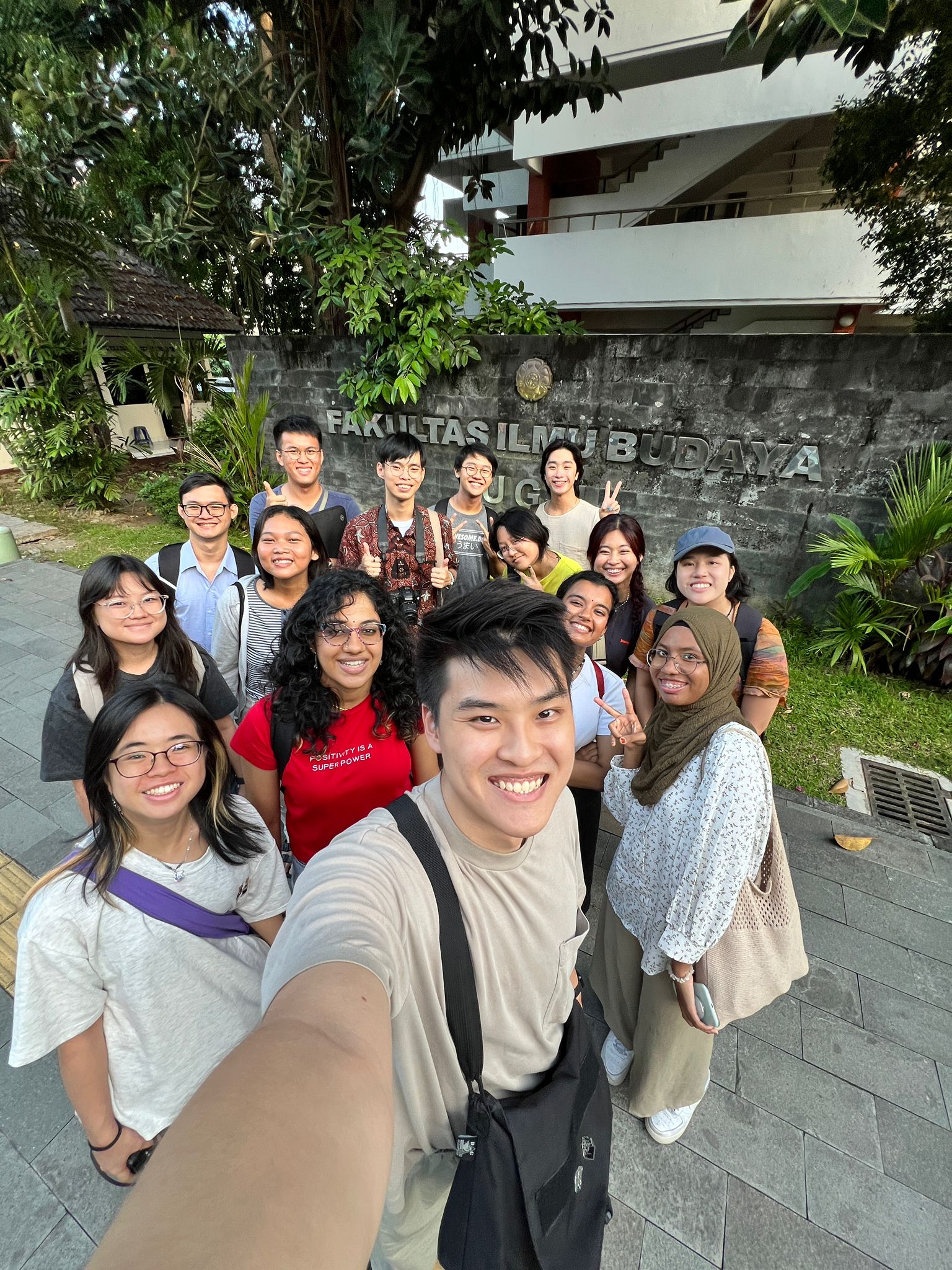
Photo 1: Leni with NUS Students at the Faculty of Cultural Sciences, UGM

12

Video UGM

[shtmlslider name='shslider_options']
Universitas Gadjah Mada

Faculty of Cultural Sciences
Universitas Gadjah Mada
Jl. Nusantara 1, Bulaksumur Yogyakarta 55281, Indonesia
   fib@ugm.ac.id
   +62 (274) 513096
   +62 (274) 550451

Work Units

  • Office of Journal & Publishing
  • INCULS
  • Information Technology and Database
  • Language Learning Center
  • Library Unit
  • Public Relations
  • Research

Facilities

  • Computer Laboratory
  • Gamelan
  • Guest House
  • Language Library
  • Library
  • Phonetics Library
  • Self Access Unit
  • Student Internet Centre

Importan Links

  • Journal of Humaniora
  • Subscriber Journal
  • Alumni Portal
  • Career
  • Departmens News
  • UGM Streaming

Contacts

  • Academic
  • Administration
  • Dean’s Office
  • Departments / Study Programs
  • Public Relations

© 2024 Faculty of Cultural Sciences Universitas Gadjah Mada

KEBIJAKAN PRIVASI/PRIVACY POLICY

[EN] We use cookies to help our viewer get the best experience on our website. -- [ID] Kami menggunakan cookie untuk membantu pengunjung kami mendapatkan pengalaman terbaik di situs web kami.I Agree / Saya Setuju