• About UGM
  • Academic Portal
  • IT Center
  • Library
  • Research
  • Webmail
  • Informasi Publik
  • English
    • Indonesia
Universitas Gadjah Mada Faculty of Cultural Sciences
Universitas Gadjah Mada
  • Home
  • Profile
    • History
    • Vision and Mission
    • Organizational structure
    • Administration
    • Staff
    • Faculty Members
  • Academic
    • Academic Calendar
    • Undergraduate Programs
      • Bachelor of Cultural Antrophology
      • Bachelor in Archaeolagy
      • Bachelor in History
      • Bachelor in Tourism
      • Bochetor in Korean Language and Culture
      • Bachelor in Indonesian Language and Culture
      • Bachelor in English
      • Bachelor in Arabic
      • Bachelor in Japanese Language and Culture
      • Bachelor in Javanese Language, Literature and Culture
      • Bachelor in French language and literature
    • Graduate Programs
      • Master in Antrophology
      • Master in ArchaeoIogy
      • Master in History
      • Master in Linguistics
      • Master in Literature
      • Master In American Studies
      • Master in Middle Eastern Cultural Studies
    • Post-Graduate Programs / S3
      • Doctor in Antropology
      • Doctor in American Studies
      • Doctor in Humanities
    • Student Service
  • KPPM
    • Research Information
    • Scientific / Academic Publications
    • Community Service
    • International Cooperation
    • Domestic Cooperation
  • Student Organizations
    • Student Executive Council
    • Semi-Autonomous Organizations
      • KAPALASASTRA
      • Christian Student Alliance
      • LINCAK
      • Saskine
      • Catholic Student Family
      • Dian Budaya
      • Sastra Kanuragan (sasgan)
      • Family of Muslim Cultural Sciences Students (KMIB)
      • Bejo Mulyo
    • Autonomous Organizations
      • Family of Anthropology Students (KEMANT)
      • English Department Student Association
      • Tourism Students Association (HIMAPA)
      • Family of Indonesian Literature Students (KMSI)
      • West Asian Literature Student Association (IMABA)
      • Association of Korean-Language Students (HIMAHARA)
      • Family of Regional Indonesian Literatures Students (KAMASUTRA)
      • The Family Body of History Students (BKMS)
      • The French Literature Students Association (HMSP)
      • Family of Anthropology Students
      • Japanese Student Association (HIMAJE)
  • Admission
    • Student Evaluation
  • Home
  • SDGs 16: Perdamaian Keadilan dan Kelembagaan Yang Tangguh
  • SDGs 16: Perdamaian Keadilan dan Kelembagaan Yang Tangguh
Arsip:

SDGs 16: Perdamaian Keadilan dan Kelembagaan Yang Tangguh

Prof. Setiadi Discusses Humanitarian and Justice Reflections on Refugee Issues at Masjid Mardliyah Study Session Yogyakarta, Februar

News Release Friday, 27 February 2026

Yogyakarta, February 25, 2026 – The Dean of the Faculty of Cultural Sciences (FIB) at Universitas Gadjah Mada (UGM), Prof. Setiadi, S.Sos., M.Si., delivered a lecture at the Masjid Mardliyah UGM study session under the theme “Humanitarian and Justice Reflections on Refugee Issues.” . The discussion invited participants to examine forced migration not only from a policy perspective, but also through the lens of humanity and social justice.

In his presentation, Prof. Setiadi emphasized that the phenomenon of forced migration cannot be separated from social structures and power relations that often generate marginalization. He noted that when refugee issues arise, public discourse frequently shifts toward debates over who has the authority to address the matter, rather than focusing on substantive solutions and the protection of refugees themselves.

According to him, refugees are individuals striving to rebuild their life histories after being disconnected from their jobs, education, aspirations, and communities. Forced displacement can occur at both micro and macro levels due to conflict, discrimination, political pressure, or natural disasters. In this context, “fleeing” is fundamentally an act of survival in order to secure safety and continuity of life.

Conceptually, the term refugee in the international framework refers to the definition established by the United Nations High Commissioner for Refugees (UNHCR), which describes a refugee as a person who is outside their country of nationality due to a well-founded fear of persecution based on race, religion, nationality, membership in a particular social group, or political opinion, and who is unable or unwilling to return to that country. The definition also extends to individuals forced to leave their habitual residence due to external aggression, occupation, foreign domination, or events seriously disturbing public order. In addition, there are internally displaced persons who are compelled to relocate but remain within their country’s borders.

Prof. Setiadi further encouraged participants to view refugee issues as part of the broader historical dynamics of human life. Refugees are not merely statistical figures; they are individuals with dreams, hopes, and the right to rebuild a dignified future. The greatest challenges are not only administrative in nature, but also social barriers such as stigma, discrimination, and limited access to education and employment.

The study session also underscored the relevance of refugee issues to the Sustainable Development Goals (SDGs). Efforts to ensure protection and justice for refugees align with the global commitment to reducing inequalities (SDG 10) and promoting peace, justice, and strong institutions (SDG 16). Guaranteeing refugees’ access to quality education and decent livelihoods also supports the goals of ending poverty (SDG 1) and ensuring quality education (SDG 4), while international cooperation in addressing refugee crises reflects the importance of global partnerships (SDG 17).

Through this forum, the Dean of FIB UGM reaffirmed that reflecting on refugee issues is a moral imperative to build a more just and compassionate society, placing humanity at the core of policy and social action.

[Public Relation of FIB UGM, Alma Syahwalani]

Inauguration Night for New Master’s Students in Literature at UGM Affirms the Five Pillars and Academic Integrity

News Release Thursday, 19 February 2026

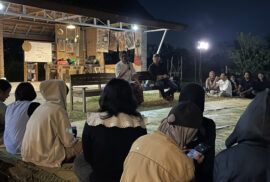
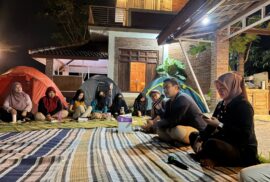
The Master’s Program in Literature at the Faculty of Cultural Sciences, Universitas Gadjah Mada (UGM), held an Inauguration Night for New Students of the Even Semester of the 2025/2026 Academic Year at Pondok As-Salam Kalimasada, Sleman Regency, Yogyakarta, on Saturday–Sunday, 14–15 February 2026. Carrying the theme “Our Literature, One Family,” the event marked the initial momentum in shaping the academic identity of master’s students.

The main session commenced on Saturday at 7:30 p.m. (WIB) and featured the Head of the Master’s Program in Literature, Prof. Dr. Aprinus Salam, M.Hum. In his remarks, he emphasized that at the master’s level, students are expected to demonstrate a higher degree of academic maturity.

“Master’s students are not only required to master course materials. They must also understand the history and philosophy of UGM as the foundation for developing academic attitudes and ethics,” he stated.

Aprinus also highlighted the importance of building a collaborative academic culture. He stressed that an open tradition of discussion, accompanied by mutual support across cohorts, is a prerequisite for fostering a healthy, productive, and sustainable scholarly community.

The event also featured a sharing session with senior students—Khotibul Umam, Marsya Kamila, and Kharisma Qurrota A’yun—who shared their experiences regarding time management, academic dynamics, and strategies for preparing research proposals as initial preparation for graduate studies.

The keynote lecture was delivered by Professor of Philosophy at UGM, Prof. Drs. M. Mukhtasar Syamsuddin, M.Hum., Ph.D., who elaborated on UGM’s Five Pillars as the philosophical foundation of the university. He explained that UGM is grounded in five principal identities: a National University, a University of Struggle, a Pancasila University, a People-Oriented University, and a Center of Culture. These pillars serve as the institutional direction as well as ethical guidelines for the entire academic community.

“UGM is not merely an educational institution, but a space for shaping the nation’s character. Therefore, its core values must be embodied in students’ daily conduct,” he remarked.

During the discussion session, Mukhtasar Syamsuddin also underscored the importance of interdisciplinary openness, particularly for literature students. According to him, the complexity of social and cultural issues demands cross-disciplinary dialogue; therefore, students should not construct rigid boundaries between literature, philosophy, and other fields of study. This perspective is highly relevant to the reflective and humanistic character of literary studies.

The main session concluded at 9:30 p.m. and was followed by performances by the 2025/2026 Even Semester cohort, including poetry readings and musical performances that strengthened solidarity among members. After the evening program, participants rested and continued the agenda the following day.

On the second day, Sunday (15/2), activities began with congregational dawn prayer, followed by a morning walk and group games designed to reinforce togetherness. The event concluded with a session for sharing hopes and a group photo before participants returned to their respective homes.

Through this inauguration night, the Master’s Program in Literature at the Faculty of Cultural Sciences, UGM, reaffirmed its commitment to postgraduate education that is oriented not only toward academic achievement but also toward the cultivation of integrity, interdisciplinary awareness, and moral responsibility in upholding the university’s core values. The event marked the beginning of the intellectual journey of 33 new students in developing critical, reflective literary studies that contribute meaningfully to society.

[Master of Arts in Literature, Rini Febriani Hauri]

Farewell and Welcome Ceremony for Faculty of Cultural Sciences Officials

News Release Thursday, 8 January 2026

Yogyakarta, January, 7, 2026 — The Faculty of Cultural Sciences (FIB), Universitas Gadjah Mada, held a Farewell and Welcome Ceremony for Faculty Officials, which was accompanied by the signing of the official handover documents for Heads of Departments and Heads of Study Programs. This event marked an important moment in ensuring leadership continuity and strengthening institutional governance oriented toward improving educational quality and sustainable institutional development.

The event commenced with the signing of the official handover documents, symbolically represented by the outgoing and incoming Heads of Departments. The handover and signing were carried out by the Heads of the Departments of Anthropology, Archaeology, Language and Literature, and History, reflecting a shared commitment to continuing the academic leadership relay within the Faculty of Cultural Sciences.

In his remarks, Drs. Sudibyo, M.Hum., expressed his gratitude for the cooperation and support of the entire academic community during his previous term of office. He conveyed his hope that the new leadership would further enhance the faculty’s performance and strengthen FIB’s role in delivering high-quality higher education. On the same occasion, Drs. Sudibyo congratulated the newly appointed officials and offered his apologies for any shortcomings that may have occurred during his tenure.

Remarks on behalf of the Heads of Departments and Heads of Study Programs were delivered by Dr. Fahmi Prihantoro, S.S., S.H., M.A. He stated that the new Heads of Departments had been officially inaugurated at the university level earlier that morning. According to him, the mandate entrusted to the new leadership carries significant responsibility, considering the achievements attained by the Faculty of Cultural Sciences to date. He affirmed the commitment of the new management to continue the leadership responsibly while fostering collaboration and the sharing of experiences to sustain academic and institutional excellence.

Meanwhile, the Dean of the Faculty of Cultural Sciences, Prof. Dr. Setiadi, M.Si., expressed his appreciation to the former Heads of Departments and Heads of Study Programs for their dedication and contributions over the past five years. He emphasized that a number of strategic achievements had been accomplished, ranging from the strengthening of faculty management systems and improvements in academic performance to progress toward international accreditation for all study programs. These achievements, he noted, reflect sound institutional management and a strong orientation toward building resilient institutional capacity.

Furthermore, Prof. Setiadi expressed optimism regarding the future development of the Faculty of Cultural Sciences, including plans for the utilization of a new building scheduled to begin operation in July 2026. The new facility is expected to support the development of language and linguistic studies, as well as the downstreaming and contextualization of humanities scholarship to ensure its continued relevance in addressing contemporary challenges. This initiative forms part of FIB’s commitment to fostering academic innovation, expanding access to quality education, and strengthening the role of cultural studies in sustainable development.

Through this farewell and welcome ceremony, the Faculty of Cultural Sciences reaffirmed its commitment to inclusive, accountable, and sustainable leadership. The orderly and transparent transition of leadership is expected to further strengthen FIB’s contribution to producing high-quality human resources, building robust institutional foundations, and promoting innovation and the application of knowledge for the benefit of society at large.

[FIB UGM Public Relations, Alma Syahwalani]

Undoukai HIMAJE BKJ UGM: A Sports Competition to Strengthen Student–Faculty Community

News Release Wednesday, 7 January 2026

The Kazoku Division of the Japanese Language and Culture Student Association (HIMAJE), Faculty of Cultural Sciences, Universitas Gadjah Mada, held its Undoukai program on 27–28 September 2025. This event was organized as a series of sports competitions within the Japanese Language and Culture Program (BKJ) to strengthen connections among students from different cohorts and to foster closer interaction between students and faculty members. In addition, Undoukai served as a space to promote sportsmanship and create a healthy, fun, and exciting competitive atmosphere.

The first day of activities, held on Saturday, 27 September 2025, focused on a badminton tournament involving students from all cohorts as well as lecturers. The matches were conducted with high enthusiasm and provided an opportunity for students and faculty to interact more closely in a supportive setting. Through this sport, participants not only competed but also reinforced a sense of togetherness within the BKJ UGM community.

The event continued on Sunday, 28 September 2025, featuring competitions based on games and strategy, including Mobile Legends, chess, and FIFA. This variety of events encouraged participation from students with diverse interests. The competitions were lively and demonstrated that strong bonds can be built through different forms of activities—whether physical sports or games that rely on teamwork, focus, and strategic thinking.

Undoukai became one of the activities that strengthened the family-like atmosphere within the BKJ UGM community. Through this program, the Kazoku Division of HIMAJE BKJ UGM hopes that the spirit of sportsmanship and solidarity will continue to grow, while also fostering warmer interaction between students across cohorts and faculty members.

[Japanese Literature, Barra Taura Nursaid]

Bunkasai HIMAJE BKJ UGM: “Natsu no Bunkasai” Brings a Japanese Cultural Festival to FIB UGM

News Release Wednesday, 7 January 2026

The Japanese Language and Culture Program (BKJ) at Universitas Gadjah Mada, through its student association HIMAJE, held Bunkasai 2025 under the theme “Natsu no Bunkasai.” Inspired by Japanese school culture festivals, the two-day event offered an immersive cultural experience through stage performances, competitions, interactive booths, karaoke, and a lively bazaar, allowing visitors to enjoy a festive and engaging atmosphere.

Bunkasai took place on Friday and Saturday, 14–15 November 2025, across several key venues at the Faculty of Cultural Sciences (FIB) UGM, including Plaza Margono, the Auditorium, and Greenland. On the first day, activities began as the gates opened at Greenland, followed by an opening session and welcoming remarks. The day concluded with stage performances that set the festive tone of the event. One of the highlights was a performance by HIKARI, which energized the audience and marked the beginning of the entertainment program leading up to the opening of the bazaar.

On the second day, the event started with the opening of competitions at the Soegondo Building, followed by contests such as a quiz competition, Mobile Legends, and chess. Visitors were also invited to participate in other competitions, including speech, dokkai (Japanese reading), and presentations, emphasizing that the festival served not only as a space for entertainment but also as a platform for showcasing Japanese language skills.

In the afternoon and evening, the festival returned to Greenland with an even more vibrant atmosphere. The bazaar reopened alongside the announcement of competition results, followed by performances from internal BKJ communities such as HIGAKU and DAIJI. After an exhibition session and mini games, the event continued with a highly anticipated group karaoke session, reinforcing the spirit of expression and togetherness that Bunkasai aimed to create.

Overall, Bunkasai 2025 demonstrated how BKJ UGM students do not only study Japanese language and culture in the classroom, but also bring it to life through an open, interactive, and collaborative cultural festival. Through a combination of performances, competitions, bazaar activities, and creative programs, Bunkasai became one of the events that reflects the strong and dynamic student community within BKJ UGM, while also serving as an enjoyable medium for introducing Japanese culture to a broader audience.

[Japanese Literature, Barra Taura Nursaid]

123…9

Video UGM

[shtmlslider name='shslider_options']
Universitas Gadjah Mada

Faculty of Cultural Sciences
Universitas Gadjah Mada
Jl. Nusantara 1, Bulaksumur Yogyakarta 55281, Indonesia
   fib@ugm.ac.id
   +62 (274) 513096
   +62 (274) 550451

Work Units

  • Office of Journal & Publishing
  • INCULS
  • Information Technology and Database
  • Language Learning Center
  • Library Unit
  • Public Relations
  • Research

Facilities

  • Computer Laboratory
  • Gamelan
  • Guest House
  • Language Library
  • Library
  • Phonetics Library
  • Self Access Unit
  • Student Internet Centre

Importan Links

  • Journal of Humaniora
  • Subscriber Journal
  • Alumni Portal
  • Career
  • Departmens News
  • UGM Streaming

Contacts

  • Academic
  • Administration
  • Dean’s Office
  • Departments / Study Programs
  • Public Relations

© 2024 Faculty of Cultural Sciences Universitas Gadjah Mada

KEBIJAKAN PRIVASI/PRIVACY POLICY

[EN] We use cookies to help our viewer get the best experience on our website. -- [ID] Kami menggunakan cookie untuk membantu pengunjung kami mendapatkan pengalaman terbaik di situs web kami.I Agree / Saya Setuju