• About UGM
  • Academic Portal
  • IT Center
  • Library
  • Research
  • Webmail
  • Informasi Publik
  • English
    • Indonesia
Universitas Gadjah Mada Faculty of Cultural Sciences
Universitas Gadjah Mada
  • Home
  • Profile
    • History
    • Vision and Mission
    • Organizational structure
    • Administration
    • Staff
    • Faculty Members
  • Academic
    • Academic Calendar
    • Undergraduate Programs
      • Bachelor of Cultural Antrophology
      • Bachelor in Archaeolagy
      • Bachelor in History
      • Bachelor in Tourism
      • Bochetor in Korean Language and Culture
      • Bachelor in Indonesian Language and Culture
      • Bachelor in English
      • Bachelor in Arabic
      • Bachelor in Japanese Language and Culture
      • Bachelor in Javanese Language, Literature and Culture
      • Bachelor in French language and literature
    • Graduate Programs
      • Master in Antrophology
      • Master in ArchaeoIogy
      • Master in History
      • Master in Linguistics
      • Master in Literature
      • Master In American Studies
      • Master in Middle Eastern Cultural Studies
    • Post-Graduate Programs / S3
      • Doctor in Antropology
      • Doctor in American Studies
      • Doctor in Humanities
    • Student Service
  • KPPM
    • Research Information
    • Scientific / Academic Publications
    • Community Service
    • International Cooperation
    • Domestic Cooperation
  • Student Organizations
    • Student Executive Council
    • Semi-Autonomous Organizations
      • KAPALASASTRA
      • Christian Student Alliance
      • LINCAK
      • Saskine
      • Catholic Student Family
      • Dian Budaya
      • Sastra Kanuragan (sasgan)
      • Family of Muslim Cultural Sciences Students (KMIB)
      • Bejo Mulyo
    • Autonomous Organizations
      • Family of Anthropology Students (KEMANT)
      • English Department Student Association
      • Tourism Students Association (HIMAPA)
      • Family of Indonesian Literature Students (KMSI)
      • West Asian Literature Student Association (IMABA)
      • Association of Korean-Language Students (HIMAHARA)
      • Family of Regional Indonesian Literatures Students (KAMASUTRA)
      • The Family Body of History Students (BKMS)
      • The French Literature Students Association (HMSP)
      • Family of Anthropology Students
      • Japanese Student Association (HIMAJE)
  • Admission
    • Student Evaluation
  • Home
  • SDG 4: Quality Education
  • SDG 4: Quality Education
  • page. 6
Arsip:

SDG 4: Quality Education

The Javanese Language, Literature, and Culture Study Program Participates in the 2025 Nusantara Manuscript Community (Manassa) Event

News Release Wednesday, 22 October 2025

Yogyakarta, October, 22, 2025 – The Javanese Language, Literature, and Culture Program demonstrated its role in the preservation and development of the archipelago’s manuscript heritage through its participation in a series of activities organized by the Nusantara Manuscript Society (Manassa) 2025. This prestigious event included the 20th Nusantara Manuscript International Symposium, the 2025 National Collective Memory Manuscript Award (IKON), and the 8th National Conference of the Nusantara Manuscript Society, which will take place on October 15-17, 2025, at the Auditorium of the National Library of the Republic of Indonesia and the National Research and Innovation Agency (BRIN) Building in Jakarta. This event, attended by researchers, academics, and manuscript enthusiasts from various regions in Indonesia, is an important forum for strengthening collaboration in the preservation, research, and utilization of ancient Nusantara manuscripts as the nation’s cultural heritage.

On this occasion, Dr. Arsanti Wulandari, M.Hum., a lecturer in the Javanese Language, Literature, and Culture Study Program, together with Nanda Nursa Alya, S.S., an alumnus from the same study program, actively participated not only as participants but also as speakers at the XX International Symposium on Nusantara Manuscripts.

The symposium, held on Thursday, October 16, 2025, at the BRIN Widya Graha Building, began with participant registration at 8:15 a.m. Western Indonesian Time, followed by the opening and panel sessions divided into 11 major themes. In each panel, researchers presented their research results and discussed various aspects of manuscript writing in a scientific manner.

During the session, Dr. Arsanti Wulandari, M.Hum., together with Nanda Nursa Alya, S.S., presented a paper entitled Hybridity of Snacks in Manuscript NB 499: A Linguistic and Cultural Review. The research addressed the theme of “Traditional Knowledge and Technology” by examining a manuscript from the National Library of Indonesia collection labeled R. Aj. Kramahudjana and stamped with the Internationale Crediet en Handelsvereeniging Rotterdam (1931) book stamp.

This study highlights the phenomenon of cultural hybridity—a blend of Javanese and European (Dutch and French) elements—as reflected in the culinary diversity described in the manuscript. One interesting example is the Purpercĕs Pohung snack, which etymologically is a vernacularization of the Dutch word poffertjes (a type of small cake) and the Javanese word pohung (cassava). The phoneme poffertjes was adapted to purpercĕs, demonstrating the dynamics of language and cultural interaction at that time. 

The appearance of the Prastila (top right), Bludĕr Pohung (top left), Purpercĕs Pohung (bottom) 

Documentation by Dr. Arsanti Wulandari, M.Hum.


The participation of the Javanese Language, Literature, and Culture Study Program in the Manassa 2025 event is a tangible manifestation of academics’ commitment to preserving Nusantara manuscripts as a relevant source of knowledge for modern life. Through such studies, knowledge from the past is revived to benefit the wider community, in line with the Sustainable Development Goals (SDGs), particularly those related to quality education, sustainable cities and communities, and partnerships to achieve goals.

[Javanese Language, Literature and Culture, Haryo Untoro]

The Eighth Session of Entrepreneurship Class: Arabic Study Program Students at UGM Learn Sustainable Business Funding Strategies

News Release Wednesday, 22 October 2025

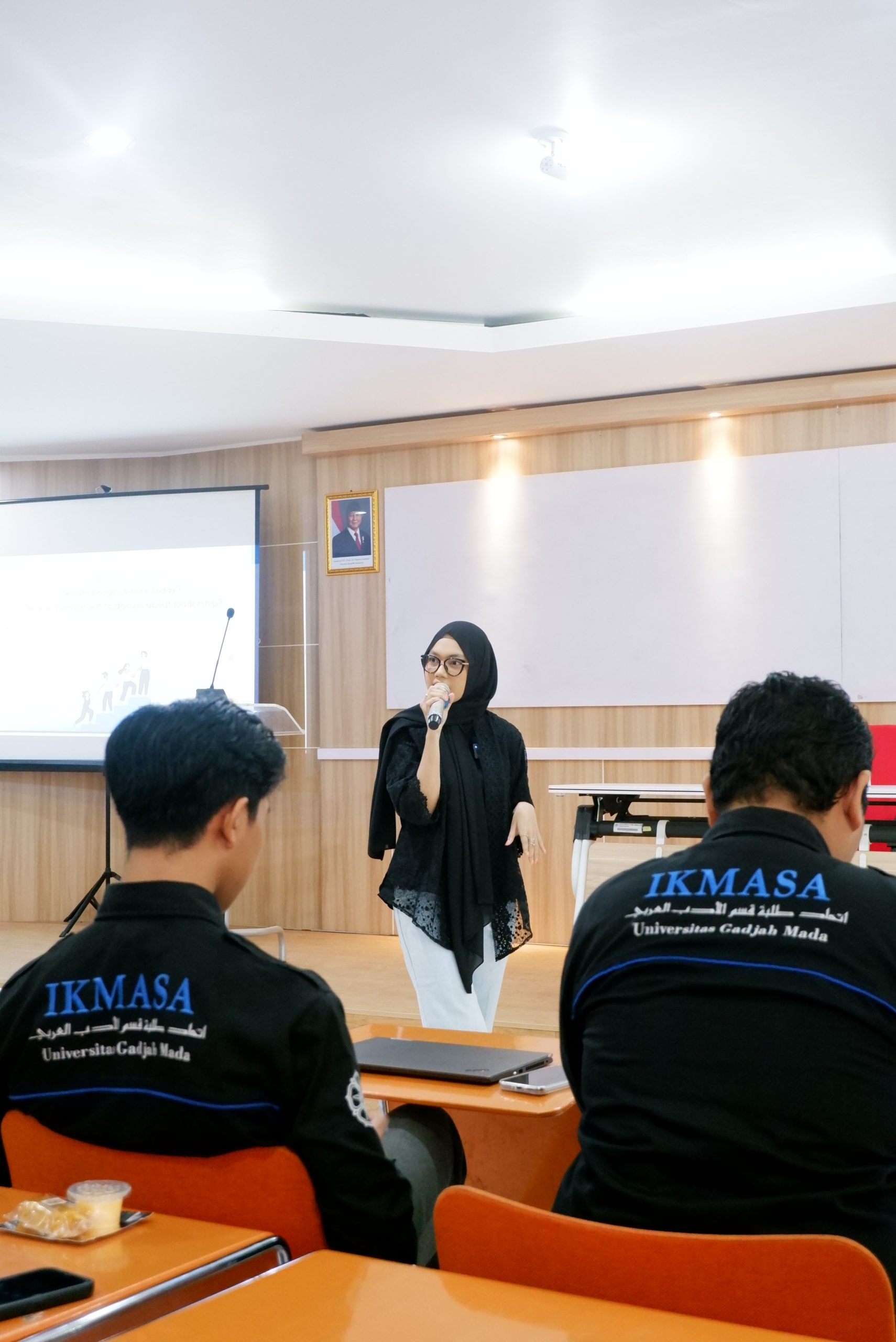
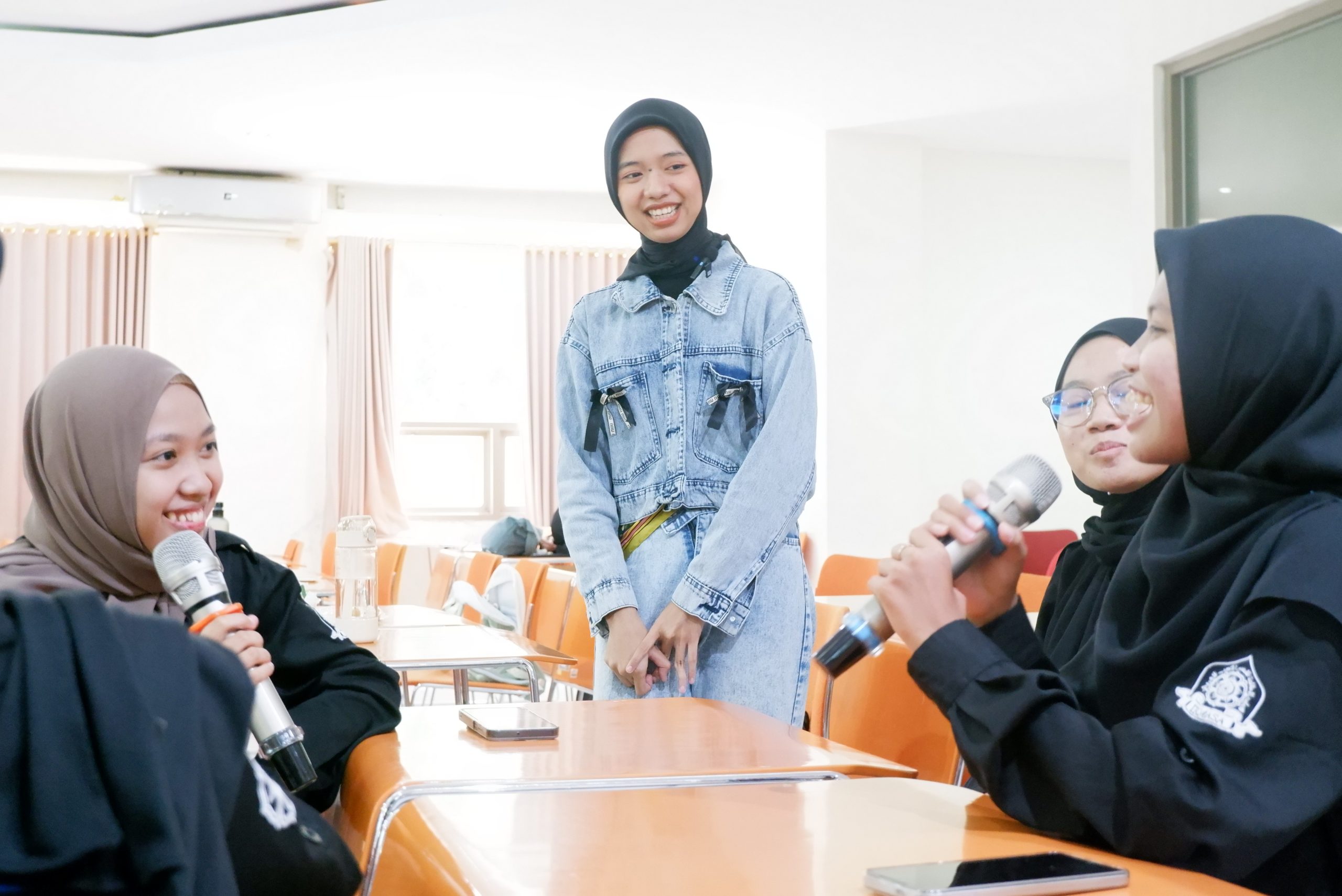
Yogyakarta, October 20, 2025 – The Arabic Study Program, Faculty of Cultural Sciences, Universitas Gadjah Mada, continued its eighth session of the Entrepreneurship course with lecturer Diyah Wikan Rakhmatika, S.S., M.A.. This session carried the theme “Business Funding Opportunities”, focusing on strategies to acquire, manage, and utilize financial resources effectively and ethically to support business sustainability.

In her presentation, Diyah explained that funding is a fundamental aspect of business continuity and growth. She emphasized that a successful entrepreneur is not only one who can generate creative ideas but also one who can manage finances wisely and determine the right funding strategy. Students were introduced to two main sources of business capital — internal funding (personal savings, reinvested profits, and support from family or friends) and external funding (banks, investors, venture capital, crowdfunding, Islamic financing, and government grants).

Furthermore, Diyah highlighted the importance of preparing a compelling and credible business proposal as a key to attracting investors. A well-crafted proposal, she noted, should clearly present the business vision, market potential, financial projections, and realistic return plans. She also underscored the principles of transparency, accountability, and Islamic ethics in financial management to ensure that businesses operate honestly, fairly, and sustainably.

The session also explored real-world funding practices in Indonesia, such as the government’s Kredit Usaha Rakyat (KUR) program, venture capital schemes from institutions like East Ventures and Mandiri Capital Indonesia, as well as donation- and investment-based crowdfunding models. Through case studies, students were encouraged to identify opportunities and challenges in funding initiatives relevant to literature- and language-based entrepreneurship, including independent publishing, digital literacy content creation, and language learning platforms.

This session provided valuable insights for Arabic Study Program students to develop businesses that are not only intellectually creative but also financially robust. By understanding sustainable business funding strategies, students are expected to design independent, ethical, and impact-driven entrepreneurial models.

The course also supports the achievement of the Sustainable Development Goals (SDGs) — particularly SDG 4 (Quality Education) through practical entrepreneurship education, SDG 8 (Decent Work and Economic Growth) by fostering competitive young entrepreneurs, and SDG 9 (Industry, Innovation, and Infrastructure) by promoting innovation and sustainable resource management.

[Arabic Literature, Muhammad Ardiansyah]

UGM Students Achieve Success at the 31st Nusantara Cultural Gathering Imbasadi at UNY

News Release Tuesday, 21 October 2025

Yogyakarta, October, 21, 2025 – The Association of Indonesian Regional Language and Literature Students (Imbasadi) and Yogyakarta State University (UNY) successfully held the 31st Nusantara Cultural Gathering (TBN) on October 13–16, 2025. The four-day event carried the theme “Satyakarta Baswara: Angiring Jantraning Basa Susastra,” which means “shining brightly in accompanying the journey of language and literature.”

As an annual Imbasadi agenda, TBN XXXI featured various cultural and academic activities, including a National Conference, cultural seminars, and a grand finale filled with award ceremonies and the inauguration of the new Imbasadi board for the 2025/2026 period. This event serves as a forum for networking and exchanging ideas among students from various universities that offer regional language and literature programs throughout Indonesia.

The Department of Javanese Language, Literature, and Culture, Faculty of Cultural Sciences, Gadjah Mada University (UGM) participated in the event by sending seven delegates. They are Haryo Untoro (class of 2022), Ganes Larasati (class of 2023), Meifira Arini Pitaloka (class of 2023), Noviyanti Alfitri (class of 2024), Shabrina Fitra Azzahra (class of 2024), Eva Wulandari (class of 2025), and Yogi Setiawan (class of 2025).

Good news comes from two of its students, Yogi Setiawan and Eva Wulandari, who have been nominated for the 2025 Imbasadi Favorite Male and Female Champions. This achievement is a tangible manifestation of the spirit of students in the Javanese Language, Literature, and Culture Program at the Faculty of Humanities, UGM, in appreciating, preserving, and promoting the cultural wealth of the archipelago through scientific and cultural activities.

Through the organization of TBN XXXI and the achievements attained, it is hoped that students’ enthusiasm for preserving regional cultural heritage will continue to grow, while also strengthening bonds among regional literature students across Indonesia. The Javanese Language, Literature, and Culture Program at FIB UGM also extends its gratitude to all parties who have supported the implementation of these activities.

Indonesia is diverse; Imbasadi unites.

[Jvanese Literature, Language and Culture , Haryo Untoro]

INCULS UGM Open Registration for the Regular Program – Even Semester 2025/2026

News Release Friday, 17 October 2025

Yogyakarta, October 17, 2025 – The Indonesian Culture and Language Learning Service (INCULS), Faculty of Cultural Sciences, Universitas Gadjah Mada (FIB UGM), has officially opened registration for the Regular Program – Even Semester of the 2025/2026 Academic Year. This program offers international students the opportunity to explore Indonesia through its language, arts, and traditions, right in Yogyakarta, a city renowned as the cultural and educational heart of the nation.

The program, which will take place from February 16 to June 19, 2026, is designed to provide a learning experience that focuses not only on language skills but also on cultural understanding. Through this initiative, INCULS contributes to the achievement of the Sustainable Development Goals (SDGs), particularly SDG 4 (Quality Education), by providing inclusive access to language and cultural education for learners from around the world.

Students are placed according to their language proficiency levels, ranging from Beginner (A1, A2) to Advanced (C2.1, C2.2). The curriculum covers reading, writing, listening, speaking, grammar, and vocabulary, delivered through interactive methods that connect classroom learning with real-life communication.

Beyond classroom activities, participants are invited to experience Indonesia more deeply through various cultural enrichment programs, such as Batik workshops, Gamelan (traditional music) classes, and visits to cultural and historical sites around Yogyakarta. Through these cross-cultural experiences, the program also supports SDG 10 (Reduced Inequalities) by fostering intercultural understanding and strengthening international friendships.

INCULS additionally offers elective courses such as Indonesian Culture, History and Politics, Tourism, and Translation, allowing students to broaden their academic perspectives based on their interests. At the end of the semester, participants will receive an official certificate and academic transcript, which can be transferred to their home universities.

Through collaboration with various international institutions and participation from students across the globe, INCULS also advances SDG 17 (Partnerships for the Goals) by fostering cross-cultural learning environments that enhance global understanding of Indonesia while strengthening international academic networks.

Registration for the Regular Program – Even Semester 2025/2026 can be completed online via admission.ugm.ac.id/registration. Further information is available at bit.ly/INCULSHowtoApply and bit.ly/INCULSBrochure

With the spirit of “At INCULS, language meets culture, and learning becomes a journey of discovery,” UGM invites international students to join and explore the richness of Indonesia’s language, culture, and humanity. ✨

[Public Relations, Faculty of Cultural Sciences UGM,  Alma Syahwalani]

Soft Launching Book “Reimagining Development in Southeast Asia: Alternative Practices from the Grassroots and Social Movements”

News Release Wednesday, 15 October 2025

Monday, October 6, 2025 – What if development did not have to repeat the same failed models?

This question is the main premise of the book Reimagining Development in Southeast Asia: Alternative Practices from the Grassroots and Social Movements. On Monday, October 6, 2025, the Department of Anthropology held a soft launch of the book Reimagining Development in Southeast Asia: Alternative Practices from the Grassroots and Social Movements. This book is the result of collaboration between a number of researchers who highlight various social, political, and geographical contexts in the Southeast Asian region. Through various field studies and theoretical reflections, this book places alternative development as its main focus, while inviting readers to reimagine the meaning of progress from the perspective of communities that have often been marginalized in mainstream development discourse.

Furthermore, the authors also invite us to question the perspective that limits people’s experiences within the framework of the nation-state. The division of regions such as “Southeast Asia” is in fact inseparable from the excesses of colonialism, which sought to compartmentalize social and cultural spaces into separate entities. Through this lens, Reimagining Development in Southeast Asia not only discusses alternative forms of development, but also how we can reimagine cross-border relationships—both historical and cultural—which are in fact a vital source for the emergence of grassroots development practices.

At the book’s soft launch on Monday, two of its authors, Ananeza P. Aban, PhD Researcher from Ghent University, and Jose Monfred C. Sy, PhD Researcher from the University of Hong Kong, were present to give a brief presentation on the outline of the book and the main topics discussed. Both highlighted how local initiatives and social movements in various Southeast Asian countries can become forms of alternative development that seek to break away from colonial formats and renegotiate power relations in the global context.

This event also provided a space for participants to revisit the concept of development, which has been dominated by global perspectives and mainstream economic policies. Through this launch, the authors hope to open a broader conversation about the future of development in the region, how grassroots experiences can be a source of inspiration for a more inclusive and sustainable direction of development, and encourage researchers to participate in documenting local development practices—especially in Southeast Asia.

[Antropologi Budaya, Daiva Keefe Kalimasadha]

1…45678…32

Video UGM

[shtmlslider name='shslider_options']
Universitas Gadjah Mada

Faculty of Cultural Sciences
Universitas Gadjah Mada
Jl. Nusantara 1, Bulaksumur Yogyakarta 55281, Indonesia
   fib@ugm.ac.id
   +62 (274) 513096
   +62 (274) 550451

Work Units

  • Office of Journal & Publishing
  • INCULS
  • Information Technology and Database
  • Language Learning Center
  • Library Unit
  • Public Relations
  • Research

Facilities

  • Computer Laboratory
  • Gamelan
  • Guest House
  • Language Library
  • Library
  • Phonetics Library
  • Self Access Unit
  • Student Internet Centre

Importan Links

  • Journal of Humaniora
  • Subscriber Journal
  • Alumni Portal
  • Career
  • Departmens News
  • UGM Streaming

Contacts

  • Academic
  • Administration
  • Dean’s Office
  • Departments / Study Programs
  • Public Relations

© 2024 Faculty of Cultural Sciences Universitas Gadjah Mada

KEBIJAKAN PRIVASI/PRIVACY POLICY

[EN] We use cookies to help our viewer get the best experience on our website. -- [ID] Kami menggunakan cookie untuk membantu pengunjung kami mendapatkan pengalaman terbaik di situs web kami.I Agree / Saya Setuju